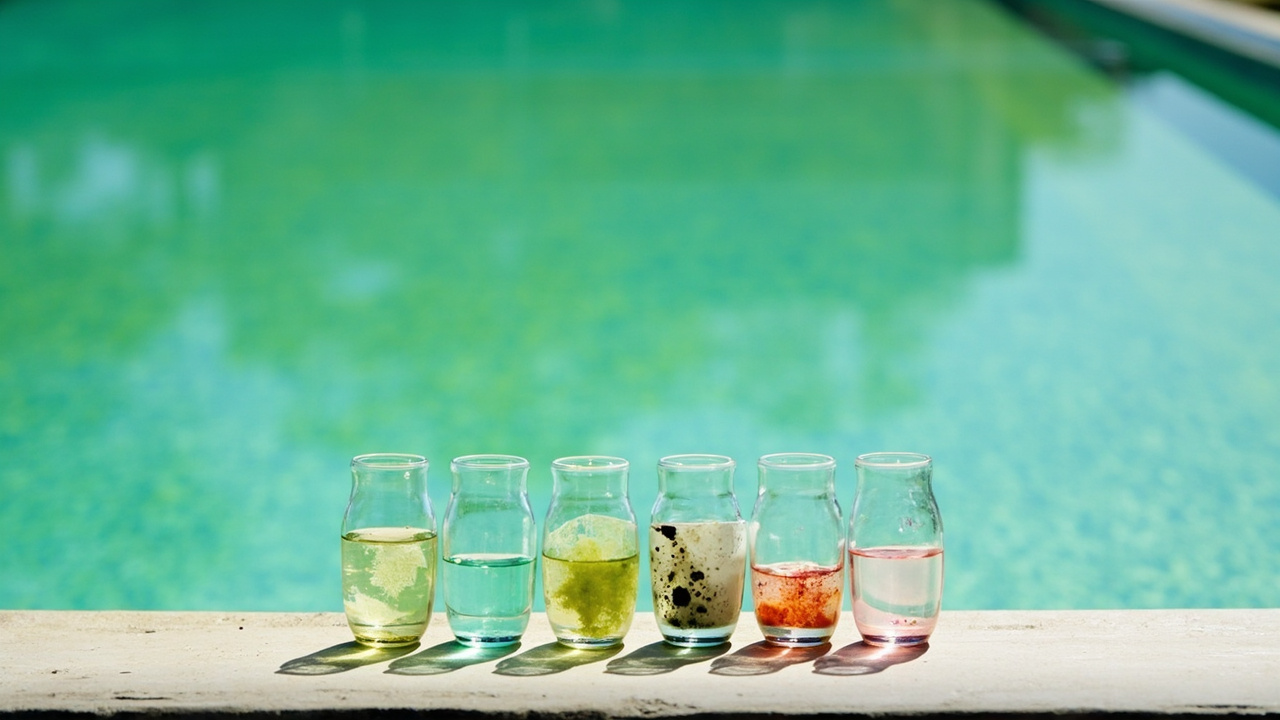


Your pool walls are changing color and the water looks off. Adding more chlorine without knowing what you’re fighting wastes money and often makes the problem worse. Each algae type needs a specific approach: green floats in the water, mustard clings to shady walls, black roots into plaster, and pink isn’t even algae. Identify the type first, test your water, then hit it with the matching treatment.
Quick answer
Pool algae come in four types — green, mustard (yellow), black, and pink. Green turns the water cloudy and is the easiest to kill. Mustard clings to shady walls and resists normal chlorine. Black spots root into plaster and need aggressive wire-brushing. Pink slime is actually bacteria, not algae. Test your FC, pH, and CYA first, then match the treatment to the type you see.
What this is not: one fix doesn’t work for all four
A lot of pool owners dump shock in and hope. Here’s why that backfires:
- Green-tinted water isn’t always green algae. Low FC alone can make water look cloudy-green without any algae colony present.
- Pink slime isn’t algae at all. It’s Serratia marcescens bacteria, so algaecides barely touch it.
- “Black algae” doesn’t float. It appears as dark, coin-sized spots stained into plaster — and it has roots.
- Mustard algae survive normal FC levels. They attach in layers, so chlorine at your usual 3 ppm won’t penetrate the colony.
- Black algae have a protective shell. You must brush it open before any chlorine can reach the root layer underneath.
The four pool algae types at a glance
Green algae (the most common)
Green algae float freely in the water column. The pool turns cloudy, then green, often within 24 to 48 hours of FC dropping below 1 ppm. You’ll see it on walls and floors too, but the giveaway is the water itself changing color. This is the easiest type to kill — a single shock treatment usually clears it.
Difficulty: Easy. One shock cycle plus 24 hours of filtration does the job in most cases.
Mustard algae (yellow, chlorine-resistant)
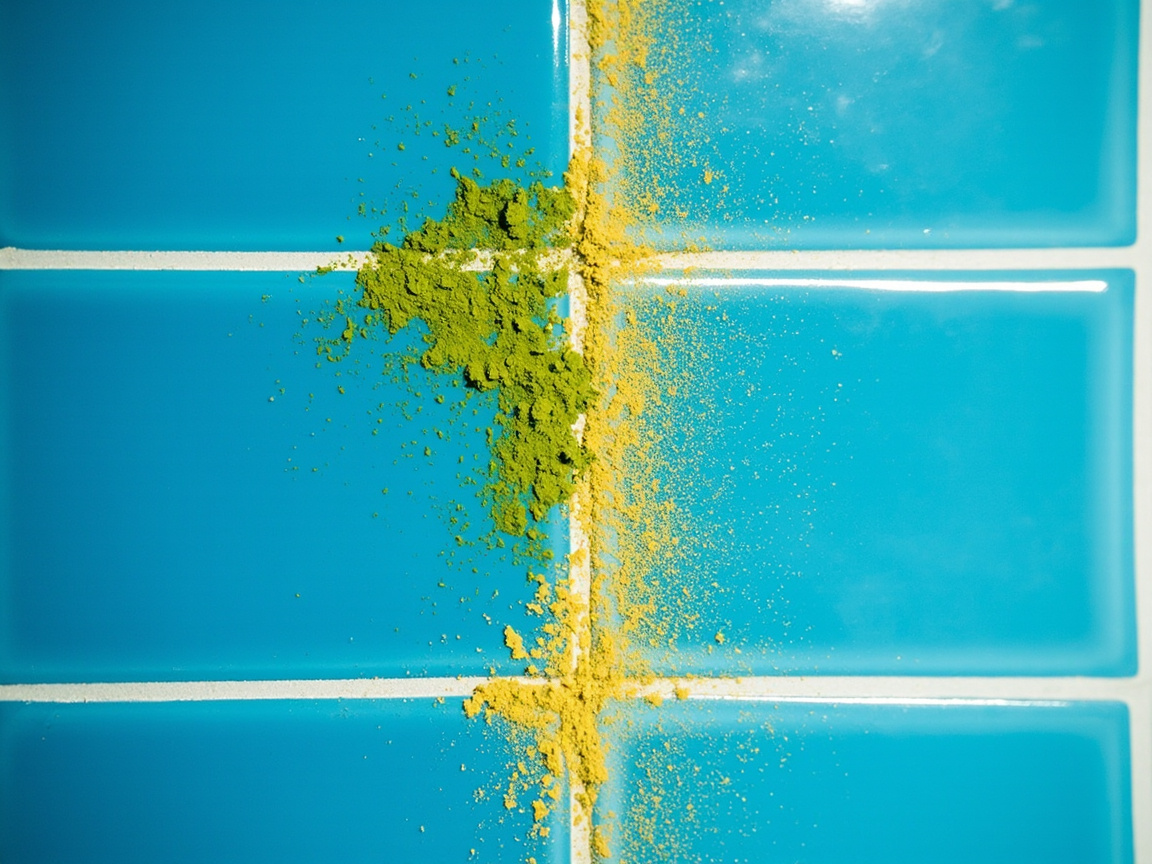
Mustard algae look like yellow-green powder on shady pool walls, steps, and behind ladders. The water stays clear, which trips people up — you think the pool is fine until you notice the dusty patches. It brushes off easily but returns within days if you don’t treat it properly. Common in hot climates where FC dips and CYA is high.
Difficulty: Medium. Needs full-wall brushing, breakpoint shock, and usually a polyquat 60 backup.
Black algae (roots into plaster)
Black algae appear as dark blue-green to black coin-sized spots on plaster or pebble surfaces. They don’t show up in vinyl or fiberglass pools because they root into rough plaster. The spots feel like hard bumps — that’s the protective shell over a root system that goes into the surface. Chronic low FC over weeks lets them establish.
Difficulty: Hard. Requires wire-brushing to break the shell, trichlor tablets placed on spots, and repeated shock cycles over 3 days.
Pink algae (actually bacteria)
Pink “algae” show up as a pink, red, or orange slimy film in skimmer lids, light niches, behind ladders, and on pool toys. It’s Serratia marcescens bacteria — not algae at all. It thrives when sanitizer is low, water is warm, and phosphates are high. Standard algaecides don’t work well because it’s bacterial.
Difficulty: Medium. Scrub surfaces, boost FC to 5 ppm, hold for 48 hours, and remove phosphates if above 200 ppb.
Decision tree: which algae type do you have?
Work through this step by step. Click each question to reveal the answer:
Is the water itself green or cloudy?
You likely have green algae floating in the water column. Head to the full green pool treatment guide for the step-by-step clearing process.
Are there patches on the walls but the water is clear?
- Yellow-green powder on shady walls and steps → Mustard algae.
- Dark coin-sized spots on plaster that resist brushing → Black algae.
- Pink or orange slimy film in crevices, skimmer, or light niches → Pink bacteria (technically bacteria, not algae).
Do you have a saltwater pool?
Salt cells produce FC slowly. In hot weather, algae can outpace the cell. Run the cell at 100 percent output and boost with liquid chlorine or cal-hypo shock during an active bloom.
Test before you treat: measure first
Don’t reach for chemicals until you know your numbers. Test three things:
Free chlorine (FC)
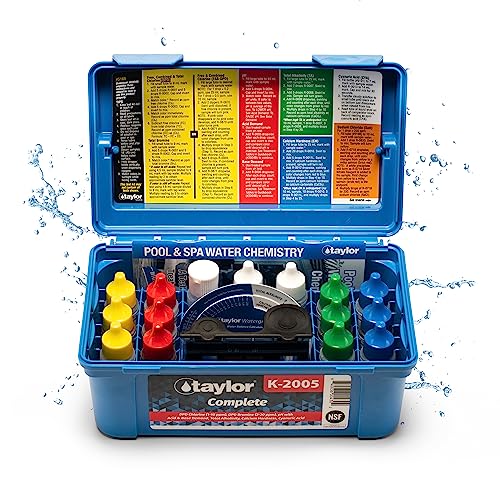
Target 1 to 3 ppm without CYA, or 3 to 5 ppm with CYA at 30 to 50 ppm. Below 1 ppm, algae will outcompete chlorine regardless of which type you’re fighting. A Taylor K-2005 DPD test kit gives you the accuracy you need for algae work. For how to test pool water the right way, that guide walks through the full process.
pH and CYA context
High pH (above 7.8) slows chlorine down — it becomes less effective at killing algae even when the FC number looks fine. pH levels directly control how much of your chlorine is active versus sitting idle. High CYA (above 70 ppm) locks your free chlorine so algae grow right through it. Both conditions let algae gain ground even when your test shows chlorine present. Total alkalinity plays a role too — if TA is out of range, pH bounces around and chlorine effectiveness swings with it. Read up on CYA lock and why high CYA lets algae win if your CYA keeps climbing.
Filter pressure and circulation
A clogged filter plus algae equals a losing battle. Backwash or clean the cartridge before you start treatment. Dead spots — areas with poor circulation — are exactly where mustard and black algae take hold. Point return jets to keep water moving across every corner.
What you’ll need
Here’s the gear that covers all four algae types. Each item links to a verified product with the splash101-20 tag.
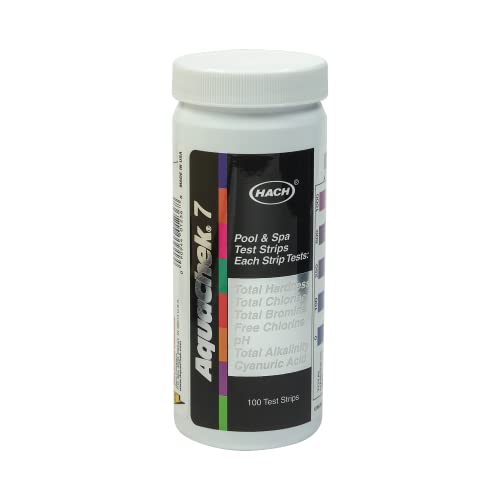
Test kit (mandatory): The Taylor K-2005 DPD kit reads FC, TC, pH, TA, CH, and CYA — the three critical values (FC, pH, CYA) you need before any algae treatment. Reusable season after season. Skip the full DPD kit if you only need a quick daily check — AquaChek 7-Way strips work for that. Don’t use OTO kits — they can’t separate free from combined chlorine, so you can’t tell if your sanitizer is actually working. See liquid DPD kits vs test strips for the full breakdown.
Shock (for green and mustard algae): HTH Pool Shock Advanced is 68 percent cal-hypo in single-dose 1 lb packets — fast-acting, no CYA added. Skip cal-hypo if your calcium hardness is already above 400 ppm because it pushes CH higher. Don’t use trichlor pucks to shock — they add CYA and worsen chlorine lock. For breakpoint chlorination in depth, that guide covers the dosing math.
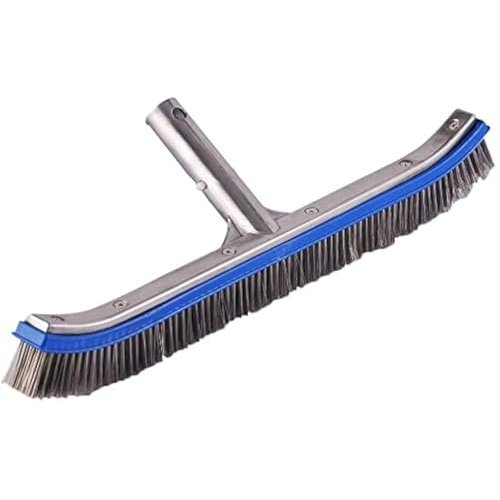
Pool brush: The LALAPOOL 18-inch stainless steel brush has heavy-duty wire bristles for plaster and pebble pools — it’s what you need to break black algae’s root layer. Skip the stainless steel brush if you have vinyl or fiberglass — it tears the surface. Don’t try to scrub black algae with a nylon brush — it won’t get through the protective shell.
Polyquat 60 algaecide (for mustard algae backup): In The Swim Algaecide 60 Plus is non-foaming, non-metal, and works as a preventive too. Skip foam-based (quaternary) algaecides on an active bloom — they foam up and don’t kill established colonies. Don’t use copper-based algaecides with a salt cell or heater — copper stains surfaces and corrodes metal components.
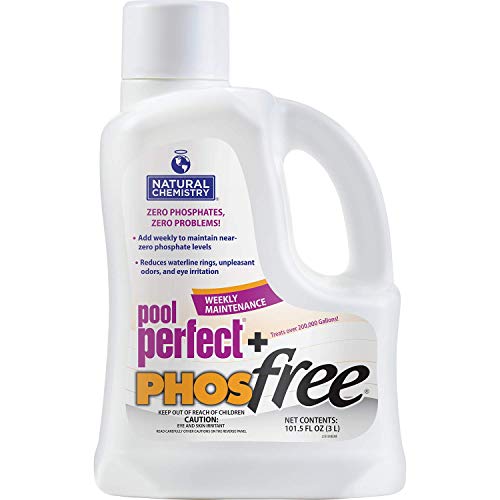
Phosphate remover (for persistent blooms and pink bacteria): Natural Chemistry Pool Perfect + Phosfree combines enzymes with phosphate removal — use it when algae or pink bacteria keep returning despite proper FC. Skip phosphate treatment if your FC is still below target — fix chlorine first. Don’t add phosphate remover right before backwashing — it clogs the filter. Learn what to look for in pool test strips if you need to test phosphates.
Safety notes (read this)
- Never mix different chlorine products. Cal-hypo plus trichlor in the same bucket or skimmer creates toxic chlorine gas. When placing trichlor tablets on black algae spots, make sure no cal-hypo residue is on the same surface.
- Add chemical to water, not water to chemical. Pre-dissolve cal-hypo in a clean bucket of pool water before pouring it in.
- Wear gloves and eye protection when wire-brushing black algae. The disturbed root layer can aerosolize and irritate your lungs.
- Keep trichlor tablets out of the skimmer if you have an inline chlorinator — concentrated chlorine can react with residual trichlor in the feeder.
- Store algaecide and chlorine separately. Concentrated chlorine plus some algaecides can react.
- Keep swimmers out until FC drops below 5 ppm after a shock treatment.
Per-type first action: the recovery roadmap
Once you’ve identified the type and tested your water, here’s the first move for each. For shock dose math, use the chemical dose calculator to get the right amount for your pool size.
Green algae first action
Brush all walls and floor to break up the algae film. Shock to 10 ppm FC using cal-hypo, then run the filter 24 hours straight. Clean or backwash the filter when pressure rises 8 to 10 psi above baseline. For the full step-by-step clearing process, see the green pool recovery guide.
Mustard algae first action
Brush every affected wall — and not just where you see the powder. Mustard algae layer on top of each other, so what’s visible is only the top layer. Shock to breakpoint (roughly 10 times your combined chlorine reading), then add polyquat 60 algaecide as backup. Clean skimmer baskets, ladders, and pool toys — mustard algae survive on equipment and reinfect the pool.
Black algae first action
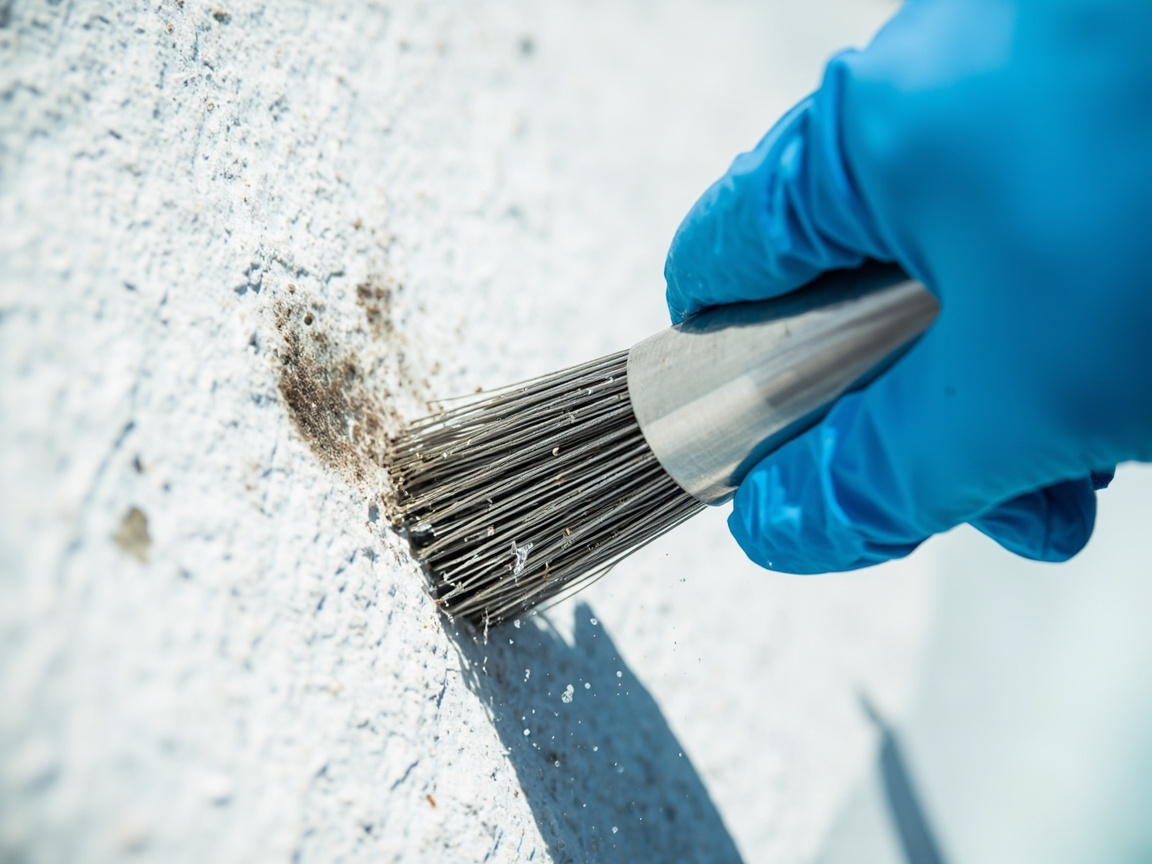
Wire-brush each spot aggressively with a stainless steel brush to break the protective root layer — this is non-negotiable. Place a trichlor tablet directly on each spot (inside a sock, weighted down) for 24 hours. Shock heavily to 15 ppm FC or higher. Repeat the brushing, trichlor, and shock routine for 3 consecutive days. Skipping the brushing is why black algae come back.
Pink algae first action
Scrub all affected surfaces with a pool brush. Boost FC to 5 ppm and hold it there for 48 hours. Test phosphates — if above 200 ppb, use a phosphate remover because pink bacteria feed on phosphates. Keep the filter running and clean it daily until the slime is gone.
Chlorine pool vs saltwater pool
The algae are the same, but the system changes how you respond.
Chlorine pool: You dose manually, which means you can spike FC fast for a shock treatment. Just add more — liquid chlorine, cal-hypo, or whatever matches your surface and chemistry. Trichlor tabs in a floater work fine for daily maintenance, but watch your CYA because each 3-inch tab adds about 7 ppm of CYA per 10,000 gallons. Check free chlorine target ranges if you’re unsure where to hold FC.
Saltwater pool: The salt cell makes FC continuously but slowly. During an active bloom, the cell alone can’t keep up — algae outpace it in hot weather. Run the cell at 100 percent output and add liquid chlorine or cal-hypo shock to get ahead of the bloom. A clean cell, correct salt level (2,700 to 3,400 ppm), and balanced pH and CYA are your best prevention. See the weekly pool care routine that keeps algae from starting in the first place.
Common mistakes that make algae worse
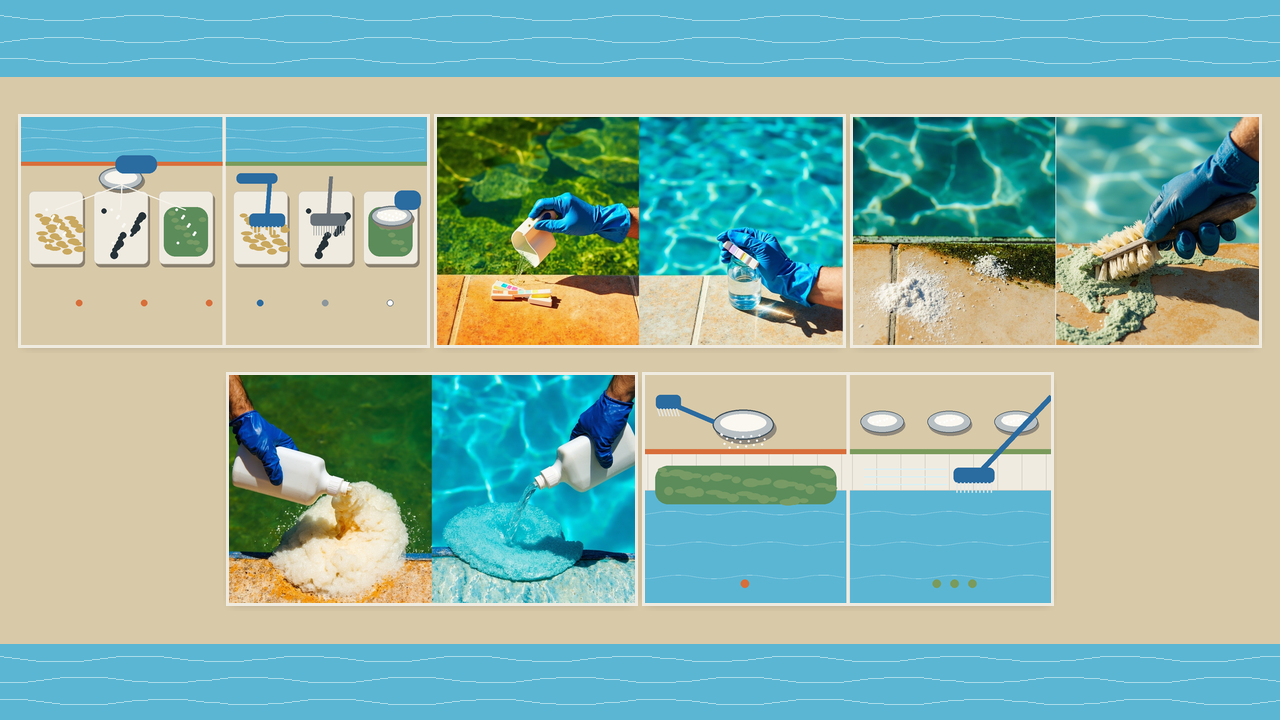
- Treating all algae the same. Black algae need wire-brushing first. Mustard needs full-wall coverage. Pink isn’t algae. Applying one-size-fits-all shock wastes chemicals and lets the colony grow.
- Skipping the CYA test. High CYA (above 70 ppm) locks your FC so algae win even when you’re adding chlorine. Test CYA every month during pool season.
- Not brushing enough. Mustard and black algae have protective layers. Shocking without brushing first just kills the surface, not the colony underneath.
- Using foam-based algaecides. Quaternary algaecides foam up and don’t kill established algae. Polyquat 60 is the right choice — it’s non-foaming and actually penetrates the colony.
- Shocking once and waiting. Mustard and black algae often need 2 to 3 consecutive shock cycles spaced 24 hours apart. One round rarely finishes the job.
What to buy only if needed
Don’t buy everything on the list up front. Match the product to your specific algae type.
Only if you have mustard algae
Polyquat 60 algaecide (In The Swim Algaecide 60 Plus) — add it after shocking to stop recurrence. Mustard algae are chlorine-resistant, so the algaecide backup matters more than for green algae.
Only if you have black algae on plaster
Stainless steel pool brush (LALAPOOL 18-inch) — required to break the root layer before shocking. You’ll also need trichlor 3-inch tablets to place directly on each spot in a sock.
Only if algae or pink bacteria keeps coming back
Phosphate remover (Natural Chemistry Pool Perfect + Phosfree) — phosphates feed both algae and pink bacteria. Test first, and only treat if phosphates are above 200 ppb.
When to call a pro
Keep it DIY if: you can test water accurately, brush every surface, run the filter 24 hours, and your FC and pH numbers are moving the right way within 48 hours.
Call a pro if:
- Black algae persist after 3 or more rounds of wire-brushing, trichlor, and shock.
- Mustard algae keep returning within a week despite full-wall brushing and polyquat 60.
- Recurring pink slime suggests plumbing or filter contamination that needs professional cleaning.
- You can’t see the bottom of the pool — a heavy bloom means high chlorine demand and a pro can identify the type and dose correctly.
Related
- How to clear a green pool — the full green-algae treatment hub, the most common type.
- Cloudy pool — another common follow-up after algae treatment.
- Free chlorine explained — FC target ranges and why algae take hold when FC drops.
Key takeaways
- Four common pool algae types: green, mustard (yellow), black, and pink — each needs a different treatment.
- Pink “algae” is actually Serratia marcescens bacteria, not algae, so algaecides don’t work well.
- Green algae are the easiest to kill; black algae are the hardest because they root into plaster.
- Always brush mustard and black algae before shocking — they have protective layers that chlorine can’t penetrate.
- Test FC, pH, and CYA before any treatment; high CYA locks your chlorine and lets algae grow.
- Saltwater pools can still get algae — boost the cell output and add chlorine manually during a bloom.
- Route the full green-algae treatment to the green pool recovery guide.