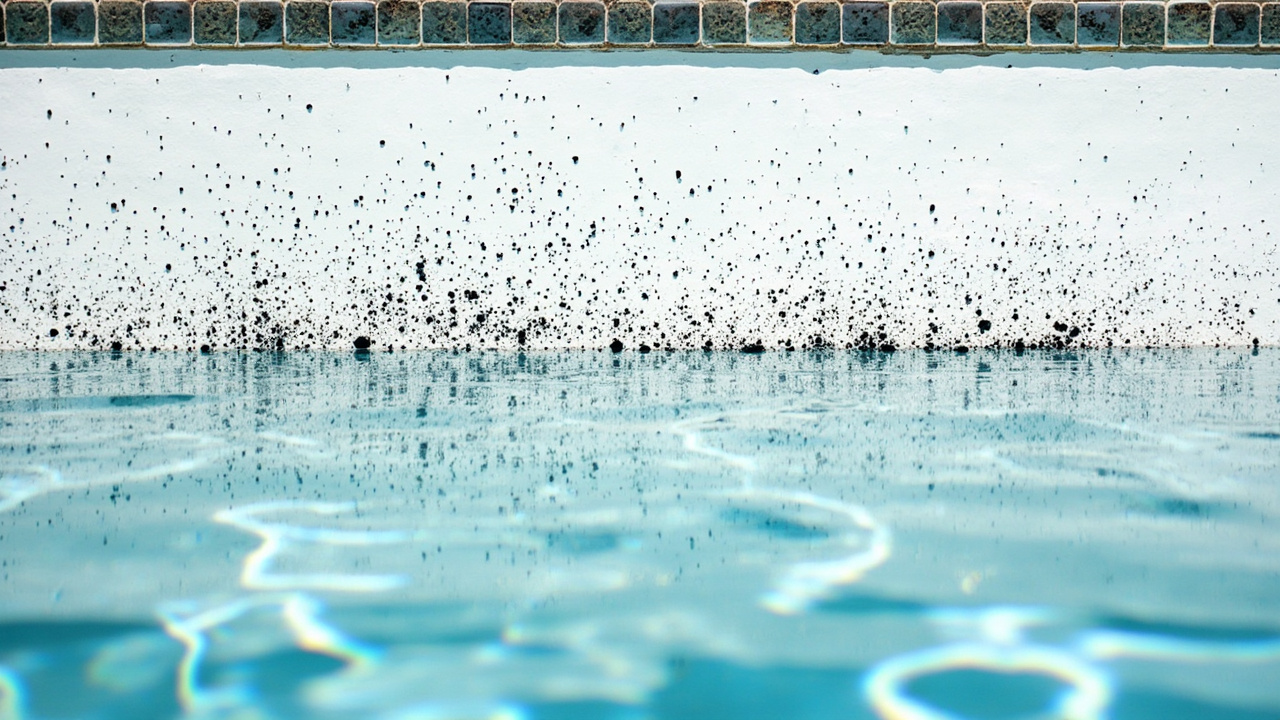
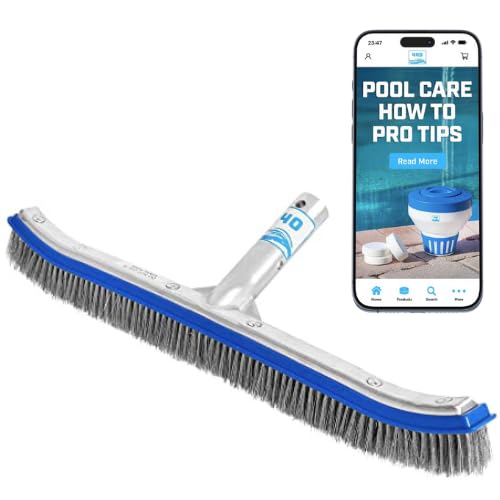

If dark pepper spots keep coming back after a single shock bag, you’re fighting a rooted colony—not surface dirt. Casual chlorine bounces off the protective plate, wastes product, and leaves the same footprints a week later. Confirm the ID on the algae types hub first, open the plate with the right brush, then hold free chlorine at a CYA-aware kill level for multiple days. Don’t expect a one-bag shock to finish the job when roots are still seated in the plaster.
Quick answer
Black algae is a rooted colony that survives casual shocking until you open its plate with the right brush, then hold free chlorine at a CYA-aware kill level for multiple days. Confirm identity on the algae types hub first. On plaster use stainless brushes; on vinyl use nylon only. Pair brushing with cal-hypo shock and black-algae treatment, retest before swimming, and fix dead spots so colonies don’t return.
What this is not
Not a full algae species encyclopedia
Identification and mustard/green overviews live on algae types. This page is the black-algae kill protocol.
Not green-water recovery
Green pea-soup paths are green pool. Black spots can hide in otherwise clear water.
Not a drain-first mandate
Most black algae jobs succeed without draining when brushing and FC are disciplined.
Not metal stain removal
If spots don’t respond at all to brush plus chlorine and metals test high, switch to stain diagnosis—not endless algaecide.
Parent hub context
Black algae is one colony type covered in the algae types identification hub. Use that page to rule out dirt, stains, and mustard algae before starting a multi-day black kill. Salt systems also see saltwater pool algae patterns—sanitizer still must reach the wall.
Identify black algae vs lookalikes
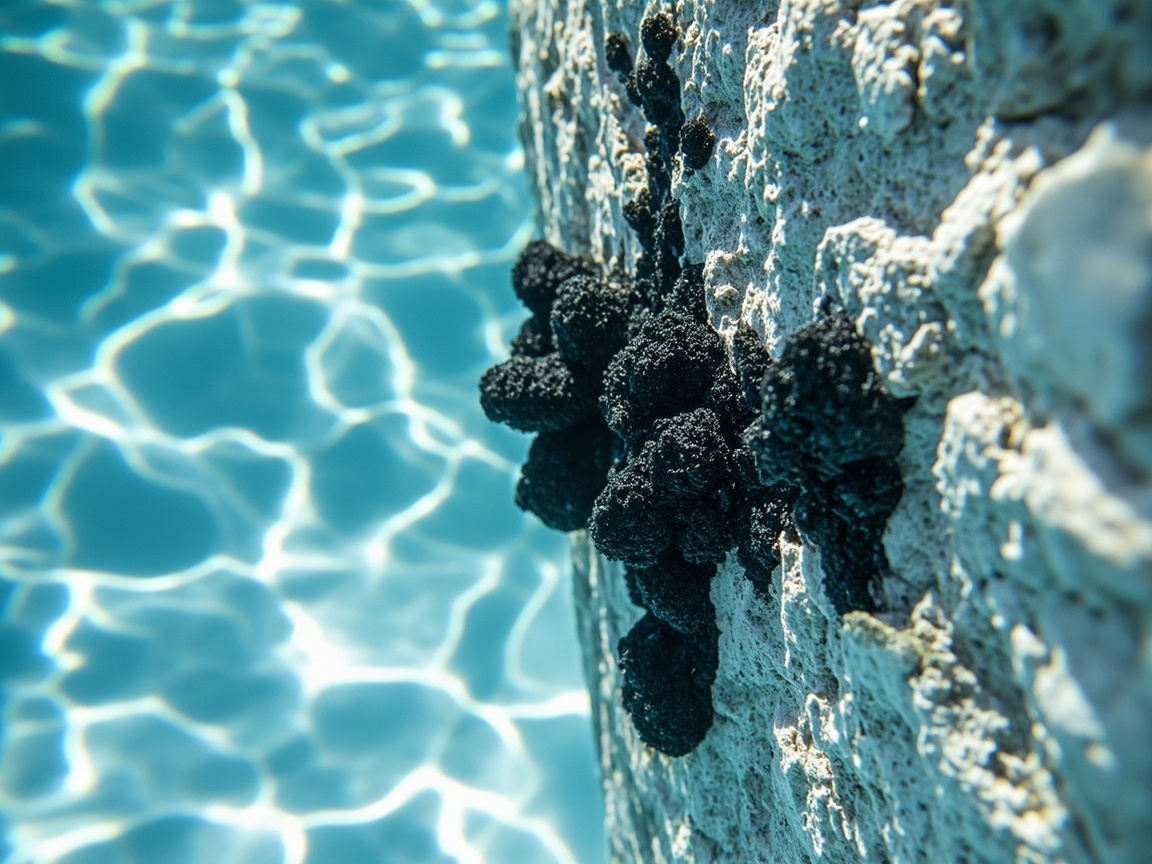
Raised pepper spots that return
Classic black algae: dark, often circular, slightly raised, returns in the same place if roots remain.
Dirt that wipes away once
If a nylon brush plus vacuum removes it permanently, it was not rooted algae.
Stain clues
Flat discoloration with metal history needs a sequestrant or stain path, not wire-brush theater.
Surface rules before you touch a brush
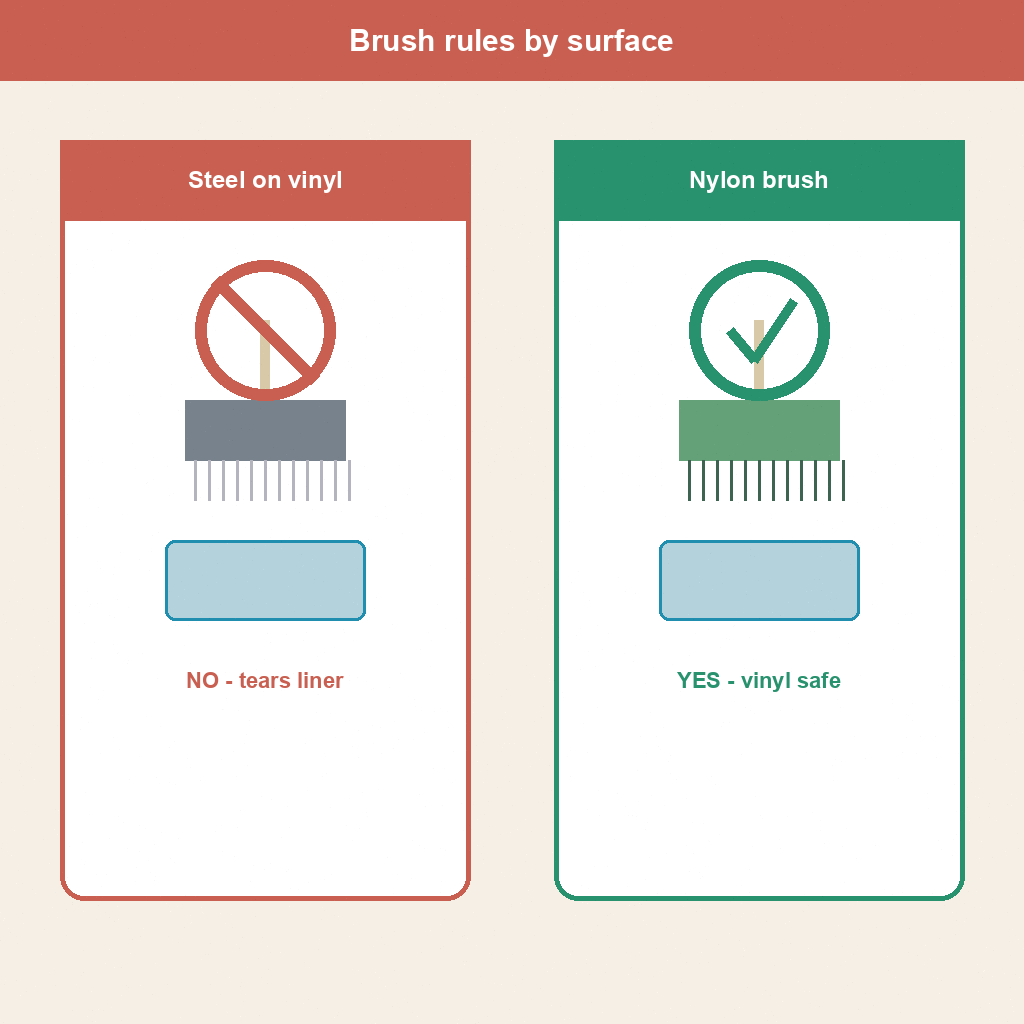
Plaster / gunite / pebble
A stainless detail brush plus a wide wire wall brush are appropriate on hard surfaces. Pick specific tools after the decision tree—not before you know liner type.
Vinyl liner
Nylon brush only. Wire will gouge and void liners. Compensate with longer contact time and meticulous spot treatment.
Fiberglass
Soft brush; avoid aggressive wire. Follow manufacturer finish guidance.
Decision tree — pick your attack path
Branch 1 — Confirmed black algae on plaster, FC testable
Brush aggressively → dose black algaecide → raise FC with shock → brush daily → hold FC.
Branch 2 — Vinyl liner with black spots
Nylon brush only → algaecide plus shock path → longer mechanical patience; never steel.
Branch 3 — CYA very high (for example chronic trichlor use)
FC kill targets climb with CYA (cyanuric acid, free chlorine). Plan more product days or a partial drain strategy if CYA is extreme.
Branch 4 — Saltwater generator pool
Run the cell hard, brush, and you may still need manual shock to hit kill FC (pool shock).
Branch 5 — Spots in dead zones (behind ladders, steps, shady wall)
Add directed flow and a brush schedule; chemistry alone fails in still water.
Branch 6 — Returns after a “successful” clear last month
Audit phosphates (phosphates), brush discipline, and sanitizer holidays.
What you’ll need
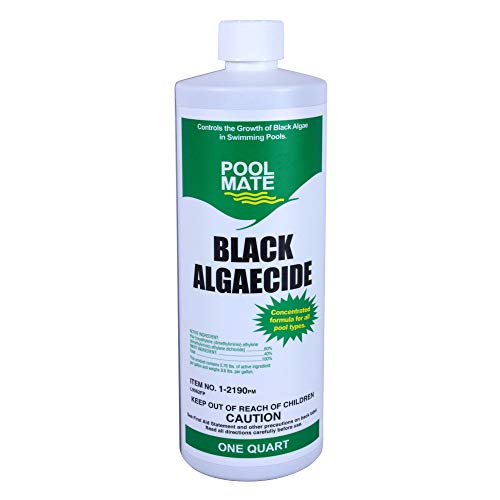
Pool Mate Premium Black Algaecide 1 qt
Dedicated black algae chemistry after mechanical disruption. This copper-class bottle is the primary treatment after you open the plate with brushing.
Skip if: you have a vinyl liner and high metals history—copper algaecides can stain; prefer brush plus FC discipline first.
Don’t use if: you already dosed copper this week; stacking copper raises stain risk.
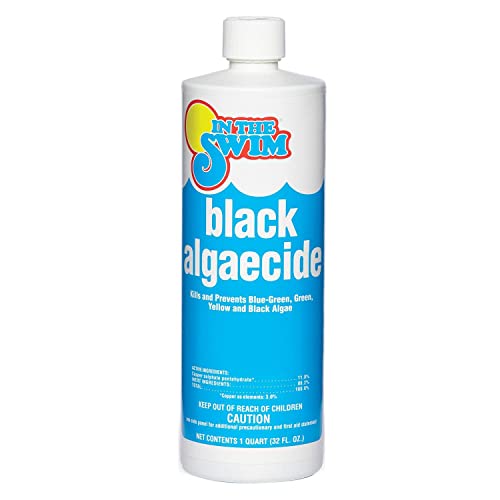
In The Swim Black Algaecide 1 qt
Alternate copper-class black treatment if the primary bottle is unavailable. Don’t stack copper doses the same week carelessly.
Skip if: you already dosed a copper algaecide this week.
Don’t use if: pH is sky-high and you ignore metals risk; balance first.
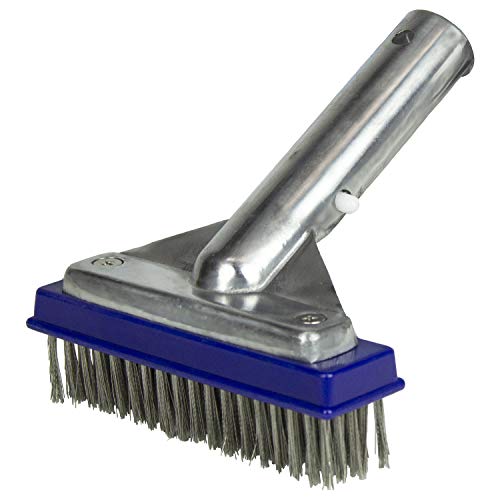
Poolmaster 5” stainless detail brush
Corners, steps, and grout lines on hard surfaces. Opens spots a wall brush misses.
Skip if: the surface is vinyl or fiberglass—stainless wire will scratch.
Don’t use if: you’re scrubbing barefoot on a slick deck; gloves and footing matter.
18” stainless wire wall brush
Large plaster walls—vinyl forbidden. Breaks the protective plate before shock.
Skip if: you have a vinyl liner—wire brushes destroy vinyl.
Don’t use if: you’re “just testing” steel on a soft liner; the gouge is permanent.
HTH Shock Advanced 12 × 1 lb
SLAM-style FC raises. Pairs with how to choose pool shock and pool shock.
Skip if: you prefer dichlor only when CYA is under 30 ppm and you need FC plus CYA together.
Don’t use if: you plan to pour dry shock through a skimmer that feeds an automatic chlorinator—that mix can create a dangerous reaction.
Multi-day protocol (step-by-step)
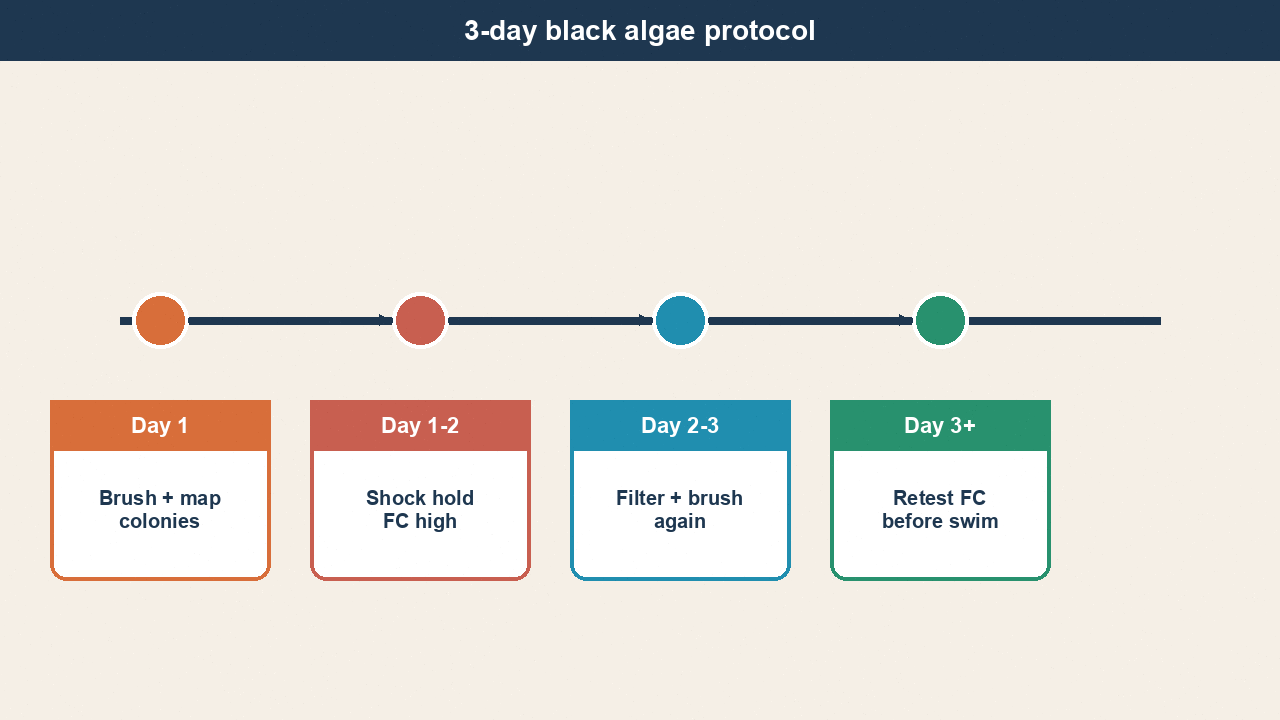
Step 1 — Test FC, pH, CYA, and map every colony
Photograph walls. Balance pH into a workable band before huge chlorine doses (pool water testing).
Step 2 — Brush to break the protective layer
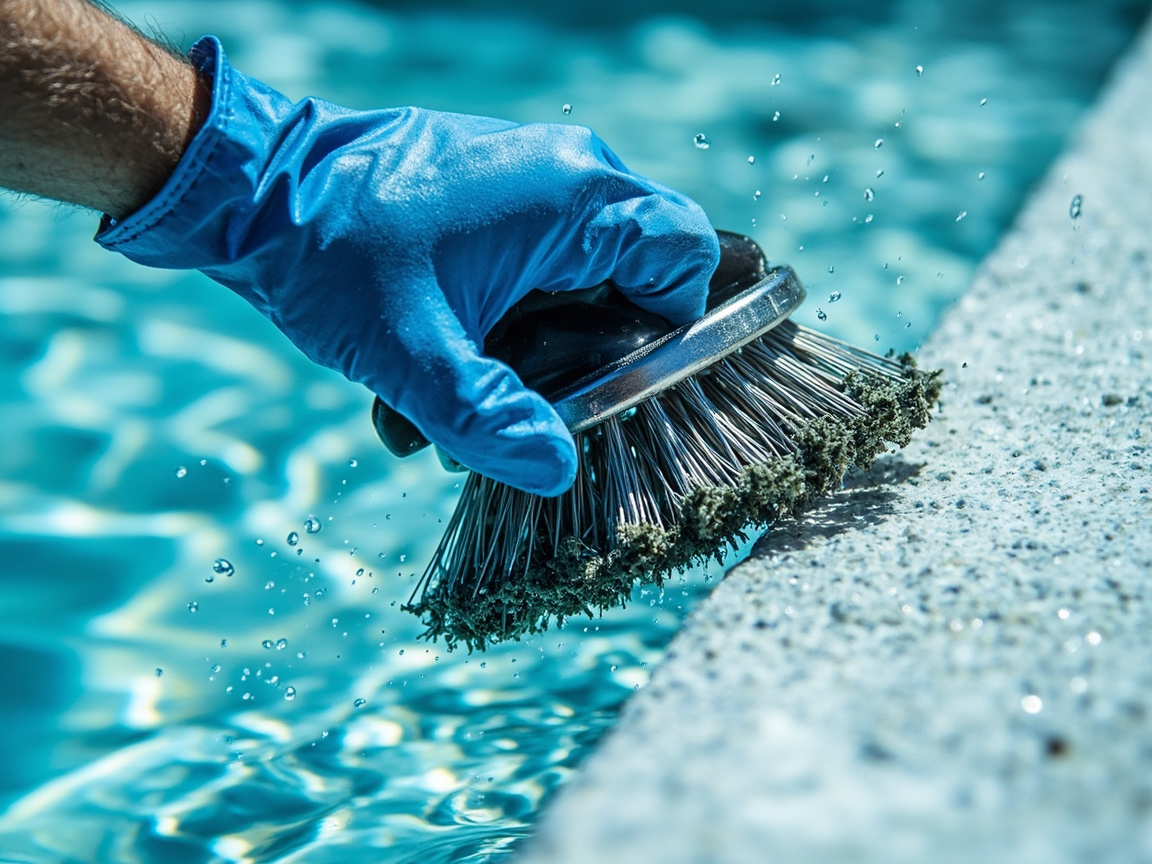
Hard surfaces: stainless detail plus wall brushes until spots smear or lighten—use the Poolmaster detail brush and 18” wire brush. Vinyl: nylon only, thorough passes.
Step 3 — Spot chemistry
Apply black algaecide per label rate for your gallons (Pool Mate black algaecide). If that bottle is out, In The Swim black algaecide is the alternate—still one copper product, not both the same week. Some pros place trichlor carefully on spots in plaster pools only—never on vinyl; never as a lazy substitute for brushing. Chlorine type context: chlorine types.
Step 4 — Raise and hold FC (CYA-aware)
Shock with HTH cal-hypo using dose calculator math for volume. Target kill-level FC appropriate to CYA; retest often; brush daily while FC stays high.
Step 5 — Filter relentlessly
Clean the filter as load climbs (pool filter cleaning and weekly care filter checks). Dead algae clogs media.
Step 6 — Confirm kill and step down
Spots should lighten and not return after FC returns to normal maintenance. Vacuum debris; keep brushing a week longer than you think.
Step 7 — Prevention lock-in
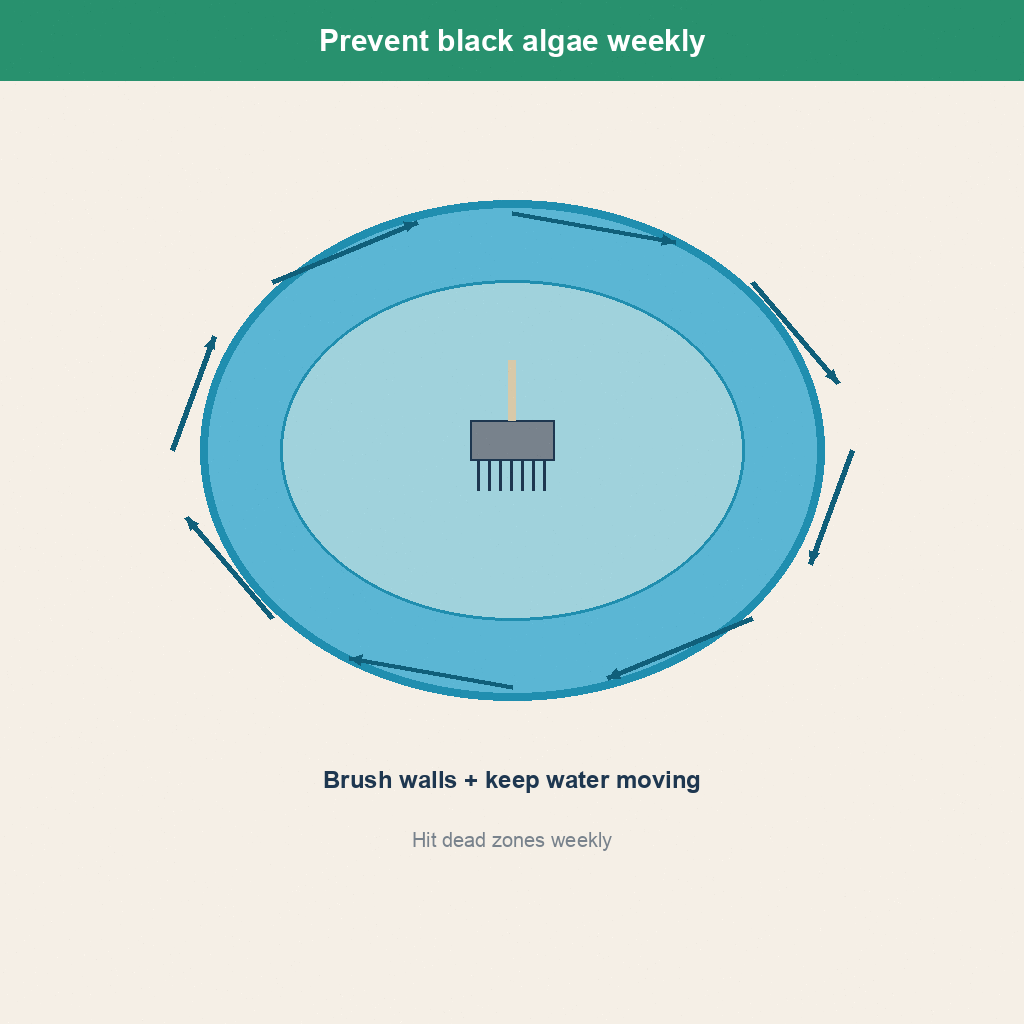
Weekly brush habit, no sanitizer holidays, circulation to former dead zones, phosphate control if tests show fuel.
Safety notes
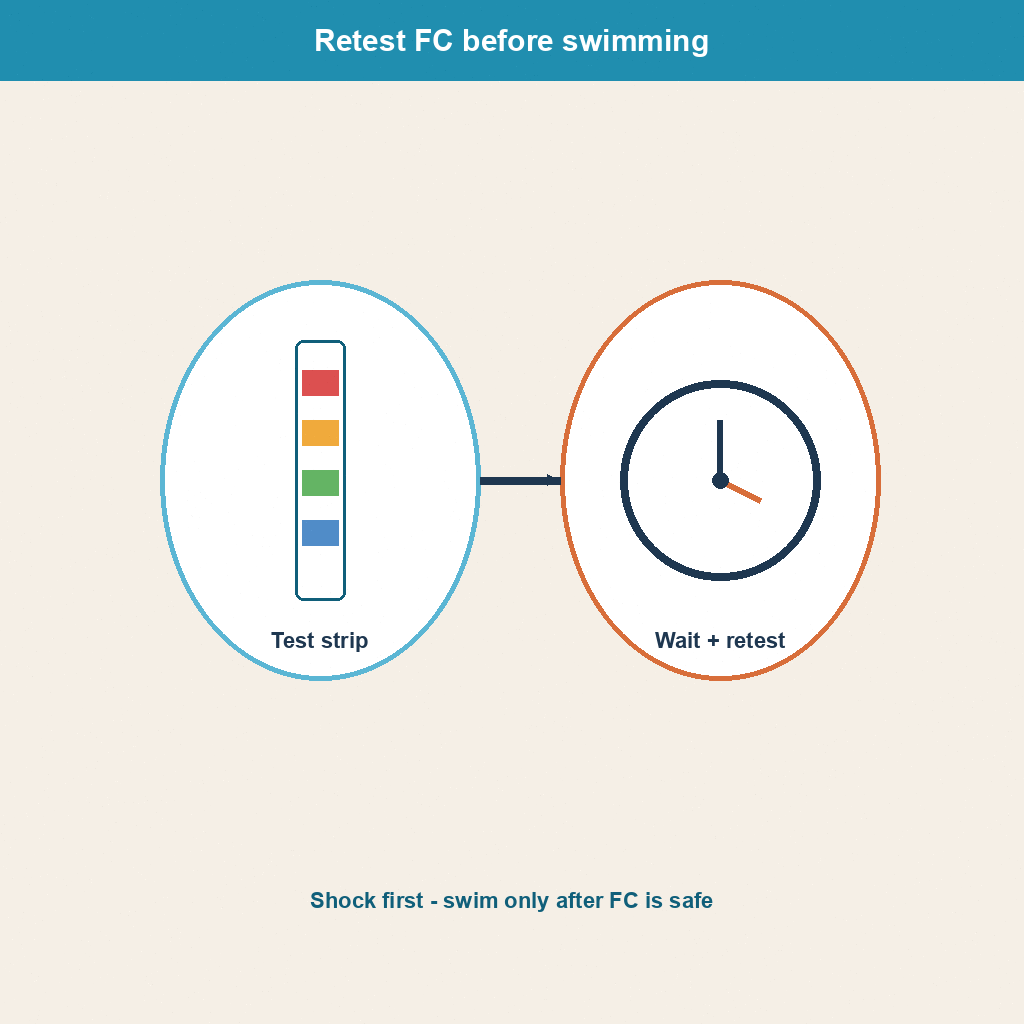
- High FC is not a swim invitation. After shock, retest FC and only swim when levels are back in a normal maintenance band—test gate, not “wait until tomorrow” folklore.
- Wire brushes and bodies: gloves; watch footing on slick decks; keep steel tools off vinyl.
- Copper algaecides and staining: overdose plus high pH can stain plaster and hair. Follow the label; consider metals tests if you have a stain history.
- Chemical separation: shock and acid never mixed; store oxidizers sealed away from kids and pets.
- Eye and lung awareness: brushing plus dosing on windy days—stand upwind; eye protection when pouring.
- Salt cell during huge FC swings: follow OEM guidance if superchlorinating with a cell present.
- Never pour HTH shock through a skimmer that feeds an automatic chlorinator—you can get a dangerous reaction in the line.
Common mistakes
- Shocking without brushing. The plate blocks chlorine; spots smile back in a week.
- Steel wire on vinyl. Expensive liner damage for zero benefit—keep the 18” wire brush on plaster only.
- One-and-done treatment day. Black algae is multi-day; daily brush while FC stays high with HTH shock top-ups as tests require.
- Ignoring CYA when setting FC targets. Stabilizer changes what “high chlorine” means.
- Stopping circulation at night during the kill. Dead zones reseed colonies.
When to call a pro
Keep DIY if: you can test, brush daily, hold FC, and spots are lightening across several days.
Call a pro if:
- Spots ignore a full disciplined protocol—possible mis-ID (stains), extreme CYA, or plaster issues
- Structural niches (cracks, vanishing edges, features) harbor colonies that need pro equipment or surface repair
- Health symptoms after a DIY chemical marathon—stop exposure; medical care for irritation; pro reset chemistry
What to buy only if needed
Only if your only brush is a soft vacuum attachment
Get a real wall brush matched to surface type—Poolmaster detail brush for corners on plaster, nylon for vinyl.
Only if CYA is extreme and FC demand is endless
Water replacement planning may beat drowning in shock bags of HTH cal-hypo.
Only if phosphates read very high after kill
Sequestrant or phosphate remover path as prevention—not a day-one distraction.
Only if the filter cannot keep up with die-off
Temporary filter aid or clarifier after mechanical clean—not instead of brushing. Keep Pool Mate black algaecide for the chemistry leg, not as a brush substitute.
Only if the primary black algaecide is out of stock
Use In The Swim black algaecide as the alternate—still one copper product that week.
Related
- Algae types hub — parent ID
- Pool shock guide — oxidation mechanics
- How to choose pool shock — cal-hypo vs alternatives
Key takeaways
- Start from algae types so you treat the right problem.
- Brush opens the plate; chemistry finishes the job.
- Steel only on hard surfaces; nylon on vinyl and fiberglass.
- Hold CYA-aware FC across multiple days with daily brushing.
- Clean the filter as colonies die.
- Retest before swimming after shock.
- Fix dead spots or the same black footprints return.