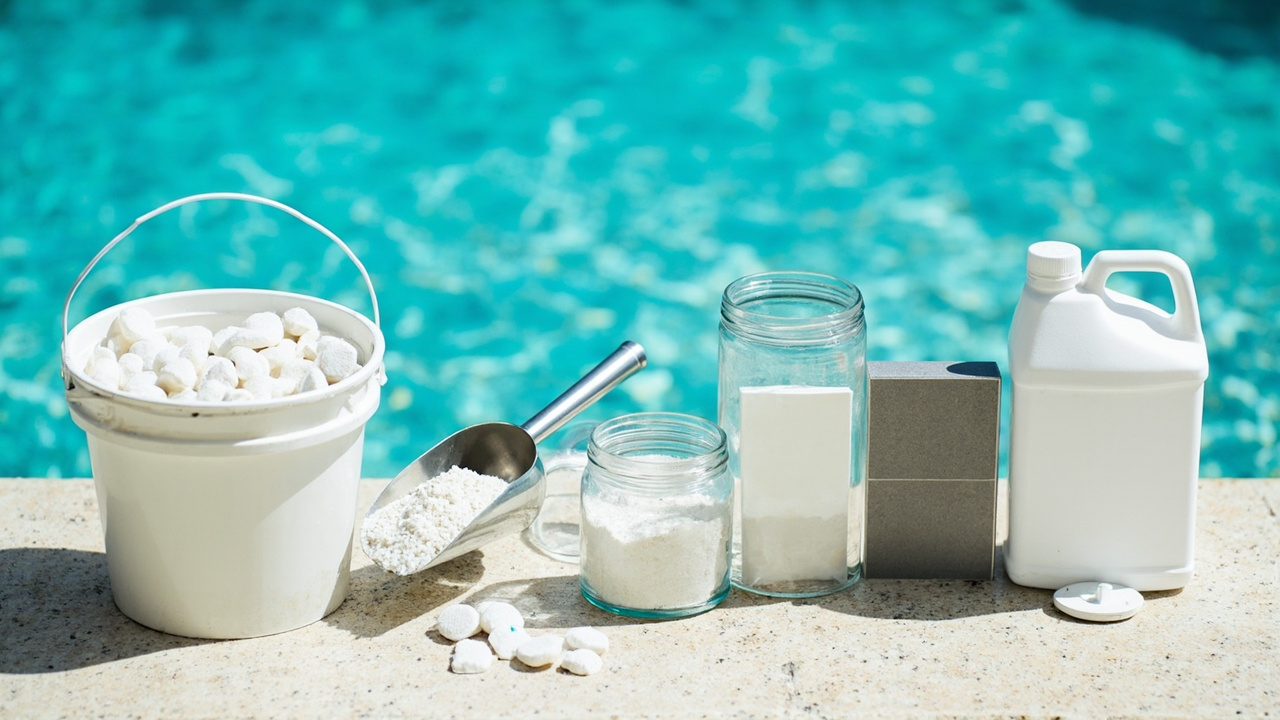

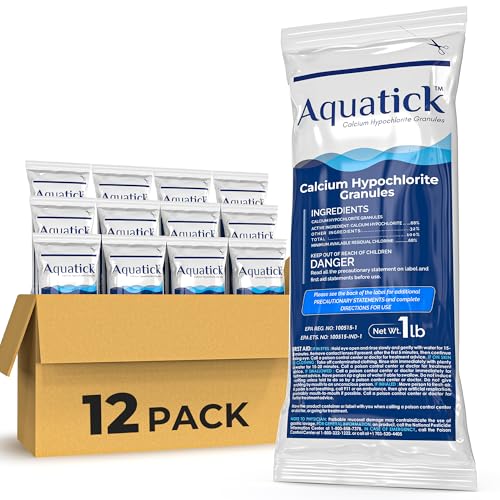


You’re standing in the pool aisle staring at tablets, granules, jugs, and bags — all labeled “chlorine.” Buy the wrong type and you’ll either overspend on redundant products or push your stabilizer (CYA) so high that chlorine stops working entirely. The good news: once you know what each type does, picking the right one takes about 30 seconds.
Quick answer
Pool chlorine comes in five main forms. Trichlor tablets dissolve slowly and add CYA — ideal for daily sanitizing in a floater. Cal-hypo and liquid chlorine hit hard without adding CYA, making them better for shock doses. Dichlor dissolves fast and suits spas. Salt systems generate chlorine on-site from dissolved salt. Pick based on your CYA level, pool size, and whether you need daily dosing or a shock treatment.
What good enough means
Every form of pool chlorine releases the same active sanitizer — hypochlorous acid (HOCl) — when dissolved in water. The difference between types isn’t what they kill. It’s how fast they dissolve, what else they add to your water (CYA, calcium, or nothing), and how convenient they are to apply.
Available chlorine: the strength number
This is the percentage of active sanitizing power per pound or gallon. Higher means less product needed per dose, but also more concentrated handling.
| Type | Available chlorine | Form | Dissolve speed |
|---|---|---|---|
| Trichlor | ~90% | 3-inch tablets | Slow (days) |
| Dichlor | 56 to 62% | Granular | Fast (minutes) |
| Cal-hypo | 65 to 73% | Granular / tablets | Medium |
| Liquid (sodium hypochlorite) | 10 to 12.5% | Liquid | Instant |
| Lithium hypochlorite | ~35% | Granular | Fast |
| Salt system output | ~1 to 3% | Generated on-site | Continuous |
What this is not: chlorine confusions that cost money
Chlorine is not the same as shock. “Shock” refers to dose size, not chemical type. You can shock with cal-hypo, dichlor, or liquid chlorine — they’re all chlorine, just applied at a higher dose. Trichlor tablets are for daily maintenance, not shocking. See how to shock your pool properly for technique.
Stabilized is not unstabilized. Trichlor and dichlor contain cyanuric acid (CYA), which protects chlorine from UV breakdown. Cal-hypo, liquid, and lithium do not contain CYA — in a sunny pool, unstabilized chlorine burns off in 2 to 4 hours without a separate CYA conditioner.
A “chlorine smell” does not mean too much chlorine. A strong odor means chloramines (combined chlorine), which form when free chlorine is overwhelmed. The fix is more chlorine (shock), not less. If your pool reeks, work through our chlorine smell means chloramines guide.
Salt pools still use chlorine. A salt chlorine generator doesn’t eliminate chlorine — it manufactures sodium hypochlorite from dissolved salt via electrolysis. See how salt chlorine generators work for the full breakdown.
Which chlorine type do you need? (Decision tree)
Work through these five questions in order. Each branch narrows your choice until only one type remains.
Step 1: Do you have a salt chlorine generator?
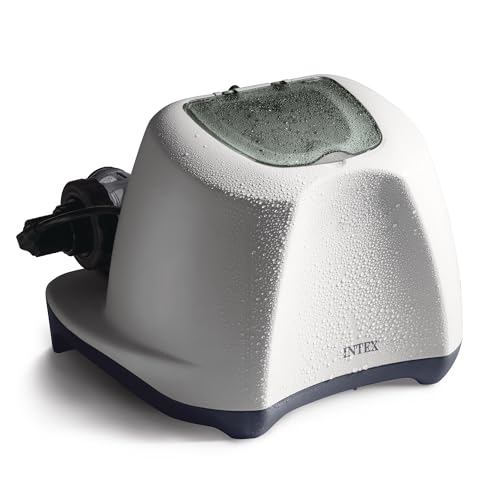
- Yes → Your daily sanitizer is handled automatically by the salt system — see the INTEX QS1200 ($209.99) for a typical above-ground setup. You may still need cal-hypo or liquid for algae or chloramine spikes — salt cells can’t produce chlorine fast enough for a shock dose. Jump to Our picks by scenario.
- No → Continue to step 2.
Step 2: Daily sanitizing or one-time shock?
- Daily sanitizing → You want slow, automated dosing. Trichlor tablets in a floater or inline feeder are the standard. Watch CYA buildup — test monthly. See free chlorine level for target ranges.
- Shock dose → Continue to step 3.
Step 3: What’s your CYA (stabilizer) level?
- Below 30 ppm → Dichlor is a good shock option — it adds CYA while sanitizing.
- 30 to 100 ppm → Cal-hypo or liquid chlorine — no CYA added, avoids over-stabilization. See CYA accumulation problem.
- Above 100 ppm → Stop adding stabilized chlorine. Use liquid chlorine only, and plan a partial drain to lower CYA.
Step 4: What’s your pool size and type?
- Above-ground, under 15,000 gal → Tablets in a floater are simplest; cal-hypo granules for shock.
- In-ground, over 15,000 gal → Liquid chlorine via pour or pump; cal-hypo for heavy shock.
- Spa or hot tub → Dichlor granules — fast-dissolving, no tablet residue.
Step 5: Confirm the final pick
Cross-check your answer against the compatibility table below, then jump straight to that scenario in Our picks by scenario.
Pool type compatibility table
| Chlorine type | Above-ground | In-ground | Spa | Salt pool | CYA added? |
|---|---|---|---|---|---|
| Trichlor tablets | Best | Best | Too slow | Supplemental | Yes |
| Dichlor granular | Shock only | Shock only | Best | Supplemental | Yes |
| Cal-hypo | Shock | Shock | OK | Shock | No |
| Liquid chlorine | Daily or shock | Daily or shock | Hard to dose | Boost | No |
| Salt generator | AG models | IG models | Rare | Core | No |
Features that matter
CYA interaction: the hidden variable
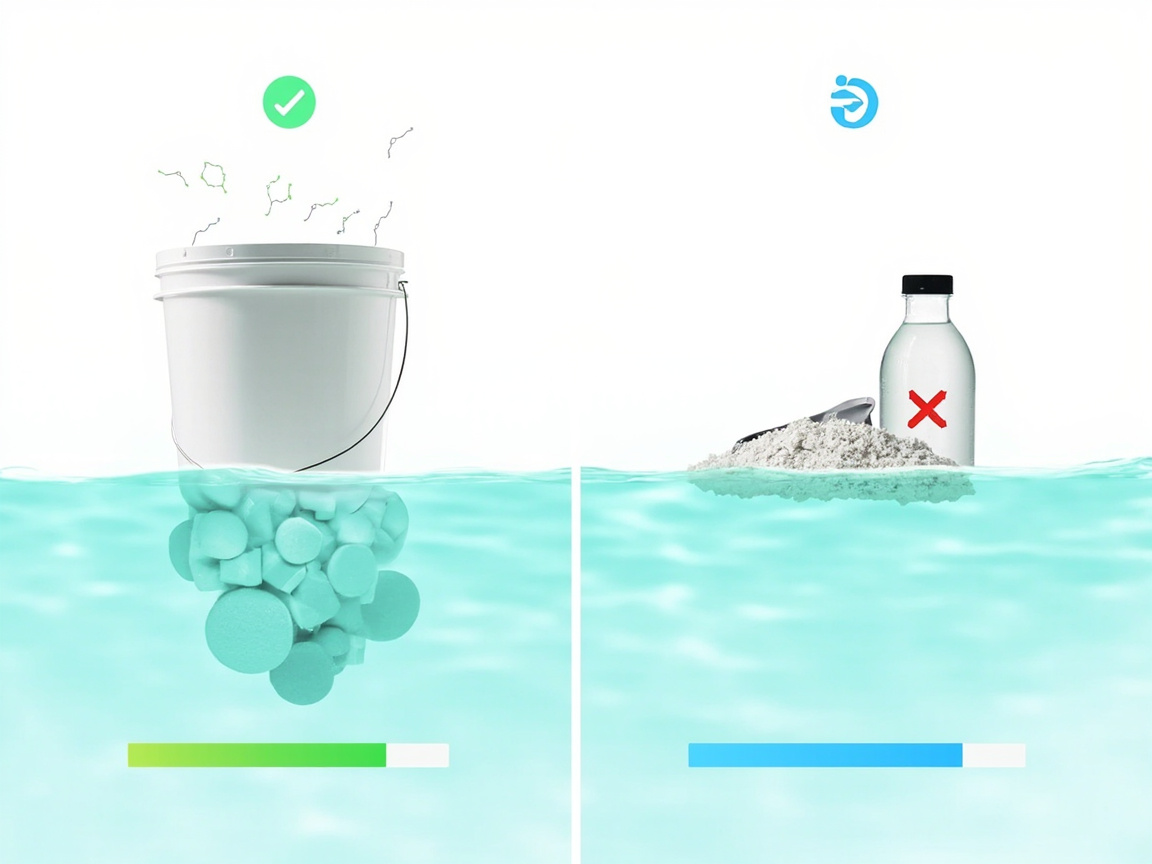
CYA (cyanuric acid) protects chlorine from UV sunlight. Without it, outdoor pool chlorine degrades in 2 to 4 hours. But too much CYA — above 50 to 100 ppm — makes chlorine sluggish and ineffective. The relationship between CYA, pH, and total alkalinity drives your effective sanitizing power.
Key rule: Trichlor and dichlor add CYA with every dose. Over a season, daily trichlor use can push CYA past 100 ppm, requiring a partial drain. Cal-hypo and liquid do not add CYA — see POOLACC Cal-Hypo Shock ($54.99) and In The Swim Dichlor Granules ($139.99). This single fact drives most chlorine-type decisions.
Calcium hardness impact
Cal-hypo adds calcium to your water. In pools with already-high calcium hardness (above 400 ppm), repeated cal-hypo use causes scaling on tile and equipment. Liquid chlorine adds sodium instead — no calcium, no scaling risk. If your CH is already high, liquid becomes the safer shock option.
Cost per pound of available chlorine
| Type | Typical price | Available Cl | Cost per lb Cl |
|---|---|---|---|
| Trichlor tablets | ~$4/lb | 90% | ~$4.4/lb Cl |
| Dichlor granular | ~$5.6/lb | 62% | ~$9/lb Cl |
| Cal-hypo granular | ~$2.5/lb | 68% | ~$3.7/lb Cl |
| Liquid 12.5% | ~$0.50/gal | 12.5% | ~$4.8/lb Cl |
Cal-hypo is the cheapest per pound of actual chlorine. Dichlor is the most expensive.
What to skip (don’t waste money on these)
Lithium hypochlorite — unless you have very specific needs
Lithium hypochlorite (~35% available chlorine) dissolves fast and doesn’t add calcium or CYA. It’s ideal for vinyl liner pools and spas. But at 3 to 4 times the cost of cal-hypo with half the strength, it’s rarely worth it for a standard pool owner. Skip unless you have a vinyl liner AND high calcium hardness AND can’t use liquid chlorine.
”Multi-function” tablets with algaecide
Trichlor tablets laced with algaecide or clarifier sound convenient, but you’re paying a premium for additives that may not match your water chemistry. Buy pure trichlor and add algaecide separately when you actually need it. Browse all pool essentials for targeted options.
What you’ll need
Before choosing and dosing chlorine, test your water. You can’t pick the right chlorine type without knowing your current CYA, FC, and calcium levels.
Essential testing gear
- Test strips or liquid kit — Must read Free Chlorine (FC), pH, CYA, and Calcium Hardness at minimum. Cheap strips that skip CYA are a common mistake. See pool test strips that read CYA.
- Pool volume calculator — You need accurate gallonage to dose correctly. Use the chemical dose calculator.
- Baseline water test — Run a full pool water testing panel before switching chlorine types. Knowing your starting FC, pH, TA, CYA, and CH prevents overdosing the new chemical.
Application gear by chlorine type
- Trichlor: 3-inch tablet floater or inline chlorinator. Never put tablets in the skimmer. For daily dosing, In The Swim 3-inch Tablets (25 lb) ($94.99) covers a typical 15,000-gal pool for a full season.
- Cal-hypo: Pre-dissolve in a bucket, pour around the edge. POOLACC 68% Cal-Hypo Pool Shock ($54.99) is a reliable granular option.
- Liquid chlorine: Pour slowly into the return jet with the pump running. Champion Pool Shock Liquid Chlorine 12.5% ($49.99) works for daily or shock doses.
- Dichlor: Broadcast granules directly or pre-dissolve for vinyl liner pools.
Our picks by scenario
Daily sanitizing for a standard chlorine pool
Pick: Trichlor 3-inch tablets in a floater or feeder.
Trichlor dissolves slowly over days, maintaining a consistent FC residual without daily effort. At 90% available chlorine, it’s the most concentrated form available. The trade-off is CYA buildup — test monthly and rotate to unstabilized chlorine if CYA climbs above 50 to 60 ppm.
Skip this if: your CYA is already above 50 ppm, or you have a salt system.
Don’t use it for: shocking (too slow to reach breakpoint), or spa care.
Our pick: In The Swim 3-inch Stabilized Chlorine Tablets (25 lb) — $94.99. The 25 lb bucket lasts a typical 15,000-gal pool an entire season.
Routine weekly shock
Pick: Cal-hypo granular shock.
Cal-hypo at 68% delivers a strong chlorine punch without adding CYA. It’s the cheapest per pound of available chlorine and works in any pool type — except pools with very high calcium hardness (above 400 ppm). Pre-dissolve in a bucket and pour around the perimeter with the pump running.
Skip this if: your calcium hardness is above 400 ppm (use liquid instead), or your CYA is below 30 ppm (dichlor doubles as a CYA booster).
Don’t use it for: daily sanitizing (too concentrated), or in an inline chlorinator that holds trichlor (the two react dangerously when mixed).
Our pick: POOLACC 68% Cal-Hypo Pool Shock — $54.99. Available in multiple bucket sizes.
Shock when CYA is low
Pick: Dichlor granular.
Dichlor at 56 to 62% dissolves fast and adds CYA while it sanitizes — killing two birds when your stabilizer is below 30 ppm. It’s also the go-to for spas and hot tubs because it dissolves completely without leaving tablet residue.
Skip this if: your CYA is already above 50 ppm (adding more makes chlorine sluggish).
Don’t use it for: daily sanitizing in a large pool (cost adds up fast at ~$9 per pound of actual chlorine).
Our pick: In The Swim Sodium Dichlor Granules (25 lb) — $139.99.
High CYA or high calcium — add chlorine only
Pick: Liquid chlorine (sodium hypochlorite).
Liquid chlorine adds nothing but chlorine — no CYA, no calcium. It’s the safest choice when your water chemistry is already balanced or your CYA is sky-high. It acts instantly and works for both daily dosing and shock. Downside: it degrades in storage (loses about 50% strength in 6 months if not kept cool and dark) and requires manual pouring.
Skip this if: you want set-and-forget daily sanitizing (tablets or salt are better).
Don’t use it for: long-term storage (buy fresh each season), or precise small-volume dosing.
Our pick: Champion Pool Shock Liquid Chlorine 12.5% — $49.99.
Converting to salt
Pick: Salt chlorine generator.
A salt system eliminates buying, storing, and handling chlorine tablets. It generates sodium hypochlorite on-site from dissolved salt via electrolysis. You still need to shock occasionally (salt systems can’t produce chlorine fast enough for a shock dose), but daily sanitizing becomes automatic.
Skip this if: your pool is very small (under 5,000 gal — salt cells are overkill), or you rent and can’t modify equipment.
Don’t expect: zero maintenance — you still test weekly, clean the salt cell every 3 months, and monitor pH (salt systems tend to push pH up).
Our pick: INTEX QS1200 Krystal Clear Saltwater System — $209.99. Designed for above-ground pools up to 15,000 gal.
Safety notes (read this)
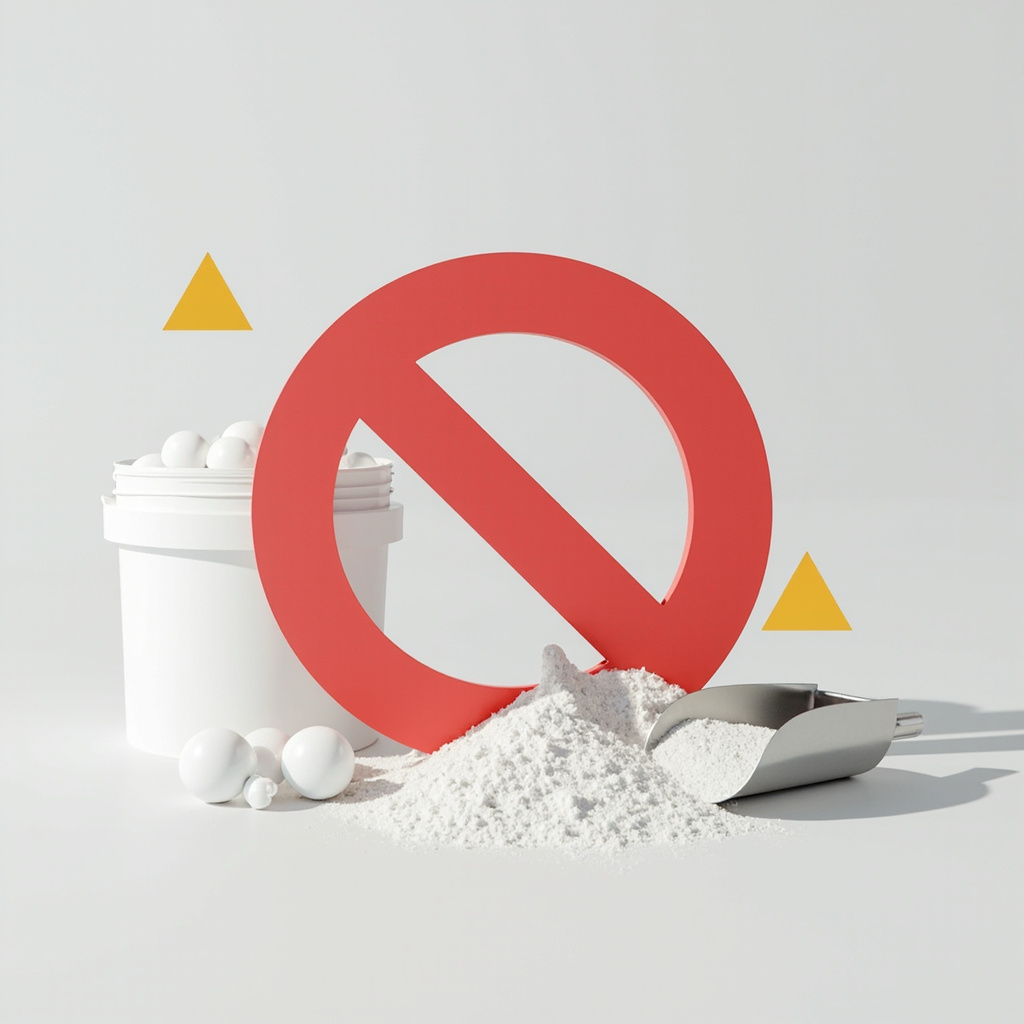
- Never mix different chlorine products dry or in a bucket. Trichlor and cal-hypo in contact can generate toxic chlorine gas and heat — this is a documented cause of pool chemical fires and explosions.
- Never pour shock through a skimmer that feeds an automatic chlorinator. Residual trichlor in the feeder plus incoming cal-hypo or liquid equals a dangerous reaction inside your plumbing.
- Add chemical to water, not water to chemical, when pre-dissolving granules. Pouring water onto cal-hypo can splatter concentrated solution.
- Wear gloves and eye protection. Don’t breathe dust when opening chlorine containers — concentrated fumes irritate lungs fast.
- Store locked away from kids and pets. Keep tablets in their original sealed bucket — moisture causes off-gassing that can damage nearby metal surfaces.
Common mistakes
-
Putting trichlor tablets in the skimmer. Tablets like In The Swim 3-inch Stabilized Chlorine Tablets ($94.99) create highly acidic water that flows directly into your pump and heater, corroding metal components over months. Always use a floating dispenser or inline chlorinator.
-
Mixing cal-hypo and trichlor. These two chemicals react violently when they touch — heat, gas, potential fire. Never store them near each other, and never put both in the same feeder.
-
Not testing CYA before choosing chlorine type. If you don’t know your CYA level, you can’t make an informed choice. Use pool test strips that read CYA before buying any stabilized chlorine.
-
Buying liquid chlorine in bulk at season start. Liquid sodium hypochlorite like Champion Pool Shock 12.5% ($49.99) loses about 50% strength in 6 months if stored warm. Buy what you’ll use in 2 to 3 months, not a six-month supply.
-
Ignoring calcium hardness when using cal-hypo. Each cal-hypo dose adds calcium. If your CH is already above 400 ppm, switch to liquid chlorine to avoid scale buildup on tile and heater elements.
What to buy only if needed
Only if your CYA is below 30 ppm
If you’re starting fresh or just refilled, you need stabilizer before unstabilized chlorine will survive sunlight. In The Swim Sodium Dichlor Granules ($139.99 for 25 lb) doubles as shock plus CYA source. Or buy pure cyanuric acid conditioner separately if you’d rather dose each independently.
Only if you’re starting a brand-new pool
Trichlor tablets ($94.99 for 25 lb) are the easiest way to establish a chlorine residual from day one. Once your CYA reaches 30 to 50 ppm, evaluate whether to continue with tablets or switch to unstabilized chlorine for daily dosing.
When to call a pro
Keep DIY if: you can test water, brush, run the filter 24 hours, and numbers are moving the right way. New pool owners should start with first year pool care basics before customizing.
Call a pro if:
- CYA is above 100 ppm and you’re unsure how much water to drain and replace. A pro can calculate the exact exchange ratio and check for other chemistry interactions.
- You’re converting from chlorine to salt (or vice versa) — salt system installation requires electrical work and plumbing modifications that are best left to a licensed professional.
- You’ve mixed chlorine types in a feeder or skimmer and noticed a chemical reaction (heat, gas, discoloration). Evacuate the area and call a professional to assess equipment damage.
- FC tests at zero despite repeated dosing. This signals either severe algae consuming chlorine faster than you add it, or a chemical lock from extremely high CYA — both need professional diagnosis.
- Build your daily routine around a weekly pool care checklist so you catch problems before they require a service call.
Related
- Free chlorine level — What FC level to target after you’ve chosen your chlorine type
- CYA accumulation problem — The stabilizer number that determines whether stabilized chlorine is safe to use
- Pool test strips that read CYA — Test kits you need before choosing a chlorine type
Key takeaways
- There is no single “best” chlorine — the right type depends on your CYA level, pool type, and whether you need daily sanitizing or a shock dose.
- Trichlor tablets are the easiest daily sanitizer but raise CYA — test monthly and rotate if CYA climbs past 50 ppm.
- Cal-hypo is the cheapest shock per pound of available chlorine, but adds calcium — avoid if CH is already high.
- Liquid chlorine adds nothing but chlorine — no CYA, no calcium — making it the safest choice when water chemistry is already balanced.
- Dichlor is ideal for low-CYA pools and spas — fast-dissolving and doubles as a CYA booster.
- Never mix chlorine types in the same container — trichlor plus cal-hypo can generate toxic gas.
- Salt systems make chlorine from salt — same chemistry, different delivery. You still need to shock occasionally.