
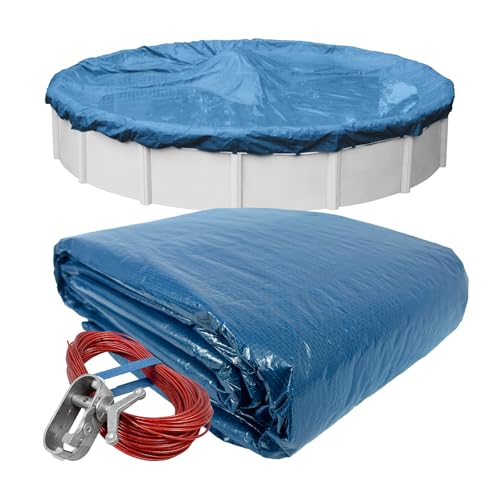
Quick answer
A pool cover is one of five products: a solid winter cover (anchored for off-season debris and freeze protection), an ASTM F1346 safety cover (mesh or solid, required if kids or pets use the pool), a solar bubble cover (raises water temp and cuts evaporation), a mesh cover (light debris and rain-permeable), or an automatic retractable cover (motorized, ASTM-compliant, daily convenience). Pick by climate zone, kids and pets, and swim frequency.
What pool covers actually do
A cover is not one product with five names — it’s five different products that solve five different problems. Most buying confusion comes from picking a winter cover when you needed a safety cover.
A solar bubble cover cuts overnight heat loss by 70-80% and adds 5-10°F during the day. An uncovered pool in Phoenix loses 1-2 inches per week to evaporation. Only an ASTM F1346-rated safety cover blocks the drowning risk that an open pool carries even with a fence.
Pool cover types: the 5 you actually need to choose between
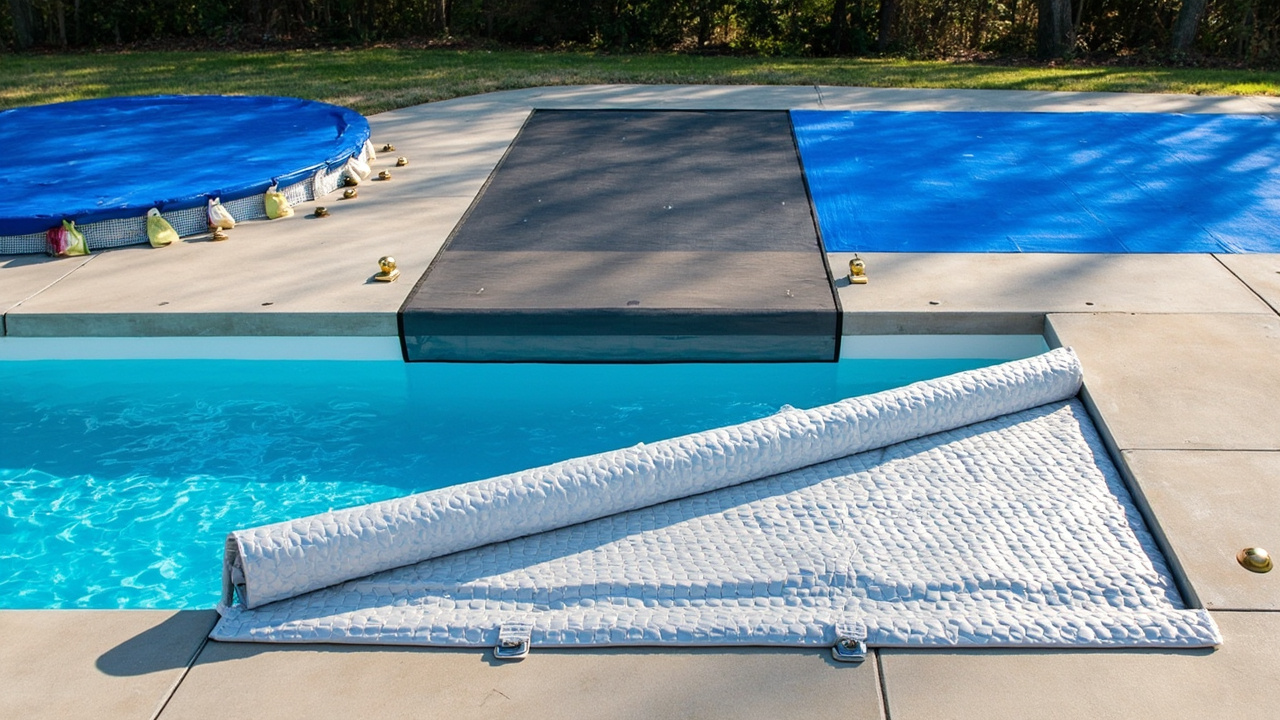
Cover types at a glance
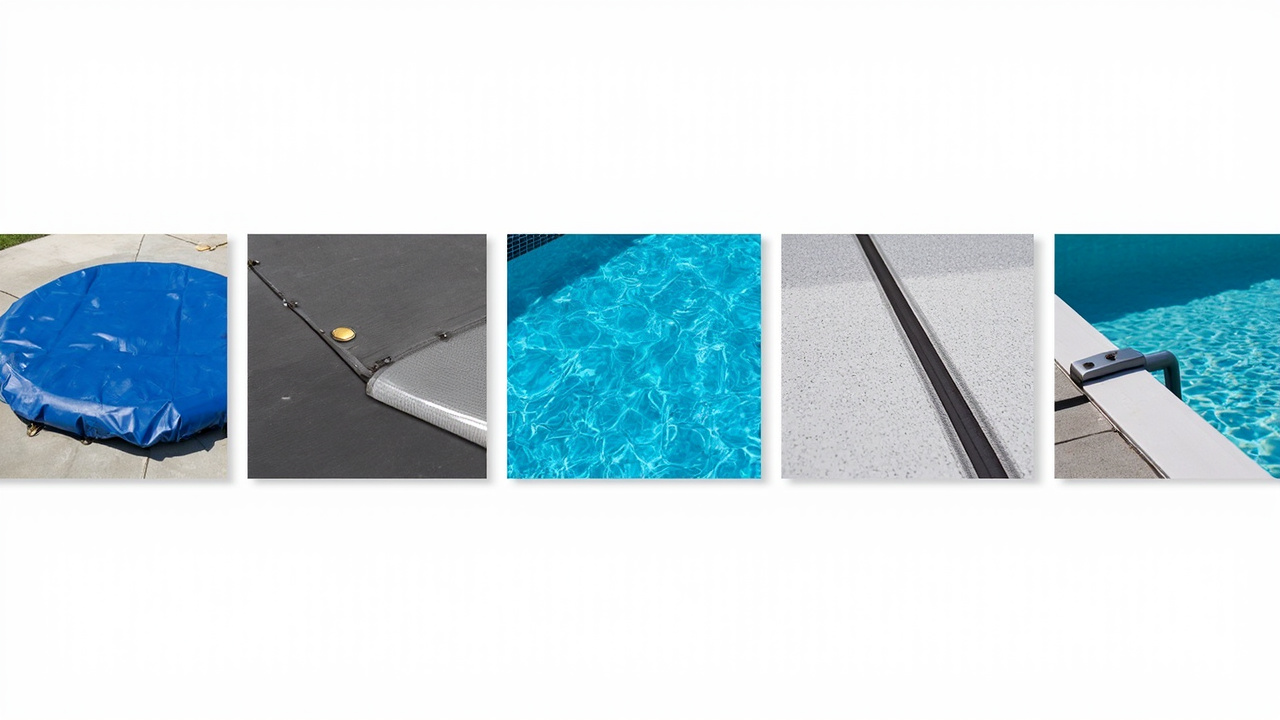
Winter covers (heavy-duty, off-season)
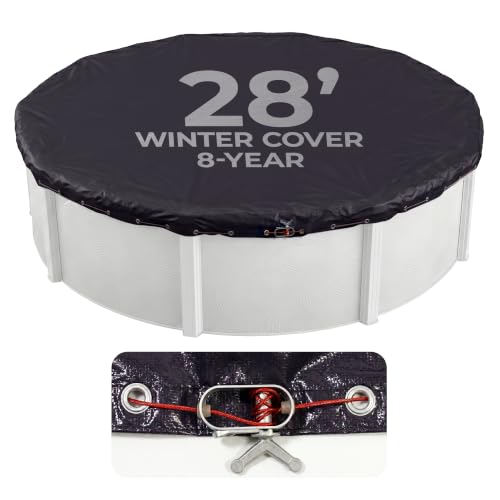
A solid sheet of reinforced polyethylene or vinyl, anchored over the pool for the off-season. Blocks all light (prevents algae) and sheds rain. NOT a safety cover — cannot support a child’s weight. Above-ground covers run $40-150; inground covers run $80-400. Walk through the winterize-pool checklist for the full off-season sequence.
Safety covers (ASTM F1346)
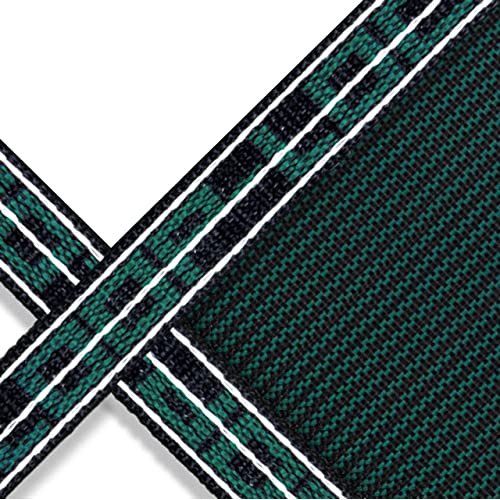
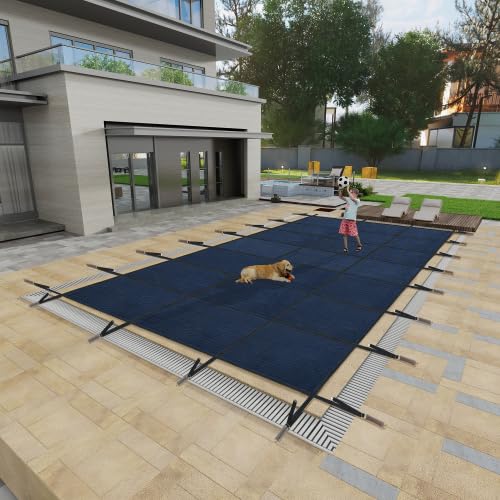
Mesh or solid sheet engineered to ASTM F1346, requiring the cover to support 485 pounds over a 4x8 foot opening without anyone touching the water. Mesh drains rain through; solid blocks all light (needs a cover pump). The ONLY cover type to use when children or pets are around an unattended pool. Loop-Loc at $1,565 is the ASTM F1346-rated pick. (HomJoones mesh is a heavy-duty winter debris cover, NOT ASTM F1346 certified — see the Mesh section below.)
Solar covers (bubble, evaporation and heat retention)
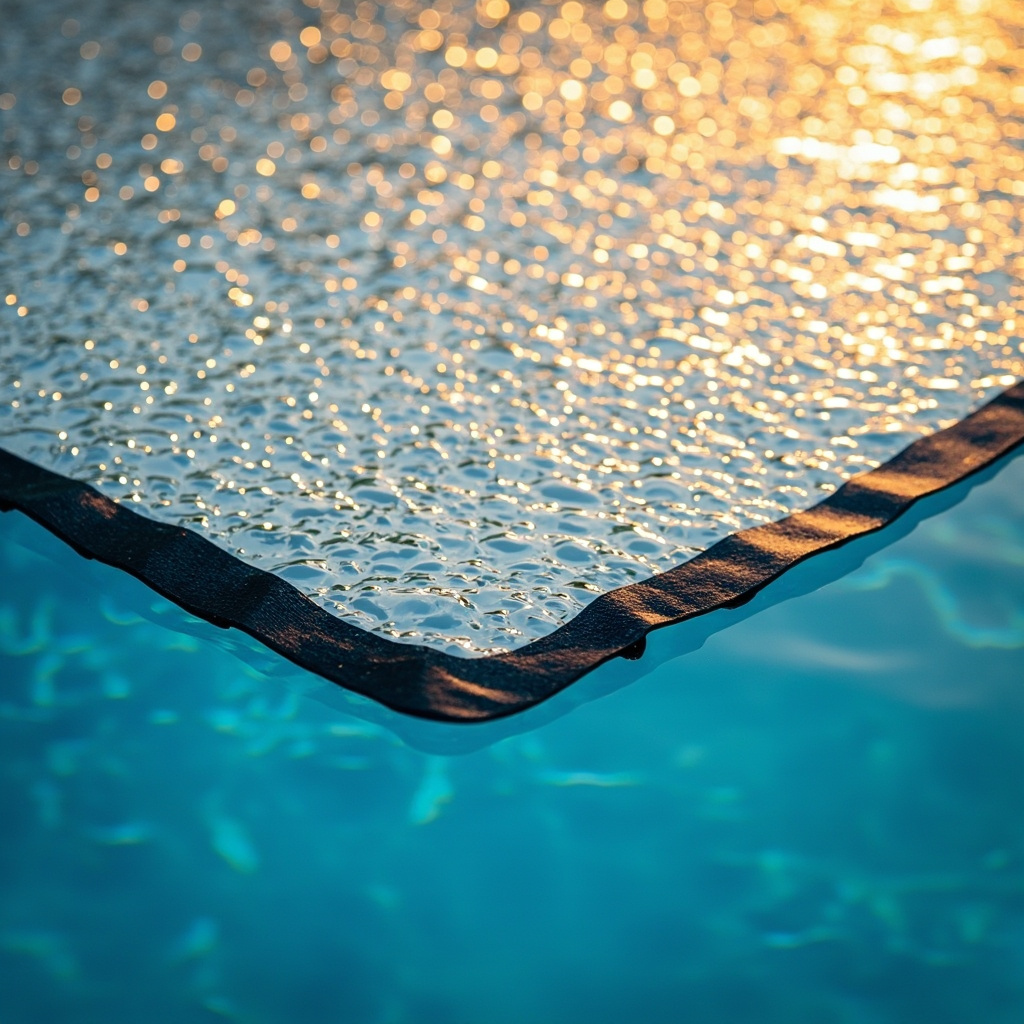
A thin polyethylene bubble blanket floating on water. Traps daytime sun heat, slows overnight evaporation. Does not block debris, does not anchor, and is NOT a safety cover. 8-mil lasts one season, 12-mil two seasons, 16-mil 3-5 seasons. VEVOR’s 16-mil cover at $238.90 covers a 40x20 ft inground.
Mesh covers (light, lets rain drain) — winter debris covers, NOT child-safety covers
A lightweight winter mesh cover made of woven polypropylene. Allows rain and meltwater to drain through so no cover pump is needed. Useful as a debris / winter cover for above-ground pools and inground pools in rainy or snowy regions. This is NOT an ASTM F1346-certified safety cover — it cannot be relied on to prevent child or pet drowning. For ASTM F1346-rated mesh safety covers, see the Safety covers section above. HomJoones Triple-Stitched Mesh at $289.99 is the heavy-duty mesh pick.
Automatic covers (motorized, retractable)
A vinyl or fabric sheet on a motorized track. ASTM F1346-rated when properly maintained. Runs $8,000-15,000. Best for daily-use pools; motor service every 5-7 years.
Material differences that matter
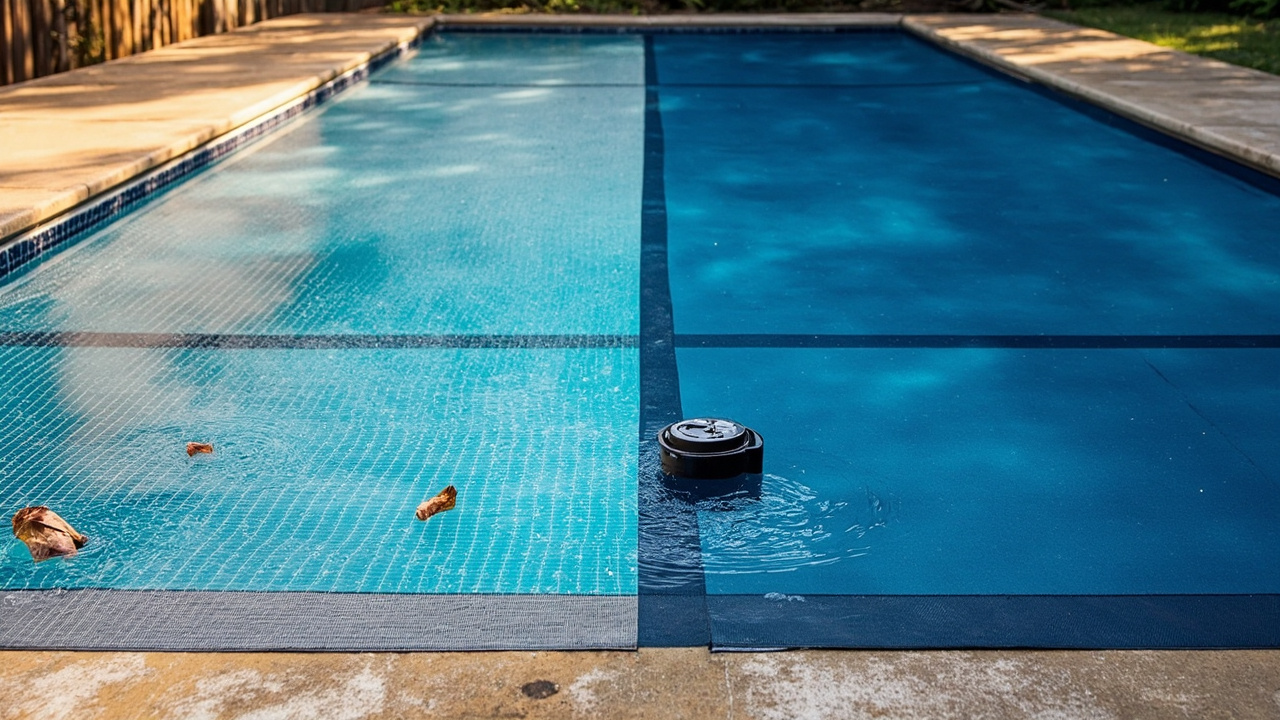
Mesh vs solid at a glance
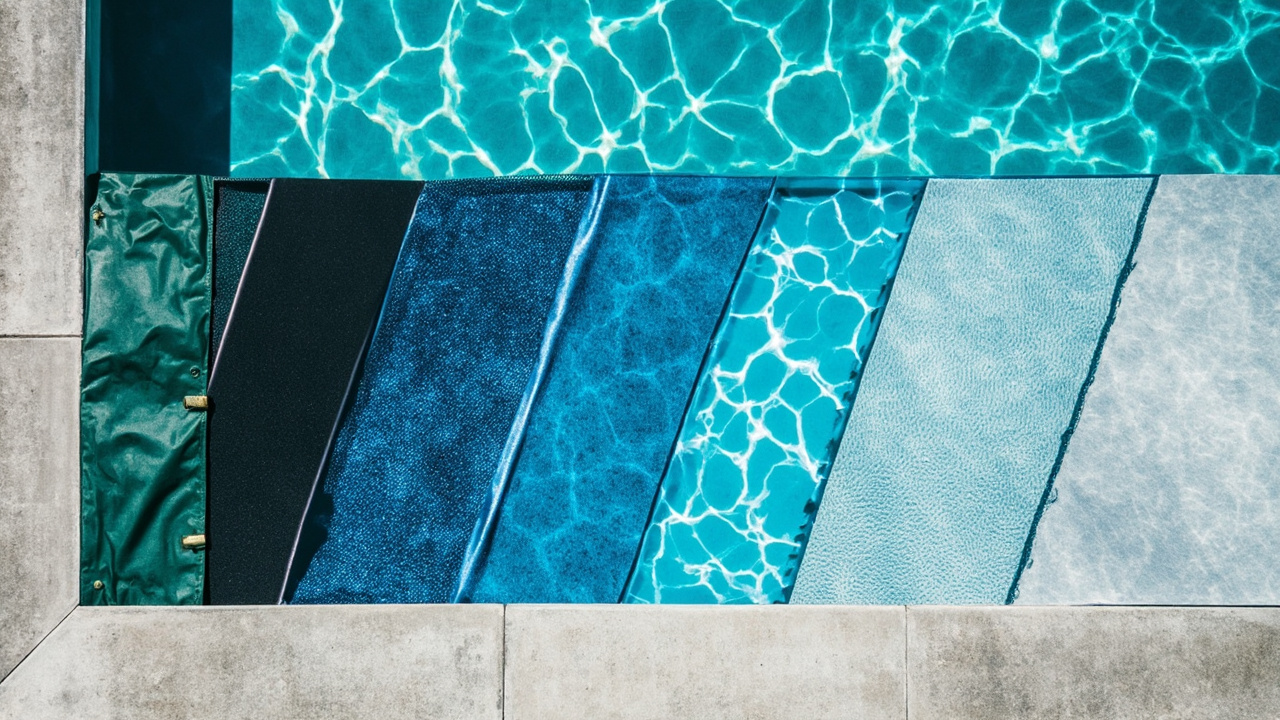
Solid vinyl vs reinforced polyethylene
Vinyl (heavier, more flexible, better cold-crack resistance, $100-300) lasts longer in hard-freeze climates. Reinforced polyethylene (scrim-reinforced, $40-150) is the above-ground pick.
Mesh vs solid safety covers
Mesh sheds rain and snow. Solid blocks all light but needs a cover pump. Mesh is the lower-maintenance pick for rainy climates; solid for leaf-heavy yards.
Bubble solar cover thickness (8-mil vs 12-mil vs 16-mil)
8-mil is one season — bubbles collapse under UV. 12-mil is two seasons and the value pick. 16-mil is 3-5 seasons for year-round warm climates. Anything thinner than 8-mil is a pool toy.
Decision tree — pick your cover in 6 branches
Decision tree at a glance
SWG owners should review salt-for-saltwater-pools.
Branch 1: Off-season in hard-freeze zone → winter cover
Temperatures drop below 20°F for weeks. Close the pool for 4-6 months. A solid winter cover is mandatory — solar covers collapse under snow. Walk through the winterize-pool checklist.
Branch 2: Year-round use with kids or pets → ASTM F1346 safety cover
Pool open year-round AND children under 6, visiting grandkids, dogs, or neighbor kids who wander. The ONLY acceptable cover is an ASTM F1346-rated safety cover. A tarp, solar cover, mesh debris cover, or “winter cover” is NOT acceptable. Inground: Loop-Loc ASTM F1346-rated mesh at $1,565. Above-ground: mesh safety cover with perimeter cable and winch. HomJoones is NOT an ASTM F1346 substitute — do not use it for unattended-pool child safety.
Branch 3: Summer heat + want to save chemicals → solar cover
Pool runs 8+ months and you want warmer water. A 12-mil or 16-mil solar bubble cover on a reel covers the pool at night. Adds 5-10°F of daytime heat, cuts evaporation by 70-80%. VEVOR’s 16-mil cover at $238.90 is the value pick.
Branch 4: Above-ground pool → mesh safety or water-bag winter cover
Two anchor options: water bags (winter-cover standard, no child safety) or winch-cable + perimeter springs (ASTM F1346 mesh safety rating). Year-round safety with kids or pets requires winch-cable mesh. Closed-pool winter can use water bags over reinforced polyethylene.
Branch 5: Inground pool with leaf-heavy yard → solid safety cover
Yard drops leaves, acorns, or pine needles into the pool every fall. A solid ASTM F1346 safety cover blocks all light, prevents the algae bloom leaves trigger. Trade-off: you need a cover pump. Premium ASTM F1346 solid from Loop-Loc ($1,565) handles the leaf problem with full child-safety rating. For leaf-blocking only (no child-safety needed), the HomJoones mesh cover at $289.99 lets rain drain but does NOT carry ASTM F1346 — combine with a 4-sided fence if kids/pets are around.
Branch 6: Push-button convenience + daily use → automatic cover
You swim daily, want the pool closed whenever no adult is present, and have the budget. A vinyl or fabric sheet on a motorized track — ASTM F1346-rated when maintained. Pricing starts around $8,000 installed, climbs to $15,000+ for custom shapes.
Above-ground vs in-ground: anchor system differences
Anchor systems at a glance
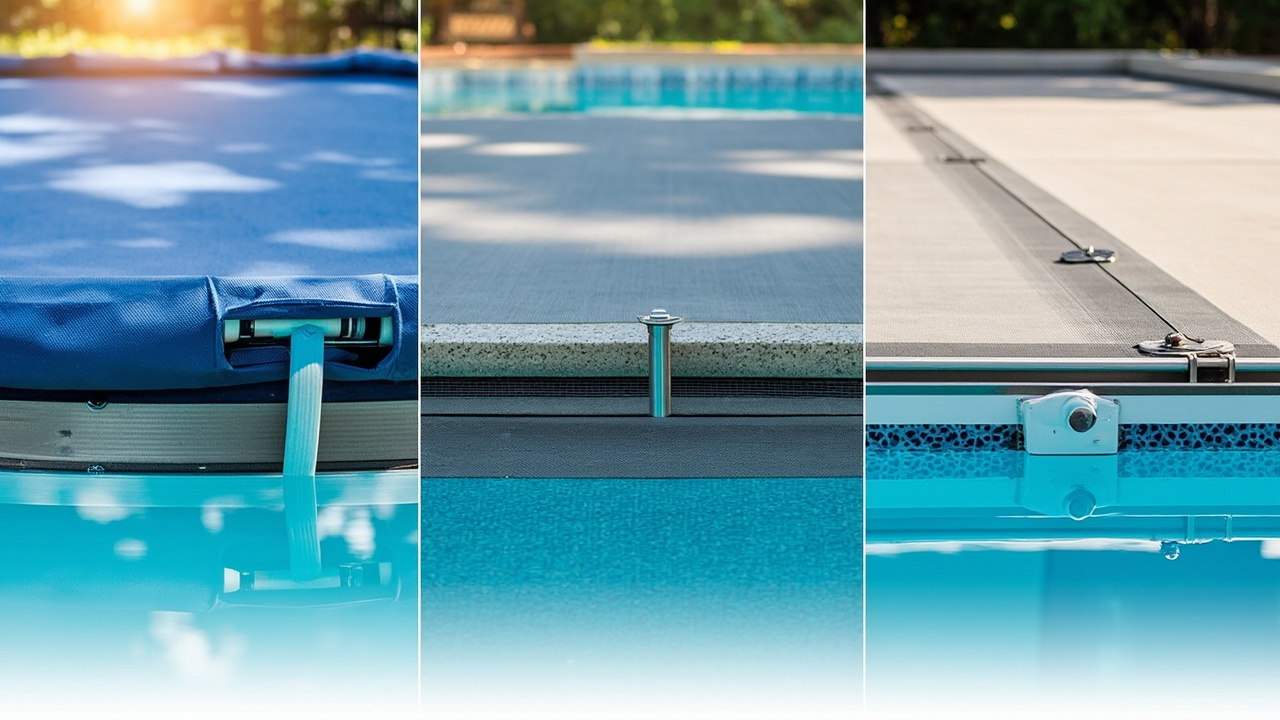
The anchor is half the safety story. A perfectly rated safety cover with bad anchors is a death trap.
Above-ground: water bags, winch-cable, perimeter loops
Water bags (filled ½-way with water or sand) are the cheapest — they hold a winter cover in place but provide zero child safety. Winch-cable + perimeter springs (cable threaded through grommets, tightened with a ratchet) is the ASTM F1346-rated option for above-ground pools with kids.
In-ground: deck-mounted spring anchors, strap tension
Deck-mounted brass or stainless anchors — a hole drilled into the pool deck, an anchor set flush with epoxy, a spring at the cover attachment point. Standard spacing is 3-5 feet around the perimeter.
Automatic cover track and housing
Automatic covers need a dedicated track at the pool edge and a housing box at one end. Track must be cleared of debris quarterly — leaves jam the mechanism. Motor service every 5-7 years.
ASTM F1346 standard and what it covers
ASTM F1346 standard badge

What F1346 requires (485-lb load over 4x8 opening)
ASTM F1346 is the US performance standard for pool safety covers. It requires the cover, when properly anchored, to support 485 pounds over any 4-square-foot opening (a 4x8 foot test zone) without anyone touching the water. The cover must also prevent a 4.5-inch sphere (representing a small child’s head) from passing through.
When F1346 applies
Applies to mesh and solid safety covers and to properly maintained automatic covers. Look for “ASTM F1346” or “UL classified to ASTM F1346” on the spec sheet.
What F1346 does NOT cover
Does NOT apply to winter covers (debris only, no load rating), solar covers (no anchor, no load rating), or improvised tarps. The only acceptable options for child or pet safety are F1346 safety covers or F1346 automatic covers.
Climate-zone picks: winter vs shoulder-season vs year-round
Climate zones at a glance
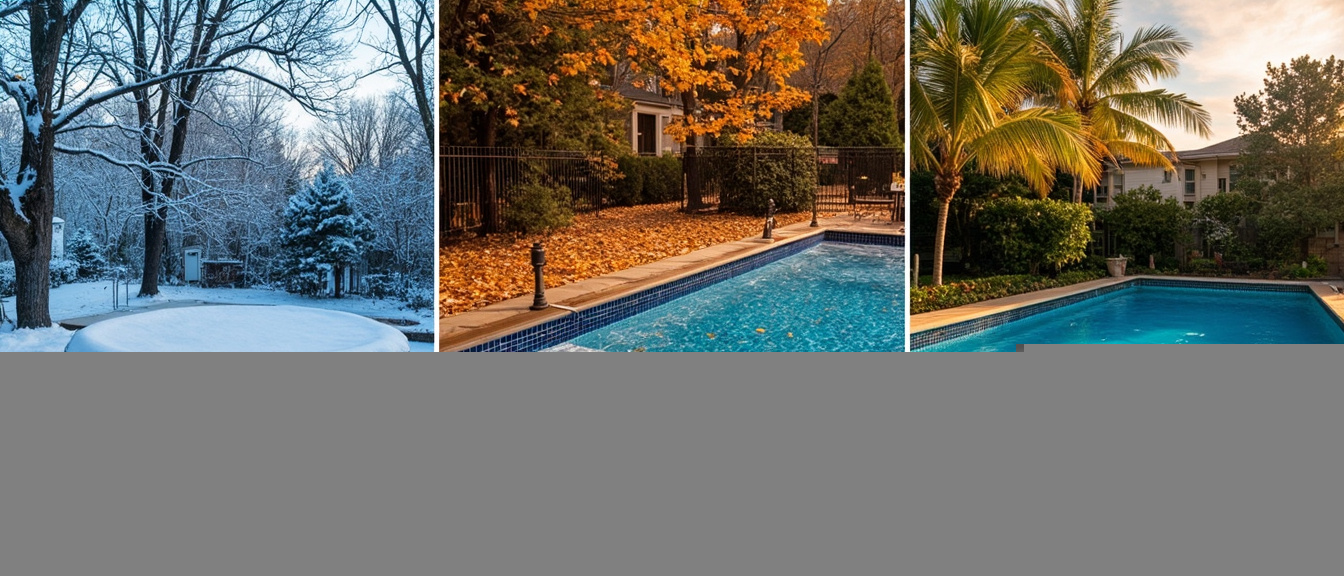
Hard-freeze (NE, Midwest, mountain states) → winter cover mandatory
Four-season climates with sub-20°F weather. Close the pool for 4-6 months. Solid winter cover is mandatory; solar covers collapse under snow. Walk through the winterize-pool checklist.
Shoulder (CA, AZ, NC, mid-South) → solar cover + light mesh
Mild winters, occasional freezes. Pool runs 9-11 months. Solar cover for heat retention; light mesh for cold weeks. SWG pools run year-round in most of this zone.
Year-round warm (FL, south TX, HI, southern CA coast) → solar cover only
No real winter. Pool runs 12 months. Solar cover nightly cuts evaporation and saves chemicals. Safety cover only if small children or pets visit.
Saltwater pools: extra considerations
A saltwater pool (SWG) changes two cover decisions.
Mesh safety over solid for SWG pools
A solid cover that traps water for 6+ months concentrates salt and stabilizer under the cover, overshooting the SWG’s salinity window. Mesh safety cover lets rain through and keeps salt even.
Cell-off before sealing the cover
Turn the salt cell off before sealing for any extended period. The cell will not generate chlorine under a sealed cover, and running it dry damages the plates. See saltwater pool basics or salt-for-saltwater-pools.
Pre-cover chemistry checklist
A cover traps whatever the water holds. Cover dirty water and you get an algae bloom in 4-6 weeks. New pool owners should walk through the first-year pool owner playbook and slot the cover-on step into the weekly pool care routine.
Test your water before closing
Run a full test — FC, TC, pH, TA, CYA, calcium hardness. Aim for FC 5 ppm, pH 7.4-7.6, TA 80-120 ppm, CYA 30-60 ppm (60-80 for saltwater), calcium 200-400 ppm.
Raise FC to 5 ppm before sealing
Bring free chlorine up to shock level before the cover goes on. A pool sealed at 2-3 ppm FC drops to 0 FC in 3-4 weeks. Shock to 5 ppm the night before covering, then seal. For SWG pools, bump output to 100% for 24 hours.
Balance pH to 7.4-7.6 first
Lock pH in the 7.4-7.6 band before sealing. pH above 7.8 accelerates scale; pH below 7.0 eats vinyl liners and metal rails.
Lock TA between 80-120 ppm
Hold total alkalinity in the 80-120 ppm band. TA is the pH buffer; if TA drifts high under a closed cover, opening reveals calcium scale.
What you’ll need
Tape measure, pool length + width + diagonal
For safety covers: exact pool dimensions to within 1 inch. For winter covers: rough dimensions plus 3-4 feet of overlap. For solar covers: pool surface area (length × width, no overlap). Diagonal matters for any rectangular pool with a step section.
Deck material note (concrete / wood / pavers)
Concrete decks take brass or stainless anchors set in epoxy. Wood decks need special wood-thread anchors. Pavers need an under-mount anchor or a strap system that doesn’t penetrate the surface.
ASTM F1346 spec sheet from manufacturer
Ask the cover manufacturer for the current ASTM F1346 spec sheet. It should list the load rating, the test method, and the warranty coverage.
Picks by scenario
Best for inground safety + winter — Loop-Loc II Super Dense Mesh
ASTM F1346-rated mesh, super-dense weave that blocks fine silt while draining rain and snow, 15-year warranty. At $1,565 for an 18’x36’ inground, lasts 15-20 years.
Best for above-ground winter cover — Blue Wave Arctic Armor
Reinforced polyethylene, 8x8 scrim, 10-year warranty, 28-ft round at $64.86. Not a safety cover.
Best solar cover for summer heat — VEVOR 16-mil Solar Pool Cover
16-mil bubble cover, 40x20 ft, $238.90, 3-5 seasons. Adds 5-10°F of daytime heat, cuts evaporation 70-80%.
Best heavy-duty mesh cover for rainy climate (debris, NOT child safety) — HomJoones Triple-Stitched Mesh
Heavy-duty triple-stitched polypropylene mesh, 25x45ft inground at $289.99. Drains rain through. Rated for heavy snow and high wind. NOT ASTM F1346 certified — for leaf-blocking / winter debris only. Do not substitute for a child-safety cover.
Best mid-price winter cover — Robelle Heavy Duty Winter
24-ft round above-ground, solid 8x8 scrim, $99.99, 10-year warranty. NOT a safety cover.
What to buy only if needed
Accessories that earn their cost only in specific situations.
Only if you have a solid safety cover in a rainy climate → cover pump
A cover pump (Little Giant APCP-1700, ~$150) is essential for any solid cover in a region with more than 30 inches annual rainfall. Skip if you have a mesh cover or live in an arid climate.
Only if you cover/uncover a solar cover daily → cover reel
A solar cover reel ($80-500) is worth it only if you actually cover the pool nightly. Manual reels work for most pools; motorized reels are an upgrade for very large pools.
Only if you have an above-ground winter cover → air pillow
An air pillow ($20-40) goes under the center of an above-ground winter cover. It absorbs ice expansion pressure. Skip for inground pools and mesh safety covers.
Common mistakes
Five real-user errors that cost money or risk a drowning.
-
Confusing winter cover with safety cover — A winter cover keeps debris out for $50-150. A safety cover prevents a child from drowning for $400-1,800. Different products. If you have kids, pets, or visiting grandchildren, the winter cover is not acceptable.
-
Skipping ASTM F1346 verification for safety claims — Marketing copy says “safety tarp” or “heavy-duty winter pool cover with safety rating.” None of that is ASTM F1346. Only the F1346 label, the spec sheet, and UL classification meet the standard. Loop-Loc publishes an ASTM-compliant spec sheet and carries the F1346 label on its safety covers. The HomJoones Triple-Stitched Mesh is heavy-duty but NOT ASTM F1346 certified — it is a debris / winter cover and cannot substitute for a child-safety cover.
-
Using solar cover alone for child safety — A solar bubble cover floats on the surface. A child walking onto it slips under and gets trapped. Solar covers are NOT safety covers under ASTM F1346. Get a mesh or solid safety cover, an automatic cover, or a 4-sided fence with self-latching gate.
-
Under-sizing the cover (overlap dimensions critical) — Safety cover overlap is typically 1-2 feet beyond the pool edge. Winter cover overlap is 4 feet (above-ground) or 5 feet (inground). Solar cover needs to match the water surface exactly with no overlap. Wrong dimensions and the cover gaps or sags.
-
Skipping water-bag or anchor tensioning — Un-tensioned anchors let the cover lift in wind — a hazard and a replacement cost. Re-tension every fall before the first storm.
Safety notes
Covers are the second layer of child-drowning prevention; the first layer is a 4-sided fence with a self-latching gate.
Never use a tarp or improvised cover as a safety cover
A tarp, painter’s drop cloth, or improvised “winter cover” cannot support the 485-lb load ASTM F1346 requires. A child walking onto a tarp falls straight into the pool.
Never leave a pool uncovered when children are present, even momentary
A child can drown in less than 30 seconds in as little as 2 inches of water. An open pool with no adult within arm’s reach is a hazard even for a 5-second distraction.
Store pool chemicals away from children and pets
Pool covers and pool chemicals are stored together in most pool sheds. Keep chemicals (chlorine tablets, shock, algaecide, muriatic acid) in a locked cabinet or high shelf.
Wear gloves and eye protection when handling cover hardware
Spring anchors, winch cables, and cover straps have sharp edges under tension. Cut-resistant gloves and safety glasses when installing or removing a safety cover. The metal spring will snap-back and cut an unprotected hand.
Food-safe does NOT mean swim-safe for covers
Some cover makers use “food-safe” to describe polyethylene that won’t leach plasticizers. Food-safe and swim-safe are different. A food-safe cover doesn’t meet ASTM F1346 unless it also carries that label.
Avoid chemical shock on a covered pool
Adding chlorine shock to a covered pool traps chlorine gas under the cover and accelerates degradation. Always shock BEFORE the cover goes on, with the cover off for at least 8 hours.
When to call a pro
Most cover situations are DIY-friendly. Three scenarios warrant a pro.
Custom-shape pools need measurement + fabrication
Rectangular covers with step sections, kidney shapes, freeform curves, and pools with raised walls or attached spas need on-site measurement and custom fabrication.
Automatic cover installation (motor + track + housing)
An automatic cover system needs a motor, a track mounted to the deck, a housing box, and wiring to a GFCI breaker. This is a 2-3 day installation requiring a licensed electrician.
Replacing an aged safety cover (load rating may not meet F1346)
Safety covers installed before 2005 may not meet current ASTM F1346 load ratings. If your cover is 10+ years old or the anchors are corroded, call a pro.
Related
- Saltwater pool basics hub — how SWGs work, ideal salt levels, cell maintenance cycle, and SWG + cover chemistry
- Winterize pool checklist — full off-season closing sequence for inground and above-ground pools (chemistry, draining, cover install)
- Pool test strips comparison — pick the right test kit for the pre-cover chemistry checklist
Key takeaways
- Five cover types, five different jobs. Winter (debris + freeze), safety ASTM F1346 (kids + pets), solar (heat + evaporation), mesh (drain-through), automatic (push-button).
- ASTM F1346 is the only safety standard that matters. Mesh or solid safety cover, properly anchored, is the only acceptable child-safety cover.
- Decision tree branches on off-season use, child/pet safety, climate zone. Hard-freeze needs winter; shoulder needs solar; year-round warm needs solar only.
- Pre-cover chemistry is half the cover decision. Shock FC to 5 ppm, balance pH 7.4-7.6, lock TA 80-120 ppm. Cover dirty water and you get an algae bloom in 4-6 weeks.
- Solar covers save chemicals; safety covers save lives. Run a solar cover daily and an ASTM safety cover when the pool is unattended.
- Anchor systems differ by pool type. Above-ground uses water bags or winch-cable; inground uses deck-mounted spring anchors.