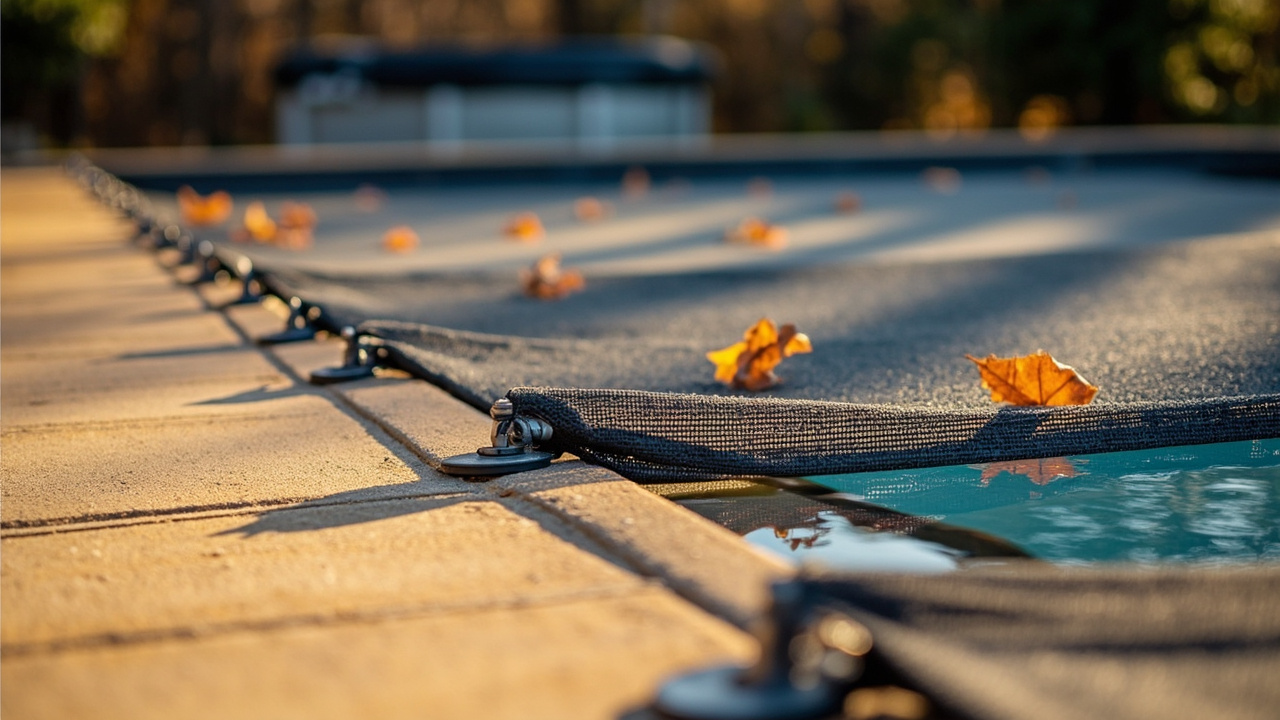
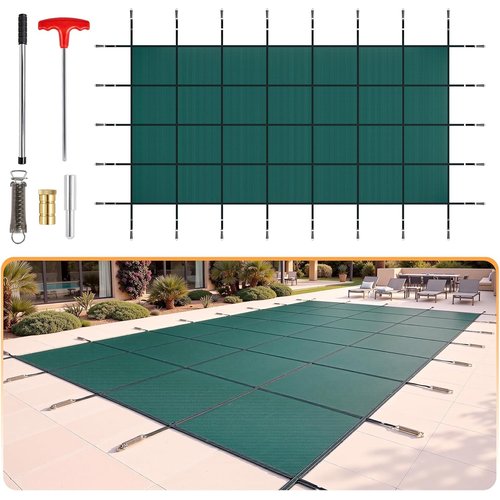
A pool safety cover isn’t a tarp you throw over the pool when you close it. It’s a fitted, anchored system rated for a specific load, anchored to a specific deck, with documented manufacturer instructions. Buy the wrong one — or treat a tarp as the equivalent — and you’ve spent $300–$500 on something that doesn’t actually protect children, pets, or the pool.
This guide covers the action: which type to pick, how the anchoring works, what the standard actually requires, and how the cover fits into a layered safety plan. For broader cover-buying context (mesh vs solid drainage, automatic vs manual, seasonal vs year-round), see pool cover basics.
Quick answer
A pool safety cover is a fitted, anchored protective system selected for the pool’s exact shape, deck, drainage, and applicable safety standard. Mesh and solid covers manage water and debris differently, while automatic covers add convenience but require strict maintenance. A cover is only one protection layer: keep barriers, alarms, active supervision, and emergency readiness in place, and never treat a basic tarp as a safety cover.
What this is not
Not a tarp or solar blanket
A safety cover is anchored, rated, and tested. A tarp is none of those. A solar blanket reduces heat loss; it doesn’t pass any safety test and shouldn’t be relied on to keep kids or pets out of the water. The price tag tells the story — a safety cover runs $300–$2,000 and takes a day to install; a tarp is $40 and goes on with bungee cords.
Not a substitute for barriers or supervision
A safety cover is one layer of protection, not a replacement for a fence, alarms, or active supervision. Most jurisdictions still require a compliant barrier (typically 4-foot fence with self-closing gate) even when a safety cover is installed. The cover is what you use when the pool isn’t in use; the barrier is what protects against unauthorized access.
Decision tree: which cover fits your pool
Pick a cover type for your pool
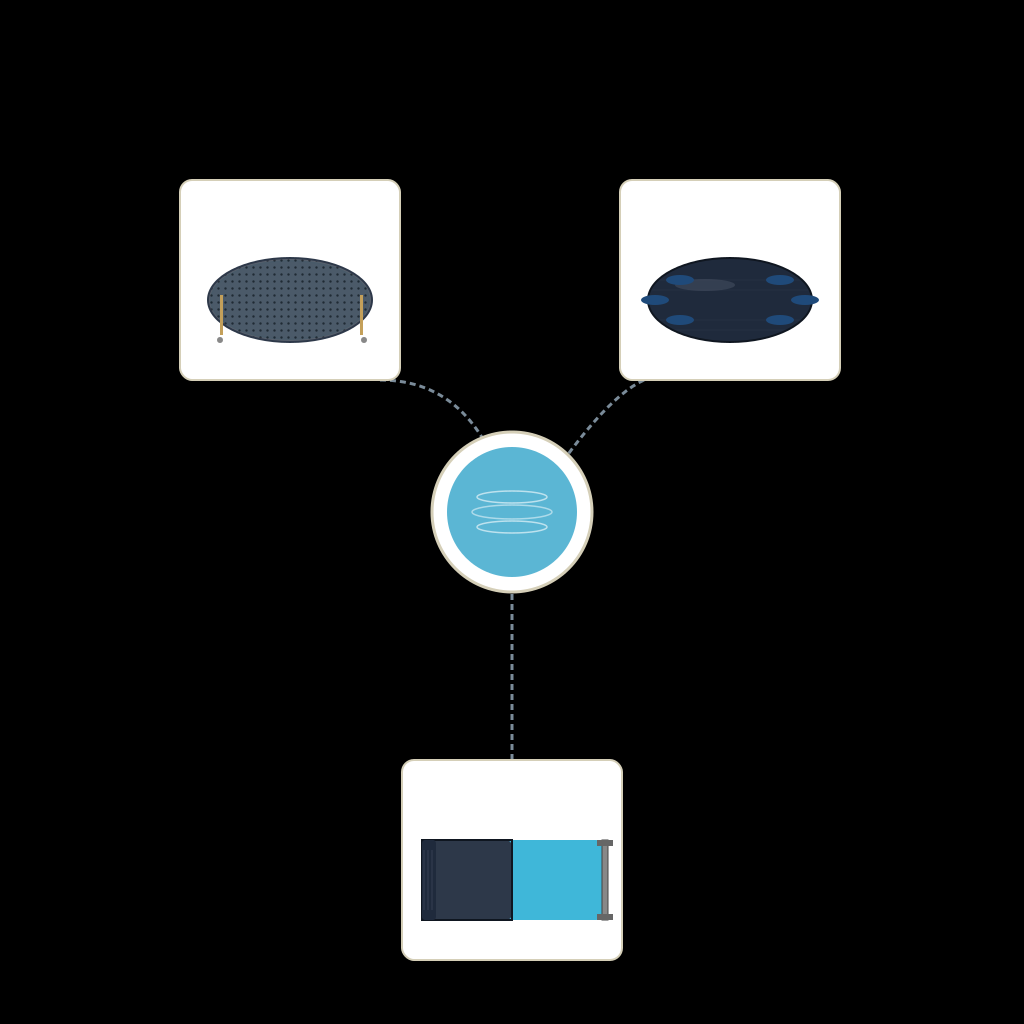
Pick the branch that matches your setup.
Note: a safety cover is a system — deck anchors, fabric, and tensioning hardware all carry the load together. Replacing one component with an off-brand substitute can void the entire installation’s safety rating and may not be covered by your homeowner’s insurance if there’s an incident.
Inground concrete deck
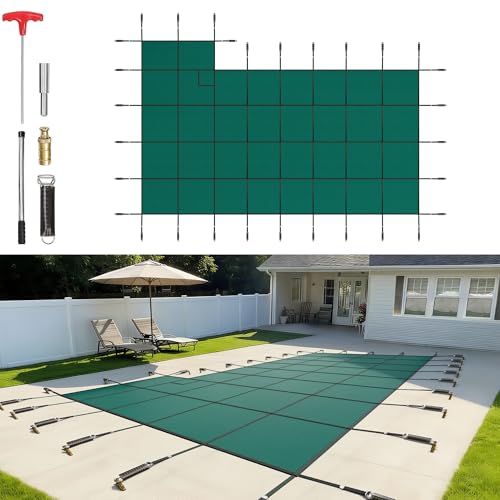
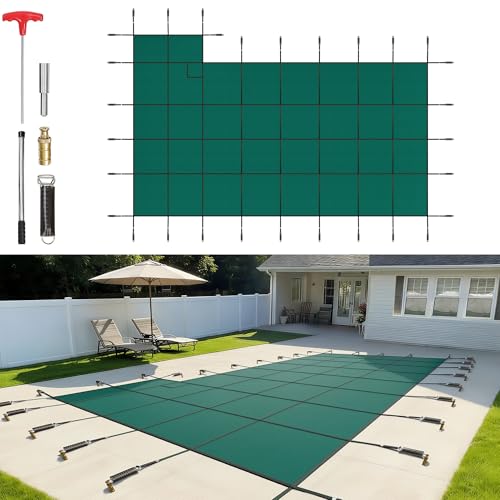
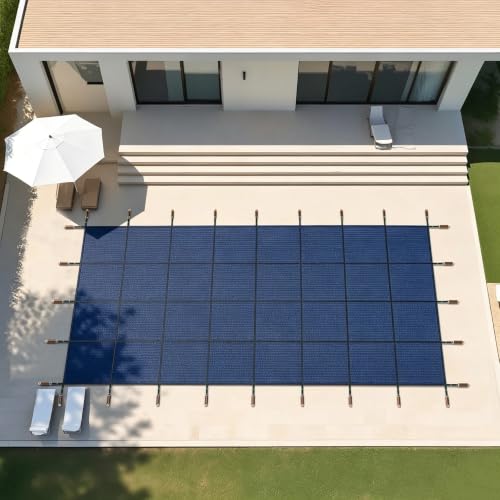
Evaluate anchors, shape, and mesh/solid tradeoffs. Concrete is the easiest deck to anchor into — brass anchors set in drilled holes hold against the rated load. Mesh covers dominate this category because of easier drainage. See the 16x32 inground cover or 18x36 options.
Above-ground pool
Use a design approved for that structure. Above-ground covers anchor to the top rail, not the deck — they’re a different product. See above ground differences for the distinction.
Irregular shape or features
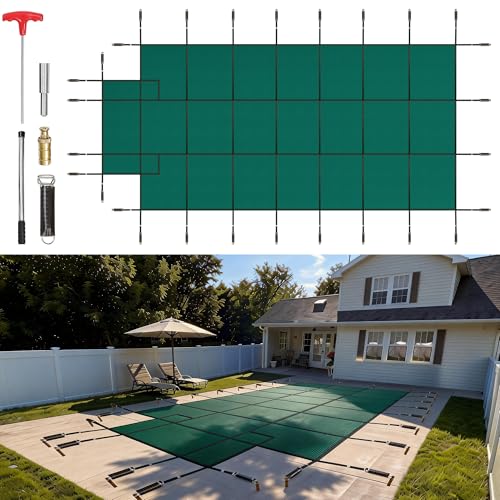
Require measured custom fit. Freeform pools, those with raised spas, or those with attached water features need measured-to-fit covers. Standard rectangles won’t work.
High rain or snow load
Prioritize drainage and manufacturer load guidance. Solid covers need a cover pump; mesh covers handle drainage naturally. For heavy snow loads, choose a heavier-duty cover sized to your local load requirements.
Frequent year-round access
Compare automatic systems and maintenance. Automatic covers open and close with a switch but require mechanical service, motor maintenance, and strict operational discipline. They’re not “install and forget” — see Safety below.
Rental or drilling prohibited
Skip permanent anchoring; strengthen compliant alternative layers. Some rentals forbid drilling into the deck. In that case use a water-tube weight system, a removable mesh cover, or skip the safety cover entirely and rely on barriers, alarms, and supervision.
Unverified listing or fit
Skip purchase until documentation is confirmed. If a dealer’s listing doesn’t specify ASTM F1346 compliance, doesn’t list the exact pool dimensions it fits, or doesn’t include anchoring hardware, walk away. Verified specs only.
Compare types, anchoring, drainage, and fit
Mesh covers (ASTM F1346 rated)
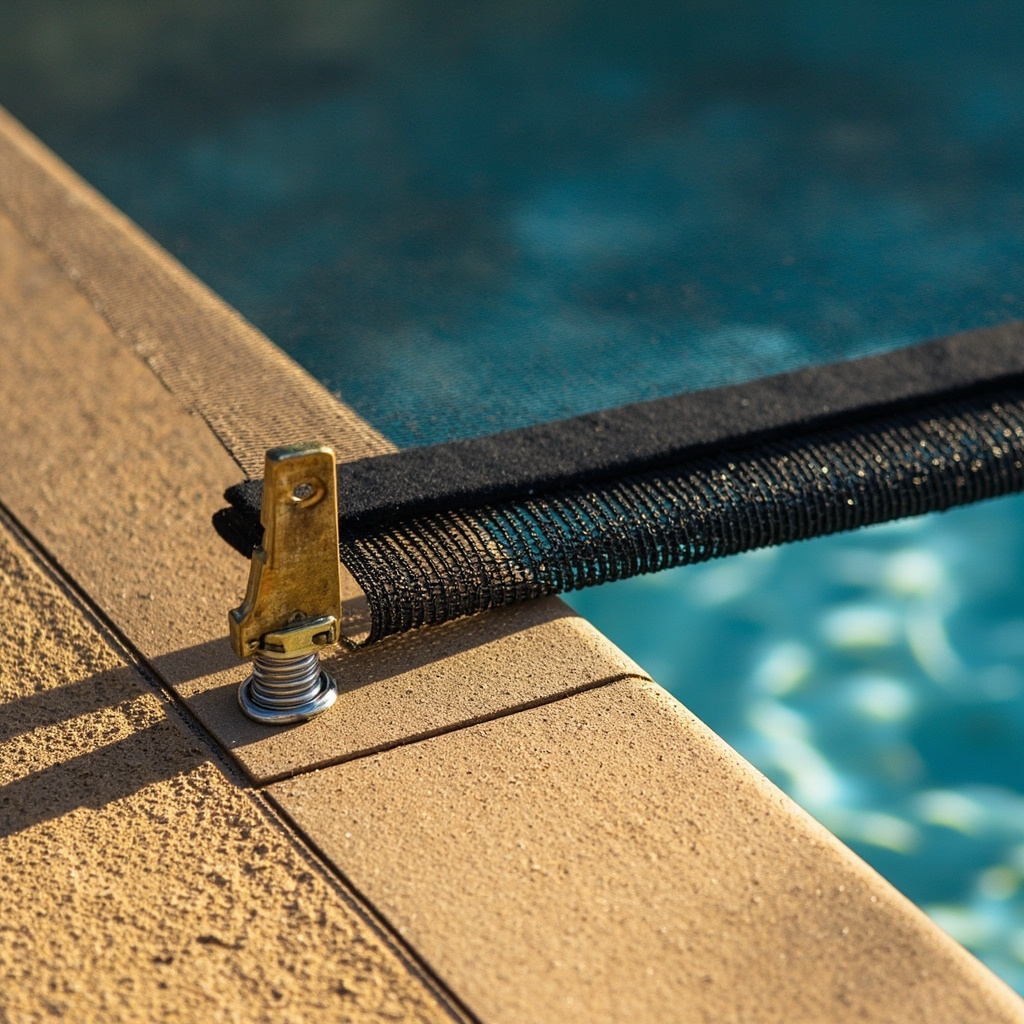
Drainage is the headline advantage.
Drainage is the headline advantage. Mesh covers let rain and melting snow pass through to the pool water, so no cover pump is needed. Lighter handling — typically 60–80% the weight of a comparable solid cover. Dries faster after rain because there’s no standing water on top. Disadvantage: fine debris (pollen, dirt) passes through and ends up in the pool. For inground concrete decks with standard 4:1 or 5:1 shape ratios, mesh is the default choice. The VEVOR 16x32 and VEVOR 18x36 are common picks.
Solid covers (ASTM F1346 rated)
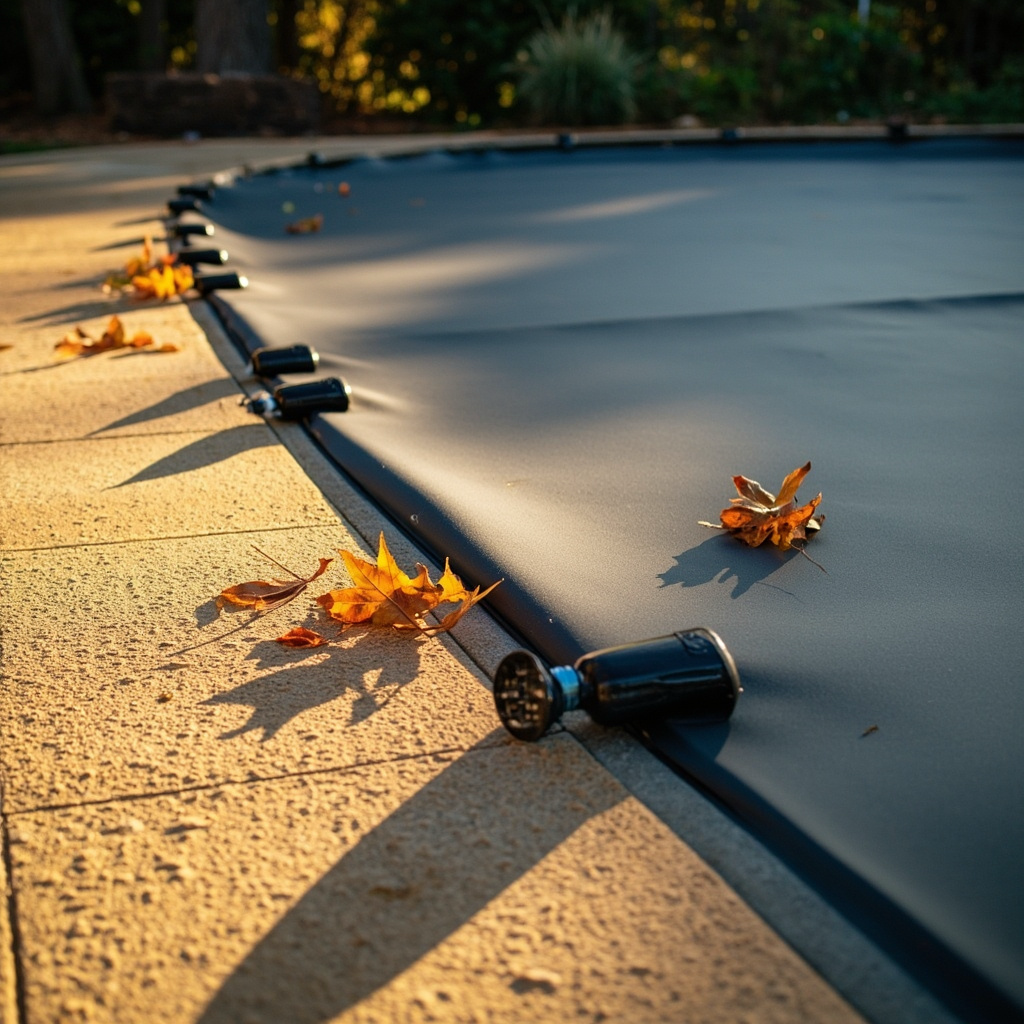
Block debris and sunlight. Solid covers keep leaves, pollen, and dirt out of the water entirely. They also block sunlight, which slows algae growth over a closed winter. Downside: standing water collects on top and needs a cover pump to remove. Heavier to handle. More expensive per square foot than mesh. For pools in leaf-heavy areas where you want zero debris in the spring, solid is worth the extra pump step.
The pump step matters more than it sounds. A solid cover with 2 inches of standing water on top adds significant weight, and if the cover is held by anchors not rated for that load (or installed with too much slack), the cover can pull anchors out of the deck. Run a cover pump weekly during rain or snow season, and after every storm.
If your pool takes weekly shocks during summer, a single-pound In The Swim dose is the right size for a 10–15k gallon pool; smaller above-ground pools often need only the budget HTH 1-lb can per dose.
Automatic covers (ASTM F1346 rated)
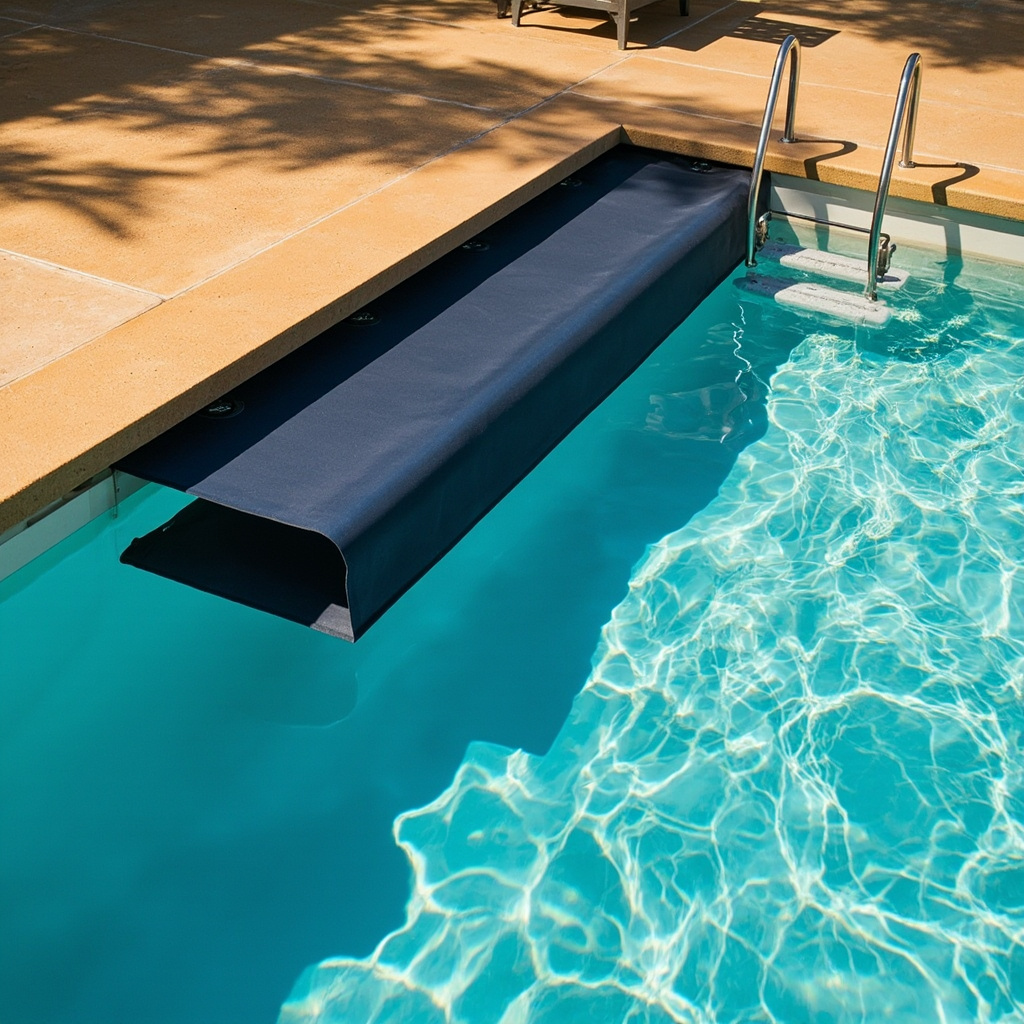
Convenience with strict maintenance. Automatic covers open and close with a key switch or push button — typically less than 30 seconds to cover or uncover. They sit in a housing at one end of the pool and roll out on tracks. Cost is significant ($5,000–$15,000 installed) and the mechanism requires annual service: track cleaning, motor inspection, fabric tension check. Failures tend to be expensive — a motor or track replacement runs $1,000+. Use only if you commit to the maintenance schedule.
Pool water chemistry still matters under an automatic cover. If you don’t run the filter and balance pH, the closed-pool environment encourages scale stains on the cover fabric and metal tracks. Treat automatic covers as a convenience layer over a working pool, not a substitute for weekly pool care. A new pool owner should follow the first year pool owner plan before adding an automatic cover so they understand the chemistry baseline.
What to skip

Unverified listings that don’t name the standard. Wrong dimensions — covers that don’t fit by an inch fail at the anchor points and pool water wins. Incompatible anchors — brass anchors in wood deck or vice versa. Tarp substitutes — the $40 tarp doesn’t meet any standard. Always confirm ASTM F1346 compliance and exact dimensions before purchase.
Even an ASTM-rated cover won’t save you if your pH is climbing, your free chlorine has bottomed out, or your total alkalinity is off. The cover sits over the water; it doesn’t fix chemistry. Test before closing — full pool water testing covers what matters when a closed pool sits for months. And if you’re using acid wash on scale stains near the cover hardware, follow muriatic acid safety basics — acid splash on cover fabric degrades it.
If a dealer’s listing doesn’t include the manufacturer’s compliance certificate, the cover hardware specification sheet, or the exact pool dimensions it fits, skip the purchase. Generic sizing without a model number is a red flag. A safety cover is a 10-year investment — verify the paperwork now, not at the moment of installation when you’ve already paid.
Last: avoid covers that bundle “anchors included” but don’t list the anchor type. The most common bait-and-switch in safety covers is selling a $400 cover with $20 plastic anchors that fail the ASTM pull test. Specify brass anchors for concrete or appropriate lag bolts for wood — and confirm the spec sheet matches what arrives in the box.
What you’ll need
Anchoring hardware breakdown
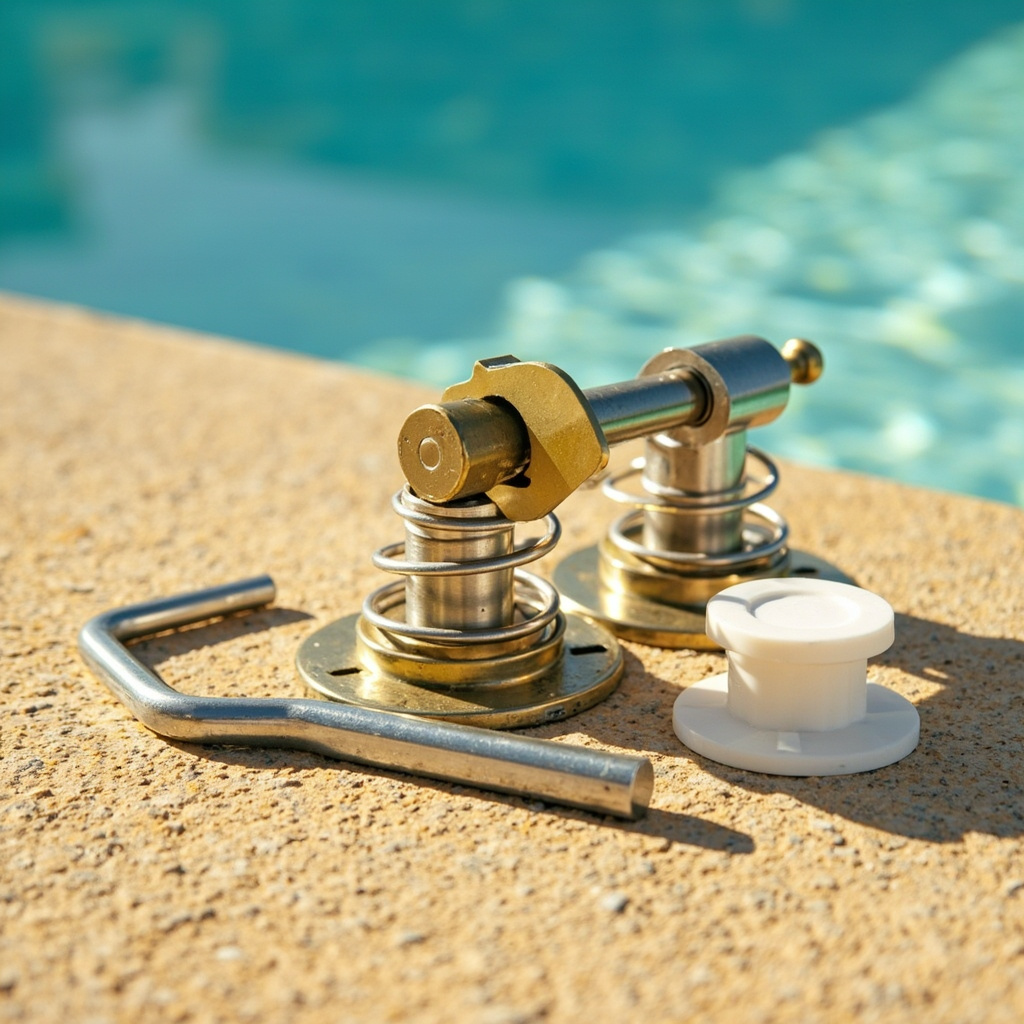
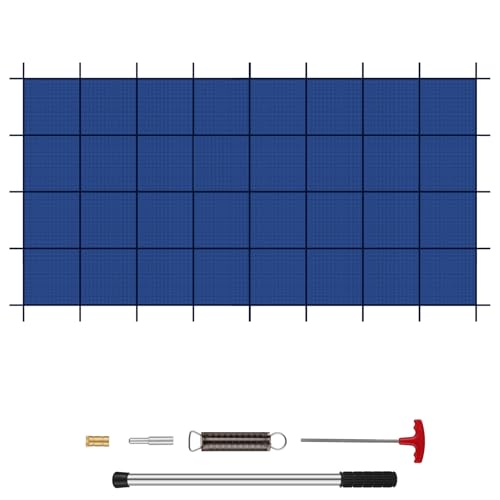
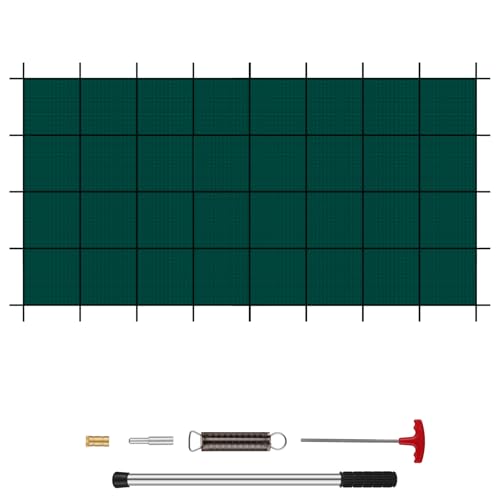
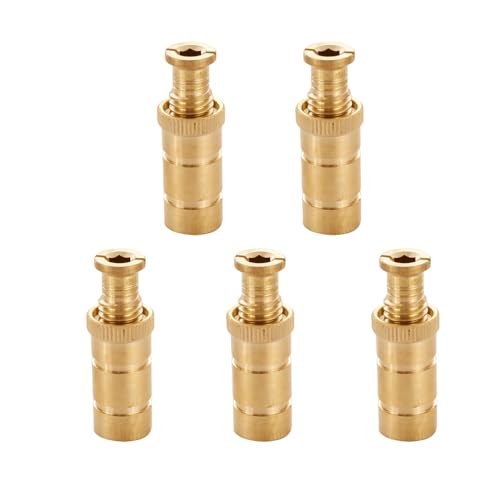
A safety cover sized to your pool, brass anchors for your deck type, a drill with the right bit, a tensioning tool, and a measuring tape. For most inground residential pools, a 20x40 standard cover covers the most common size; smaller 16x32 pools use a compact option; oversized 23x43 pools need a large-pool cover.
For a 20x40 pool, the heavy-duty 20x40 cover handles snow-load regions; otherwise the standard 20x40 is fine. Mid-size 18x36 inground pools use the 18x36 cover. The 20x40 value version is the budget option with the same anchoring system.
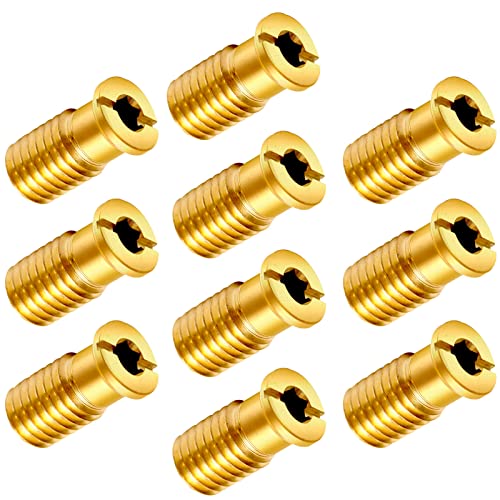
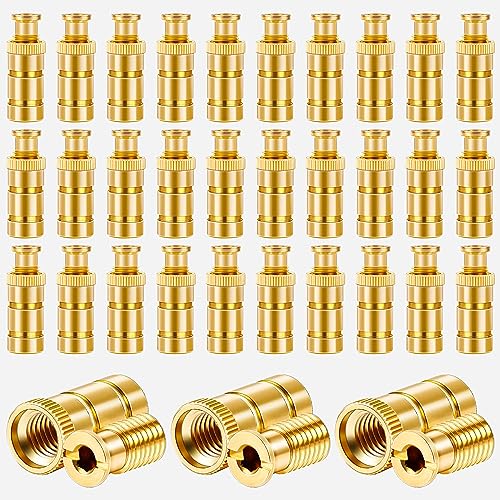
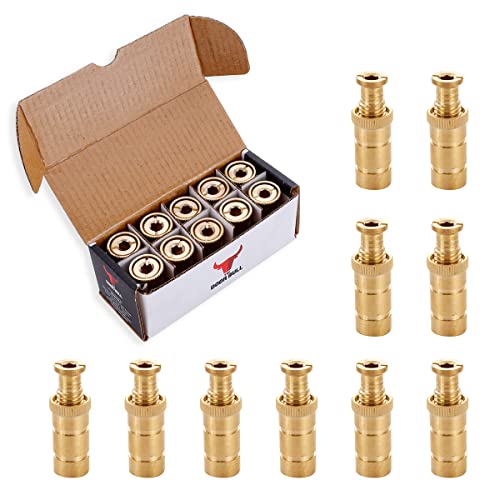
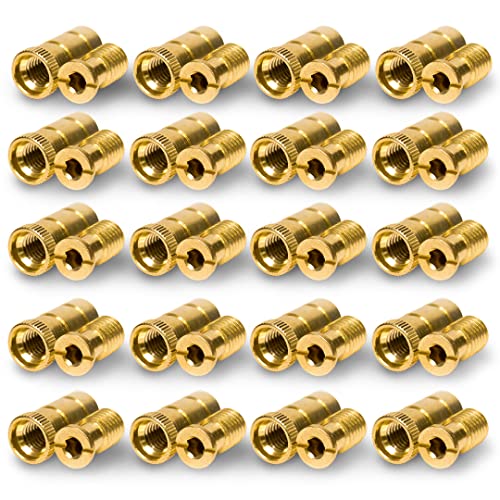
A 20-pack of brass anchors for 3/4-inch concrete covers the standard anchor count for a 20x40 cover. For partial refresh or replacement, smaller anchor packs handle single anchor replacements. Single anchors are best for emergency replacement of one missing anchor.
For owners wanting a heavier-duty winter-rated cover, the 20x40 heavy-duty cover handles snow-load regions better than the standard. Multi-pool owners or full cover refresh jobs need 30-pack brass anchors.
What to buy only if needed
Add to your routine only when conditions justify it.
- If you’re refreshing a 5+ year old installation: Get a medium anchor pack for the brass anchors that have corroded or pulled out.
- If your cover pumps standing water: Add a small submersible utility pump on top of the solid cover. Most cover pumps cost $30–$50.
- If you have a custom-shape pool: Get measured-to-fit quotes from the manufacturer — generic sizes won’t work.
- If you want alarms layered with the cover: Add a pool alarm that triggers when the cover is disturbed; do not rely on the cover alone.
Beyond the cover itself, three accessory categories make sense in specific cases. A pool alarm that triggers on cover disturbance is worth the $80–$150 if you have young children, pets, or visitors who don’t know the cover is there. A cover storage bag protects the fabric during the off-season. And a simple hand-crank tensioning tool is required if your cover uses springs — installing without one is impossible.
Safety notes
- Children and pets: never rely on a cover alone. A safety cover is rated for a specific load but is not a substitute for active supervision. The CPSC and CDC both recommend layered protection: barrier + cover + alarm + supervision.
- Storage: don’t store a wet cover in a sealed container. Dry it first; mildew degrades fabric.
- Inspection: every spring and fall, walk the cover and check each anchor point. A loose anchor or torn strap means the cover isn’t protecting anything — repair before relying on it.
- Anchors: never mix anchor types or drill new holes without confirming deck type. Concrete and wood decks use different anchors.
- Eye protection when drilling anchor holes — concrete dust is irritating.
- Gloves when handling brass anchors — sharp edges.
- Never let children play on or under a closed cover. Even rated covers can entangle.
Chemical note: avoid storing pool chemicals near the cover hardware. Trichlor tabs and cal-hypo shock off-gas chlorine that degrades fabric and corrodes brass anchors over time. Keep a chemical storage bin at least 10 feet from the cover hardware and never store anything food-safe near the chemical bin — food contamination from chemical off-gassing is a real (if rare) risk in closed garages.
Before opening the pool in spring, never cut corners on cover removal. Pull anchors systematically, fold the cover as you go (don’t drag), and inspect each strap for wear before storing. A spring cover removal that takes an extra hour saves a $300 cover replacement next fall.
When to call a pro
When a professional installer helps
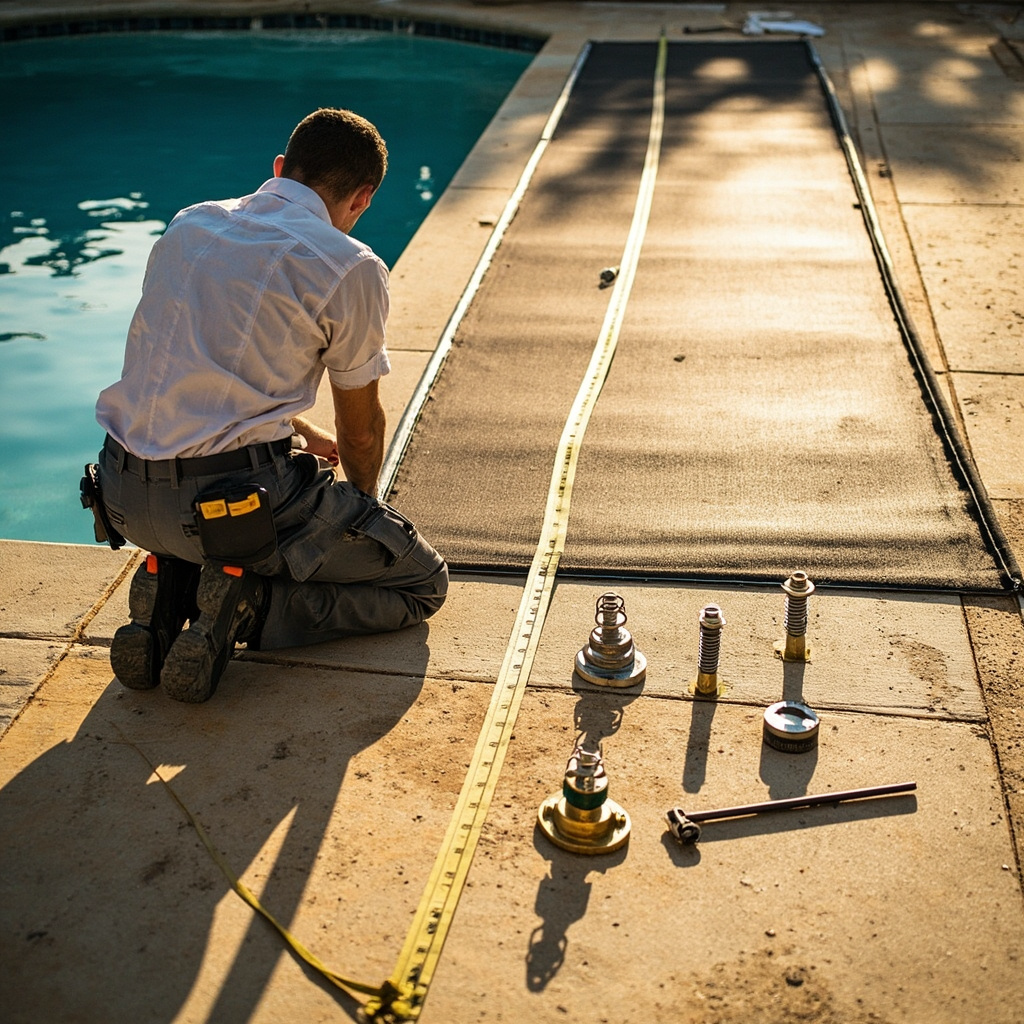
Keep DIY if: you’re comfortable with a drill, your deck is concrete, the cover fits the shape, and you can read the manufacturer instructions carefully.
Call a pro if:
- Custom shape or attached features — measured-to-fit requires precision
- Damaged anchors — pulled or corroded anchors often signal deck damage underneath
- Mechanism faults — automatic cover motors, tracks, or fabric tension issues need a service tech
- Code questions — when in doubt about barrier requirements, a pool safety inspector answers in one visit
Pro installation runs $200–$500 for a standard rectangle, more for custom shapes. Most cover failures trace back to installation issues — wrong anchor depth, uneven tension, skipped deck inspection. A professional install costs less than replacing a $400 cover in two years because the anchors pulled out.
Common mistakes
- Adding chemicals or gear by calendar without testing. Buying the cheapest cover you find without verifying ASTM F1346 compliance wastes $300 and gives you a non-safety cover. Confirm the standard and the dimensions before purchase — your pool is too valuable to risk on a bargain. Cyanuric acid stability also matters — high CYA under a closed cover can lock up chlorine and stain the cover fabric, requiring extra cleanup at opening.
- Skipping pool-volume, fit, or compatibility verification. A 16x32 cover on an 18x36 pool has gaps at the anchor points. A cover sized to “around 20 feet” doesn’t pass code. Measure your pool exactly and confirm the cover’s stated fit before ordering.
- Treating one protection or treatment step as the whole system. A safety cover without a barrier fails when someone walks onto the cover from outside. A barrier without a cover fails when the pool is in use. Layers matter.
- Ignoring label, weather, circulation, or maintenance constraints. Using a cover rated for snow loads in the desert wastes money. Using a desert-rated cover in snow country fails the first heavy storm. Match the cover to your climate and follow the manufacturer’s load guidance.
- Waiting through repeated failure instead of escalating. A cover that’s pulled at one anchor, or water collecting on top faster than your pump can clear, is a service call — not a “wait for spring” situation. Failed anchoring compromises the whole system.
Related
Key takeaways
- Choose the correct type: mesh for drainage ease, solid for debris blocking, automatic for frequent access.
- Verify ASTM F1346 compliance and exact dimensions before purchase.
- Match the cover to your pool’s exact shape, deck type, and climate load.
- Use the right anchor for the deck — brass in concrete, lag bolts in wood.
- Plan for drainage: cover pump for solid, natural for mesh.
- Inspect every spring and fall — anchors, straps, fabric, and tension.
- Layer with barriers, alarms, and supervision — the cover is one piece, not the whole plan.
A safety cover is a 10-year investment when installed correctly. The first season is when most mistakes happen — wrong anchors, wrong tension, or wrong sizing. Spend the extra hour at installation reading the manufacturer’s specification sheet, walking the deck twice, and confirming the cover is square before you tighten anything. That’s an hour that protects the pool, the equipment, and the people you care about for the next decade.