

If your chlorine reading looks fine but the pool keeps going green or cloudy, cyanuric acid is the usual suspect. Too little, and sunlight burns your sanitizer off in two hours flat. Too much, and chlorine is locked — testing normal while algae grows right through it. The fix isn’t more chlorine. It’s getting the CYA number right and keeping it there.
Quick answer
Cyanuric acid (CYA) is a chlorine stabilizer — sunscreen for your free chlorine. Aim for 30 to 50 ppm in outdoor chlorine pools, 60 to 80 ppm in saltwater pools, and zero in indoor or spa pools. Test monthly with a turbidity kit. If CYA climbs too high, the only reliable fix is partial drain and refill.
What cyanuric acid actually does
How CYA protects chlorine from sunlight
CYA forms a weak bond with free chlorine molecules, creating a temporary shield that slows photodegradation. Without CYA, direct sunlight destroys 75 to 90 percent of your free chlorine within two hours. With the right CYA level, chlorine lasts six to eight times longer through the day. This is why outdoor chlorine pools without stabilizer lose sanitizer almost as fast as you add it.
Where CYA comes from
CYA enters your pool two ways. First, deliberately, as pool conditioner or stabilizer granules (pure CYA). Second, passively, every time you use stabilized chlorine — trichlor tablets (pucks) and dichlor shock are roughly 50 percent CYA by weight. One 3-inch trichlor puck adds about 7 ppm of CYA per 10,000 gallons. This invisible accumulation is the number one reason CYA creeps too high without owners noticing.
CYA does not evaporate
Unlike chlorine, CYA does not break down in sunlight or dissipate over time. It stays in the water until you physically remove water — drain, backwash, or dilute. This is the single fact that makes high CYA so stubborn: no chemical shortcut, no filter media, no waiting it out.
What this is not
- CYA is not chlorine. It doesn’t sanitize or kill bacteria. It only extends the lifespan of chlorine already in the water. If your CYA is high but FC is zero, you still have an unsafe pool.
- CYA is not a conditioner brand. “Conditioner” and “stabilizer” are generic synonyms for pure CYA granules. There is no proprietary formulation — all dry stabilizer is 100 percent cyanuric acid.
- CYA is not total dissolved solids (TDS). Although high CYA contributes to TDS, TDS measures everything dissolved. CYA is one specific compound.
- CYA does not strengthen chlorine. This is the most dangerous misconception. CYA suppresses the active killing form of chlorine. Higher CYA means you need more chlorine, not less.
Ideal CYA range
Recommended levels by pool type
| Pool type | Target CYA | Why |
|---|---|---|
| Outdoor chlorine (trichlor or dichlor) | 30 to 50 ppm | Enough UV protection, keeps FC effective |
| Outdoor saltwater (SWG) | 60 to 80 ppm | Salt cells produce chlorine slowly, higher CYA buffers it |
| Indoor pool | 0 ppm | No UV to protect against, CYA only slows chlorine |
| Spa or hot tub | 0 ppm | Hot water plus high bather load needs fast-acting chlorine |
| Commercial or public pool | 100 ppm max | Health-code cap in many states |
Sources: CDC Model Aquatic Health Code 2023, APSP-11, industry consensus from Swim University and Orenda Technologies.
The FC-to-CYA ratio rule
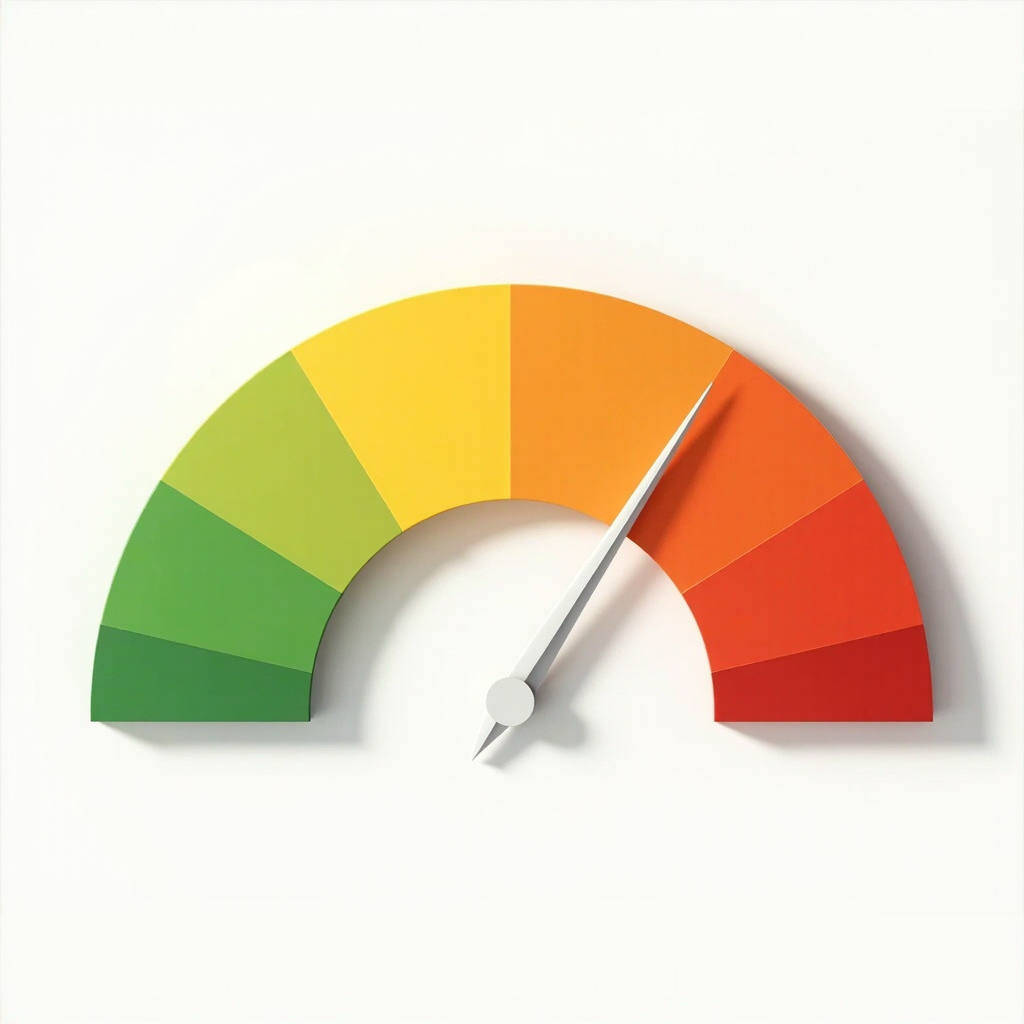
Your minimum free chlorine must scale with CYA. The widely used guideline: maintain FC at 7.5 percent of your CYA reading. At 40 ppm CYA, target 3 ppm FC. At 80 ppm CYA, target 6 ppm FC. This is why high CYA forces you to spend more on chlorine to achieve the same sanitizing effect — it does not make chlorine stronger, it raises the floor you must stay above. The full breakdown of this ratio lives on the free chlorine guide.
The stabilization trade-off
Here’s the catch with CYA. Its benefit (longer chlorine life) comes at a cost: it suppresses the active killing form of chlorine called hypochlorous acid. The higher your CYA, the higher your FC must be to achieve the same sanitizing power. At 30 ppm CYA, 2 ppm FC is plenty. At 90 ppm CYA, 2 ppm FC is effectively useless. CYA and saltwater generators interact the same way — if CYA exceeds 90 ppm in a salt pool, the cell cannot produce enough FC to overcome the over-stabilization.
Decision tree: what to do based on your CYA reading
Use this chart after every monthly CYA test. The thresholds matter because crossing them silently changes how much chlorine you need.
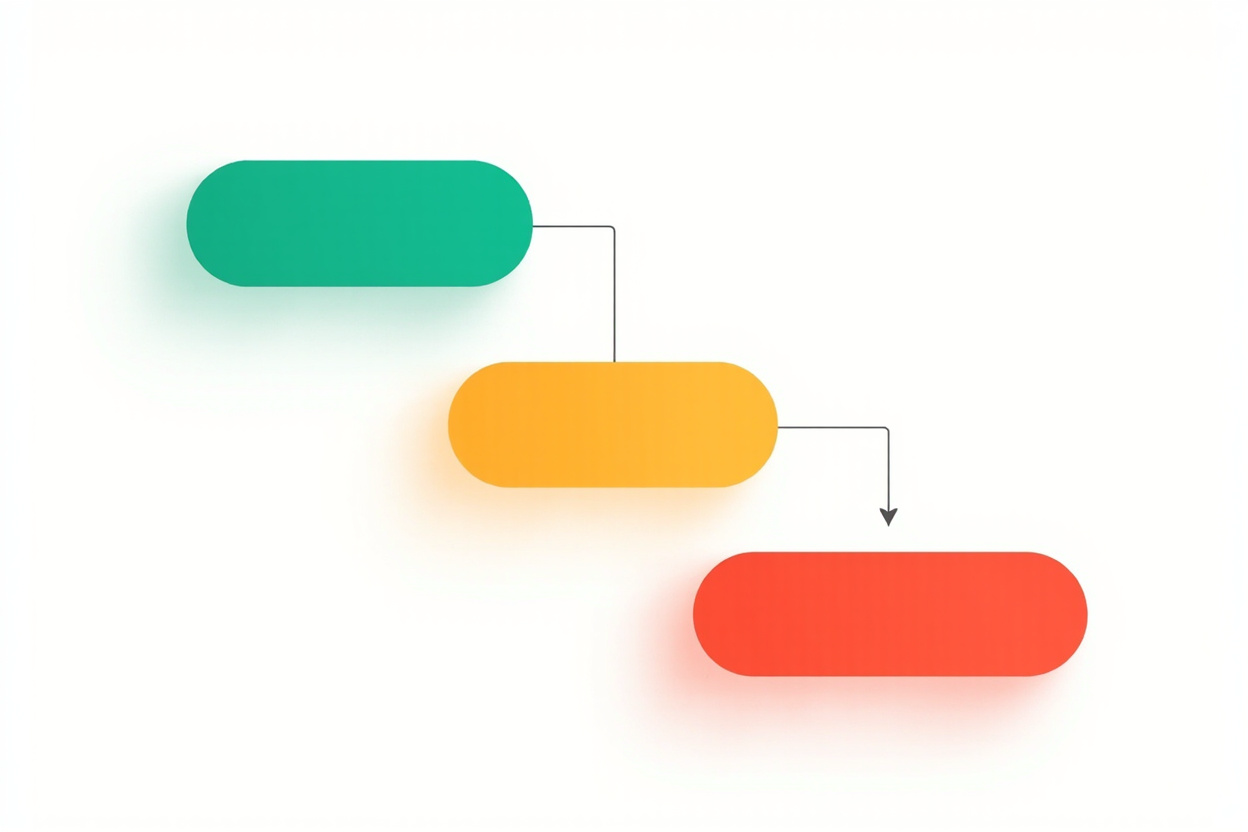
- CYA 30 to 50 ppm (chlorine pool) or 60 to 80 ppm (saltwater) — Stay the course. Recheck in 4 weeks. If using trichlor pucks, monitor for upward drift.
- CYA below 30 ppm — Add stabilizer (see the raise section below). Chlorine is burning off too fast in sunlight.
- CYA 50 to 80 ppm (chlorine pool) or 80 to 100 ppm (saltwater) — Caution zone. Stop using trichlor pucks. Switch to liquid chlorine or cal-hypo. Watch FC closely.
- CYA above 100 ppm — Dilute now. To drop CYA by 25 percent, drain 25 percent of pool volume and refill. Use the chemical dose calculator for exact math.
- CYA too high and pool is green or cloudy — Chlorine lock is likely. FC reads normal but algae persists because effective chlorine is too low relative to CYA. Partial drain first, then shock. See the green pool recovery guide.
How to test CYA accurately
Turbidity test — the standard
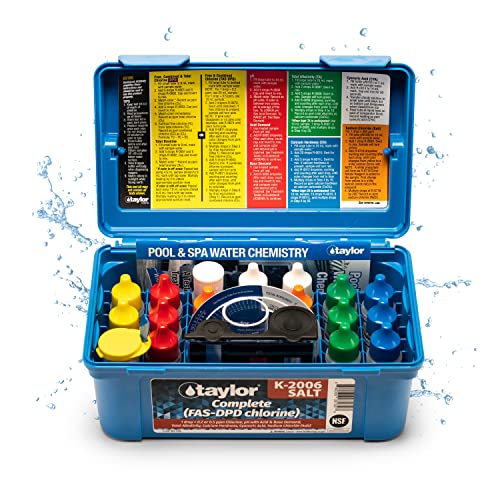
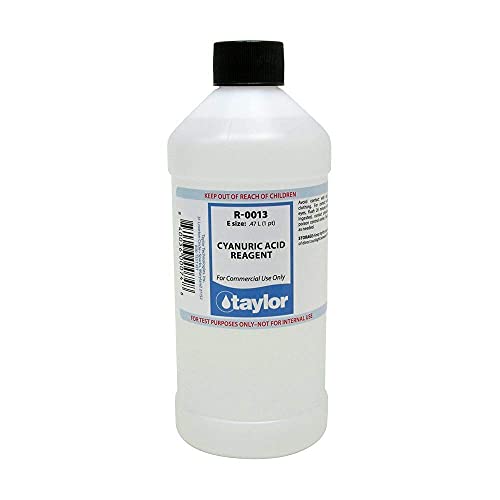
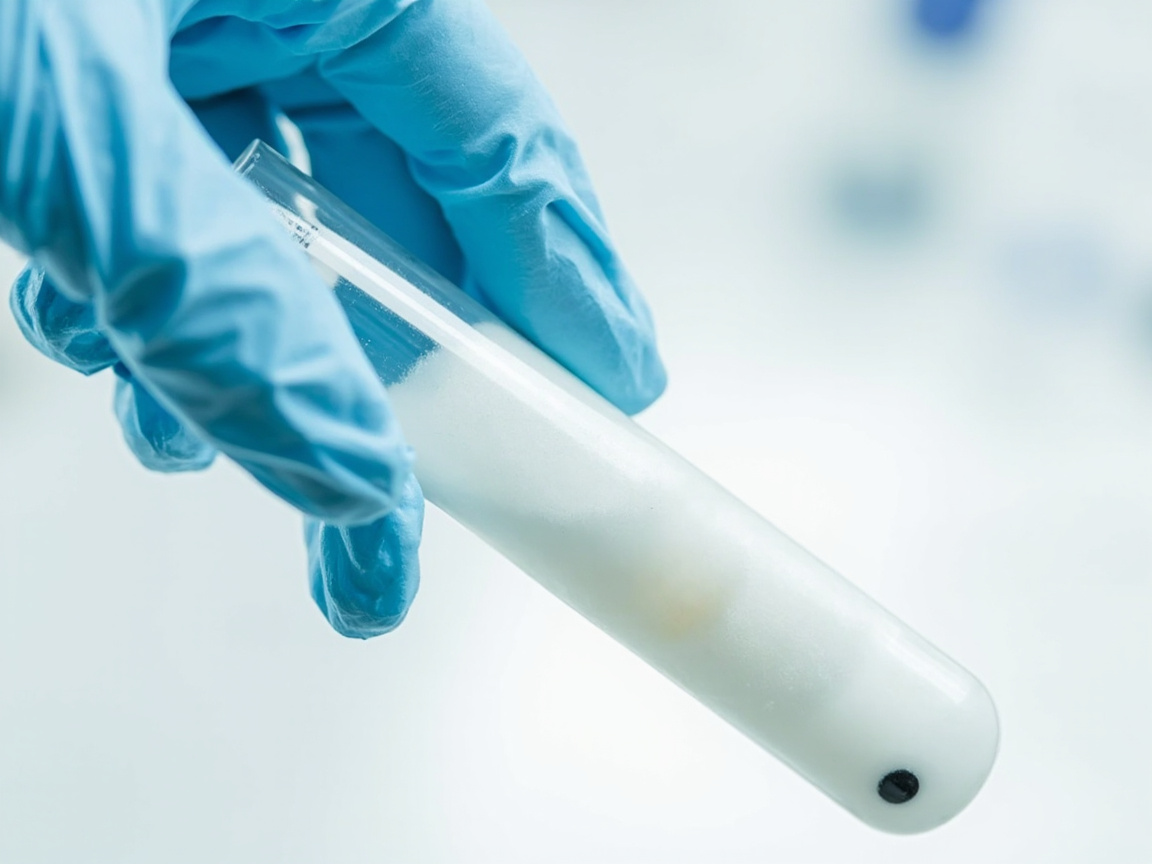
CYA is measured by a turbidity (cloudiness) test. You mix pool water with a melamine reagent, which turns cloudy in proportion to CYA concentration. You read the point where a black dot on the bottom of the viewing tube disappears. The Taylor K-2006-SALT complete kit and the Taylor K-1005 9-in-1 both include this turbidity CYA test. These give the most accurate readings available to homeowners. Keep a Taylor R-0013-E reagent refill on hand — the reagent expires about 6 months after opening.
Test strips — fast but approximate
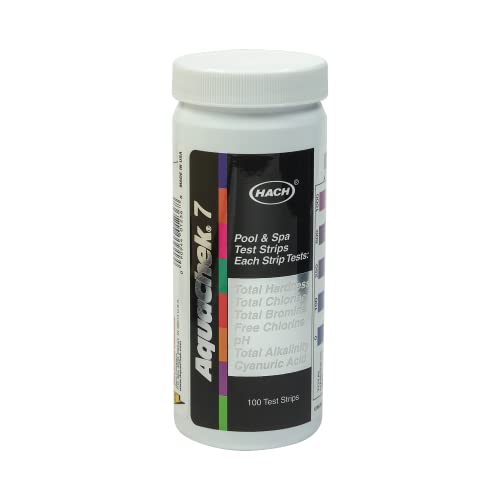
Most 7-way pool strips include a CYA pad. The AquaChek 7-Way Silver is the most reviewed and reliable strip option for CYA. Strips read in broad bands (0, 30, 50, 100-plus) rather than precise ppm, so treat the result as plus or minus 15 ppm. Good for trend checks between full liquid-kit tests. For why liquid kits beat strips for CYA specifically, see liquid test kits vs strips.
Skip / do not use if
Skip strips if you need an exact CYA number for a drain decision — the 15 ppm margin can mean the difference between draining 30 percent or 50 percent of your pool. Skip old reagent if the bottle has been open more than 6 months — readings drift low and you’ll underestimate CYA.
Reading errors that skew results
- Temperature: CYA tests read lower in cold water. Warm the sample indoors for 10 minutes if the pool is below 70 degrees Fahrenheit.
- Cloudy water: Particulates make the melamine reaction harder to read. If pool water is visibly cloudy, the CYA test is unreliable until the water clears.
- Reading too fast or too slow: The black-dot disappearance is a judgment call. Pour slowly and stop the moment the dot vanishes — do not re-check by staring longer.
- Dirty test tube: Rinse the viewing tube with distilled water between tests. Tap water residue can affect the reaction.
If CYA is low — how to raise it
How much stabilizer to add
The standard dosing rule: 13 oz of pure CYA per 10,000 gallons raises CYA by 10 ppm. Use the chemical dose calculator for exact amounts based on your pool volume.
Step-by-step: add CYA stabilizer
- Test current CYA. If below 30 ppm (chlorine pool) or 60 ppm (saltwater), proceed.
- Calculate the amount needed. Target minus current, in ppm. Multiply by the pool volume factor using the dose calculator.
- Pour granules into the skimmer with the pump running, or into a sock tied in front of a return jet. Don’t broadcast CYA granules directly on the pool surface — CYA dissolves very slowly and can settle and stain.
- Run the pump for at least 24 hours to fully dissolve and circulate.
- Wait 3 to 5 days before re-testing. CYA takes time to fully register on a test.
- For saltwater pools starting at CYA 0, add to 60 to 70 ppm before relying on the SWG alone. The cell needs that buffer to keep up with UV loss.
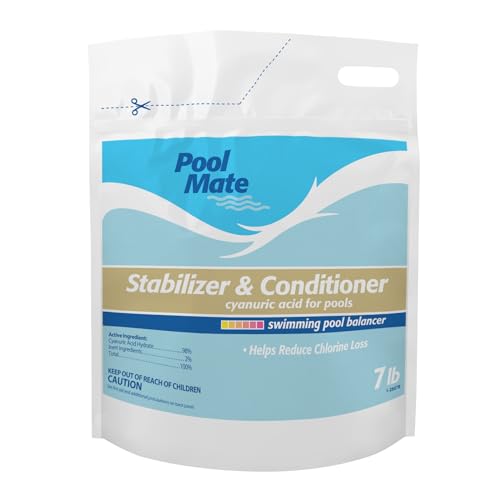
For small pools or minor corrections, Pool Mate 4 lb stabilizer raises CYA about 12 ppm per 10,000 gallons. For medium pools (15,000 to 30,000 gallons), Pool Mate 7 lb covers a 15 to 25 ppm boost.
Skip / do not use if
Skip adding stabilizer if your pool is indoors — no UV means no CYA needed. Skip it if you use trichlor pucks regularly — they add CYA continuously and you’ll overshoot. Skip it if CYA is already above 30 ppm and you only use the pool in summer.
If CYA is high — how to lower it
Why there is no chemical shortcut
No commercial product reliably removes CYA from pool water. Enzyme-based “CYA reducers” exist but work slowly, are temperature-sensitive, and are not trusted by the pool industry. Bio-remediation products may degrade CYA marginally over weeks, but results are inconsistent. Spending 40 dollars on a reducer while avoiding a partial drain wastes money and prolongs the problem.
Drain-dilution math
To lower CYA by X percent, drain and refill X percent of your pool volume:
| Current CYA | Target CYA | Drain percent of pool volume |
|---|---|---|
| 100 ppm | 50 ppm | 50 percent |
| 80 ppm | 40 ppm | 50 percent |
| 120 ppm | 50 ppm | 58 percent |
| 150 ppm | 50 ppm | 67 percent |
Use the chemical dose calculator to convert that percentage into gallons for your specific pool.
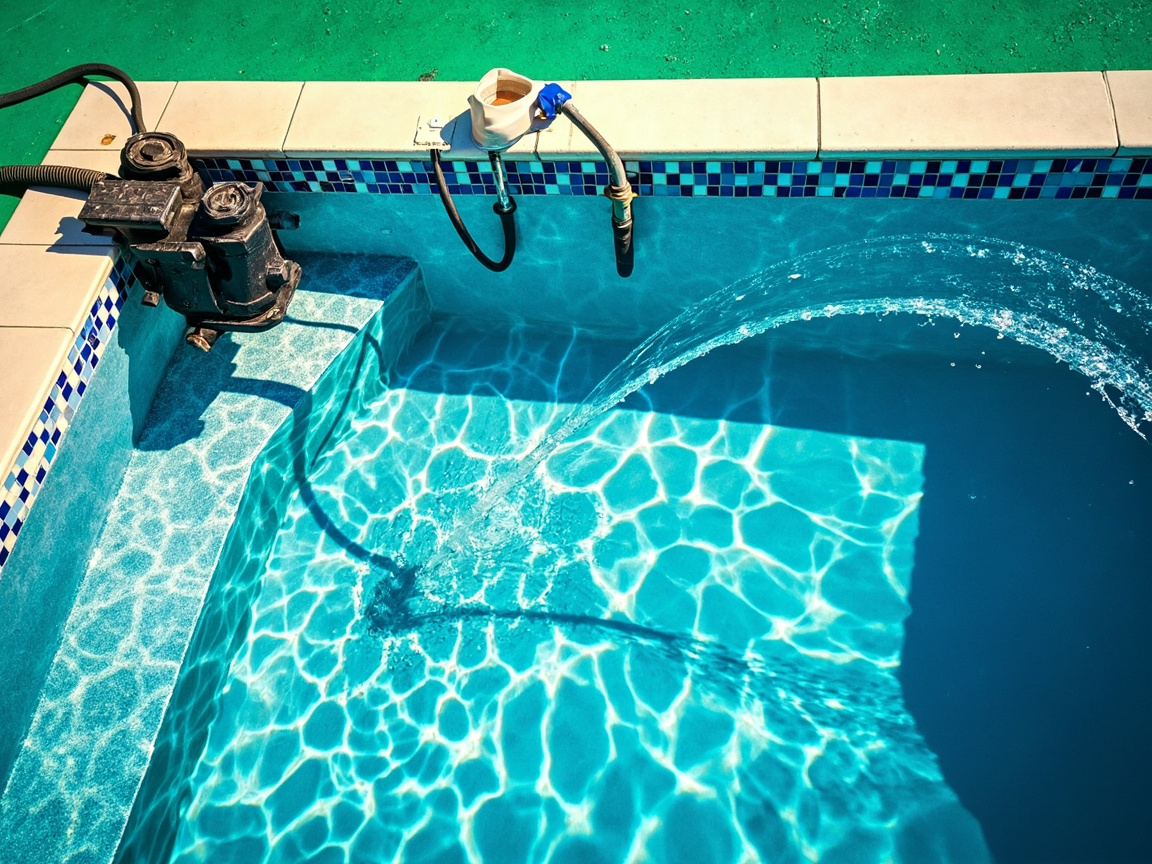
Safer drain alternatives for high water-table areas
If a full drain risks hydrostatic pop-out (high groundwater pushing the pool shell up), try staged dilution instead:
- Drain in stages: Drop 1 foot, refill, circulate for 24 hours, re-test. Repeat until CYA is in range.
- Backwash dilution (sand or DE filters): Backwash more frequently and top off with fresh water. Slower but safer for vinyl and fiberglass pools.
- Trickle overflow: Leave a hose running slowly with the overflow drain open. Displaces water gradually over several days.
What chlorine lock really is
When CYA is very high (above 100 ppm) your free chlorine tests normal (3 to 5 ppm) but the pool still turns green or cloudy. This is chlorine lock — the CYA has over-stabilized the chlorine so much that very little is available as active sanitizer. The fix is always the same: lower CYA by dilution first, then maintain FC at 7.5 percent of the new CYA level. See the green pool guide for the full recovery sequence.
Skip / do not use if
Skip CYA reducer chemicals entirely — save the money for a test kit refill. Skip the muriatic acid trick some forums suggest — adding muriatic acid does not lower CYA, it only crashes your pH. You’ll end up with corrosive water and the same CYA level.
What you’ll need
Everything for testing and adjusting CYA, organized by what you actually need first:
- CYA-capable test kit — Taylor K-2006-SALT for the most accurate reading plus full chemistry panel, or Taylor K-1005 as a mid-tier option with CYA included.
- CYA test strips — AquaChek 7-Way Silver for quick monthly checks between full tests.
- CYA reagent refill — Taylor R-0013-E to keep your turbidity test fresh.
- Pool stabilizer — Pool Mate 4 lb for small pools or Pool Mate 7 lb for medium pools, only when CYA tests below 30 ppm.
- Gloves and eye protection for handling granules.
What to buy only if needed
Only if CYA is below 30 ppm
Add Pool Mate 4 lb stabilizer for pools up to 15,000 gallons — it raises CYA about 12 ppm per 10,000 gallons. For larger pools, use Pool Mate 7 lb. Skip both if you are already using trichlor pucks — the pucks are adding CYA for you.
Only if you need a complete kit upgrade
If you are still using basic OTO or pH drops and want accurate CYA for the first time, the Taylor K-2006-SALT covers FC, CC, pH, TA, calcium hardness, and CYA in one professional-grade kit. Skip it if you already have a DPD kit that reads CYA.
Only if your strips do not read CYA
Many cheap 3-way or 4-way strips omit CYA entirely. Upgrade to AquaChek 7-Way, one of the few strip lines that reliably includes a CYA pad. Skip it if you already own a liquid turbidity kit — strips are a backup, not a replacement. For more on pool test strips options, the comparison guide covers which pads matter.
Common mistakes
- Using trichlor pucks year-round and never testing CYA. Each puck adds CYA continuously. Over a season, CYA can climb from 30 to over 150 ppm, causing chlorine lock. Fix: test CYA monthly. Rotate to liquid chlorine or cal-hypo when CYA exceeds 50 ppm.
- Assuming more CYA means stronger chlorine. CYA does not strengthen chlorine — it weakens the active fraction. High CYA means you need more chlorine, not less. This misconception leads owners to under-chlorinate and then battle algae.
- Broadcasting CYA granules on the pool floor. Pure CYA dissolves extremely slowly and can settle and stain. Always add through the skimmer or in a sock at the return jet.
- Trusting a CYA reading from cold or cloudy water. Cold water makes CYA read artificially low. Cloudy water makes the turbidity test unreliable. Always warm the sample and test only when water is clear.
- Buying CYA reducer chemicals instead of draining. No enzyme or bio-product reliably lowers CYA. Skip the reducer aisle and invest in good test strips to catch the drift early before a drain becomes necessary.
Safety notes (read this)
Handling cyanuric acid granules
CYA is a mild acid in dry form. While far less hazardous than muriatic acid or chlorine gas, take standard precautions:
- Wear gloves and eye protection when scooping granules. CYA dust can irritate eyes and skin on contact.
- Don’t mix CYA with chlorine products in the same container. Dry CYA plus trichlor or cal-hypo in a confined space can generate irritating fumes. Add them to the pool separately.
- Store CYA in a sealed, dry container. Moisture causes clumping and degradation.
- Keep out of reach of children and pets. Pure CYA is toxic if ingested in quantity.
High CYA is a health concern
When CYA exceeds 100 ppm, chlorine becomes so suppressed that bacteria and pathogens (including Cryptosporidium, which is particularly CYA-resistant) can survive in the water. This is why many state health codes cap CYA at 100 ppm for public pools. If your residential pool is above 100 ppm and anyone has been sick after swimming, dilute immediately. The full testing protocol is on the pool water testing guide.
When to call a pro
Consider professional help when:
- CYA is above 150 ppm and you cannot safely drain more than 50 percent of the pool (high water table, vinyl liner, fiberglass shell).
- You have drained and refilled but CYA will not come down. The test may be misreading, or you may have CYA carryover from a dirty filter.
- Your pool is green despite FC reading above 5 ppm. Chlorine lock diagnosis and correction can be complex. A pool service tech can identify whether it is CYA, phosphates, or filter failure.
- You switched from trichlor to liquid chlorine and algae exploded. The transition requires recalibrating your entire FC-to-CYA ratio. A pro can fast-track the rebalance.
Related
- Pool Water Testing — The master guide to testing all pool parameters, including which tests need liquid kits versus strips.
- Free Chlorine — CYA’s direct partner. Understand the 7.5 percent FC-to-CYA ratio and how to calculate your target FC.
- Start Here — New to pool care? Begin with the Splash101 beginner guide.
Key takeaways
- CYA is sunscreen for chlorine, not chlorine itself. It extends chlorine life in outdoor pools but suppresses its killing power.
- Target 30 to 50 ppm (chlorine pool), 60 to 80 ppm (saltwater), 0 ppm (indoor or spa). Test monthly.
- Trichlor pucks continuously add CYA. If you use them, CYA will climb — switch to liquid chlorine when it exceeds 50 ppm.
- No chemical removes CYA. The only fix for high CYA is partial drain and dilution.
- Maintain FC at 7.5 percent of CYA. At 40 ppm CYA you need 3 ppm FC. At 80 ppm CYA you need 6 ppm FC.
- Chlorine lock means high CYA plus normal-looking FC but algae persists. Dilute first, then rebalance.
- Test with a warmed, clear sample. Cold or cloudy water makes CYA readings unreliable.