
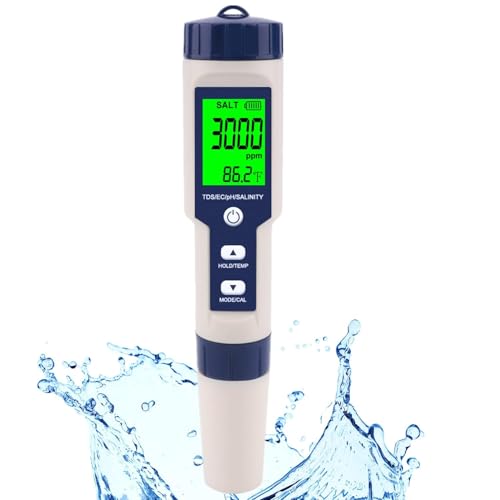
Quick answer
One strip says chlorine is fine; another looks low, and a digital salt meter can’t settle the argument. Dose from the wrong result and you’ll waste chemicals or push the water farther off balance. The best pool test kit is usually a layered system: strips for quick screening, liquid drops for confirmation before dose-changing decisions, and a calibrated digital meter only for the parameters it actually measures.
How pool testing actually works
Separate screening, confirmation, and diagnosis
These are three different jobs. Screening asks whether today’s water is behaving normally. Confirmation checks an odd result before you add anything. Diagnosis looks across sanitizer, pH, total alkalinity, calcium hardness, and cyanuric acid when the water or equipment is telling you something’s wrong.
A fast method can be right for screening and wrong for a large correction. A slower method can be useful during pool opening yet annoying for every quick midweek check. That’s why “most accurate” isn’t a useful answer until you name the parameter and the decision.
Judge the method, the range, and your technique
Accuracy isn’t just the number of decimal places on a display. Ask whether the method measures the parameter directly, whether the reading sits inside its stated range, and whether you followed the sample volume, timing, and storage directions. A repeatable wrong routine still gives wrong results.
Strips depend on dry storage, strict timing, and color matching. Drop kits depend on sample volume, reagent order, consistent drops, mixing, and endpoint recognition. Digital probes depend on calibration, rinsing, storage, and a sensor made for the parameter in question.
Run every test in the same order
- Collect a fresh sample from moving water, away from a return jet or chemical feeder.
- Screen it with the method chosen for that day’s job. If you’re using strips, dip for the maker’s stated interval—often 1–2 seconds—and read at the exact bottle time rather than whenever the colors look strongest.
- Confirm a surprising result with a fresh sample and a method suited to that parameter.
- Log the result, the time, and what changed. Then make one chemistry decision at a time.
The complete pool water testing workflow covers sample collection and test order in more detail.
What this is not: a universal accuracy ranking
This isn’t a strip shopping list or a promise that one device replaces a full water panel. For strip counts, pad choices, storage, and read technique, use the guide to choosing and using pool test strips.
It also isn’t a chemistry interpretation page. This article helps you choose a method. The testing workflow explains how to run it, while the parameter guides explain what the result means. Keeping those jobs separate stops a shiny display or a crowded strip bottle from making the decision for you.
Decision tree: choose your testing method
Start with the decision you’re about to make. Every branch below ends with a method, a confirmation rule, and a reason to skip it.
Follow the six-branch map
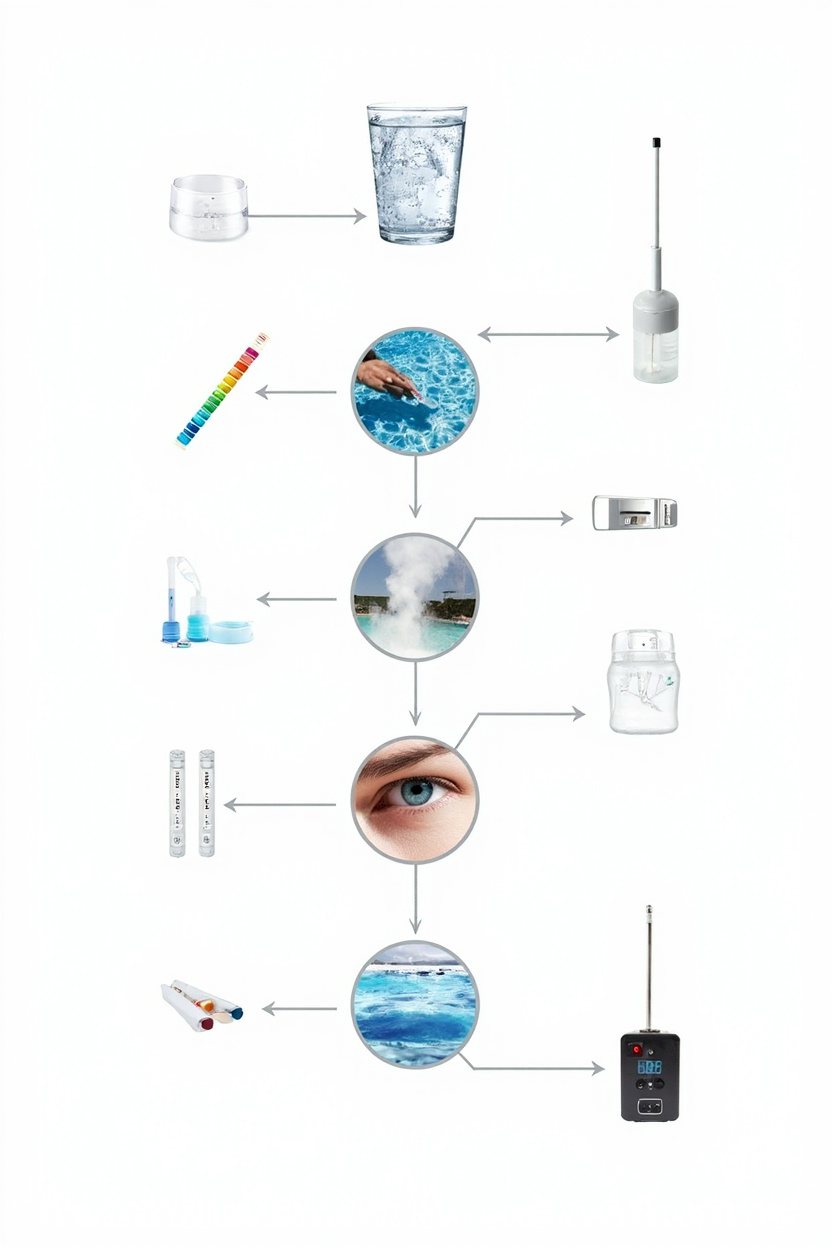
Branch 1 — Need a fast routine screen with no measuring?
Choose: fresh 7-way strips. Confirm: repeat an odd pad with a fresh strip, then use suitable liquid drops before changing a dose. Skip: don’t make strips your only method if timing, humidity, or color matching makes the result uncertain.
Branch 2 — Opening the pool or troubleshooting chlorine?
Choose: a full liquid kit, with FAS-DPD when chlorine resolution drives the decision. Confirm: repeat the test with the correct sample volume before dosing. Skip: don’t trust the kit if reagent shelf life is unknown or an endpoint remains unclear.
Branch 3 — Running a saltwater chlorine generator?
Choose: a liquid kit for sanitizer and balance, then add a digital salinity and pH meter only if you need those readings. Confirm: compare an odd salt result with the cell’s stated range or another suitable test. Skip: a TDS, EC, or salt number can’t stand in for free chlorine.
Branch 4 — Testing a spa frequently?
Choose: strips for frequent screening and a liquid kit that supports the sanitizer you use. Confirm: check sanitizer and balance readings before a correction. Skip: don’t buy more device types to solve a storage problem; heat and humidity can damage strips and reagents alike.
Branch 5 — Is color matching difficult?
Choose: digital measurement for listed parameters, such as pH and salinity, plus a titration or professional test for sanitizer. Confirm: cross-check a number that conflicts with the water or another method. Skip: a numeric screen isn’t a full pool panel.
Branch 6 — Won’t maintain calibration or storage routines?
Choose: sealed strips for screening plus an in-date liquid kit you can store correctly. Confirm: replace suspect consumables and repeat before dosing. Skip: don’t buy a probe if you won’t calibrate, rinse, and store it as directed.
Strip vs liquid vs digital — the real tradeoffs
Compare the three jobs before the gear
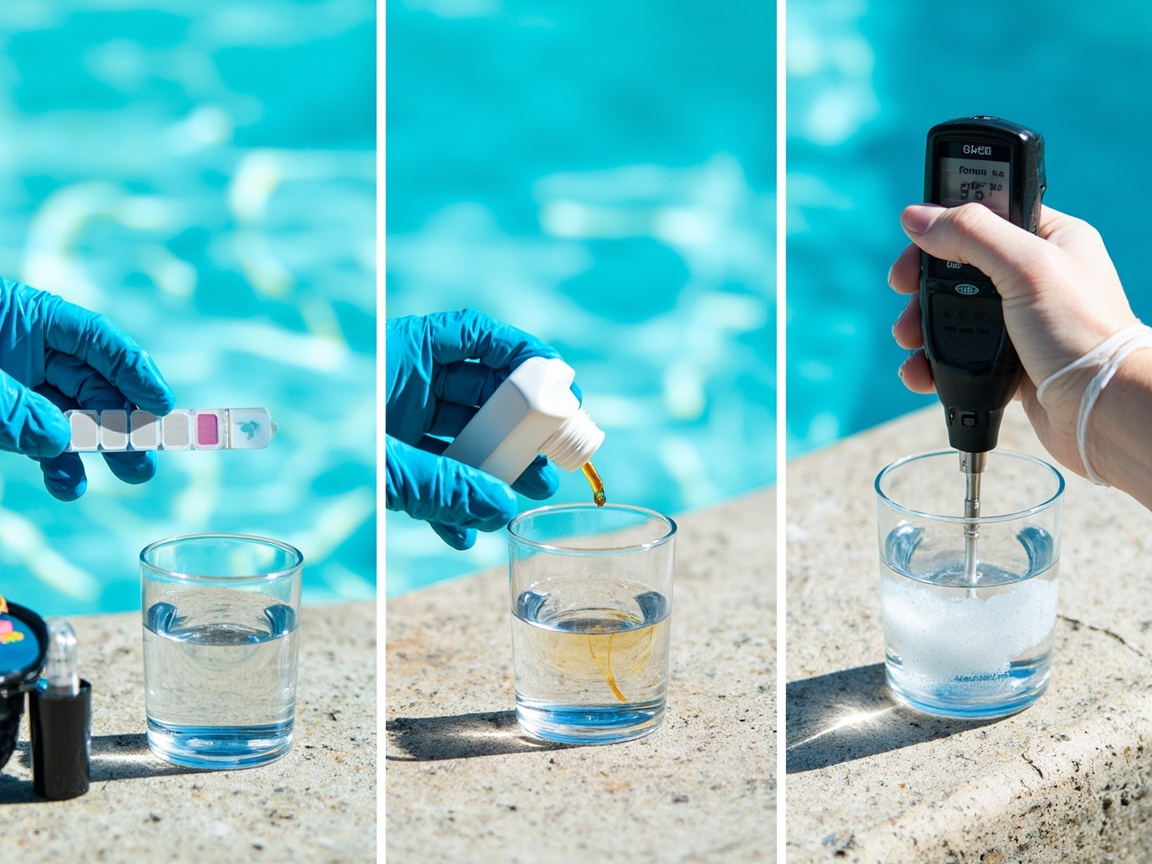
| Method | Main job | Time and learning curve | Ongoing needs | Best use | Common failure |
|---|---|---|---|---|---|
| Test strips | Fast multi-parameter screen | Fastest; read-time discipline matters | Fresh strips and dry storage | Routine trends | Damp pads, late reading, poor light |
| Liquid drops | Confirmation and diagnosis | More steps; technique improves with practice | Replacement reagents | Opening, corrections, conflicting results | Wrong volume, drop count, or endpoint |
| Digital tester | Numeric readings for listed sensors | Fast display; setup and care still count | Calibration and probe care | pH or salinity when the sensor fits | Trusting a narrow meter as a full panel |
Test strips: fastest screening, coarser interpretation
A strip can check several parameters in one dip, which makes it easy to fit testing into a busy week. Hold the strip as directed, start a timer, and compare it in good light. Don’t keep staring at it after the stated read window; the colors can keep shifting.
The tradeoff is resolution. Adjacent color blocks may span a range, and two people may call the same pad different shades. That’s acceptable for a stable trend. It isn’t enough for a large correction when one color block changes the action.
Liquid drop kits: more control for dose-changing decisions
Liquid kits aren’t all the same. A DPD comparator still asks you to match color. An FAS-DPD chlorine test uses a measured sample, reagent powder, and counted drops to reach an endpoint, so the decision comes from the drop count rather than choosing between close shades.
The extra control comes with extra ways to slip: wrong sample volume, tilted dropper, skipped swirl, contaminated vial, or old reagent. Follow the kit instructions in order. Bigger reagent bottles make sense when you’ll test often, not because bigger automatically means better.
Digital testers: useful numbers within narrow capabilities
“Digital” can mean a probe, photometer, or strip reader. Those tools don’t measure the same things. A pH and salinity probe can reduce subjective color matching for those two readings, yet say nothing about free chlorine, total alkalinity, calcium hardness, or CYA.
Check the sensor list before the price. Then check calibration solution, storage method, temperature limits, and replacement needs. If the device shows a number outside its useful range—or disagrees sharply with a fresh second method—stop and investigate.
What “good enough” means for a pool decision
Accept a stable trend for a routine check
A result is good enough when it shows a stable direction and you aren’t calculating a dose from it. Repeat once if a pad, endpoint, or display looks odd. Put that check into a weekly pool care routine so a missed day doesn’t turn into a month of guessing.
Demand confirmation for a chemical adjustment
A result isn’t good enough when two methods disagree, the reading sits at a method’s limit, or the next step adds sanitizer, acid, or base. Take a fresh sample and use a suitable second method. Then check what a free chlorine reading means, how to interpret pH before adjusting water, or the total alkalinity guide before changing chemistry.
Our picks by scenario
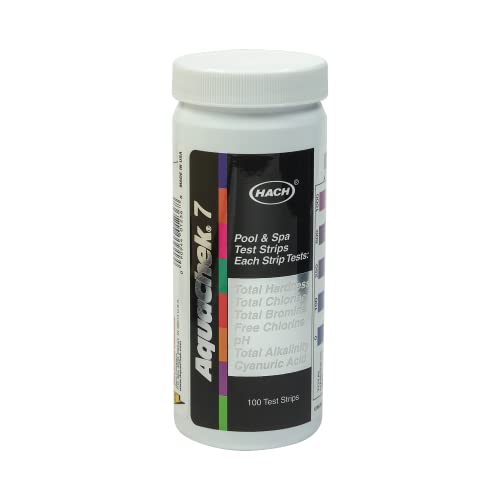
New pool owner — AquaChek 7-Way Pool and Spa Test Strips, 100 Count plus Taylor K-1005 DPD 9-in-1 Pool Test Kit
Use the strips to learn your pool’s normal weekly pattern, then use the liquid kit when a result surprises you or changes what you’ll add. The K-1005 covers a broad group of sanitizer and balance tests, but its DPD comparator still involves visual judgment. Pair the method with the first-year pool owner guide instead of trying to learn every parameter at once.
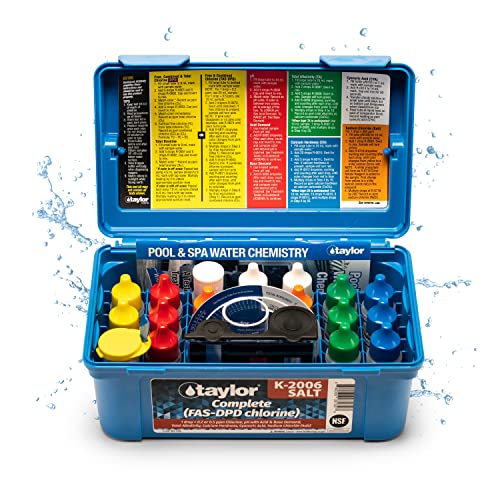
Saltwater pool — Taylor K-2006-SALT FAS-DPD 9-in-1 Pool & Spa Test Kit plus Hofun 5-in-1 Digital Pool Salt Tester and pH Meter
Use the FAS-DPD kit for chlorine and the balance panel. Add the meter for pH and salinity if you’ll handle calibration and probe care. The Hofun listing identifies pH, salinity, TDS, EC, and temperature; it doesn’t list free chlorine, total alkalinity, calcium hardness, or CYA as measured parameters. Don’t let a salt reading masquerade as proof of sanitation.
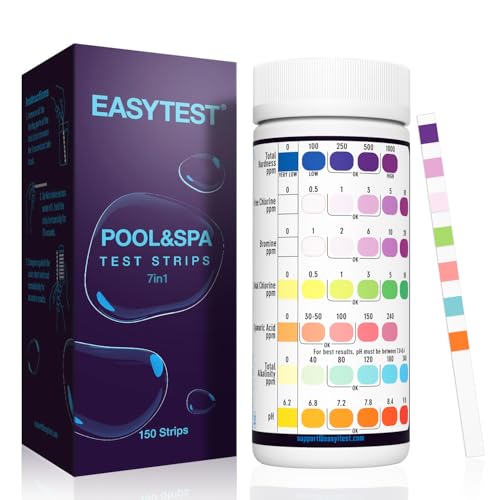
Spa — EASYTEST 7-Way Pool Test Strips, 150 Count plus Taylor K-1005 DPD 9-in-1 Pool Test Kit
The 150-count bottle suits frequent screening only if you’ll use it promptly. The Amazon listing says to use the strips within 90 days after opening, so a low-frequency pool owner may waste the bulk pack. Use the liquid kit to confirm sanitizer and balance before correction, and keep both containers away from humid spa air.
Color-matching difficulty — Hofun 5-in-1 Digital Pool Salt Tester and pH Meter
Choose this only for numeric pH and salinity readings. It won’t remove color decisions from every pool parameter. For chlorine, use an applicable drop-count method or ask a pool store or service technician for a measured value and the method used.
Troubleshooting chlorine — Taylor K-2006-SALT FAS-DPD 9-in-1 Pool & Spa Test Kit
The larger FAS-DPD kit fits pool opening, repeated chlorine checks, and conflicting sanitizer results. It isn’t the budget choice for occasional screening. Measure the sample, add reagents in order, swirl to the endpoint, record the drop count, and repeat an implausible result before dosing.
Layer the methods instead of buying a winner
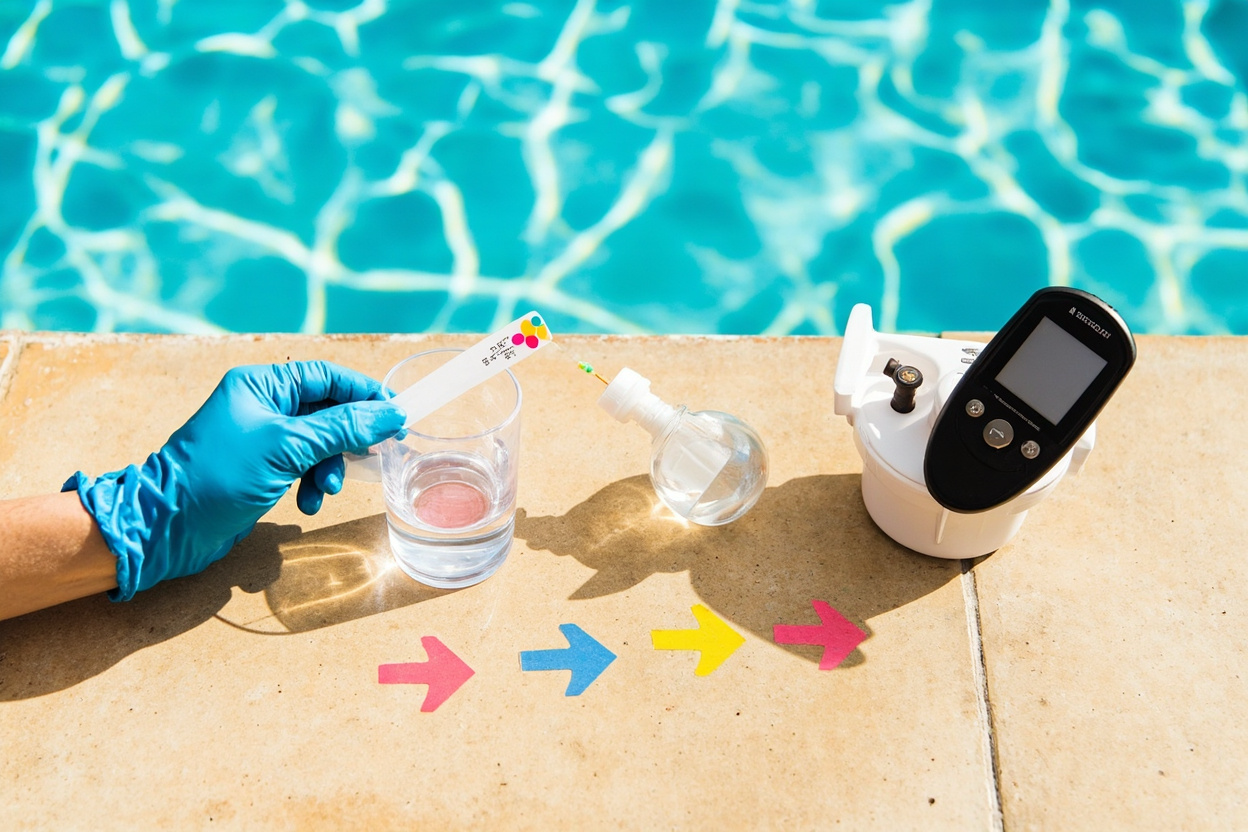
The useful pattern is simple: screen fast, confirm when the decision carries more risk, and add a digital tool only for a real measurement gap. That setup costs less than chasing every new display and gives each method a clear job.
What you’ll need
Build a baseline two-method setup
Start with one fresh screening product, such as the AquaChek 7-Way Pool and Spa Test Strips, 100 Count, and one liquid confirmation option, such as the Taylor K-1005 DPD 9-in-1 Pool Test Kit. Add a clean sample cup, timer, the current instructions, and a paper or phone log.
Fix the testing conditions before the shopping list
Use clean hands, a representative sample, steady lighting, and uninterrupted timing. Rinse reusable cells as directed and let them drain without wiping surfaces the instructions tell you not to touch. These controls cost nothing and often explain more than another gadget would.
What to buy only if needed
Only if you need digital pH or salinity readings
The Hofun 5-in-1 Digital Pool Salt Tester and pH Meter fits a saltwater owner who wants numeric pH and salinity output and will maintain the probe. Skip it if you expect one meter to replace chlorine and balance testing.
Only if chlorine work calls for FAS-DPD
The Taylor K-2006-SALT FAS-DPD 9-in-1 Pool & Spa Test Kit earns its shelf space during opening, troubleshooting, or frequent chlorine control. Occasional screeners won’t benefit from buying more reagent than they can use while it’s dependable.
Only if you’ll finish a high-count strip bottle
The EASYTEST 7-Way Pool Test Strips, 150 Count can suit a spa or frequent checker. Skip the bulk count if your schedule won’t use it within the listing’s stated post-opening window.
Skip claims that hide missing parameters
Don’t buy a digital tester because “5-in-1” or a decimal-heavy screen sounds complete. Identify each directly measured parameter. TDS and EC aren’t substitutes for chlorine, alkalinity, hardness, or CYA. Also skip damp strips, expired reagents, and any listing that doesn’t make consumables or sensor limits clear.
Common mistakes
- Dosing from one surprising strip instead of confirming it first.
- Reading strips on your own timing rather than following label directions.
- Treating a pH or salt meter as a full-panel replacement.
- Skipping calibration and reagent shelf-life tracking.
Mistake 1 — Dosing from one surprising strip
Don’t turn one strange color block into a chemical order. Collect a fresh sample, repeat the screen, and confirm with the Taylor K-1005 DPD 9-in-1 Pool Test Kit or another suitable liquid method. A false low can trigger an unnecessary addition; a false high can leave a real sanitizer problem untouched.
Mistake 2 — Reading strips on your own schedule
A 15-second instruction doesn’t mean “about a minute.” Dip, remove, hold, and compare exactly as the bottle directs. Read in steady light, not through tinted sunglasses or under a colored patio bulb. Use the strip guide for the full technique rather than inventing a house method.
Mistake 3 — Treating a pH and salt meter as a full panel
A digital pH or salinity number can’t answer a free-chlorine question. Write the measured parameters on the storage case if needed. When a reading isn’t on that list, use another method instead of guessing from TDS or EC.
Mistake 4 — Ignoring calibration and reagent shelf life
A crisp display from a neglected probe can create false confidence. So can a neat endpoint from questionable drops. Track opening dates, keep caps tight, store products as directed, and replace suspect consumables before using the result to change a dose.
When to call a pro
Keep testing yourself when fresh samples repeat within the method’s range and the result matches what the pool is doing. Ask a pool professional or a calibrated lab or pool-store station to cross-check when:
- fresh samples keep disagreeing across suitable methods;
- sanitizer can’t be read clearly or remains outside the kit’s range;
- you can’t distinguish the endpoint well enough to dose safely; or
- a public or shared pool must meet local testing and record rules.
Ask for the actual parameter values and the method used. “Balanced” isn’t enough information to diagnose a disagreement. If the disagreement comes with cloudy water, start with the cloudy-pool troubleshooting guide rather than layering on more products.
Safety notes
Treat color matching as a dosing control
Never add sanitizer, acid, or base from an ambiguous color matching result. Test a fresh sample with an appropriate confirmation method first. Misreading low can lead to an excessive addition; misreading high can delay a needed correction. Either error wastes chemicals and can keep swimmers out longer.
Keep calibration current
Follow the meter’s directions for calibration solutions, rinsing, storage, and test range. A numeric display doesn’t make a dry, dirty, or neglected probe trustworthy. If calibration fails or the reading jumps on the same sample, stop and use another method.
Track reagent shelf life and storage
Mark open dates, close caps promptly, and replace reagents or strips that saw excess heat or humidity. Don’t mix old and new reagents, return dispensed reagent to its bottle, or combine testing reagents with pool-treatment chemicals. Keep all of them locked away from children and pets.
Key takeaways
- The best pool test kit is a layered system, not one universal device.
- Use strips for fast trends and confirm surprising or dose-changing results.
- Use FAS-DPD when chlorine resolution changes the action.
- Add digital measurement only for parameters the sensor directly reads.
- Treat calibration, reagent shelf life, and color matching as control points.
- Replace suspect consumables before buying a more complicated tester.
- Escalate persistent cross-method disagreement before dosing.
Related
- Learn the full pool water testing sequence.
- Put the checks into a weekly pool care routine.
- Review what a free chlorine result means.