Your pool water’s looking cloudy and you’re wondering if the filter’s the problem—or if you bought the wrong one in the first place. Pick wrong and you’ll overspend on a tank too big for your pump, fight weekly backwashing on a setup with no waste line, or breathe in DE dust because nobody warned you. Match the filter to your pool type, pump flow, and maintenance tolerance, and the choice sorts itself out in about five minutes.
Quick answer
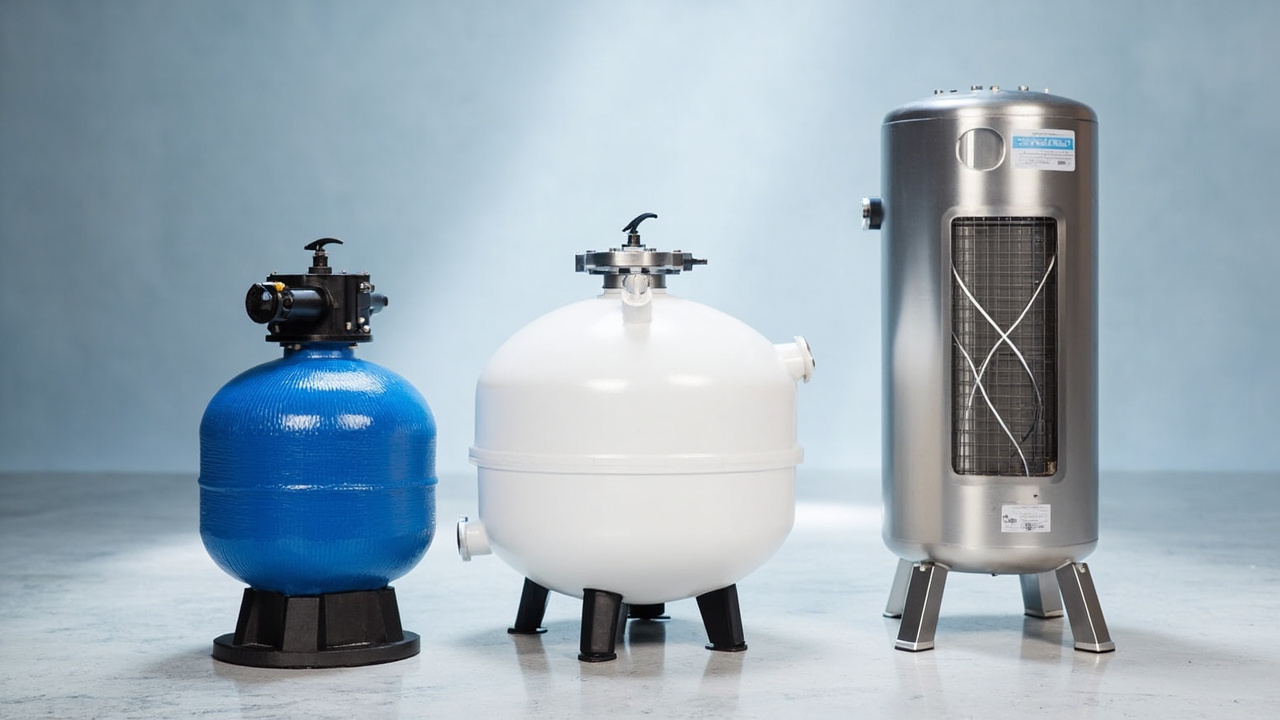
Three pool filter types exist: sand, cartridge, and DE (diatomaceous earth). Choose sand for lowest cost and lowest maintenance on pools under 30,000 gal. Choose cartridge for moderate filtration (10-15 microns) with zero backwash waste. Choose DE for the clearest water (2-5 microns) on inground pools that can handle monthly powder recharges. Match the filter to pool size and pump flow—wrong sizing causes cloudy pool water more often than wrong chemistry.
What this is not
Before you spend money, clear up four misconceptions that cost pool owners real cash.
What this is not: a filter does not replace chlorine
A filter removes physical debris—leaves, dust, dead algae, skin cells. It does NOT kill bacteria or viruses. Free chlorine sanitizes water; the filter only clears what chlorine has already killed. A brand-new filter with zero chlorine in the water will still let your pool go green in days. Read how to test your pool water before sizing any filter.
What this is not: a bigger filter is not always better
A filter must match the pump’s flow rate (GPM). Oversizing the filter restricts flow and strains the pump; undersizing it short-cycles and overloads the media. Always size to the pump curve and pool volume—not “bigger is better.”
What this is not: sand is not play sand
Pool filter sand is graded #20 silica (.45-.55 mm). Play sand is much finer (.1-.3 mm) and channels and clogs within weeks. Never substitute.
What this is not: DE is not the same as chlorine shock
Diatomaceous earth is fossilized algae skeletons used as filter media—it has zero sanitizing effect. Cal-hypo, dichlor, and MPS are chlorine or non-chlorine shocks and live on the pool shock page. Don’t confuse DE powder with shock powder.
Decision tree: which pool filter fits your pool
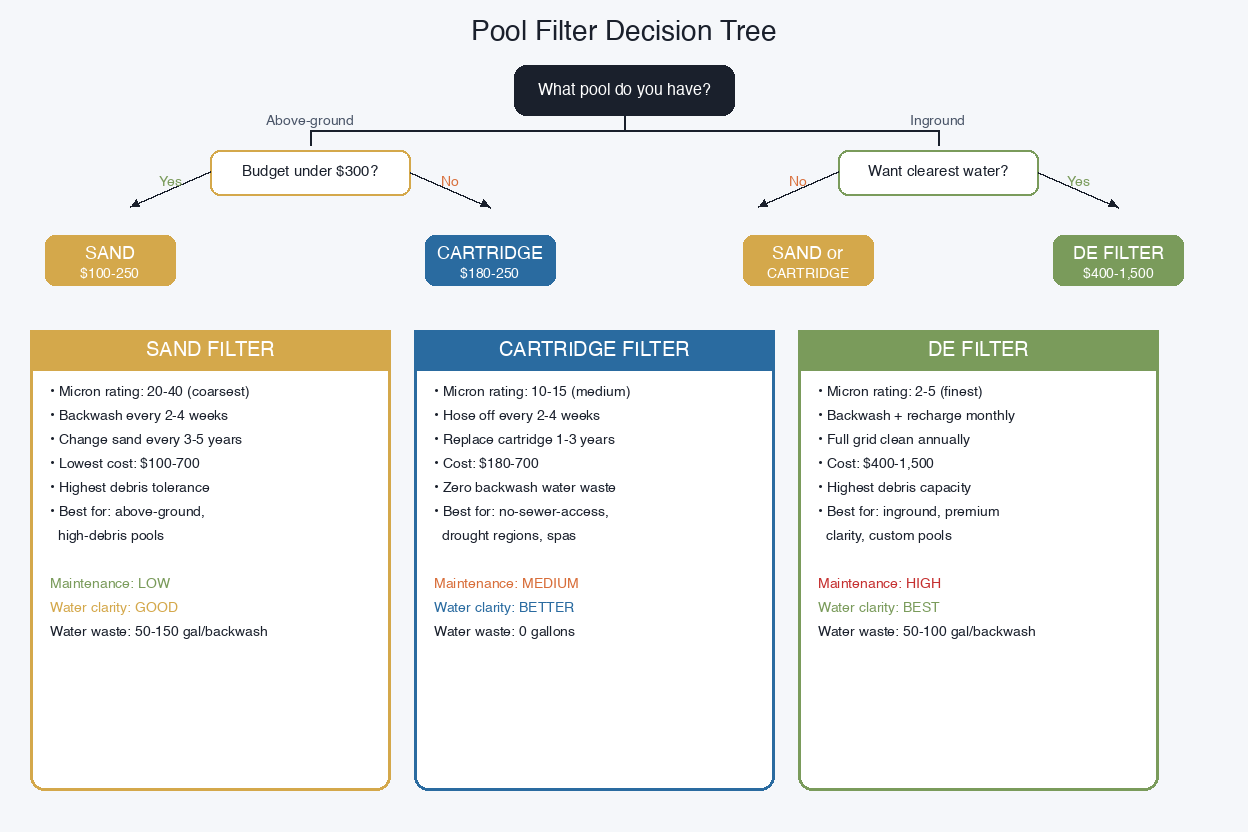
The right filter depends on three questions in this order: (1) above-ground or inground pool? (2) how much maintenance are you willing to do? (3) what’s your budget for the filter and media? Work through the branches below—and if you’re a first-year pool owner, start at Branch 1 and don’t skip.
Filter type selector at a glance
Branch 1: Above-ground pool under 15,000 gallons, tight budget
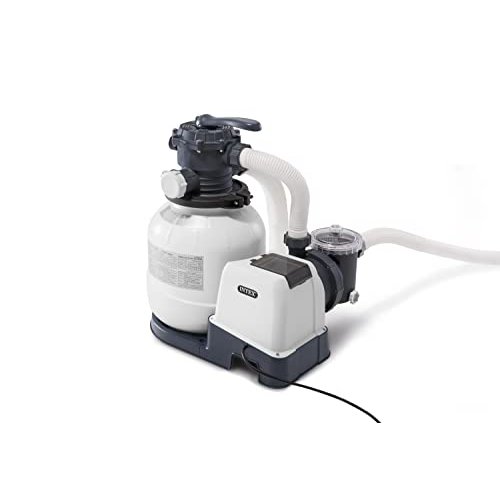
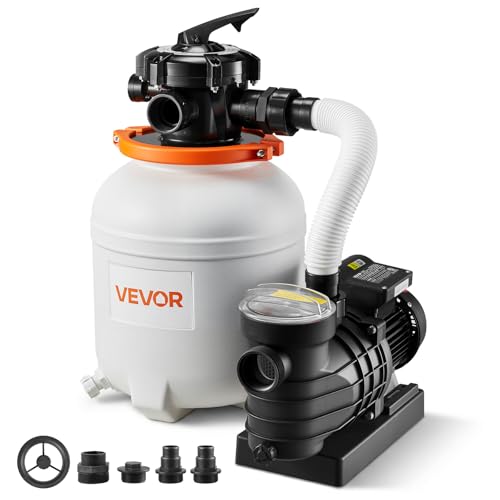
Pick: sand filter pump combo. Look at the Intex Krystal Clear 2100 GPH sand filter ($175) or the step-up VEVOR 12-inch 3000 GPH ($110). Sand is forgiving, cheap to refill ($30 per 50 lb every 3-5 years), and handles small water volume without backwash hassle.
Branch 2: Above-ground pool, you hate backwashing
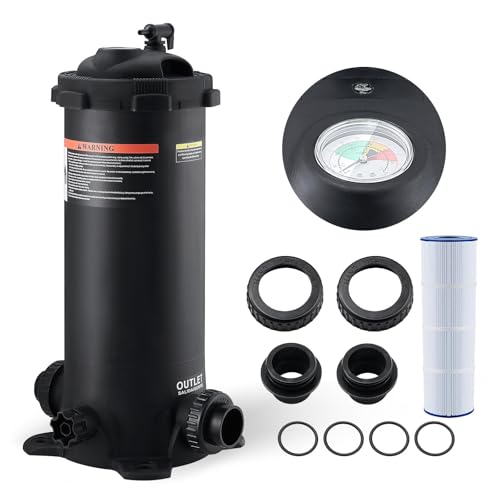
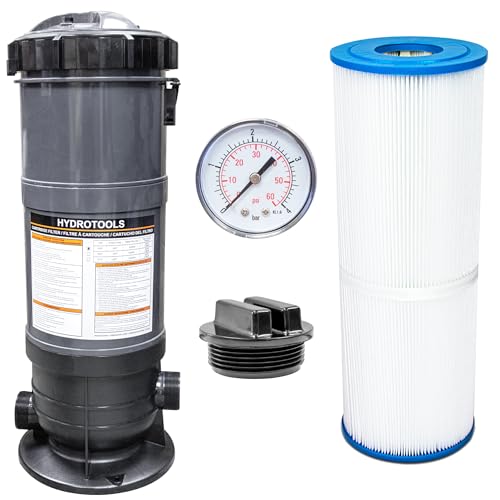
Pick: cartridge filter. The VEVOR 50 sq ft cartridge tank ($184) or Swimline Hydrotools ($200) pull out 10-15 micron debris with no backwash—pull the cartridge, hose it off, drop it back in. Lower water waste than sand.
Branch 3: Inground pool, you want lowest maintenance
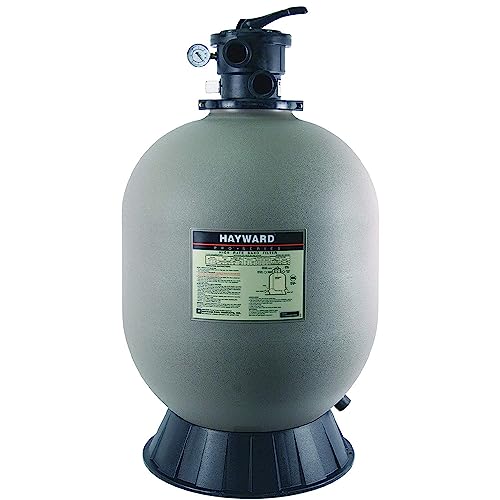
Pick: sand filter, inground size. The Hayward ProSeries 27-inch top-mount ($739) is the industry standard. Sand lasts 5-7 years, backwash takes 3 minutes, and the tank itself runs 15+ years. Best for owners who set it and forget it.
Branch 4: Inground pool, you want the clearest water
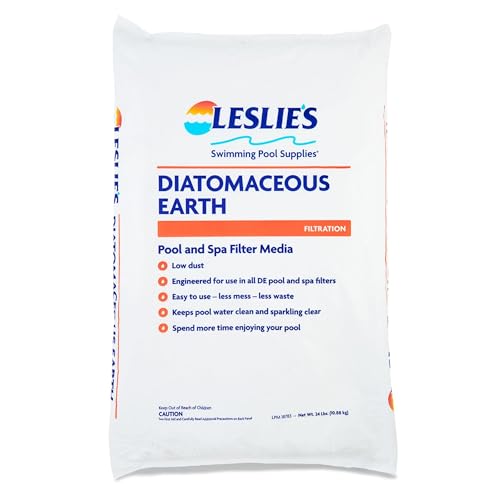
Pick: DE filter. DE filters down to 2-5 microns—visibly clearer than sand (20-40 microns) or cartridge (10-15 microns). Pair a DE tank with Leslie’s 24 lb DE powder ($42) for recharges every 4-6 weeks. Trade-off: DE powder is a confirmed lung irritant—see Safety notes below. Not recommended for owners who skip the N95.
Branch 5: Spa, hot tub, or small water feature
Pick: cartridge filter. Small footprint, no backwash plumbing needed, easy cartridge swaps. Sand and DE don’t scale down to spa volumes.
Branch 6: Saltwater pool (chlorine generator installed)
Pick: cartridge (preferred) or sand. Both work. Salt cells generate chlorine; the filter still clears the dead algae and debris. Avoid DE on saltwater unless you’re already a DE owner—the extra recharge cadence adds work on top of cell cleaning.
Sand filter deep dive: how it works, pros, cons
How a sand filter works
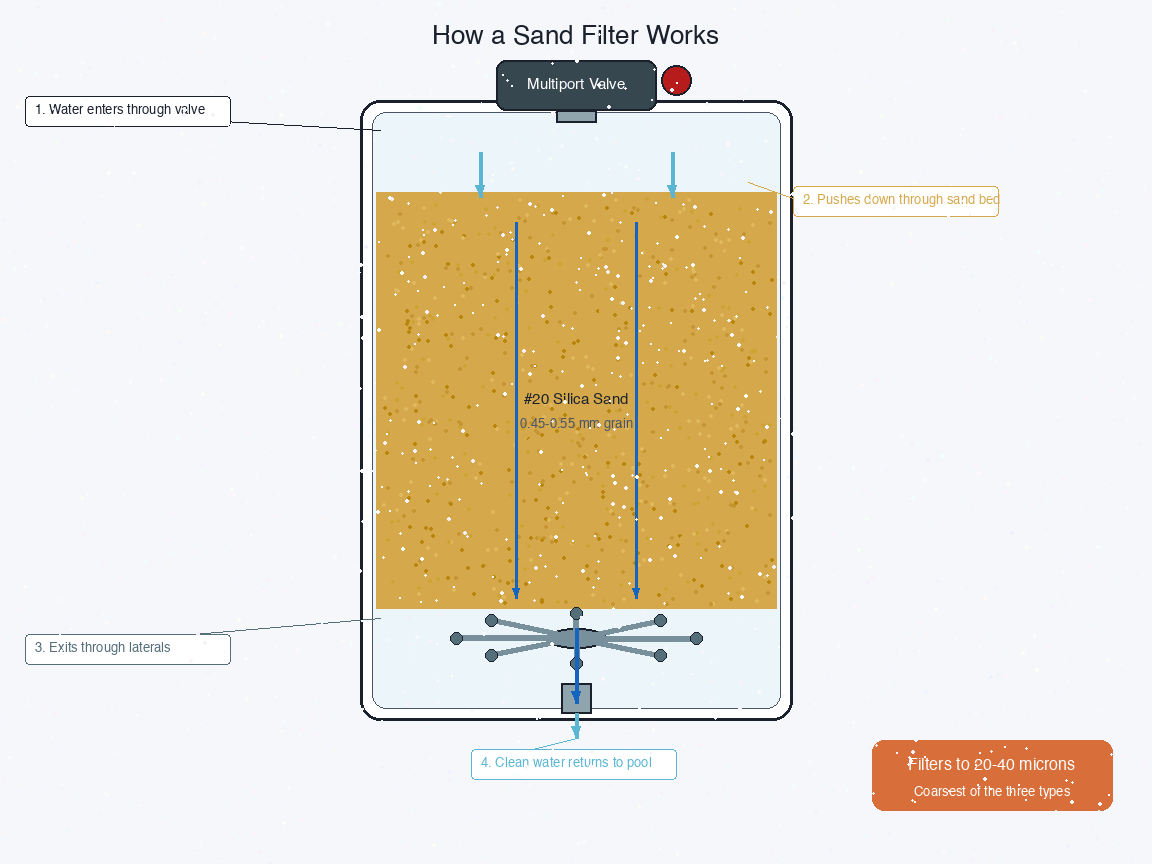
Water enters the top of the tank, pushes down through a bed of #20 silica sand (.45-.55 mm grains), and exits through laterals at the bottom. The sand bed traps particles 20-40 microns and larger. Every few weeks you reverse the flow (“backwash”) for 2-3 minutes to flush trapped debris out the waste port.
Sand filter pros
- Lowest upfront cost of the three types
- Long media life—change sand every 3-5 years
- Tolerates heavy debris loads without performance loss
- Simplest maintenance—backwash 3 minutes, done
- Hard to damage—no delicate grids or cartridges
Sand filter cons
- Coarsest filtration of the three (20-40 microns vs cartridge 10-15 vs DE 2-5)
- Requires backwash plumbing and waste water (50-150 gallons per backwash)
- Heavier—sand tanks run 200-400 lb when full
- Channeling risk after 4-5 years (water finds paths around clumped sand)
Sand filter best for
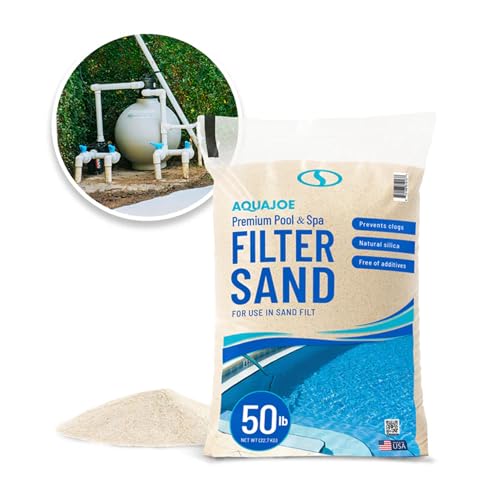
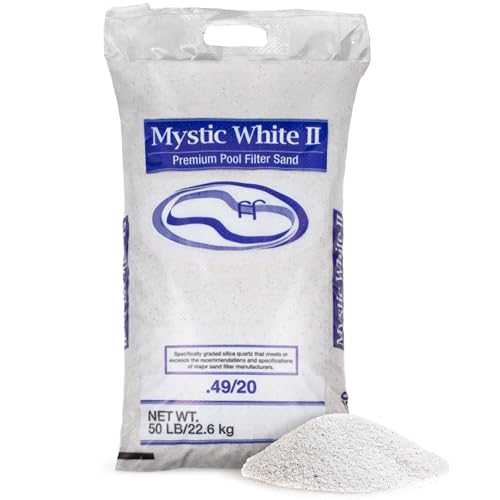
Above-ground pools, budget-conscious inground owners, high-debris pools (lots of leaves or dust), and owners who want set-and-forget. Stock up on Aqua Joe 50 lb filter sand ($30) or step up to US Silica Mystic White II ($35) for slightly better angularity and longer bed life. For step-by-step cleaning, see how to clean a pool filter.
Cartridge filter deep dive: how it works, pros, cons
How a cartridge filter works
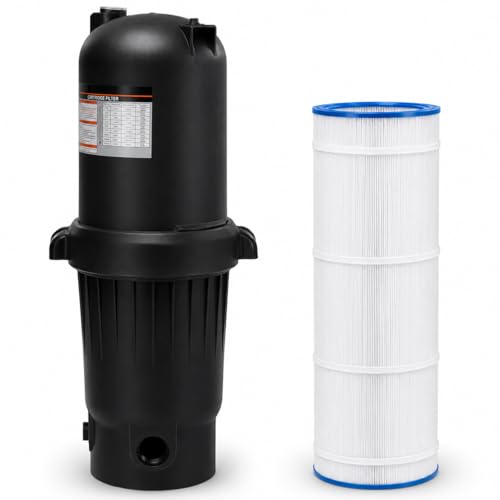
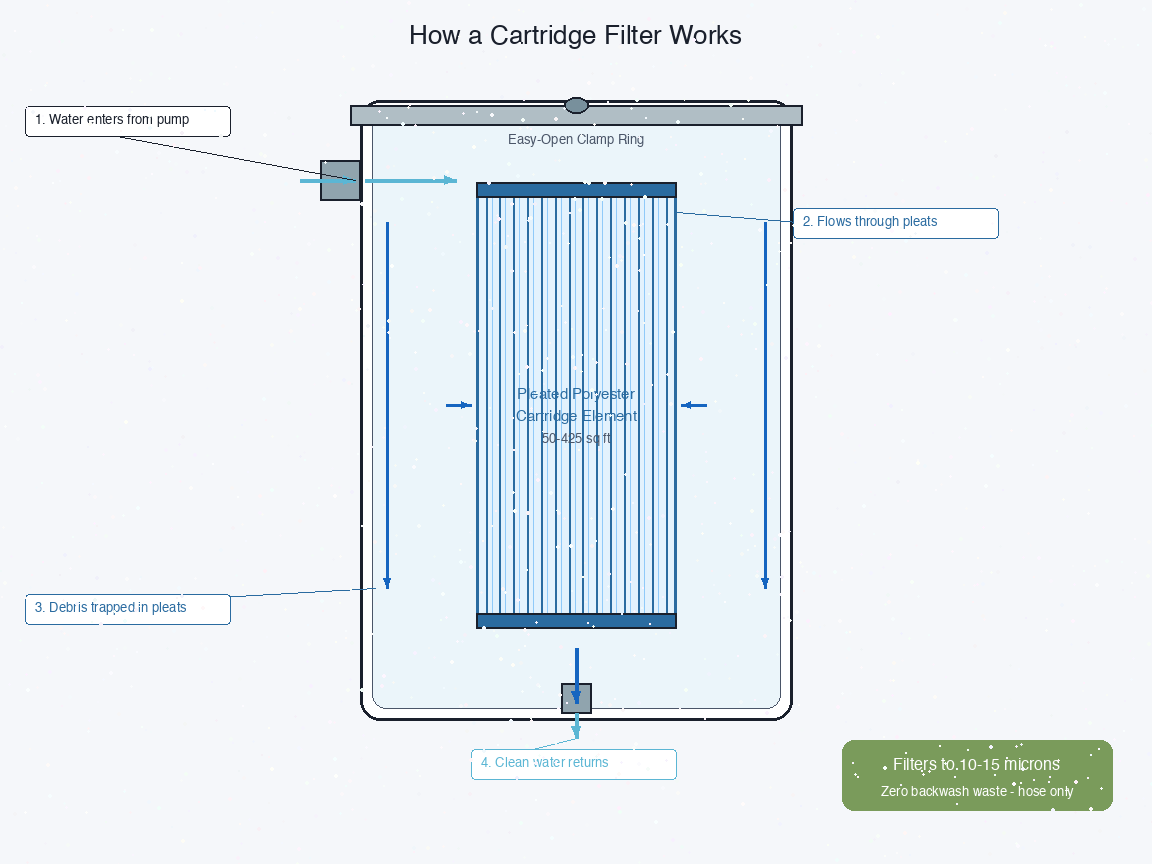
Water flows through a pleated polyester cartridge (50-425 sq ft of surface area). Debris 10-15 microns and larger gets trapped in the pleats. No backwash—when pressure climbs 8-10 psi above baseline, you pull the cartridge out and hose it off. Every 3-6 months, soak the cartridge in a cleaning solution to strip oils and scale.
Cartridge filter pros
- Finer filtration than sand (10-15 microns vs 20-40)
- Zero backwash waste—saves 1,000+ gallons of water per season
- Lower pump pressure means lower electricity cost
- Easiest cleaning—pull, hose, done
- Works without waste plumbing (great for pools without sewer access)
Cartridge filter cons
- Higher replacement cost—cartridges run $30-200 each, replaced every 1-3 years
- Less tolerant of heavy debris (leaves clog pleats fast)
- Manual cleaning—no automated backwash cycle
- Scale and oil buildup requires quarterly acid soaks
Cartridge filter best for
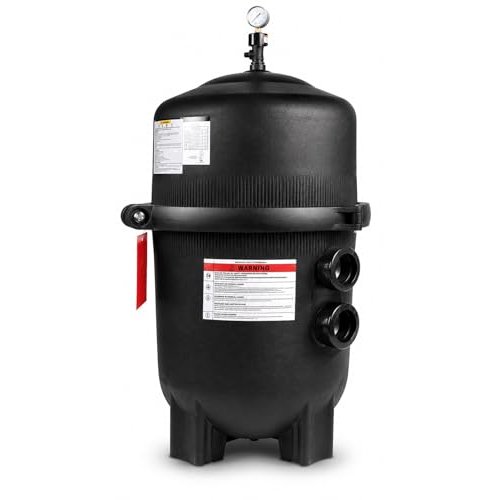
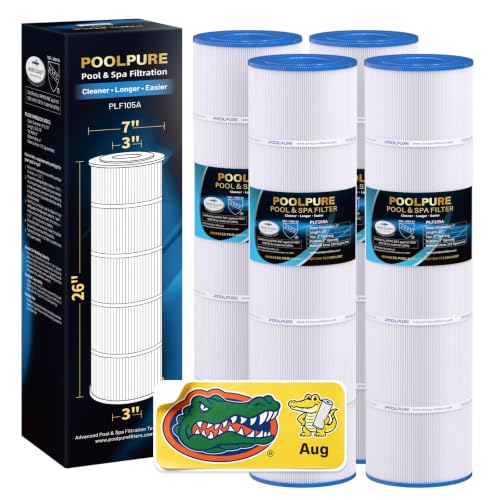
Above-ground pool owners who want better-than-sand clarity without backwash; inground pools without sewer-line access; water-conscious owners in drought regions; spas. For inground pools to ~25,000 gal, the XtremepowerUS cartridge filter ($370) is a solid mid-tier choice. For large pools 40,000-90,000 gal, step up to the 425 sq ft XtremepowerUS 4-element ($700). When cartridges wear out (every 1-3 years), a POOLPURE CCP420 4-pack ($170) drops in for Pentair Clean and Clear Plus 420 tanks. Cleaning steps are on how to clean a pool filter.
DE filter deep dive: how it works, pros, cons
How a DE filter works
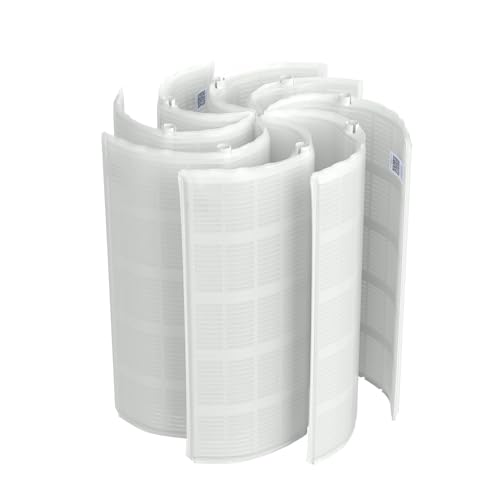
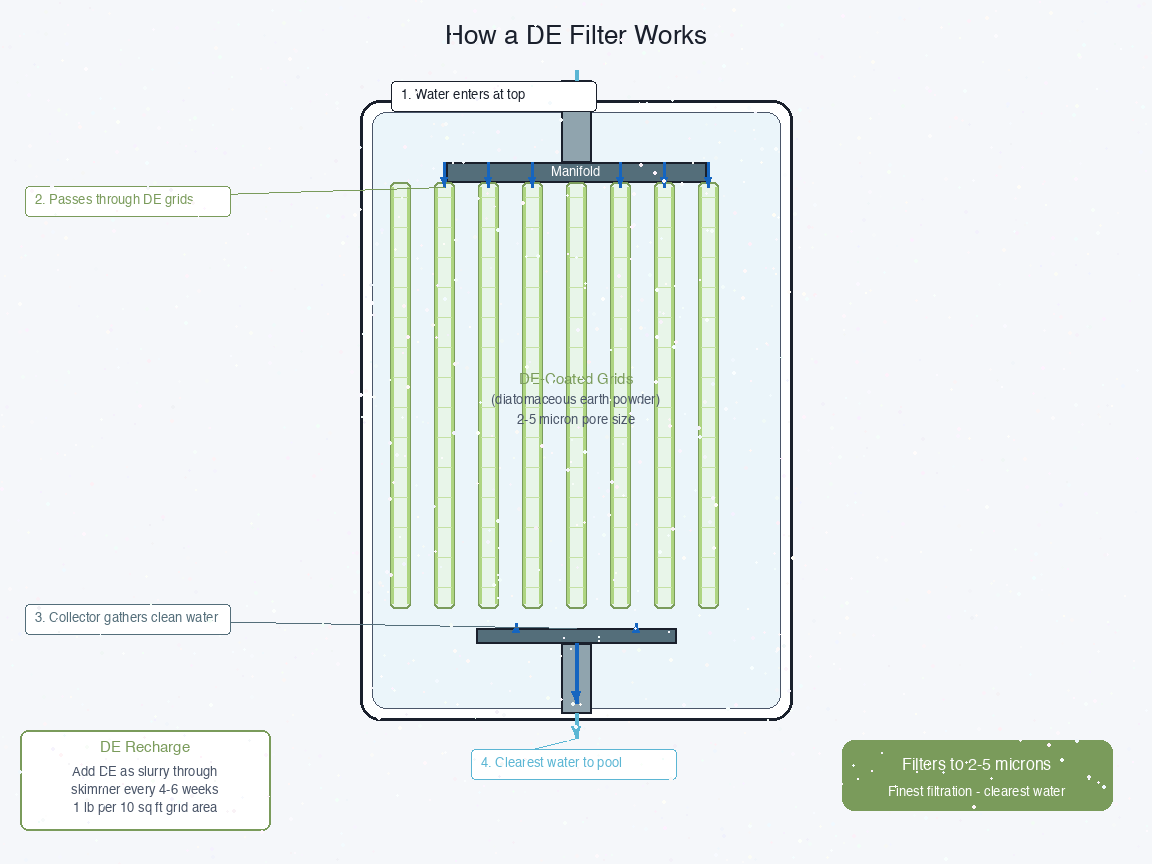
Inside a DE tank, 4-8 curved grids hold a thin layer of diatomaceous earth powder (fossilized algae skeletons, 2-5 micron pore size). Water passes through the DE-coated grids; the powder traps particles as small as 2-5 microns—the size of bacteria and fine pollen. Every 4-6 weeks, backwash the spent DE and recharge with fresh powder (about 1 lb per 10 sq ft of grid area).
DE filter pros
- Finest filtration of the three (2-5 microns—visibly clearer water)
- Highest debris capacity per cleaning cycle
- Preferred for inground pools where owners want sparkle
- Reduces sanitizer demand (clears more dead algae, less chlorine needed)
DE filter cons
- Highest maintenance—monthly backwash plus recharge, annual full grid clean
- DE powder is a confirmed lung irritant (crystalline silica risk)—N95 mask mandatory
- Highest cost—tanks $400-1,500, grids $120-300 every 3-5 years, powder $30-65 per bag
- Regulatory restrictions on DE disposal in some areas (California, parts of Australia)
- Sensitive to low pH—acidic water etches the grids faster
- Sensitive to total alkalinity swings—unstable TA scales the DE bed
DE filter best for
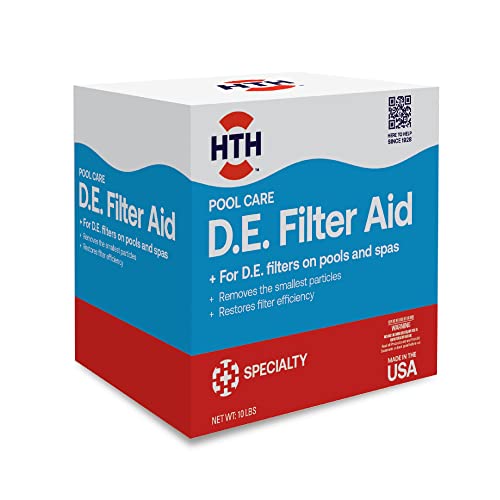
Inground pools where clarity is the priority (custom pools, swim-up bars, glass-tile finishes); pools with chronic cloudiness that sand or cartridge can’t crack; owners who don’t mind the maintenance. Use Leslie’s 24 lb DE powder ($42) or the smaller HTH 10 lb DE aid ($30) for trial runs. When grids tear or scale beyond acid-wash recovery, swap in the POOLPURE FS-2005 60 sq ft replacement grid set ($166) for Pentair FNS Plus 60, Jandy DEL60, or Hayward Pro-Grid DE6020. For DE recharge dosage math, use the chemical dose calculator. Cleaning steps are on how to clean a pool filter.
Sand vs cartridge vs DE: comparison table
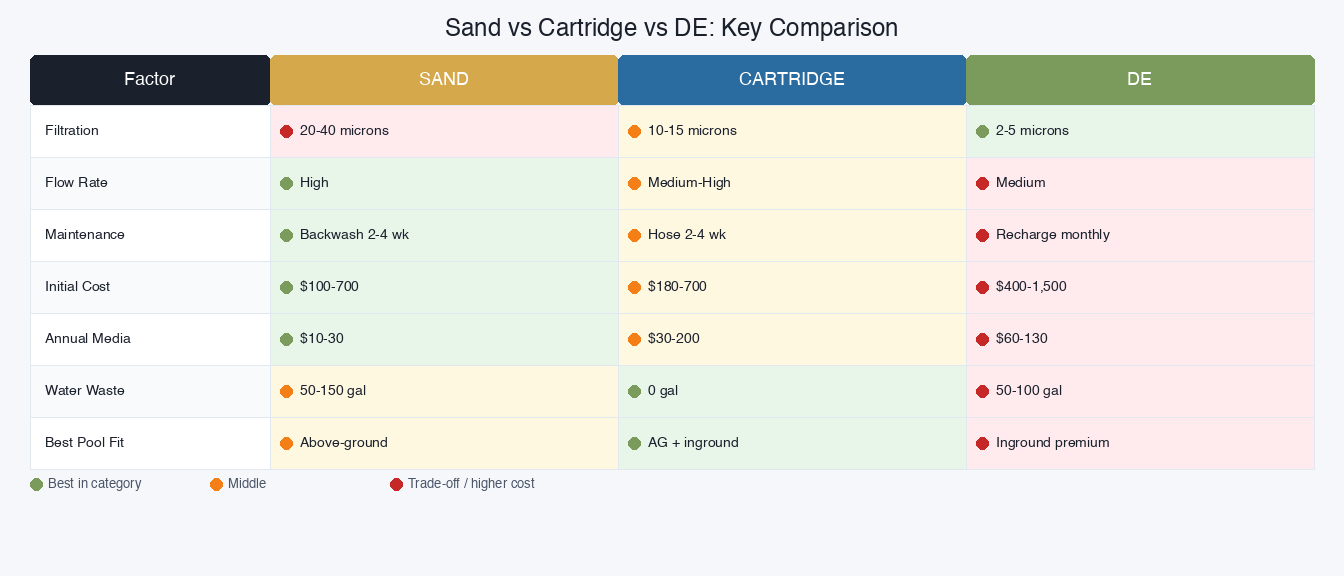
The table below summarizes the eight decision factors that matter most. Pricing reflects Amazon listings and may shift by season.
Quick comparison chart
| Factor | Sand | Cartridge | DE |
|---|---|---|---|
| Filtration (microns) | 20-40 (coarsest) | 10-15 (medium) | 2-5 (finest) |
| Flow rate (GPM) | High (best for big pumps) | Medium-High | Medium |
| Maintenance frequency | Backwash every 2-4 weeks | Hose every 2-4 weeks, soak quarterly | Backwash and recharge every 4-6 weeks, full clean annually |
| Initial cost (tank and pump) | $100-700 | $180-700 | $400-1,500 |
| Annual media cost | $10-30 (sand 3-5 yr) | $30-200 (cartridge 1-3 yr) | $60-130 (DE powder and grid replacement) |
| Debris capacity | High (sand bed depth) | Medium (limited by pleat count) | Highest per recharge |
| Water waste per clean | 50-150 gal (backwash) | 0 gal (hose off only) | 50-100 gal (backwash) |
| Best pool fit | Above-ground, high debris | Above-ground and inground mid | Inground premium clarity |
Pick sand if you want lowest cost and lowest effort. Pick cartridge if you want medium-clarity filtration with zero water waste. Pick DE if you want the clearest water and accept the maintenance. All three filter types work fine in both chlorine and saltwater pools—salt systems don’t change the calculus.
What you’ll need
To install or upgrade a pool filter you’ll need:
- The filter itself—sand, cartridge, or DE per the decision tree above
- Filter media—#20 silica sand for sand filters (one 50 lb bag per 16-inch tank); DE powder for DE filters (1 lb per 10 sq ft grid area); nothing extra for cartridge beyond the included element
- Pump matched to filter flow rate—sand needs high GPM, cartridge and DE accept lower flow
- Plumbing fittings—1.5-inch or 2-inch PVC unions, multiport valve (sand and DE) or clamp ring (cartridge)
- Pressure gauge—replace the cheap stock gauge with a 0-60 PSI unit so you know when backwash or cleaning is due
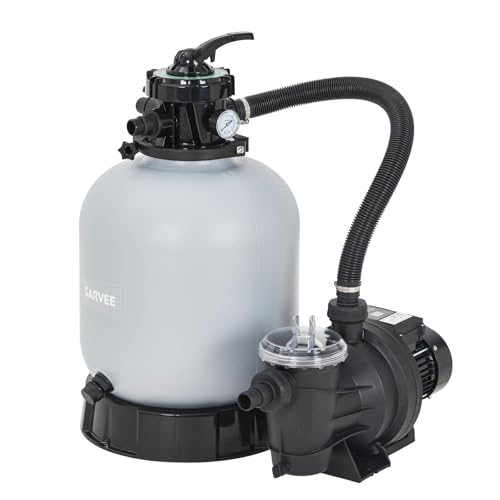
- For sand filter upgrades: a PeakPursuit 16-inch 1 HP sand filter ($221.61) covers above-ground pools to 20,000 gal and pairs well with most 1-1.5 HP pumps
What to buy only if needed
Only if your current sand is 4+ years old
Replace with #20 silica—start with one Aqua Joe 50 lb bag for a 12-16 inch tank or US Silica Mystic White II for premium angularity.
Only if your DE grids are torn or calcium-clogged beyond acid wash
Drop in the POOLPURE FS-2005 replacement grid set—half the cost of OEM Pentair grids.
Only if your cartridge is 1-2 years old and losing bounce
Try a deep chemical soak first (filter cleaner product); if pressure still won’t drop, swap in a POOLPURE CCP420 4-pack.
Safety notes: DE powder handling and cartridge cleaning
Pool filter maintenance involves two real hazards. Take both seriously.
DE powder handling safety
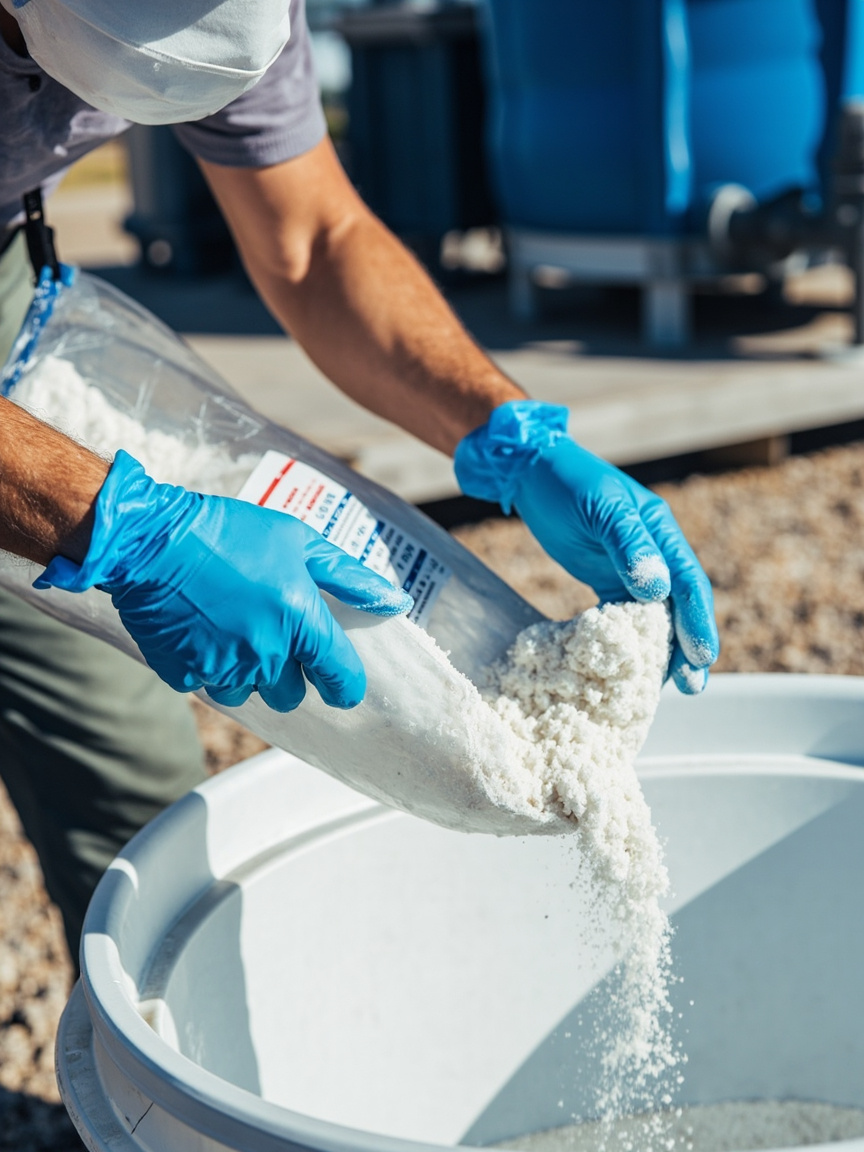
DE powder is a lung irritant
DE pool-grade powder contains crystalline silica. Long-term inhalation causes silicosis—an irreversible lung disease. Always wear an N95 mask and nitrile gloves when measuring, mixing, or applying DE. Pour slowly into a slurry bucket—never toss dry powder into the skimmer. Avoid breathing any visible dust. Store DE powder sealed and away from children and pets—the bag looks like flour or pet food. Food-grade DE (used for pest control) is a different product with much lower crystalline silica—don’t substitute, and never use filter-grade DE for any food, pet, or garden application.
Cartridge cleaning uses muriatic acid
Quarterly cartridge soaks use diluted muriatic acid or a commercial filter cleaner. Muriatic acid is a strong chemical hazard: always add acid to water (never water to acid), wear gloves and eye protection, work outdoors, and never mix acid with chlorine products—the gas can cause severe respiratory damage. See our muriatic acid safety basics for full PPE and dilution guidance.
Common mistakes
- Sizing the filter to pool volume, not pump flow rate. A 100 GPM pump paired with a 50 sq ft cartridge will short-cycle. Always check the filter’s rated GPM matches your pump curve, not just the pool gallons.
- Substituting play sand for #20 silica pool sand. Play sand (.1-.3 mm) channels and clogs within weeks—you’ll be replacing it monthly. Only #20 grade (.45-.55 mm) works.
- Skipping the N95 when applying DE powder. Crystalline silica in pool-grade DE causes silicosis with repeated exposure. The $3 mask is non-negotiable.
- Backwashing a sand filter too often. A dirty sand bed filters better than a clean one—particles trap particles. Wait until pressure rises 8-10 psi above your clean baseline, not on a fixed weekly schedule.
- Forgetting that low total alkalinity scales up filter media. Unstable TA causes pH bounce, which makes calcium precipitate onto cartridge pleats and DE grids. Fix the chemistry before replacing a “clogged” filter—the filter is the symptom, not the cause.
When to call a pro
When the filter tank itself is leaking
Cracked sand tanks or split cartridge bodies require professional replacement—DIY fixes with epoxy rarely hold under 20+ PSI operating pressure. Call a pool tech; tank swaps run $200-500 labor plus the new tank.
When pressure won’t drop after backwash or cleaning
If pressure stays 10+ PSI above baseline after a proper backwash (sand or DE) or hose-off (cartridge), the media is channeled, scaled, or the multiport valve is failing. A tech can acid-wash DE grids, deep-clean cartridges, or diagnose valve issues you can’t see.
When you’re switching filter types entirely
Converting from sand to cartridge, or cartridge to DE, requires plumbing changes (waste line removal or addition), pump flow verification, and often a new pad. Worth the $300-600 install fee to avoid leaks.
Related
- How to clean a pool filter—parent Hub: step-by-step cleaning for all three filter types (sand backwash, cartridge hose and soak, DE backwash and recharge)
- Weekly pool care routine—where filter cleaning fits in your weekly chemistry and maintenance cadence
- First year pool owner guide—Start Here if you’re choosing your first filter and building the full pool-care routine
Key takeaways
- Three pool filter types: sand (20-40 microns, cheapest, lowest maintenance), cartridge (10-15 microns, no backwash waste), DE (2-5 microns, clearest water, highest maintenance).
- Size the filter to your pump flow rate, not just pool gallons—wrong pairing causes pressure problems.
- Use only #20 silica pool sand (.45-.55 mm) in sand filters—play sand clogs.
- DE powder is a lung hazard—N95 and gloves mandatory; never substitute food-grade DE.
- Backwash sand only when pressure climbs 8-10 PSI above clean baseline—over-backwashing hurts filtration.
- All three filter types work in both chlorine and saltwater pools—salt cells don’t change the filter choice.
- Cross-link to how to clean a pool filter for maintenance steps once you’ve chosen a type.