
If the pressure gauge climbs and the returns feel weak, another tablet won’t fix the filter. Open the lid under pressure and you can launch the clamp band—or worse. Clean on a real pressure trigger, shut the pump off first, and match the procedure to cartridge, sand, or DE.
Quick answer
Clean a pool filter when pressure sits about 8–10 psi above your clean baseline—not only on a calendar date. Shut the pump off and relieve air pressure before opening any lid. Cartridges rinse and soak; sand and DE filters backwash to waste, and DE grids need the correct powder recharge after service. A clean filter clears water only if chemistry is also sane—retest after heavy debris or algae cleanups.
What this is not
Not a filter-type buying guide
Choosing cartridge vs sand vs DE is an equipment decision. This page is service procedure for the filter you already own.
Not a cloudy-water chemistry deep dive
If pressure is normal and water is still milky, continue to cloudy pool after you verify filtration.
Not spa-only cartridge care
Spa cartridges share rinse habits but different chemistry—see hot tub water care basics for spa cadence.
Not “run filter cleaner through a live skimmer with chlorine full blast”
Follow product labels; many cleaners need the pump off or an isolated soak. Never mix cleaner chemistry casually with heavy chlorine residual in a closed tank.
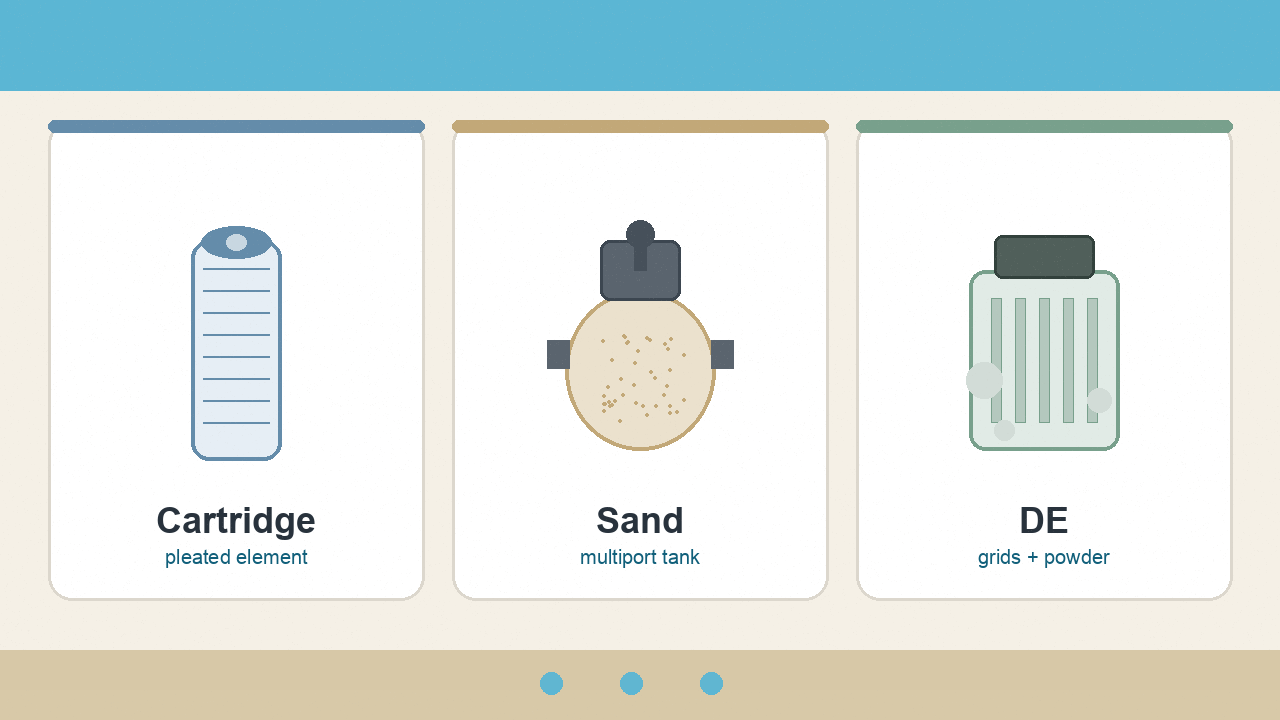
Filter type overview
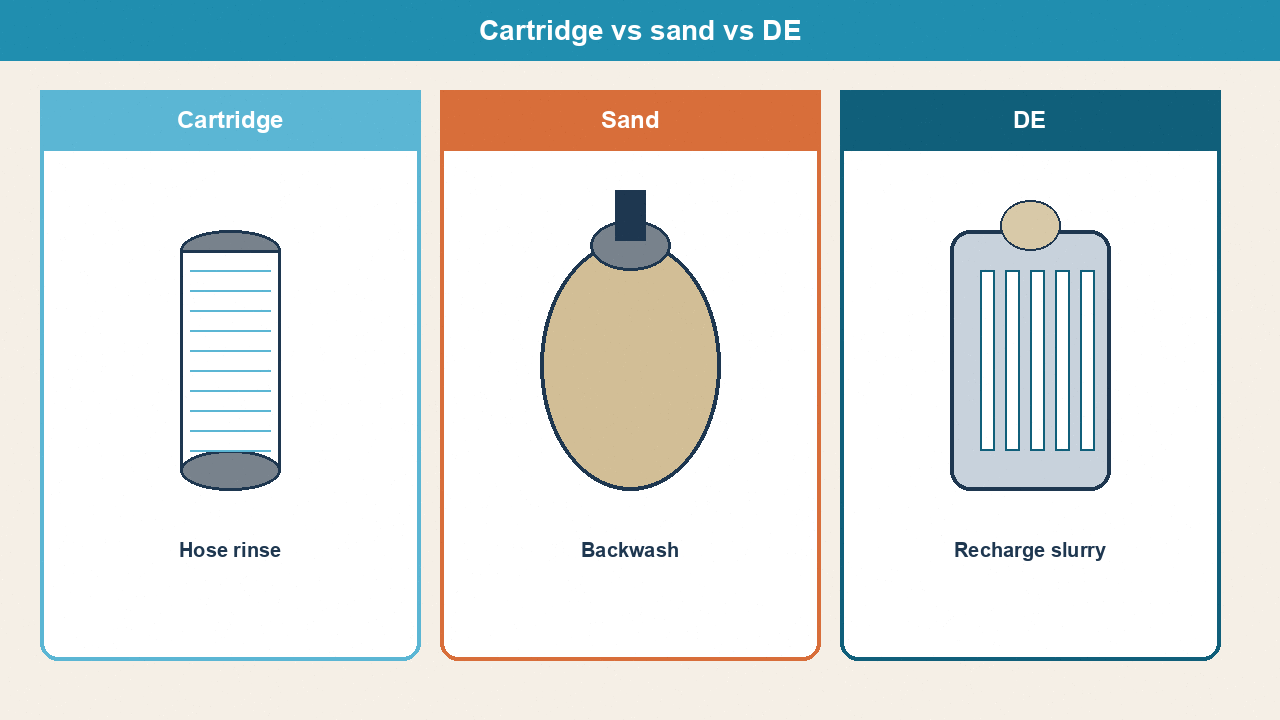
Know which tank you’re staring at before you buy tools. The wrong procedure wastes an afternoon and can wreck media.
Cartridge
Pleated media in a tank; no multiport backwash on most residential units. Clean means remove, rinse, and occasional soak. Cartridges shine on water clarity when they’re actually clean—and they hide oils deep in the pleats when they’re not. If your pool runs a single large cartridge or a multi-cartridge cluster, pull every element; half-cleaning is how pressure climbs again in two days.
Sand
Media bed traps debris; multiport BACKWASH and RINSE cycles send waste out the waste line. Sand is forgiving day to day and unforgiving when you move the multiport with the pump running. You’ll also replace sand on a multi-year interval when channeling starts and backwash stops recovering PSI.
DE (diatomaceous earth)
Grids coated with DE powder; backwash or bump, then recharge DE to the label rate. Finest filtration when grids are intact. DE gives the “wow” clarity people chase—and it punishes skipped recharges with cloudy returns and DE dust blowing back into the pool through a torn grid.
Decision tree — what service do you need?
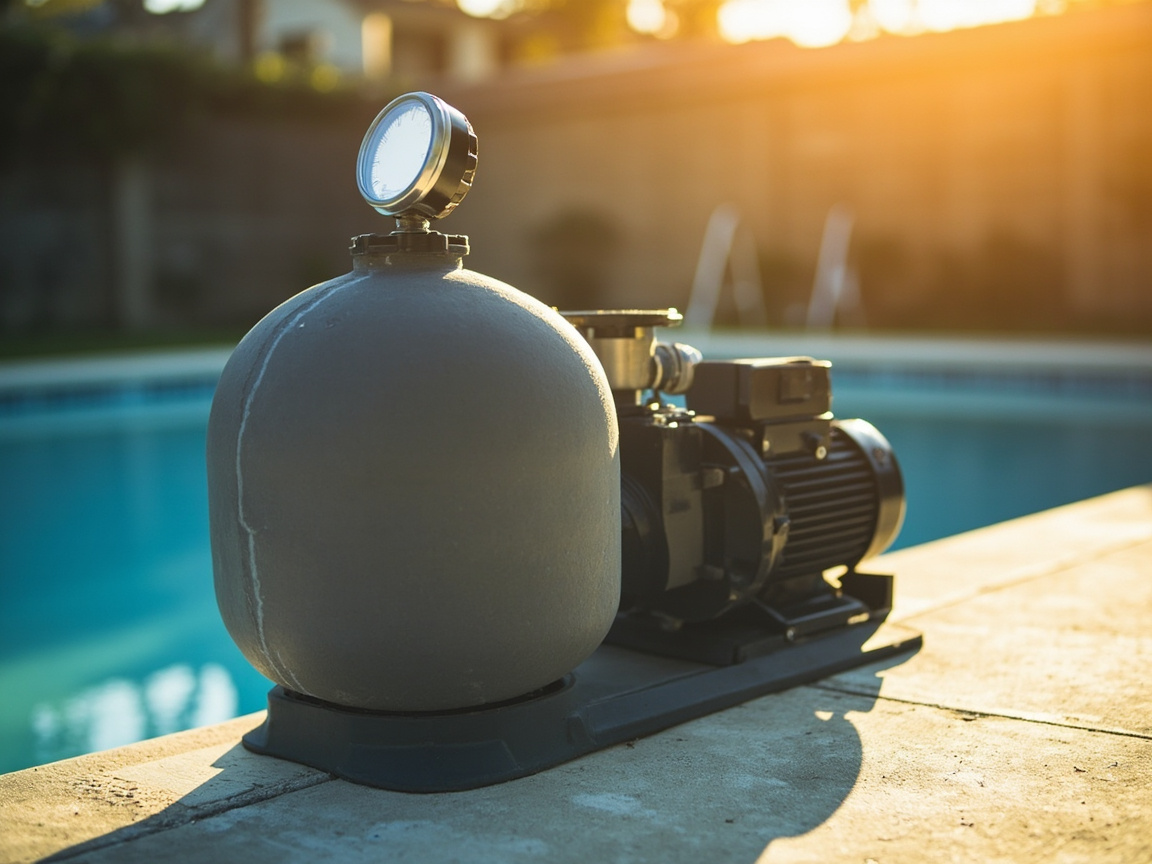
Branch 1 — You do not know your clean baseline PSI
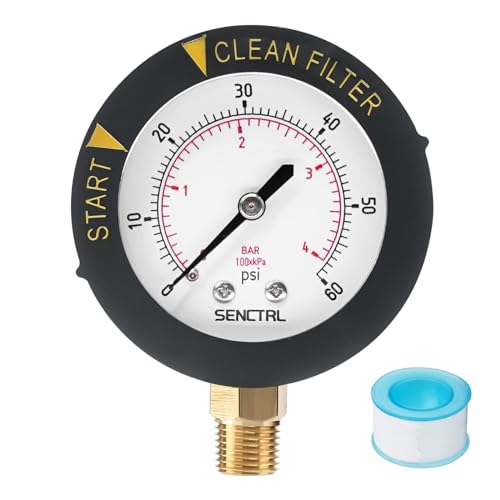
Deep-clean once the right way, mark the gauge, write the number on the tank. Future decisions need that mark. If the dial is stuck, install a SENCTRL 0–60 PSI gauge.
Branch 2 — PSI +8–10 over baseline, cartridge filter
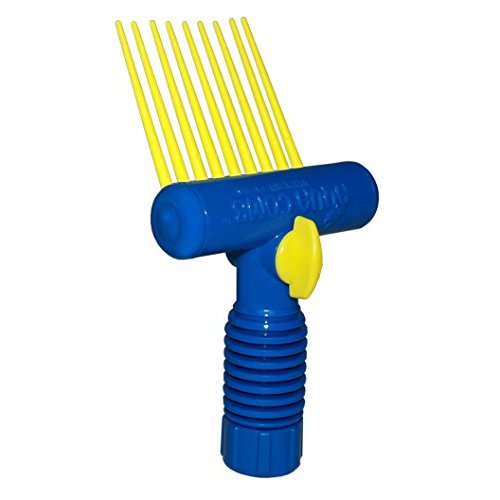
Pump off → air relief → open → rinse with a Concy 7-jet comb or hose → optional soak.
Branch 3 — PSI high, sand filter
Backwash until the sight glass runs clear → RINSE → FILTER. Repeat if pressure returns quickly (channeling or dirty sand).
Branch 4 — PSI high, DE filter
Backwash or bump per maker → recharge exact DE pounds with Dicalite DE 25 lb.
Branch 5 — Pressure low with weak flow
Check baskets, closed valves, and air leaks—not “more backwash.”
Branch 6 — Water cloudy after algae or a storm
Clean the filter after die-off load; pair with green pool or the green-to-clear tool chemistry path.
Branch 7 — Gauge stuck or reads zero always
Replace the gauge (SENCTRL 0–60 psi) before trusting any schedule.
What you’ll need
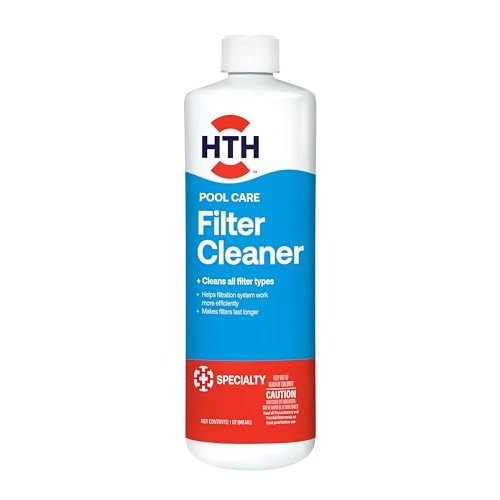
HTH Pool Care Filter Cleaner 32 oz
Chemical soak for oils and scale on cartridges and DE grids when a hose rinse is not enough. This is the soak bottle for stubborn media.
Skip if: your filter is sand-only and you only backwash—chemical soak is optional; focus on multiport technique.
Don’t use if: you plan to dump cleaner into a live high-chlorine tank against the label; isolate the soak.
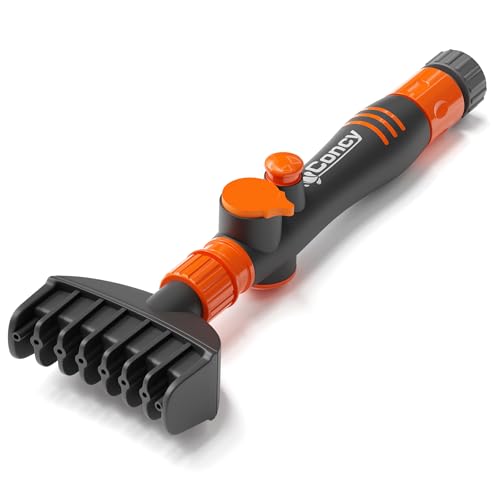
Concy 7-jet comb
Deep rinse tool for cartridge pleats. Reaches pleat roots a flat hose spray misses.
Skip if: you only run a sand filter—this tool is for cartridge (and some grid rinse) media.
Don’t use if: you blast max needle-jet pressure that splits fabric; use firm, controlled passes.
SENCTRL 0–60 PSI gauge
Readable baseline and dirty marks. Makes the +8–10 psi rule usable.
Skip if: your existing gauge still reads accurately against a known good spare.
Don’t use if: you leave the old dead gauge on the tank “for looks”—you’ll service blind.
Dicalite DE 25 lb
Recharge after DE service only. Covers multiple recharges for typical residential grids.
Skip if: you run cartridge or sand—DE powder is only for DE grids.
Don’t use if: you plan to pour DE into a cartridge tank; that ruins media and water.
Aqua Comb
Separates caked pleats after rinse so soaks reach full surface area. Gentle separator for stuck media.
Skip if: your cartridges are new and still springy—comb only when pleats cake together.
Don’t use if: you force the comb and tear pleats; replace damaged media instead.
Steps — cartridge filters
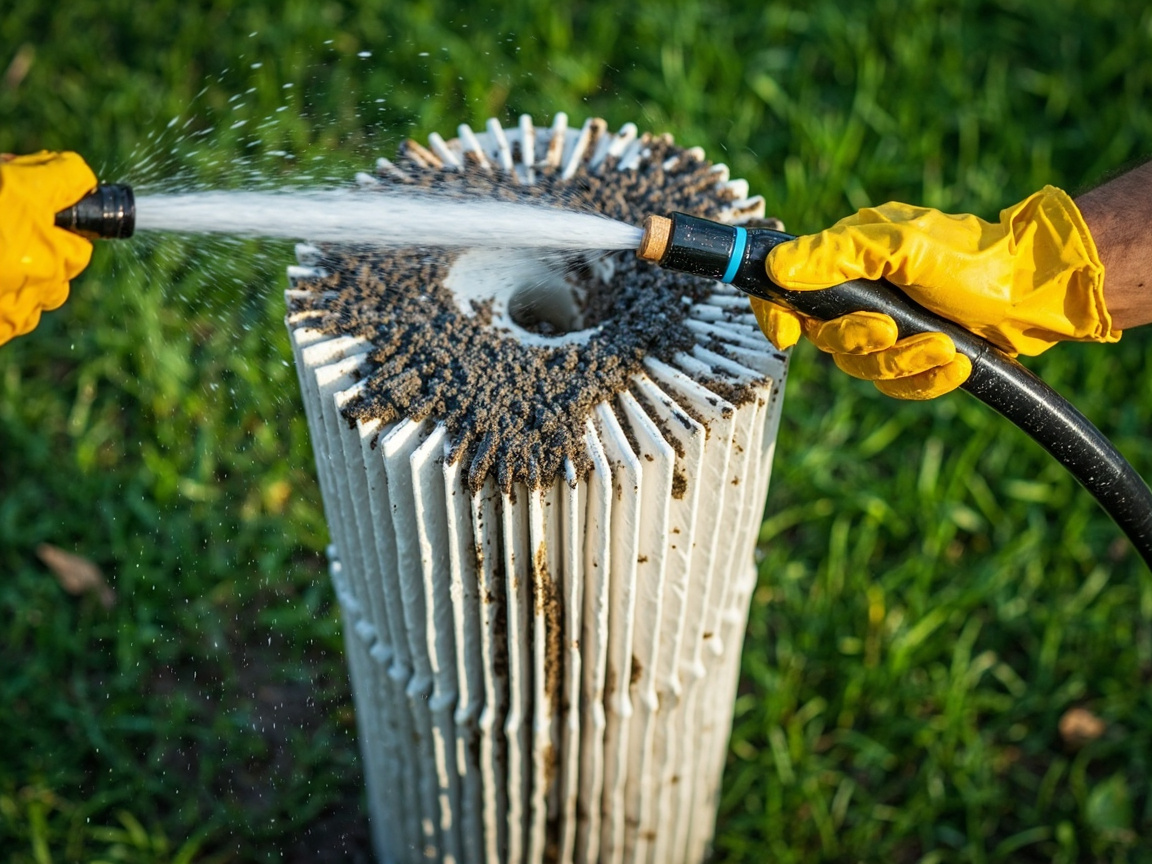
Step 1 — Power off and relieve pressure
Pump OFF. Open air relief until pressure hits zero. Never crack the clamp on a pressurized tank.
Step 2 — Remove cartridge(s)
Note orientation; inspect for broken caps, torn pleats, and channeling gaps.
Step 3 — Rinse top-down
Work dirt out of pleat roots with a Concy 7-jet comb or fan-spray hose. Avoid max-pressure needle jets that split fabric.
Step 4 — Comb if pleats stick
Use the Aqua Comb gently; do not tear.
Step 5 — Soak when oils remain
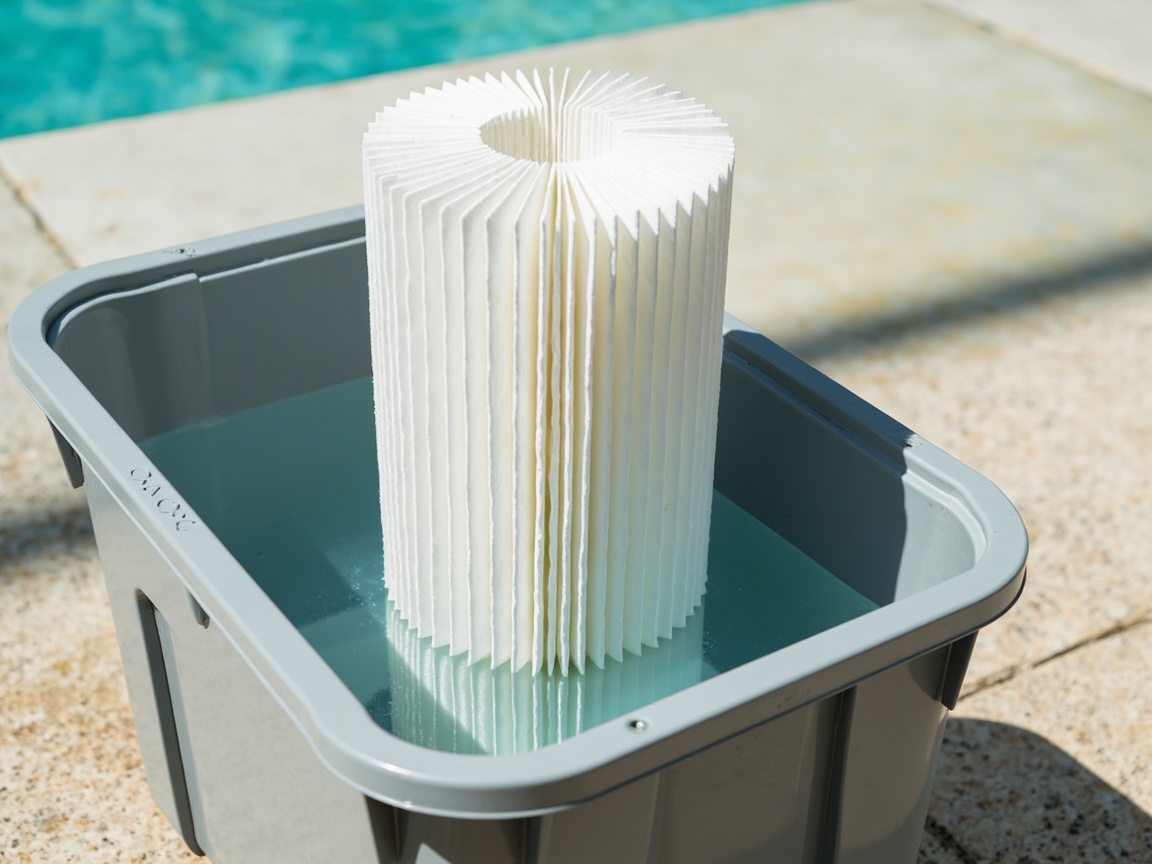
Plastic bin plus HTH filter cleaner per label; rinse thoroughly before reinstall.
Step 6 — Reassemble, restart, mark baseline
Bleed air; run; record new clean PSI on a working pressure gauge. Link cadence to weekly pool care and the monthly calendar.
Steps — sand filters
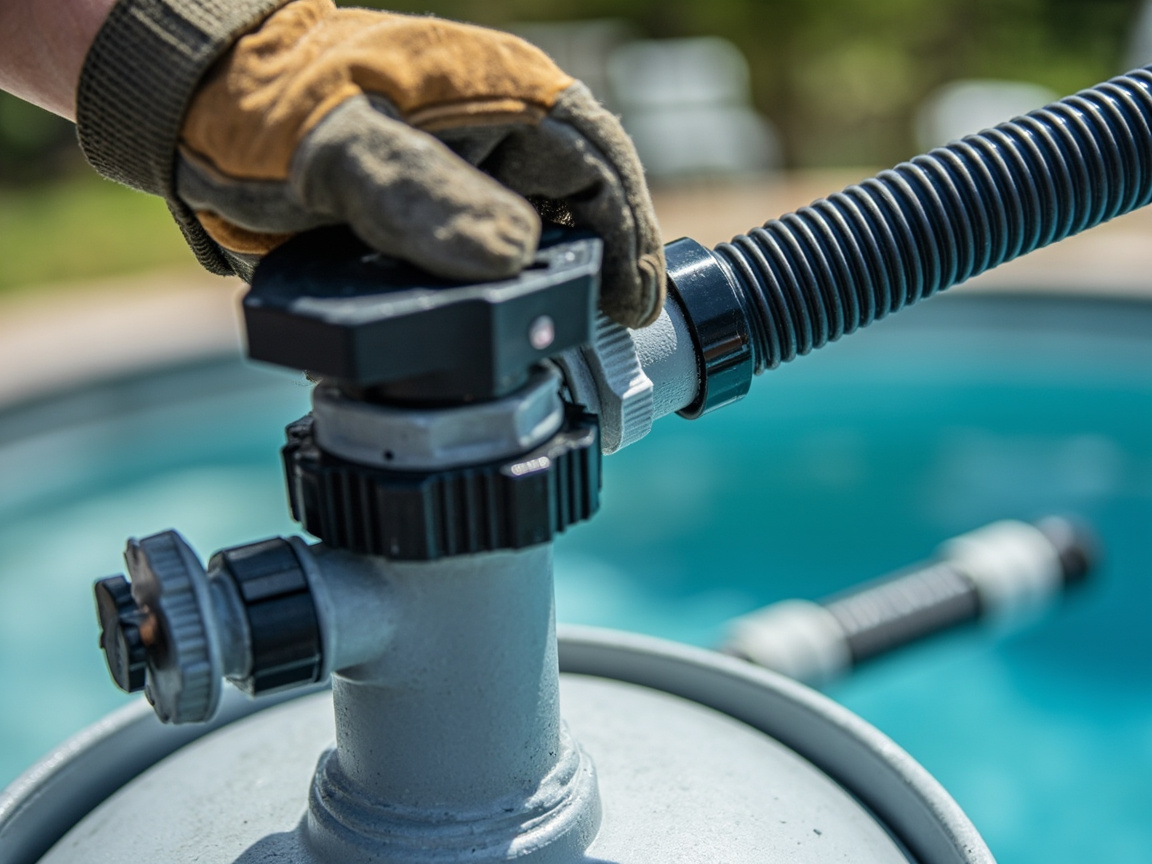
Step 1 — Pump off, set multiport correctly
Never move the multiport handle with the pump running—spider gaskets tear and spray dirty water across the pad. Shut the pump off, confirm the pressure gauge drops, then click the handle firmly into BACKWASH.
Step 2 — BACKWASH
Run until waste runs clear (time varies with load). Watch water level so you don’t suck the pool down too far—especially on smaller above-ground volumes. If the sight glass never clears, stop and check whether the waste line is restricted or the sand is due for replacement.
Step 3 — RINSE then FILTER
Short rinse resettles the bed so you don’t dump a cloud of fines back to the pool on startup. Return to FILTER, restart the pump, bleed air if your tank has a relief, and write the new PSI next to your clean baseline mark.
Step 4 — When backwash is not enough
Sand replacement age, channeling, or valve issues—pro diagnosis if pressure never recovers. A filter that hits dirty PSI twenty minutes after a perfect backwash is telling you the media bed is tired or the multiport is bypassing.
Steps — DE filters
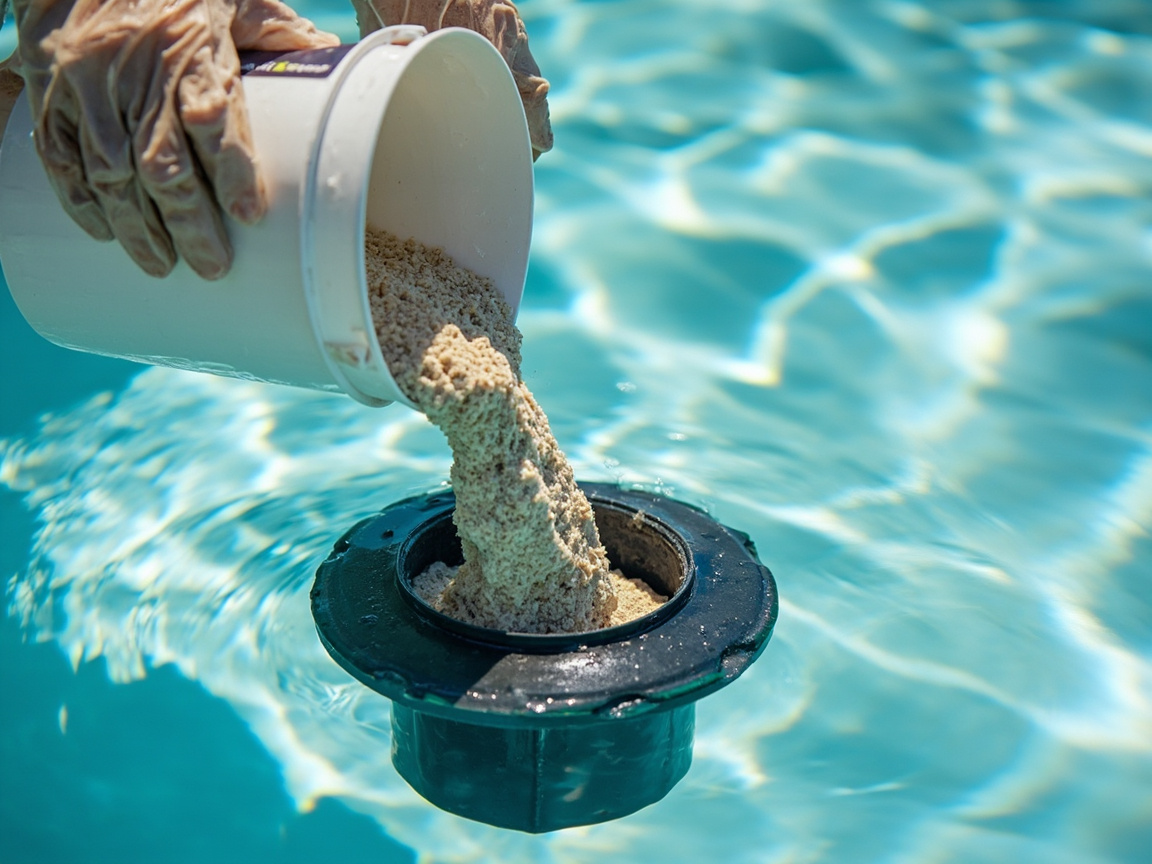
Step 1 — Backwash or bump per manufacturer
Know whether you have a bump handle or a full multiport. Bump systems shed cake differently than a full backwash cycle—follow the OEM sequence so you don’t leave half the grids bare.
Step 2 — Open only after depressurized if grids need hose service
Same clamp safety rule as cartridge. If you pull the grid assembly, support the manifold; dropping a wet grid cluster cracks seals you didn’t budget for.
Step 3 — Recharge DE
Pre-slurry powder in a bucket; add slowly through the skimmer with the pump on FILTER so grids coat evenly. Use Dicalite DE at the maker’s pounds-per-filter rate. Never dump dry powder into a cartridge tank. Skip this if you’re on sand or cartridge—wrong media ruins equipment and water.
Step 4 — Inspect grids if DE blows back to the pool
Torn grids require repair—not more powder. White dust returning to the pool after a recharge is a grid or manifold problem. Keep adding DE and you’ll only redecorate the floor.
After-clean chemistry and water clarity
A clean filter is half the story. The other half is whether the water chemistry can keep particles from reforming the minute you walk away.
Expect temporary fine haze sometimes
Fines after media disturbance can need short clarifier only if FC and pH are already OK (cloudy pool). If FC is low, clarifier just rearranges the problem. Fix sanitizer first, run the filter, then decide on clarifier.
Retest after algae cleanups
Dead algae loads filters fast—plan a second clean 24–48 hours later. Pair with pool water testing after major service days when you also shocked or treated algae. You’ll still need to empty baskets mid-cleanup when the skimmer packs with green sludge.
Testing framework
If the water still looks dull after a clean baseline PSI, leave the filter alone and fix chemistry first. Log FC, pH, and TA the same day you service the tank so you don’t blame the media for a zero-chlorine afternoon.
Tie filter service to the rest of the care calendar
Pressure-based cleans sit on top of the weekly rhythm in weekly pool care and the seasonal layers in the monthly calendar. Don’t wait for “filter Saturday” when the gauge already says dirty on Wednesday.
Common mistakes
- Opening the lid under pressure. Injury risk—always pump off plus air relief. A clamp band under pressure can become a projectile.
- Backwashing a cartridge tank. Wrong hardware path; you will not clean pleats that way. Pull the cartridge and rinse with a Concy 7-jet comb instead.
- Adding DE to a cartridge or sand filter. Wrong media ruins equipment and water—keep Dicalite DE for DE grids only.
- Moving the multiport with the pump running. Tears spider gaskets and can spray hot, pressurized water across the pad.
- Ignoring a dead gauge. You cannot run a pressure-based schedule blind—swap in a SENCTRL gauge.
Skip the “I’ll soak it next month” habit when oils already smell on the cartridge. A timely HTH filter cleaner soak beats buying a new element early.
When to call a pro
Keep DIY if: you can shut the pump off, relieve pressure, rinse or backwash correctly, and PSI returns near baseline. Most cartridge rinses and sand backwashes are homeowner jobs when the tank and multiport are intact.
Call a pro if:
- Cracked tanks, stripped clamp bands, or major leaks—structural failures are not hose-rinse problems
- Repeated DE blowback or sand in the pool—laterals, grids, or valves need teardown skill
- Electrical issues at the pad during filter work—GFCI trips, burnt leads, or a pump that restarts against a locked-out service
- Pressure never recovers after correct procedure and a known-good gauge—internal channeling or valve bypass may need shop diagnosis
If you’re mid-algae recovery and the filter clogs every few hours, you may need a second set of hands on vacuuming while you cycle cleans—not a bigger bottle of random chemicals.
What to buy only if needed
Only if pleats are crushed, torn, or permanently oil-black
Replace cartridges; HTH filter cleaner will not resurrect dead media.
Only if sand is old and pressure returns minutes after backwash
Media replacement interval may be due—not endless backwash.
Only if DE grids show tears
Grid set repair or replace before more Dicalite powder.
Only if the gauge disagrees with a known good spare
Swap the SENCTRL gauge; do not argue with two instruments forever.
Only if rinse alone never opens caked pleats
Add a Concy 7-jet comb and Aqua Comb to the kit.
Safety notes
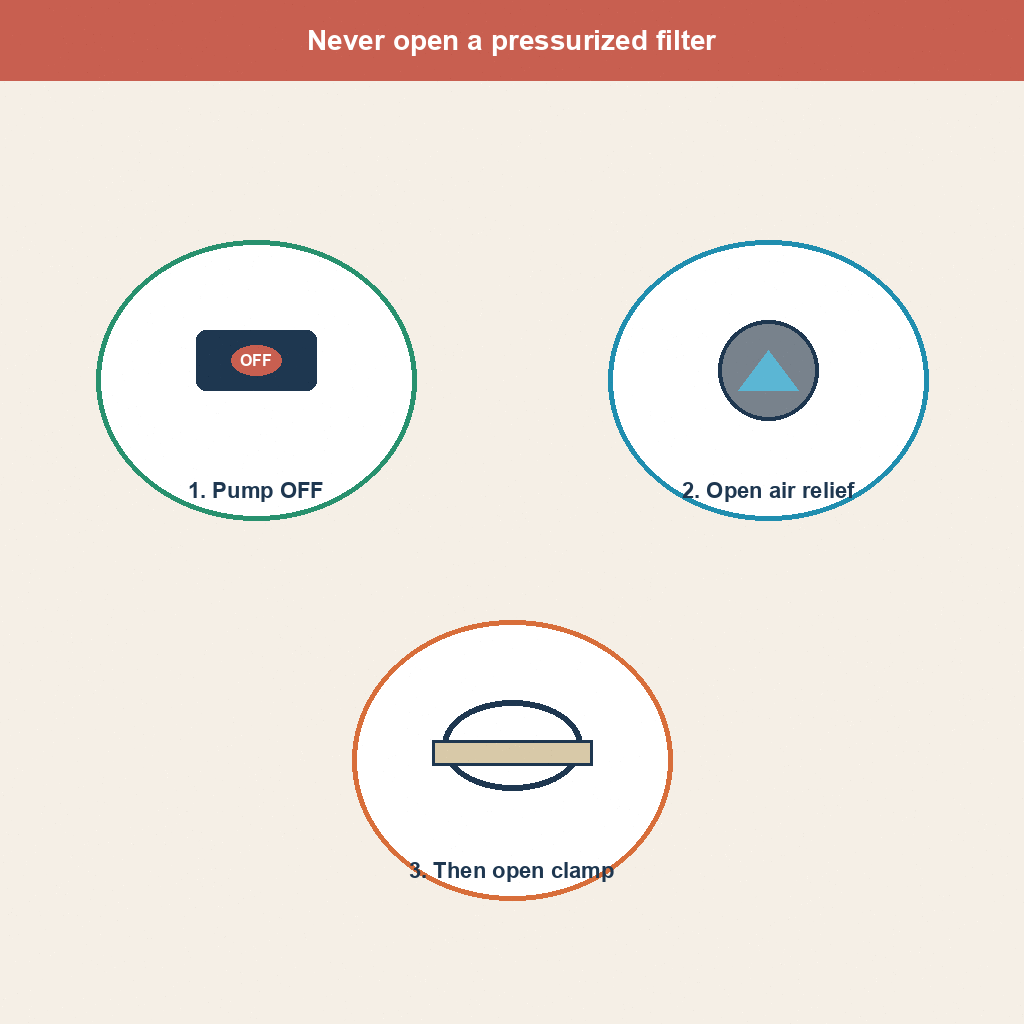
- Depressurize before any open clamp—non-negotiable every single time. A pressurized lid can blow off and cause serious injury.
- Chemical soaks: gloves and eye protection. Filter cleaners are irritants; keep kids and pets away from soak bins.
- Never mix filter cleaner with strong chlorine in a sealed tank; follow label isolation steps.
- Waste water rules: backwash to an approved waste destination; do not flood neighbors or storm drains illegally.
- Electrical lockout mindset: confirm the pump cannot restart mid-service (timer or remote apps).
- Lifting heavy multiport tanks: get help; wet sand tanks are injury magnets.
- Store HTH filter cleaner sealed and away from kids.
Related
Key takeaways
- Pressure +8–10 psi over clean baseline triggers service.
- Pump off plus air relief before opening any filter.
- Cartridge = rinse/soak; sand = backwash; DE = backwash plus recharge.
- Never put DE in cartridge systems.
- Multiport only moves with the pump off.
- After algae, expect a second clean.
- Dead gauges lie—replace them.