
If the pool only gets attention when friends text about swimming, you’re already behind. Miss two test days in heat and algae can anchor on walls while the filter packs with debris you never skimmed. A real maintenance schedule is a weekly rhythm plus monthly and seasonal layers—not one spring checklist you print and forget.
Quick answer
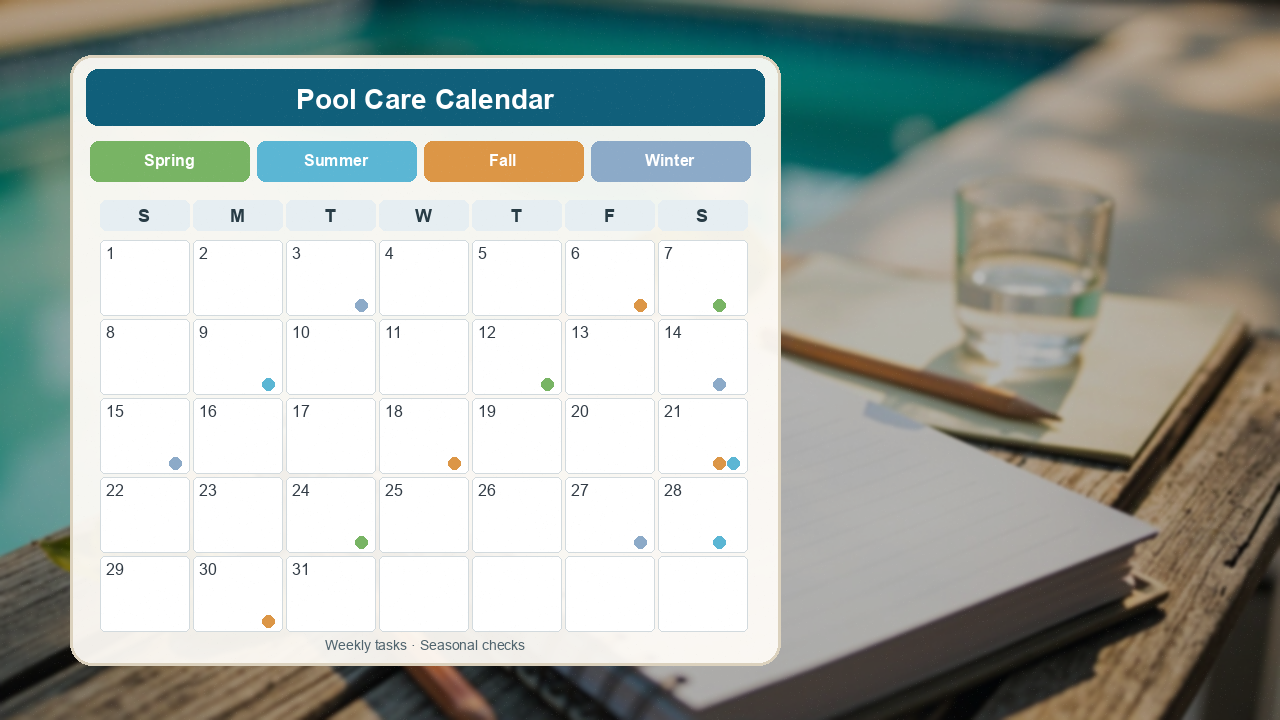
A pool maintenance schedule is a weekly rhythm plus monthly and seasonal layers—not a single spring checklist. Twice a week, test free chlorine and pH, skim, empty baskets, and brush walls. Every month, deep-clean or backwash the filter when pressure rises, inspect equipment, and oxidize after heavy use. Each season, run opening or closing tasks with the open/close checklist. Salt and chlorine systems share the mechanical calendar; only salt-cell and stabilizer checks diverge.
What this is not
Not a PDF chore list with no chemistry
This page is a living schedule that links into testing, problems, and tools—not a printable poster that ignores FC, pH, and CYA.
Not a substitute for weekly pool care depth
Day-to-day habits live in weekly pool care. This hub zooms out to monthly cadence and season gates.
Not equipment shopping
Filter media choice and salt-cell sizing belong in essentials guides. Here you only schedule the service actions.
Not climate-universal dates
“Open March 15” is wrong for half the country. Use temperature and freeze risk, then the open/close checklist.
Decision tree — which schedule branch are you on?
Branch 1 — Brand-new owner, first swim season
Start with first-year pool owner habits, then overlay this monthly calendar after week two.
Branch 2 — Chlorine tablet or liquid sanitizer (no salt cell)
Follow the full mechanical calendar plus monthly cal-hypo oxidation when combined chlorine or dull water shows up.
Branch 3 — Saltwater chlorine generator
Same skim, brush, and filter cadence; add salt level, cell inspection, and stabilizer checks on the monthly grid (saltwater basics).
Branch 4 — Above-ground seasonal pool
Compress the calendar: opening, peak-summer weekly, then full winterize. See above-ground differences and winterize pool.
Branch 5 — Pressure 8–10 psi above clean baseline this week
Jump to filter service now—do not wait for “monthly filter day.” Use pool filter cleaning.
Branch 6 — Water went green or a storm dumped debris
Pause the pretty calendar. Run recovery (green pool or after rain), then resume the weekly rhythm.
Branch 7 — You only visit the pool on weekends
Batch testing Friday and Monday; never skip brush and baskets. Automate what you can, but keep two chemistry checks.
Weekly rhythm (the non-negotiable base)
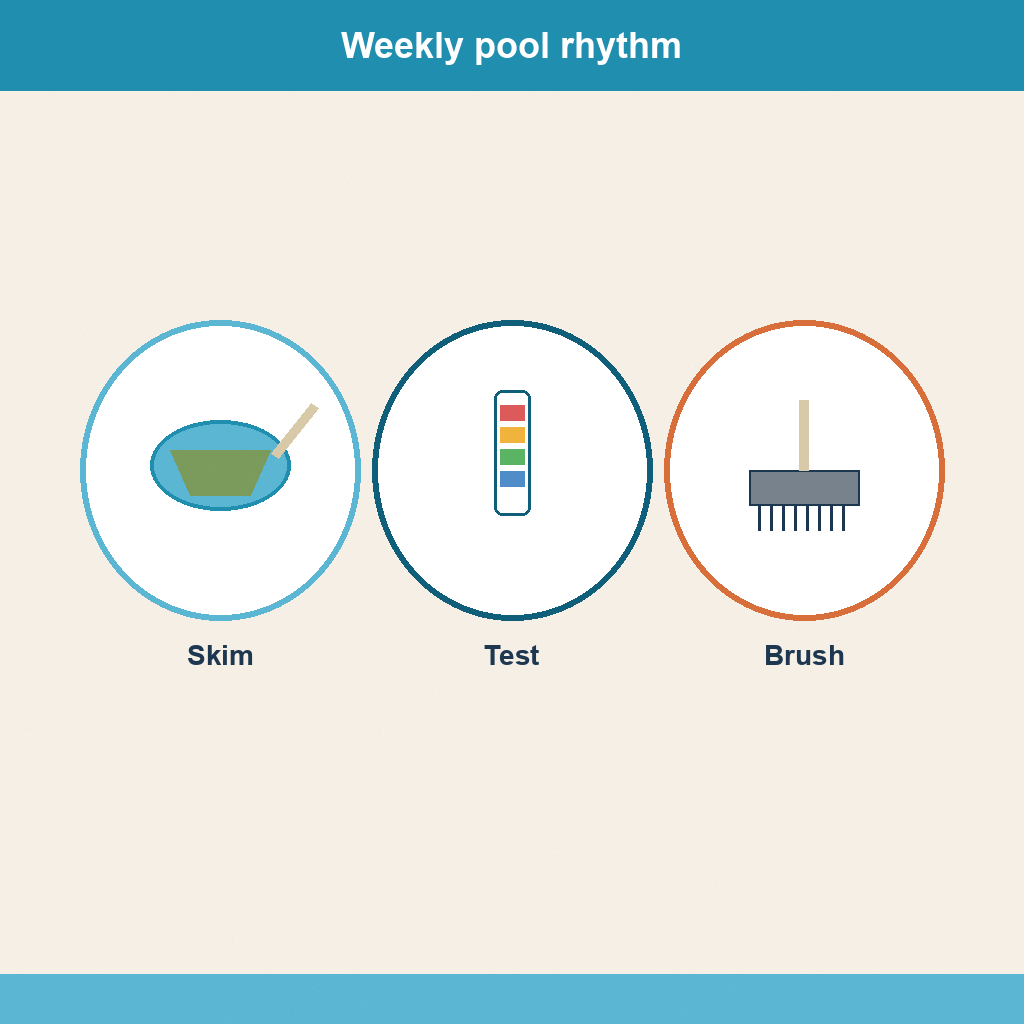
Daily (2–10 minutes)
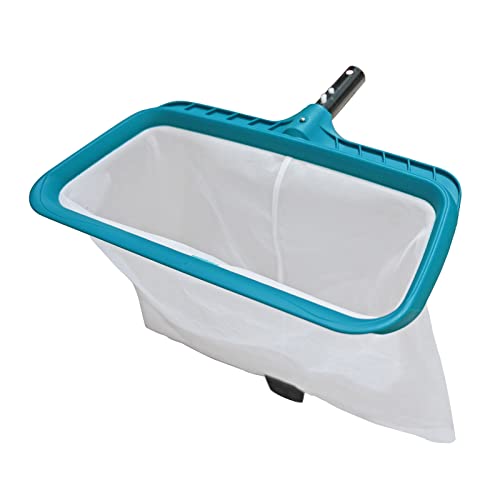
Skim the surface, check water level, and empty skimmer or pump baskets when leaves are heavy. A deep-bag net like the POOLWHALE leaf rake holds more than a flat skimmer when trees load the deck.
Twice weekly — test and dose
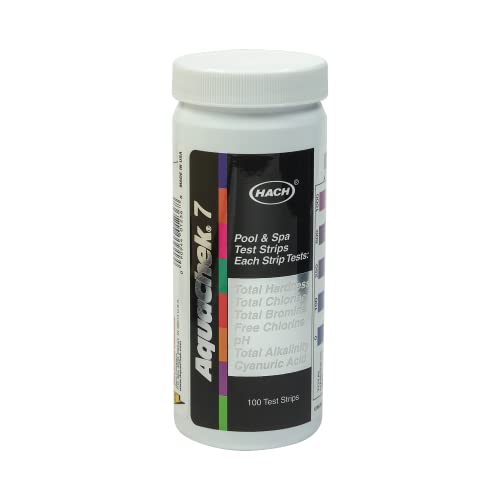
Use AquaChek 7-Way test strips or a drop kit. Log FC, pH, and TA. Dose sanitizer to target; adjust pH only after TA is in range. Framework: pool water testing, free chlorine, and pH.
Weekly — brush and circulate
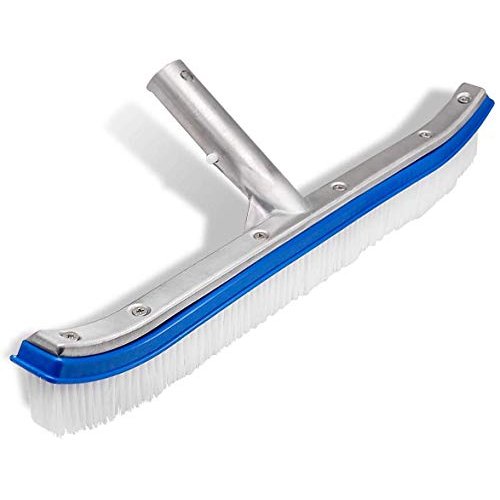
Brush walls and steps with an 18” vinyl-safe wall brush. Run the pump long enough for a full turnover. Empty cleaner bags.
Weekly — empty and glance
Check filter pressure vs your clean baseline. Note odd noises, leaks, or salt-cell lights.
Month-by-month schedule
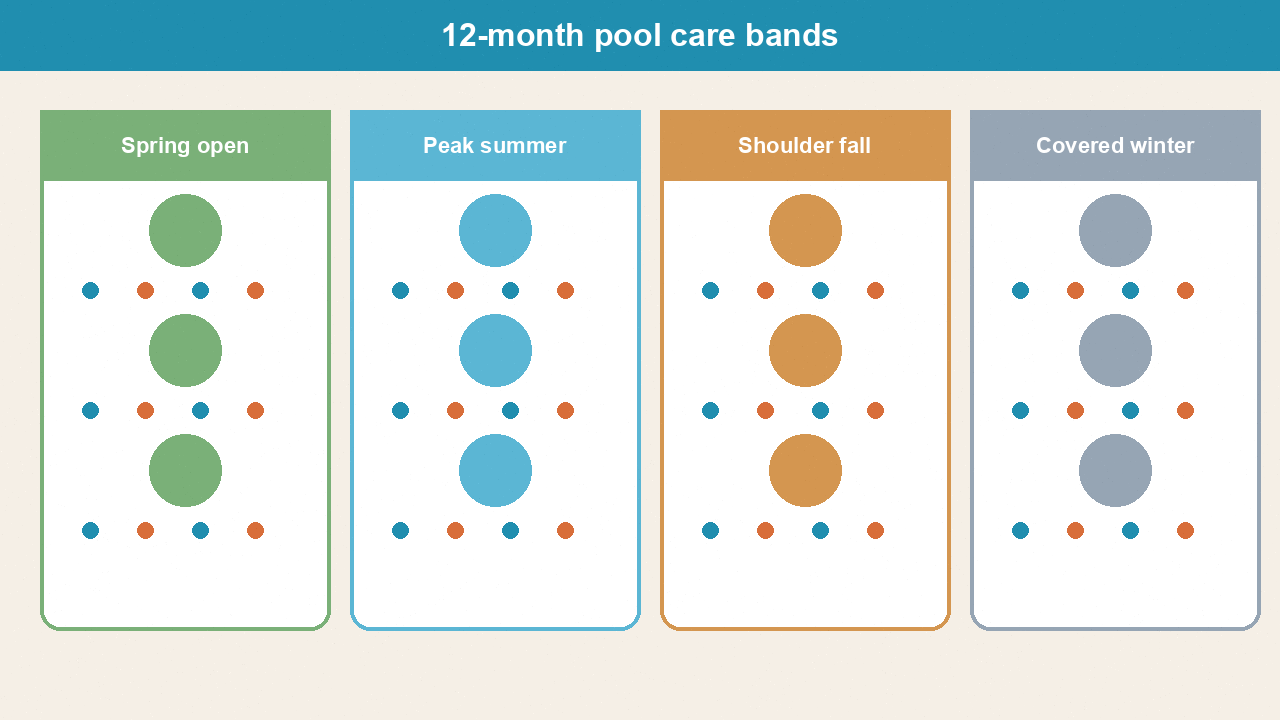
Don’t paste a 12-month spreadsheet into your notes. Think in three bands: peak heat, shoulder months, and off-season. The month names shift with your climate; the tasks don’t.
Peak summer months (local hot season)
Hold FC in range every check. Brush twice weekly if pollen or algae pressure is high. Plan one intentional oxidation with HTH Pool Care Shock Advanced after parties or heat waves (pool shock). Rinse or backwash the filter on pressure rise; deep-soak cartridges per filter cleaning. Check CYA monthly so stabilizer doesn’t climb past a useful range (cyanuric acid).
Shoulder months (spring ramp / fall wind-down)
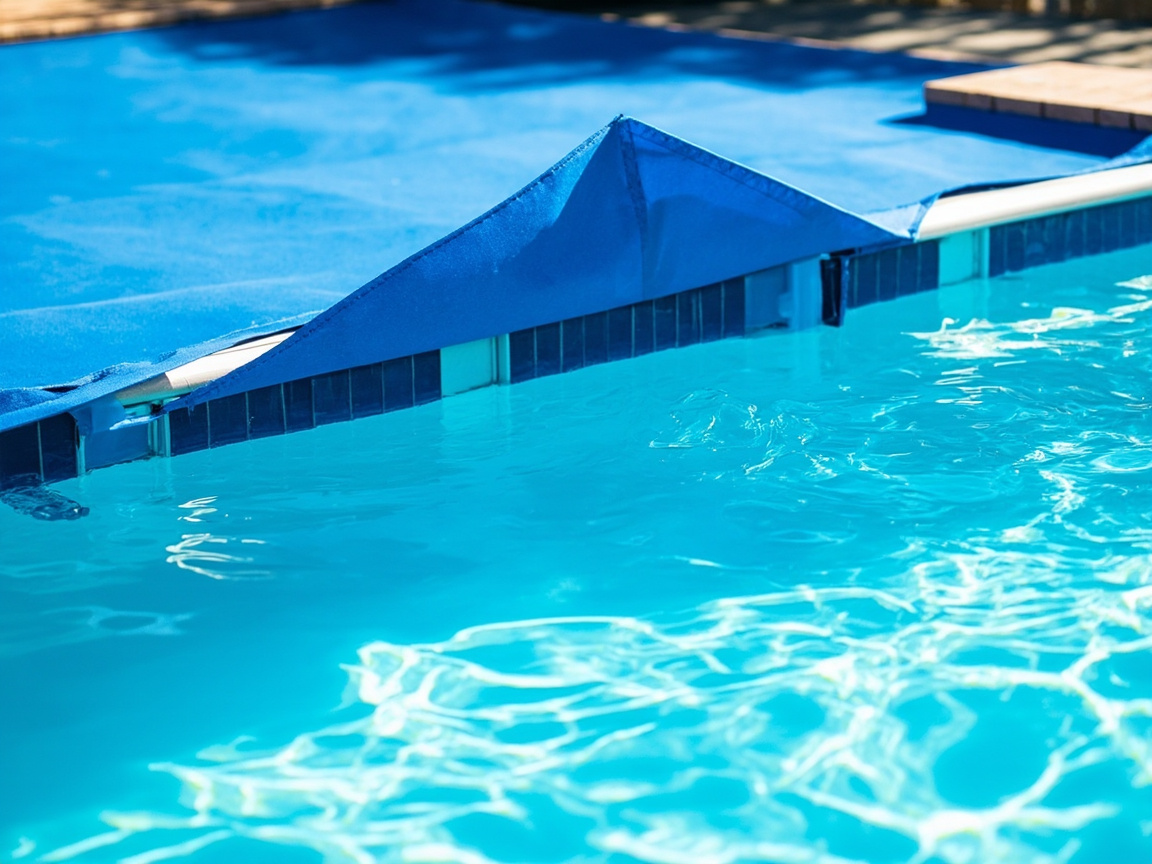
Spring: follow open pool order—debris, balance, then sanitizer—before inviting swimmers. Fall: shorten run times only after nights cool; start the winterize prep list early (winterize pool). Inspect timers, seals, salt-cell scaling, and heater clearances.
Off-season / covered months
If water stays open, keep minimum sanitizer and circulation for your climate. If closed, check cover load and freeze risk—no “set and forget” in freeze belts.
Saltwater vs chlorine calendar deltas
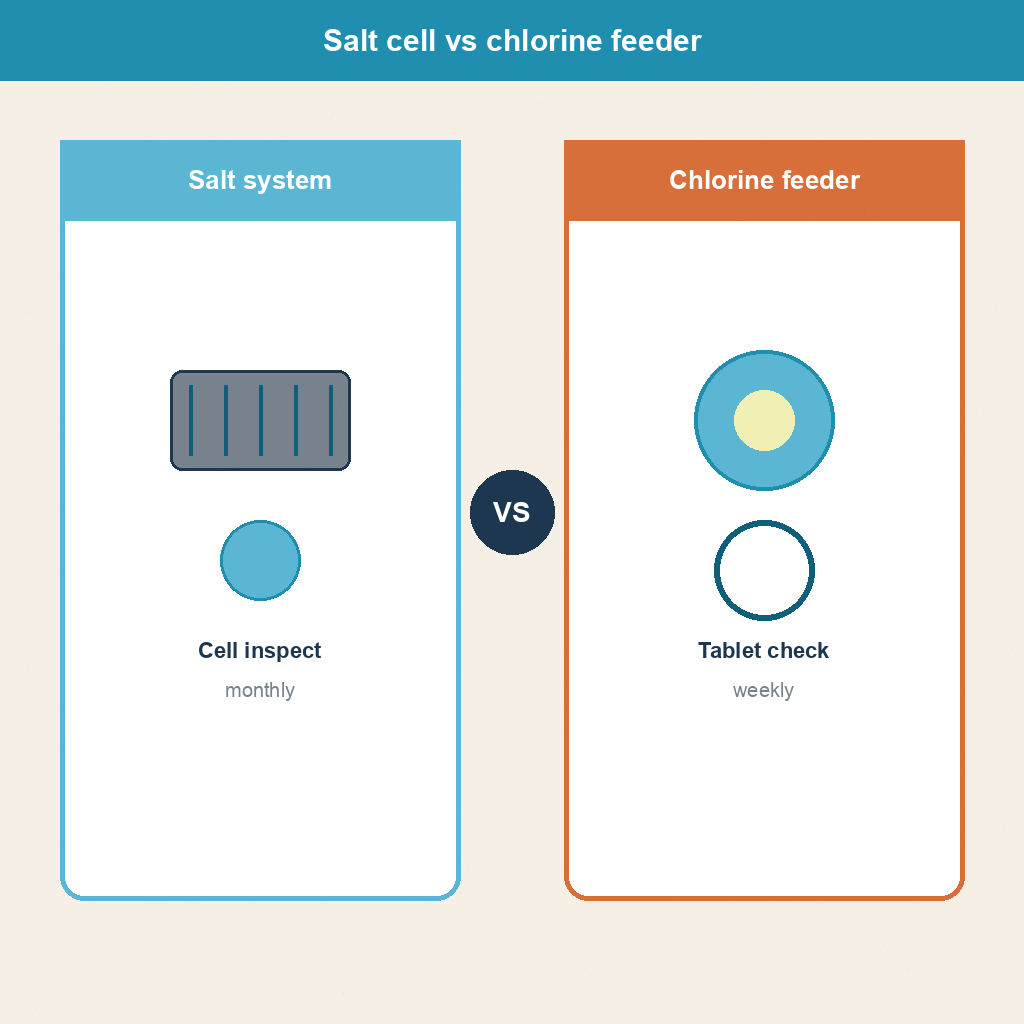
Shared mechanical tasks
Skim, brush, baskets, pressure-based filter service, and water level are identical on both systems.
Salt-only monthly adds
Salt test, cell inspect or clean per maker, and confirm generator output still matches FC needs.
Chlorine-only monthly adds
Floater or feeder rate audit, trichlor CYA creep watch, and liquid chlorination days after heavy bather load.
Monthly checks (deeper than weekly)
Chemistry panel
FC and pH every visit; TA weekly; CH and CYA at least monthly in season (total alkalinity, calcium hardness). Keep a second strip pack of AquaChek 7-Way strips so you never “skip because the bottle is empty.”
Filter and flow
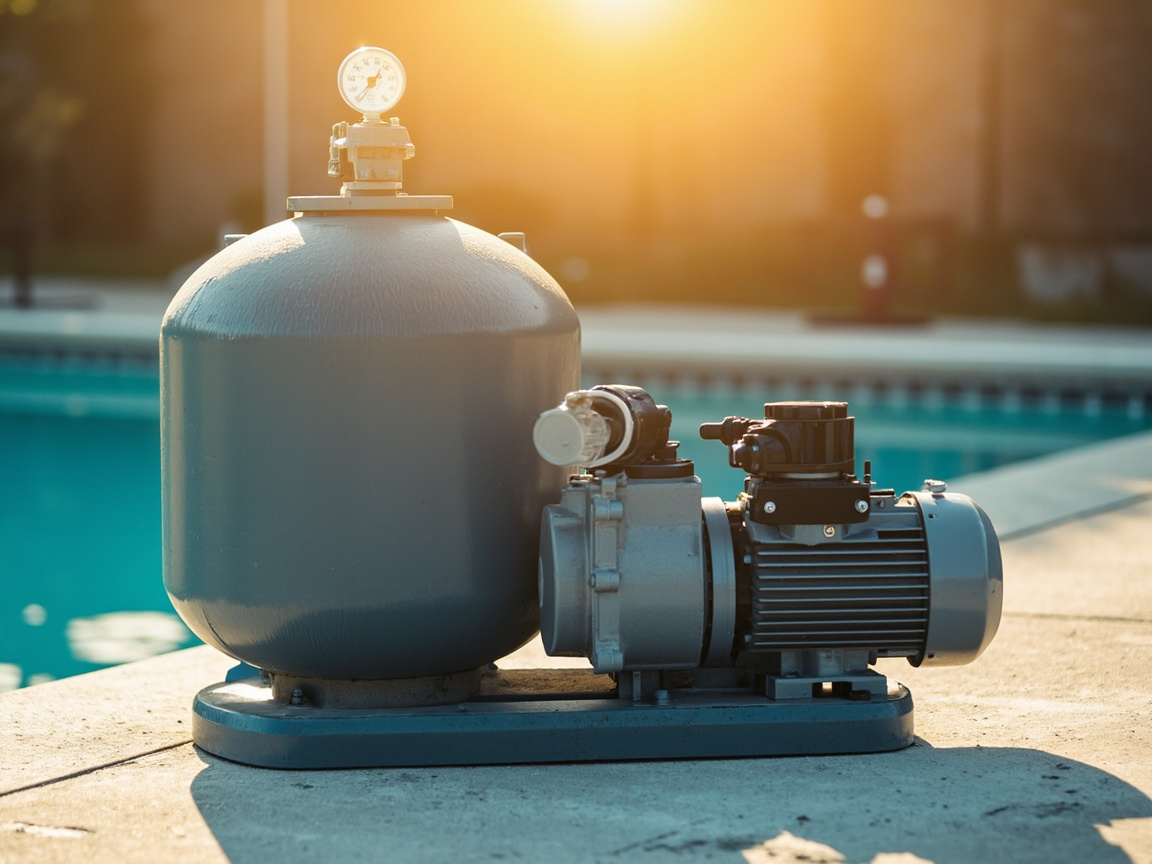
Record clean baseline PSI after each deep clean. A rising baseline means media is aging—not that you need more algaecide.
Safety gear and storage
Check child barriers, GFCI outlets, chemical separation (oxidizers away from acids), and PPE stock.
Dose math when numbers move
Use the chemical dose calculator for TA, pH, and CH changes. Don’t guess ounces per 10,000 gallons.
What you’ll need
AquaChek 7-Way Test Strips
Primary twice-weekly chemistry check. Cover a full season of 2×/week testing for one pool.
Skip if: you already own a Taylor-style drop kit and prefer drops for accuracy—keep strips as a backup only.
Don’t use if: the bottle sat open in a hot shed for a year; bleached pads lie and wreck every calendar decision.
POOLWHALE leaf rake net
Daily leg of the schedule when trees load the surface. Keeps the filter from choking between monthly deep cleans.
Skip if: you run a robotic cleaner daily and already have a working surface skimmer on the weir.
Don’t use if: the mesh is torn—half the leaves sink and become next week’s pressure spike.
18” vinyl-safe wall brush
Weekly brush leg. Uses nylon or polished bristles, not steel wire.
Skip if: you need a stainless wire brush for black algae on plaster—use a dedicated algae brush instead.
Don’t use if: you’re on plaster fighting black algae with only a soft brush; you’ll polish the plate and leave roots intact.
HTH Pool Care Shock Advanced
Monthly or event-driven oxidation. Maps cleanly to a once-per-month cadence. For type swaps, see how to choose pool shock.
Skip if: CYA is already above 80 ppm and you oxidize with dichlor weekly—switch to non-chlorine MPS so you don’t add more stabilizer.
Don’t use if: you plan to pour dry shock through a skimmer that feeds an automatic chlorinator—that mix can create a dangerous reaction.
Steps — build your personal calendar in one afternoon
Step 1 — Write your clean filter baseline PSI
After a proper clean, mark the gauge. That number drives “when,” not the printed month name.
Step 2 — Pin two fixed test days
Example: Wednesday evening and Saturday morning. Protect them like trash day. Keep AquaChek strips next to the log book so the habit sticks.
Step 3 — Map season gates on a real calendar
Opening window, peak bather months, close window—using local frost data plus the open/close checklist.
Step 4 — Attach problem exits
Green water → green-pool path. Persistent cloud → cloudy-pool plus filter page. Don’t keep “checking the calendar” while algae blooms.
Step 5 — Review after 30 days
If you skipped brush twice, shorten sessions but keep frequency. If FC is always low by day two, raise dose or run time—not guilt. Keep a spare leaf rake if the first one tears mid-season.
Common mistakes
- Treating the calendar as optional in peak heat. Algae clocks run faster than weekend plans—keep twice-weekly tests.
- Cleaning the filter only on a fixed monthly date. Pressure +8–10 psi over baseline is the real trigger.
- Shocking on a schedule while ignoring CYA and combined chlorine. Test first; pick shock type with eyes open. Reach for HTH shock only after the strip says you need oxidation.
- Copying a southern blog’s open/close dates in a freeze climate. Use temperature gates plus the open/close tool.
- Skipping brush because the water “looks fine.” Biofilm on walls is invisible until it seeds algae—use the vinyl-safe brush weekly anyway.
When to call a pro
Keep DIY if: you can test water, brush, run the filter 24 hours, and numbers are moving the right way.
Call a pro if:
- Repeated breaker trips, heater error codes, a dead salt cell, or major leaks
- FC will not hold after correct dosing and circulation—bring a water sample to a pro shop
- Cracked main drains, failed barriers, or electrical smells at the pad
What to buy only if needed
Only if your test kit is more than 12 months old or pads look bleached
Replace strips or reagents. Bad tests wreck every calendar decision—restock AquaChek 7-Way strips.
Only if clean baseline PSI keeps climbing after deep cleans
Budget replacement cartridges or a media change—not endless cleaner.
Only if you host large parties monthly
Keep extra HTH shock on hand and pre-dose strategy; don’t under-size sanitizer.
Only if trees dump heavy debris daily
Upgrade net capacity with a deep-bag leaf rake or add a robotic cleaner—calendar time is finite.
Safety notes
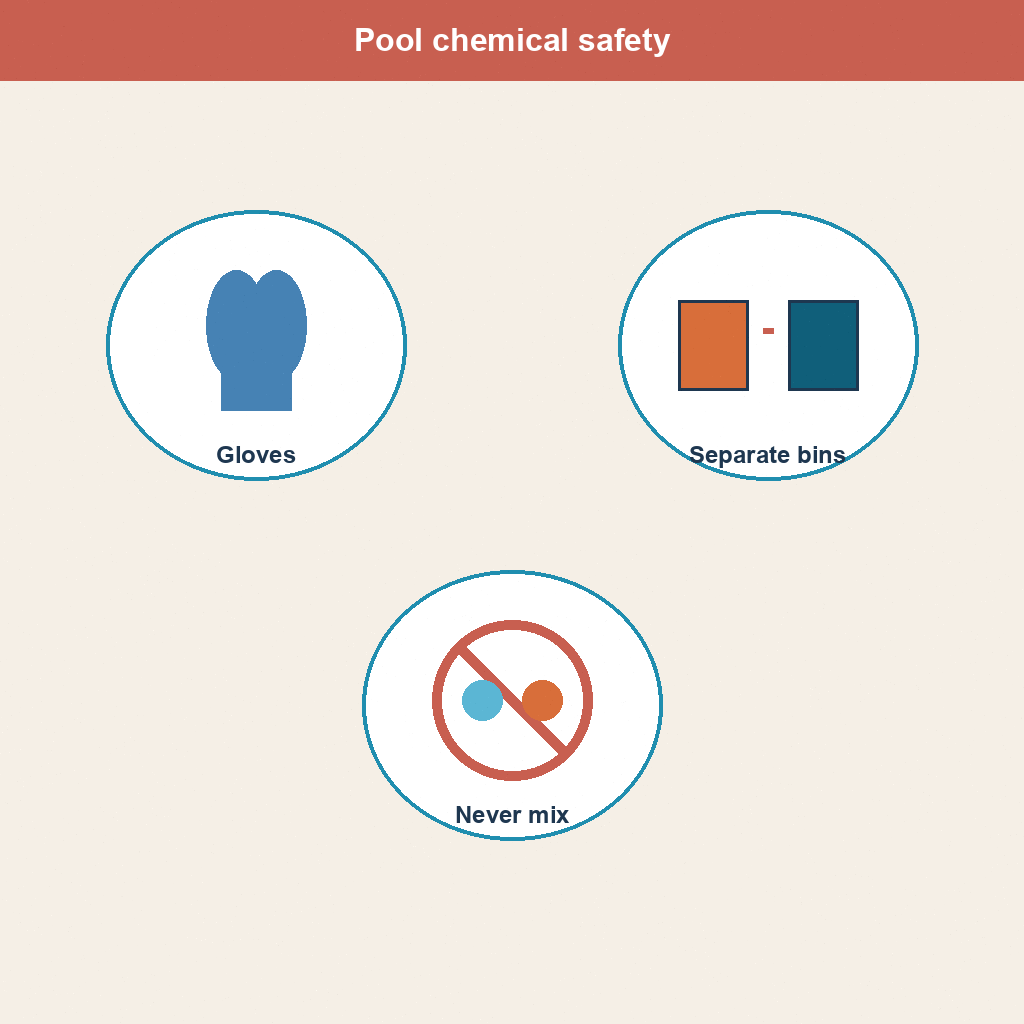
- Never mix different chlorine products dry or in a bucket—off-gassing and heat can build fast.
- Never pour shock through a skimmer that feeds an automatic chlorinator; you can get a dangerous reaction in the line.
- Add chemical to water, not water to chemical, when pre-dissolving.
- Gloves and eye protection; don’t breathe dust from open shock bags.
- Store oxidizers locked away from kids, pets, and acids.
- After any oxidation, retest FC before swimming—use a test gate, not “wait until tomorrow” folklore.
- Measure doses with the chemical dose calculator; label leftovers clearly.
Related
- Weekly pool care — daily and weekly depth
- Pool water testing — what the numbers mean
- Open/close checklist tool — season gates
Key takeaways
- Weekly rhythm first; monthly and seasonal layers second.
- Pressure rise beats calendar date for filter service.
- Test FC and pH twice weekly in season; TA, CH, and CYA on a slower loop.
- Salt and chlorine share mechanical tasks; salt adds cell and salt checks.
- Shock is event- and test-driven, not superstition.
- Problem exits (green, cloudy, storms) override the pretty grid.
- Safety: separate chemicals, retest after oxidation, measure doses.