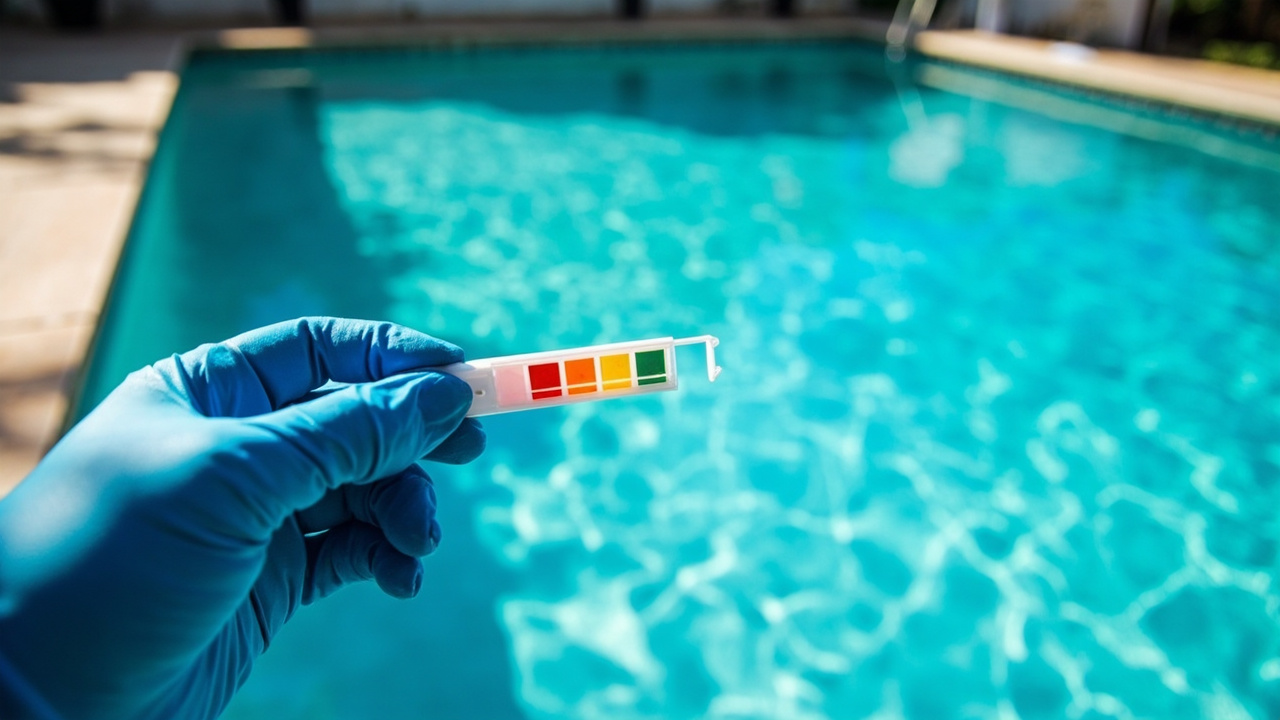


If your pool water stings your eyes, leaves scale on the tile, or keeps pushing chlorine out of line, check pH before dumping in another chemical. A bad reading wastes product and can wear out plaster, metal, or a heater. The fix is a short sequence: test pH and TA, make one measured adjustment, circulate, then test again.
Quick answer
Aim for pH 7.4–7.6. The workable range is usually 7.2–7.8. Low pH can corrode metal, roughen plaster, and sting swimmers. High pH reduces chlorine’s useful work, encourages scale, and can make water look dull. Test mid-depth away from returns, check total alkalinity (TA), and adjust in small doses. Keep the pump running while a chemical disperses, follow the product label, and retest before swimming.
What pH actually does in your pool
pH is a measure of how acidic or basic the water is. It doesn’t tell you whether the pool is sanitized; it tells you the conditions in which sanitizer has to work.
pH and chlorine effectiveness
Free chlorine can show a normal number while doing less useful work when pH climbs. Above 7.8, chlorine’s active share drops, so contaminants and chloramines get more room to hang around. That doesn’t mean you should chase a perfect decimal. Test error is real. It means a confirmed 8.0 deserves attention rather than another dose of chlorine.
Saltwater generators add another wrinkle. Aeration at the cell and return jets often nudges pH upward, so saltwater owners may need smaller, more regular acid corrections. A high pH reading also won’t be fixed by a shock. For shock timing and chlorine choices, see how pool shock works.
pH and swimmer comfort
A pH near the middle of the range feels better for most swimmers. Below 7.2, water can sting eyes and dry skin. High pH can also irritate eyes, especially when sanitizer and contaminants are out of balance. Strong chlorine smell isn’t proof that pH is low; it can signal chloramines and poor water management.
pH and equipment
Acidic water attacks metal fixtures, heater parts, and some grout. High pH raises the chance of calcium scale on tile, heaters, and filters. Plaster pools are especially unforgiving of extended low pH; vinyl pools can wrinkle or fade when water stays too acidic. If you see cloudy water or a rough ring at the waterline, test before scrubbing harder.
What pH is not
- pH isn’t TA. pH is the current reading; TA is the buffer that resists change.
- pH isn’t free chlorine. You need both numbers. A good pH doesn’t sanitize an empty-chlorine pool.
- pH isn’t CYA. Cyanuric acid protects chlorine from sunlight and changes how you manage FC, but it isn’t a pH adjustment chemical.
- pH isn’t a reason to add several chemicals together. Correct one problem, circulate, and test again.
Ideal pool pH range
| Pool or surface | Working target | Usual acceptable range |
|---|---|---|
| Standard chlorine pool | 7.4–7.6 | 7.2–7.8 |
| Saltwater pool | 7.4–7.6 | 7.2–7.8 |
| Vinyl liner | 7.4–7.6 | 7.2–7.8 |
| Plaster or pebble | 7.4–7.6 | 7.2–7.8 |
Use your local health guidance and the label on your test system if they differ. The practical rule is simple: don’t correct a 7.4 reading just because it isn’t 7.6. Correct confirmed readings outside range, then stop.
How to test pool pH
Take the sample from elbow depth, away from the skimmer, return jet, and chemical addition point. Rinse the vial with pool water, fill it to the mark, add the reagent exactly as directed, and compare in natural daylight. Don’t hold the sample over a colored towel or compare it under a blue pool light.
Test strips vs liquid kit vs meter
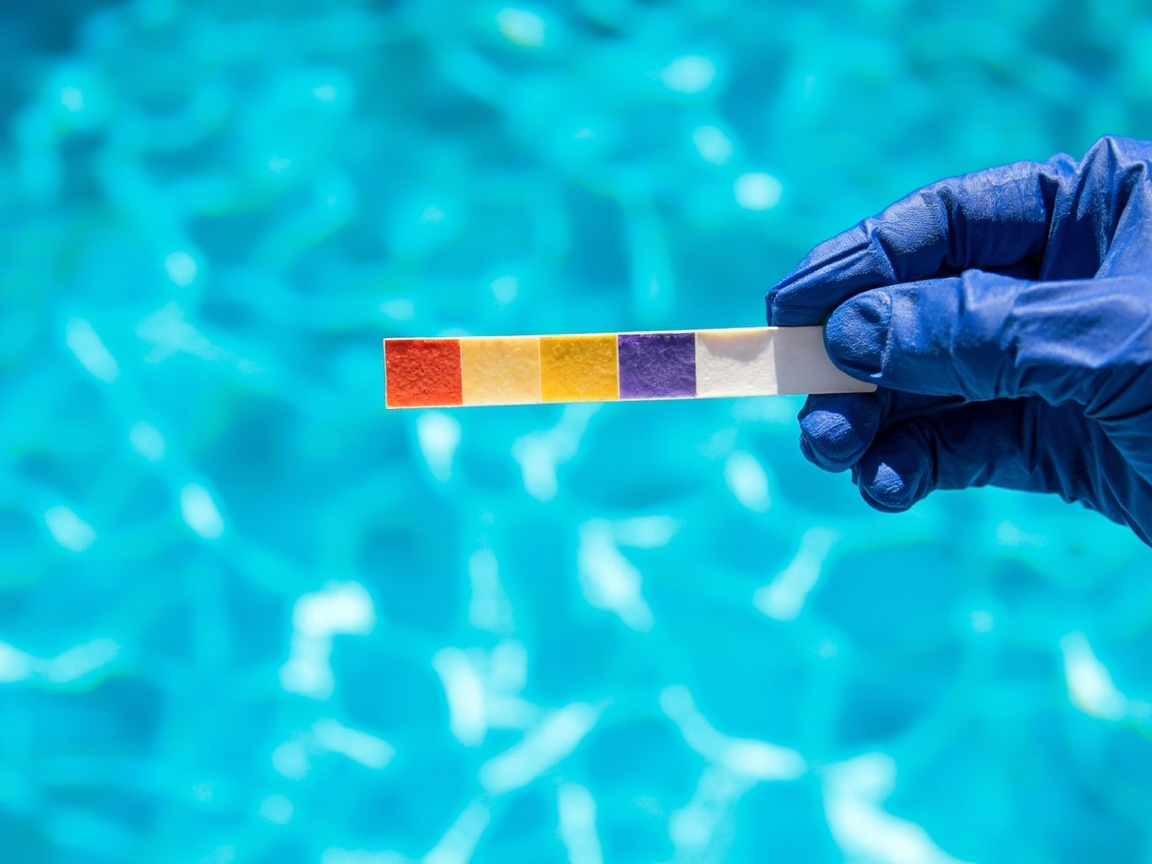
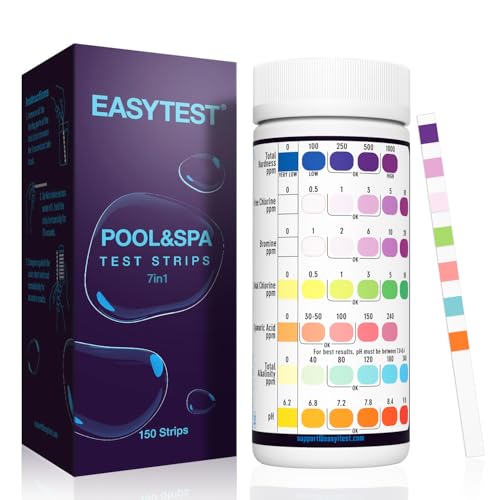
Strips are fast and useful for routine checks. A 7-way EASYTEST strip pack checks pH alongside sanitizer, TA, hardness, and CYA. Keep the lid closed and don’t use strips stored in a damp shed.
A liquid kit is the better choice when a correction matters. The Lupo 6-in-1 liquid kit includes pH and TA, which lets you see why a dose may not be moving the reading. A basic 3-in-1 liquid kit is fine for pH and chlorine, but it can’t diagnose TA.
Meters can be convenient, but they need calibration, clean probes, and proper storage solution. If the meter and a fresh liquid test disagree, don’t dose from the meter alone. Retest with a second method.
How to raise low pool pH
Raise pH when a confirmed result is below 7.2. If it’s 7.2–7.4 and stable, leave it alone. Chasing the top of the range creates a swing that you’ll have to correct later.
What you’ll need to raise pH
- A reliable pH and TA test.
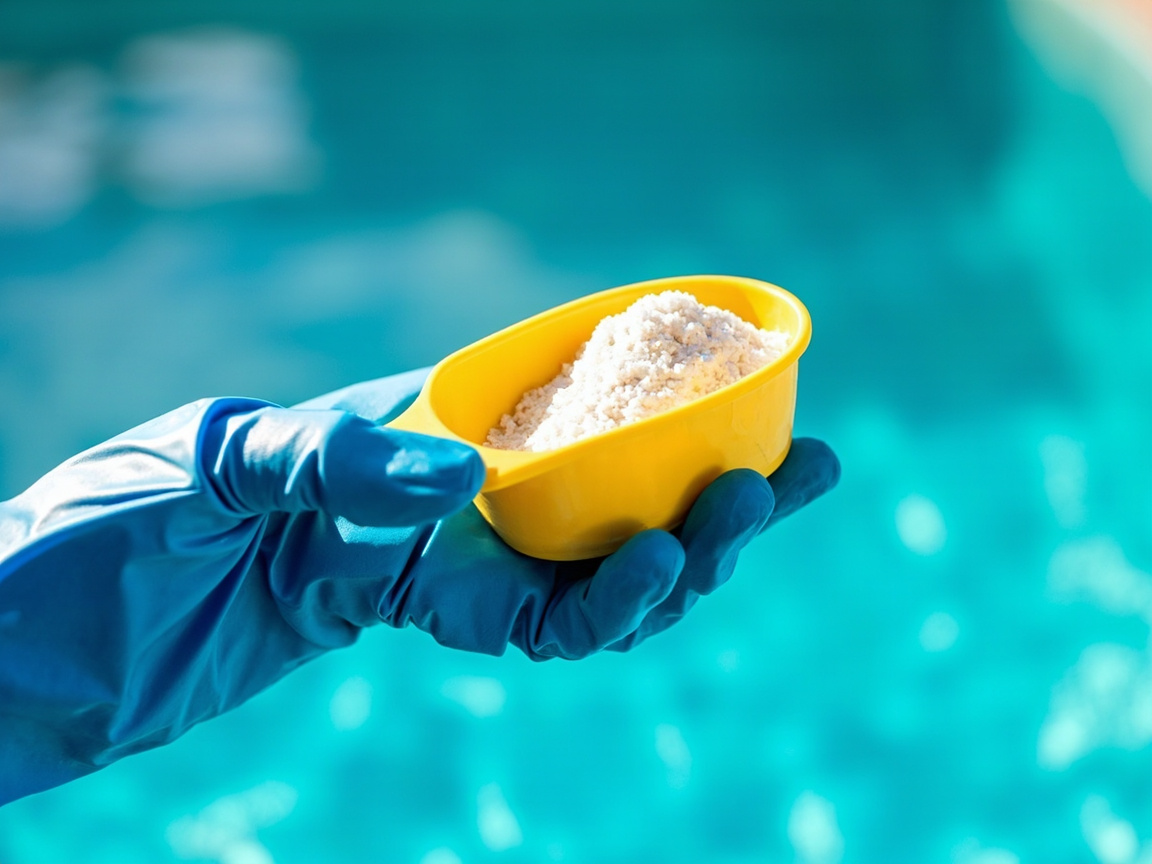
- Soda ash, also called sodium carbonate, for a direct pH increase.
- A clean five-gallon bucket and a measuring scale.
- The pool’s volume and the product label.
Our routine choice is Clorox Pool & Spa pH Up, a soda-ash product listed for pool pH correction. Skip a small bag if your pool is over 20,000 gallons or needs repeated corrections; a 45-pound pH increaser makes more sense for that pattern. Skip soda ash as the first move if TA is already high.
Step-by-step: raising low pH
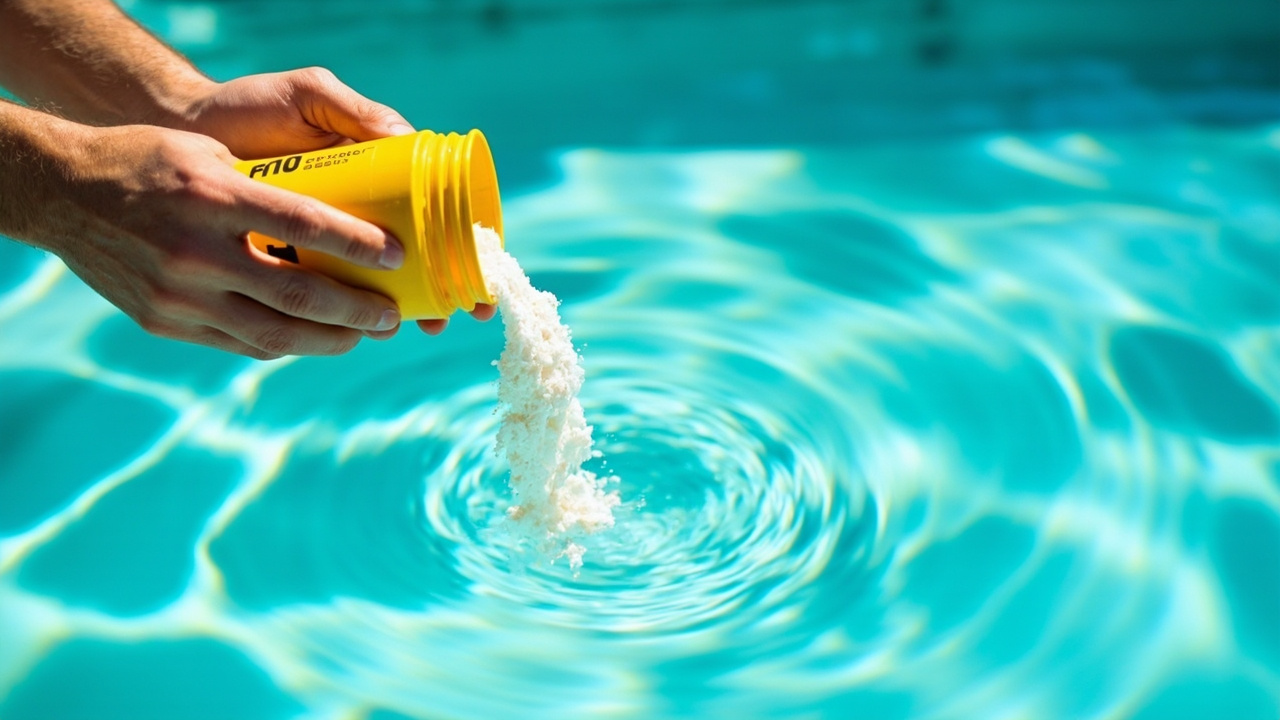
- Test TA first. If TA is below about 70–80 ppm, stabilize it with sodium bicarbonate before making repeated pH corrections. A pool alkalinity increaser is the product category to look for. Skip it when TA is already in range.
- Calculate a conservative dose. Pool size, starting pH, and product strength all matter. Use the pool chemical dose calculator as a starting estimate, then follow the package directions. Never copy a dose meant for a different pool volume.
- Pre-dissolve if the label allows it. Add chemical to water, not water to chemical. Stir outdoors with a clean plastic tool.
- Add slowly in front of a return. Keep the pump running so the soda ash disperses instead of sitting on the surface or floor.
- Wait and retest. Give it four to six hours of circulation. If pH is still low, make another small correction rather than one large hit.
How to lower high pool pH
Confirm a reading above 7.8 before adding acid. A single strip read in hot sun isn’t enough. High pH often comes with high TA, especially when a saltwater generator or water features are pushing air through the pool.
What you’ll need to lower pH
- A liquid pH/TA test or a fresh strip confirmed by a second method.
- Muriatic acid or dry acid, never both in the same dose.
- Chemical gloves, eye protection, and outdoor airflow.
- The pool volume and the exact product concentration.
Our pick for a ventilated storage area is Acid Blue low-fume muriatic acid. Low-fume doesn’t mean harmless. Skip muriatic acid if you can’t store it upright and ventilated; choose dry sodium bisulfate instead. Skip a four-gallon acid pack unless your pool needs regular doses; the bulk pack is wasteful for a one-time correction.
Step-by-step: lowering high pH
- Test TA. If TA is above 120–150 ppm, pH may keep rising. Correcting pH without addressing TA turns into a weekly argument with the same number.
- Estimate from the label. Never assume every acid has the same strength. A common 31.45% muriatic acid dose is often measured in fluid ounces, but the label and calculator should win.
- Turn on the pump and add slowly. Pour in front of a return, away from metal, liner seams, and people. Don’t pour acid through a skimmer connected to a tablet feeder; the concentrated acid can react dangerously with chlorine.
- Wait at least 30 minutes before a first retest. For a large correction, allow the full circulation period stated on the label. Don’t stack doses because the first one hasn’t mixed.
- Stop at 7.4–7.6. Leave a little room for normal aeration. Over-correcting to 7.0 creates a second problem.
Decision tree: which chemical when
pH corrections go faster when you test pH and TA together and let the numbers guide the dose. Run the same strip or liquid kit on both, then walk the branches below.
Test pH + TA + FC together.
│
├─ pH 7.2–7.8 AND TA 80–120 → no action, retest weekly
│
├─ pH below 7.2 AND TA below 80 → raise TA first (sodium bicarbonate), then pH (soda ash)
│
├─ pH below 7.2 AND TA 80–120 → just raise pH (soda ash)
│
├─ pH above 7.8 AND TA above 120 → lower TA first (acid + aerate), then pH follows
│
├─ pH above 7.8 AND TA 80–120 → just lower pH (muriatic or dry acid)
│
└─ pH above 7.8 AND TA below 80 → raise TA first (bicarb), then lower pH (acid)
A few extra branches that don’t fit on the flow:
- If FC is also under 1 ppm after a correction, dose chlorine separately. Never mix chlorine and acid in the same bucket or dose within 30 minutes of each other.
- If the pool is saltwater and pH keeps climbing weekly, plan on a routine acid dose and a longer-term look at TA. Salt cells naturally aerate and push pH upward.
- If CYA is over 70–80 ppm, pH readings drift up slowly and acid works less predictably. Consider a partial drain + refill before chasing pH with more acid.
Use the chemical dose calculator for the actual dose numbers; the tree only picks the chemical.
pH fights with TA
TA is the buffer behind pH. When TA is 80–120 ppm and pH is 7.4–7.6, ordinary adjustments are manageable. High TA resists a pH drop and often makes pH climb again. Low TA lets pH swing every time you add sanitizer, fill water, or run a fountain.
High TA resists pH change
If pH is high and TA is over 120 ppm, add a measured acid dose to bring pH near 7.0–7.2, then aerate with return jets pointed upward. Aeration raises pH without raising TA. Repeat the acid-and-aeration cycle, testing each time, until TA is in your target range. This is slower than throwing in a large dose, but it prevents the bounce-back.
Adjusting TA first
If TA is below 70–80 ppm, add sodium bicarbonate according to the label, circulate, and retest. Don’t use soda ash as a substitute when the only problem is low TA; it pushes both pH and TA upward. If your pool keeps changing after a correction, keep a short log of pH, TA, water additions, and generator run time. The pattern usually explains the repeat dose.
If high pH is part of a green-water problem, use the green-to-clear tool after a water test. Saltwater owners can also review salt dose guidance before changing salt-system settings.
Common mistakes
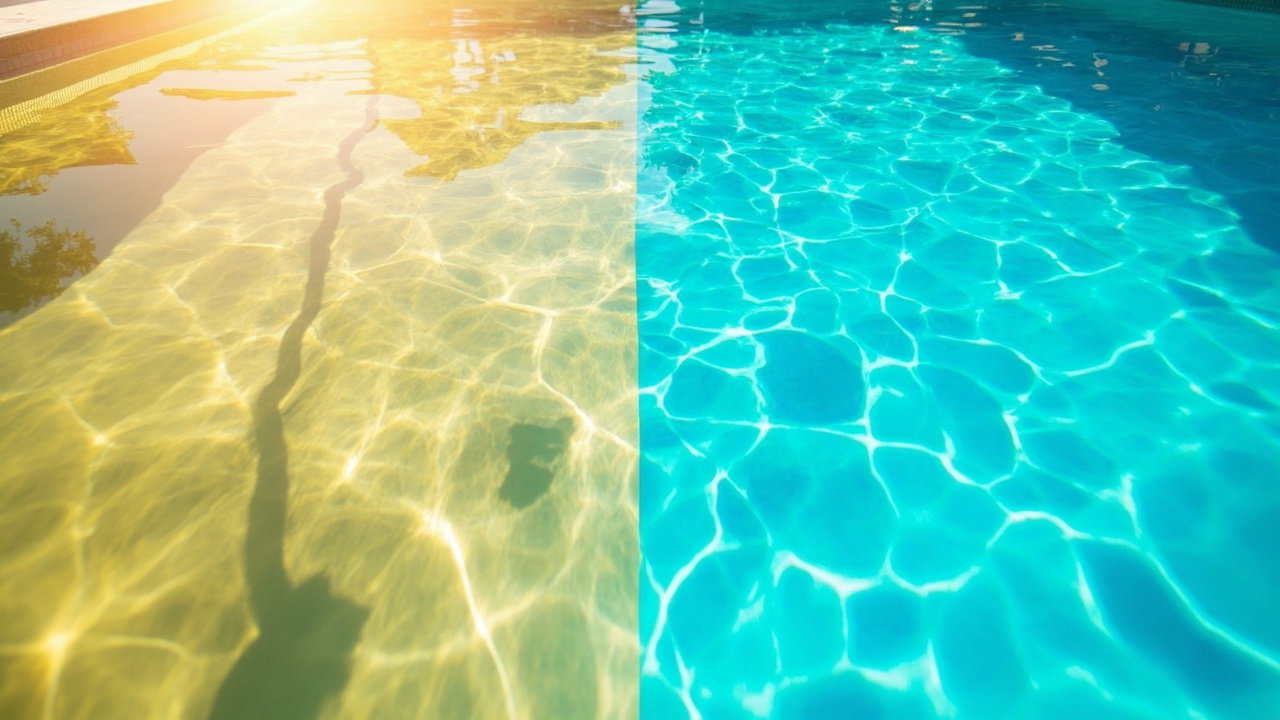
- Cheap strips don’t read CYA. A strip can show a comfortable pH while missing a rising CYA level or giving a vague TA color. Use strips for routine checks, not every diagnosis. When a reading drives a large chemical purchase, confirm it with a liquid kit.
-
Adding acid through the skimmer. If the skimmer feeds an automatic chlorinator, acid can meet concentrated chlorine in the line and create a dangerous reaction. Add chemicals to the circulating pool water as directed.
-
Fixing pH before TA. High TA can push pH right back up. Low TA can make it jump down. Test both before dosing, and don’t add the alkalinity product when TA is already on target.
-
Dosing from a guess. “About a cup” isn’t a pool-care method. Pool volume, starting reading, concentration, and surface type change the answer. Use the label and a dose calculator, round down, circulate, and retest.
-
Mixing chemicals or swimming too soon. Never mix acid, chlorine, soda ash, or any other pool product in one bucket. Keep swimmers out while adding chemicals and until pH and sanitizer readings are back in the safe range specified by your local guidance and product labels.
Safety notes
Wear chemical gloves and eye protection. Keep acid outdoors or in a cool, ventilated area away from chlorine products, metals, children, and pets. Add chemical to water when pre-dissolving; never add water to a concentrated chemical. If acid contacts skin or eyes, flush with clean running water and follow the label’s emergency instructions. Don’t breathe powder dust, and don’t pour chemicals in wind that can carry droplets toward people.
What to buy only if needed
Not every pool owner needs the full chemistry kit on day one. Match the buy to the problem you’ve actually seen, not to a worst-case list.
- If you’re testing weekly and pH sits in range, all you need is a strip jar. A 7-way EASYTEST pack is plenty.
- If you’ve confirmed low pH once, keep one bag of pH Up on hand. A 4-pound soda ash container covers a single correction for most backyard pools.
- If you’ve confirmed high pH once, decide between liquid and dry acid. Ventilated outdoor storage and a willingness to handle it? Low-fume muriatic acid is cheapest per dose. Above-ground pool or kids around? Dry sodium bisulfate is dramatically safer.
- If TA keeps drifting under 80 ppm, buy an alkalinity increaser separately. Bicarb-based TA Up raises TA without pushing pH up.
- If TA is over 150 ppm and pH keeps climbing, you don’t need more acid — you need to drop TA first. Plan a partial drain, then re-test.
Skip the bulk pail and the four-pack of acid unless you’ve used a smaller size twice and you’re sure you’ll keep using it. A leftover 45-pound pail in a damp shed is a future problem, not a savings.
For a broader shopping list across testing, sanitizers, and shock, see pool-care essentials.
When to call a pro
Most pH problems are within reach of a patient pool owner, but a few patterns deserve a service call.
Keep DIY if:
- You can read a strip or liquid kit without guessing.
- You can run the pump, brush, and retest over a 24-hour cycle.
- Numbers are moving the right direction after a measured dose.
Call a pro if:
- Pump or filter won’t prime, or you suspect electrical issues.
- pH keeps climbing despite multiple acid doses (often a hidden leak in the cell or a saturation problem that needs partial drain).
- Metal staining, persistent cloudiness, or scale that’s spreading fast across tile and heater.
- You’re not comfortable handling muriatic acid in your storage area.
- Heater or heat exchanger shows rust-colored water after a low-pH episode — the coil may have taken damage.
If the pool is green and pH was the last thing you touched, the cleaner path is usually the green-to-clear timeline plus a service quote, not a solo all-nighter with muriatic acid.
What this is not
Pool pH isn’t a magic cure for cloudy or green water. It sets the conditions for chlorine and equipment to work. If sanitizer is low, CYA is out of line, or the filter is clogged, a perfect pH reading won’t clear the pool by itself. Test the wider picture and fix one number at a time.
Related pool chemistry
Start with how to test pool water if your results don’t make sense. If pH is interfering with a cleanup, read the pool shock guide. New owners can fold this check into a first-year pool-care routine.
Key takeaways
- Aim for pH 7.4–7.6; treat 7.2–7.8 as the normal working range.
- Test TA before making repeated pH corrections.
- Use soda ash to raise pH and muriatic or dry acid to lower it.
- Dose conservatively, circulate, and retest instead of stacking chemicals.
- Never mix acid and chlorine or pour acid through a chlorinator skimmer line.
- A pH correction won’t replace sanitizer, filtration, or a proper algae cleanup.