
Quick answer
Calcium chloride and chlorine are two completely different pool chemicals. Calcium chloride raises calcium hardness (CH) — it protects plaster, grout, and heater elements from soft-water etching. Chlorine sanitizes and oxidizes — it kills bacteria and burns off organics. They’re not interchangeable. You need both, but for different problems. Test CH and FC separately before dosing either, never mix them in a bucket, and wait until the FC is back in the safe re-entry range before anyone swims.
What this is not
What calcium chloride is not
Not a sanitizer, not an algaecide, not a “pool clarifier,” not the same thing as calcium hypochlorite (cal-hypo) shock even though both contain calcium. Calcium chloride raises CH; cal-hypo chlorine raises FC and incidentally raises CH a small amount. Confusing the two is the most common dose-it-wrong case in our support queue. The full picture of what CH does — and how to lower it when you overshoot — is in the calcium hardness guide.
What chlorine is not
Not a calcium hardness booster, not a one-shot “fixer” of green water (use shock + brush), not a substitute for CYA stabilizer, and not interchangeable across types — cal-hypo, dichlor, trichlor, and liquid chlorine all raise FC but differ in CYA impact and use case. For the deep dive on which chlorine form to choose when, see the pool shock guide.
This is not a “best of” ranking, not a buying guide, and not a coverage of saltwater chlorine generation (the SWG path uses electrolysis; see saltwater pool basics).
Side-by-side comparison
| Calcium chloride | Chlorine (sanitizer family) | |
|---|---|---|
| Job | Raises calcium hardness (CH) | Sanitizes + oxidizes (kills pathogens, breaks down organics) |
| Target reading | CH 200-400 ppm (per calcium hardness guide) | FC 2-6 ppm (per free chlorine guide) |
| When to dose | CH test reads low; soft-water etching visible on plaster | FC test reads low; cloudy/green water; weekly shock |
| Pool size math (typical 10k gal) | 1 lb raises CH ~7 ppm | 1 lb cal-hypo raises FC ~5-7 ppm; 1 gal 10% liquid raises FC ~5 ppm |
| Adds CYA? | No | Cal-hypo no; dichlor yes; trichlor yes |
| Adds calcium? | Yes (that’s the job) | Cal-hypo adds a trace (4-5 ppm CH per shock dose); dichlor/trichlor add none |
| Storage | Dry bag, sealed | Dry puck/granule or jug, sealed, cool, away from acids |
| Cost (per dose) | $0.50-$3 typical backyard | $1-$8 typical weekly; $8-$20 for SLAM-dose |
| Frequency | Rarely — only when CH drops | Daily residual tabs + weekly shock for most pools |
| Re-entry wait | None (once dissolved, swim OK) | 4-gate re-entry rule (see Safety notes) |
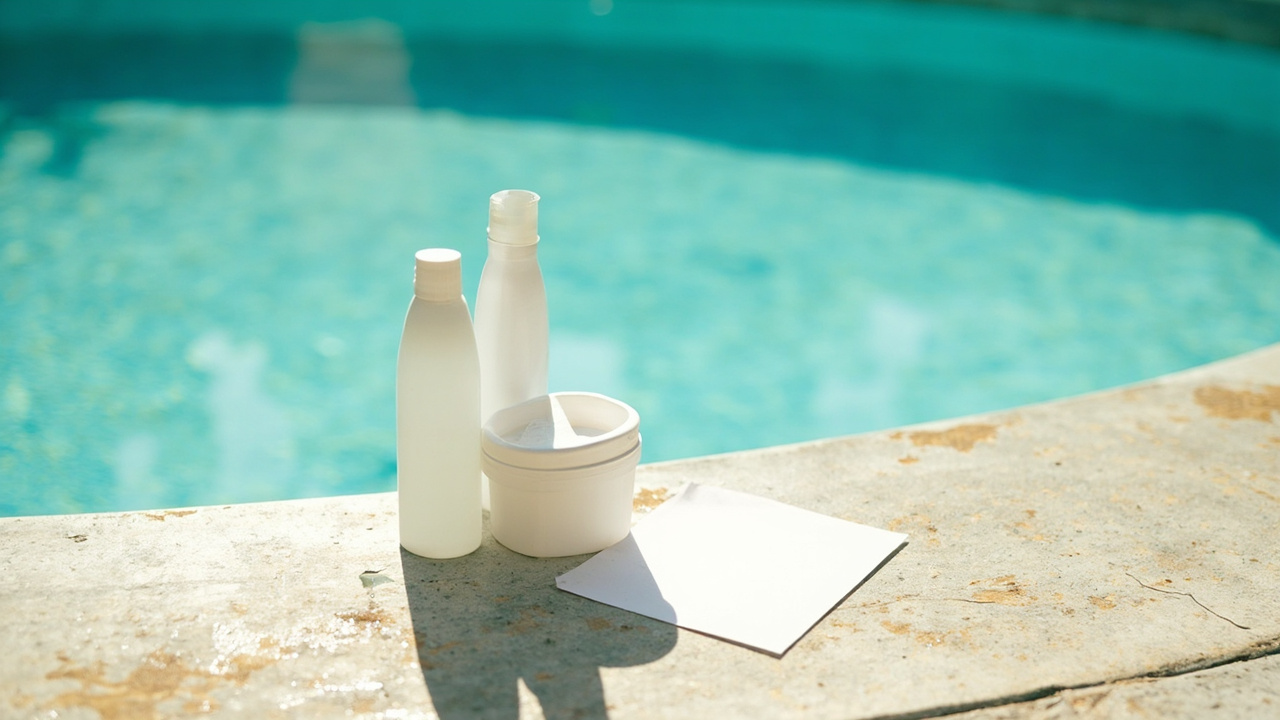
Visual: calcium chloride vs chlorine containers
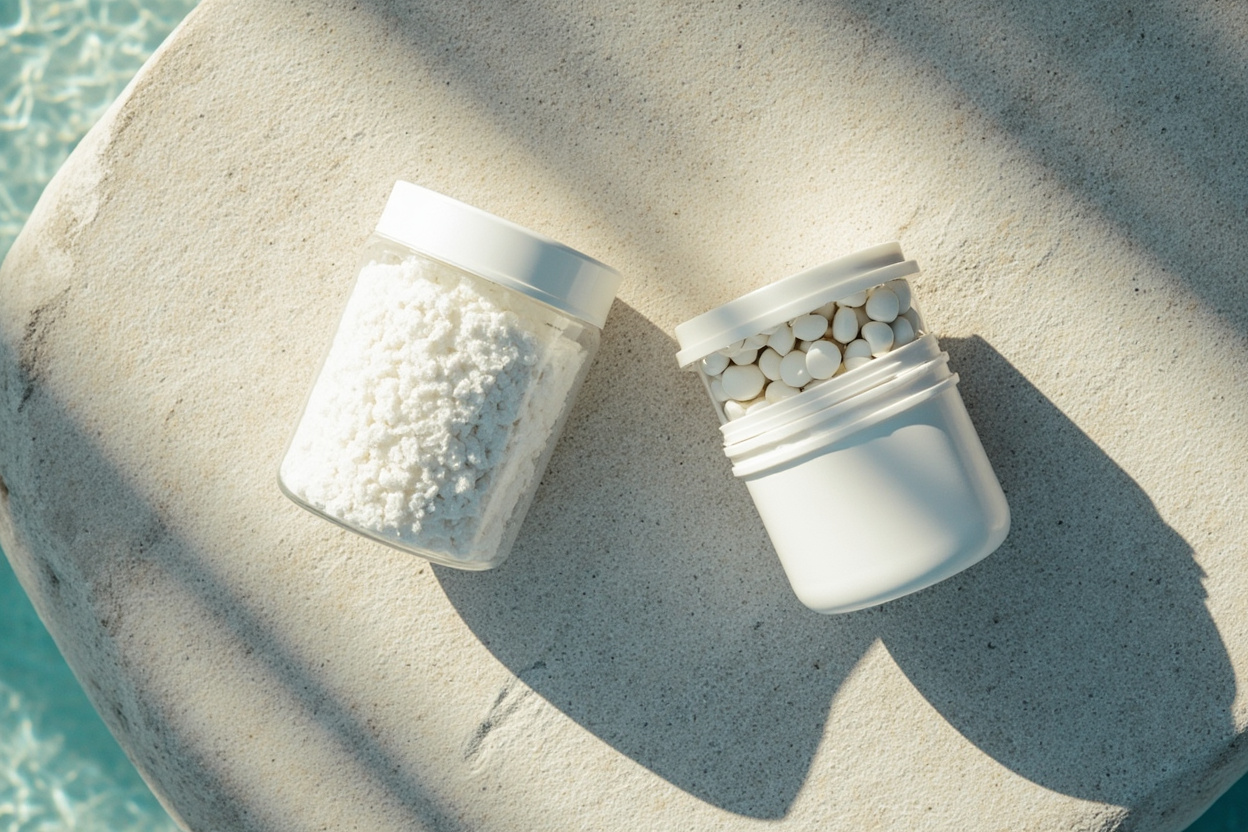
The takeaway: calcium chloride is a water-conditioner (protects the pool itself), while chlorine is a water-sanitizer (protects swimmers from pathogens). Both belong in your chemical inventory, just at different times. The CYA question — whether to use dichlor or trichlor — is in the cyanuric acid guide.
Choose calcium chloride if…
- Your CH test reads below 200 ppm AND plaster, grout, or heater elements look etched, OR your fill water is soft.
- You just drained and refilled with soft water — fresh fill almost always has zero CH and will eat plaster within weeks.
- Your heater is stainless steel or copper-nickel — low CH pulls metal ions out of heat exchanger tubes; one re-fill event can ruin a $600+ heat exchanger.
- You have a vinyl liner pool — CH 150-200 is the minimum even without plaster; below that the liner wrinkles from water absorption.
Visual: broadcasting calcium chloride along the perimeter
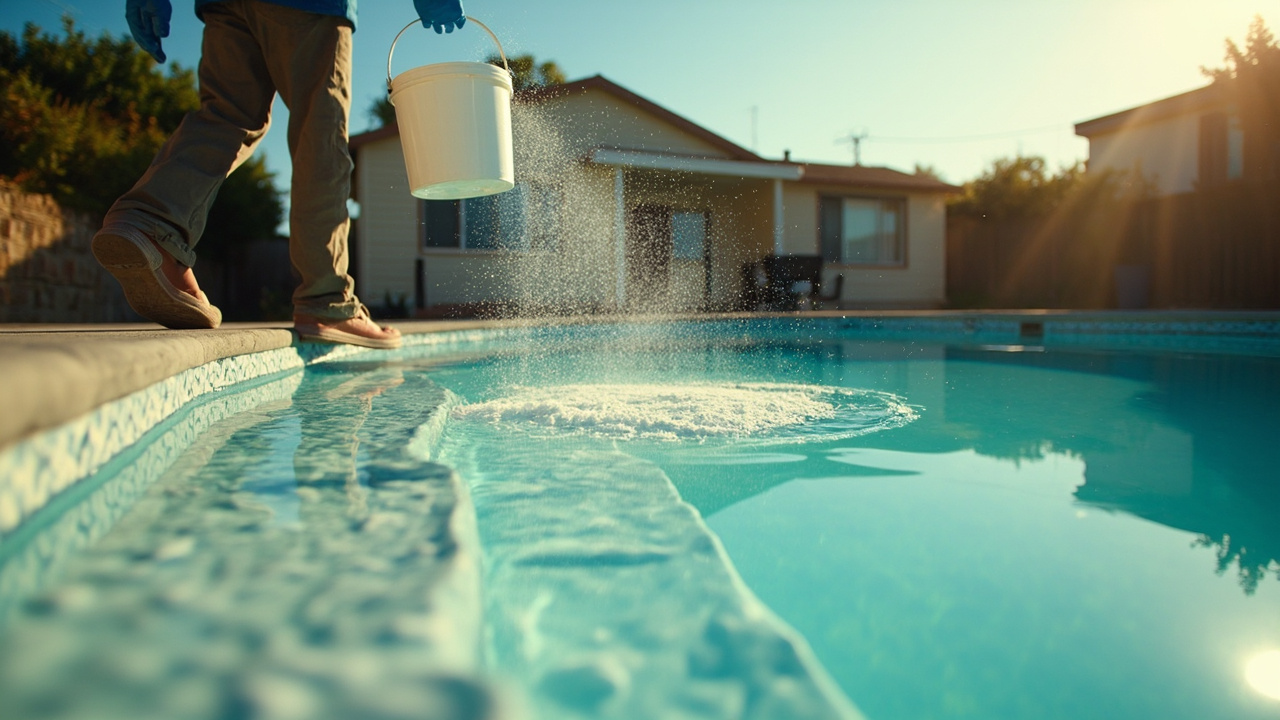
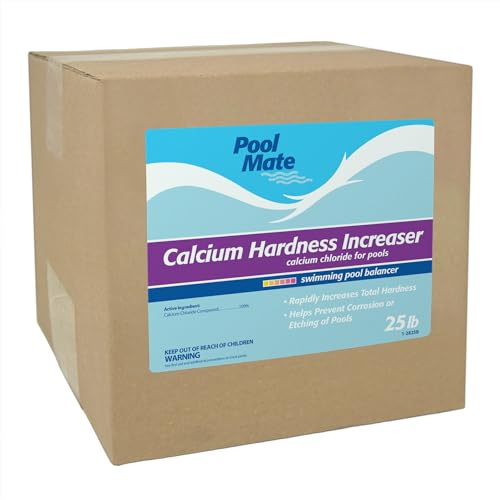
Bulk calcium chloride increaser like the Pool Mate 25-lb bag is cheaper per ppm than 4-lb packs, but only worthwhile if your fill is genuinely soft or you have plaster to protect.
Choose chlorine if…
- Your FC test reads below 2 ppm — daily residual sanitization has dropped; risk of algae and bacteria growth. Target ranges in the free chlorine guide.
- Water is hazy, slightly green, or after a bather load — daily tabs aren’t enough; you need a one-time oxidation dose.
- Combined chloramines smell strong — that “chlorine smell” is locked-up chlorine that stopped working; shock breaks it apart (see pool shock 101).
- It’s been 7-14 days since your last shock — weekly oxidation prevents buildup that no daily tab can clear.
Cal-hypo shock like HTH 52037R raises FC ~5-7 ppm per pound in a 10k-gal pool and adds no CYA.
What you’ll need
P1 — Pool Mate 25-lb Calcium Hardness Increaser
Pool Mate 25-Pounds Premium Calcium Hardness Increaser
- type:
balancers· badge: “Bulk 25-lb value bag” · bestFor: “Heftier CH corrections in one dose instead of multiple 4-lb packs.” - Adds ~175 ppm CH per 25 lb in a 10k-gal pool. Don’t pre-mix with any other chemical.
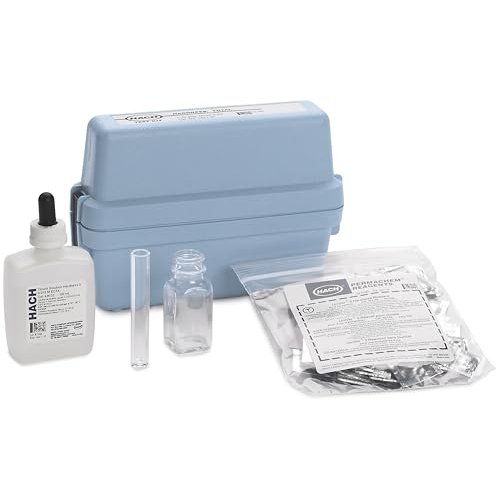
P2 — Hach Total Hardness Drop-Count Test Kit
Hach Total Hardness Test Kit, Model 5-EP
- type:
test-kits· badge: “Professional drop-count titration” · bestFor: “Confusing CH number from a strip — you need a precise reading.” - Reads via drop-count titration, one drop at a time to the endpoint.
P3 — HTH 52037R Pool Care Shock (Cal-Hypo Formula)
HTH 52037R Pool Care Shock, Cal-Hypo
- type:
shock· badge: “Standard 1-lb cal-hypo shock” · bestFor: “Weekly oxidation in a 10k-15k gallon chlorine pool.” - 1-lb resealable tub; raises FC ~5-7 ppm per dose; does not add CYA.
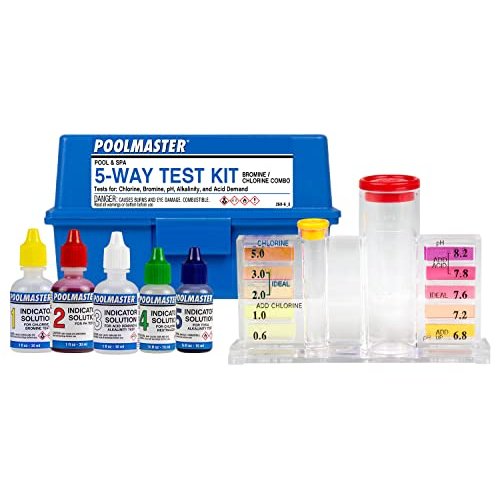
P4 — Poolmaster 22260 5-Way Test Kit
Poolmaster 22260 5-Way Test Kit with Case
- type:
test-kits· badge: “Beginner-friendly drop test, FC + pH + TA + CYA + CH” · bestFor: “First-year owner who wants one kit that covers this comparison.” - Cheaper than Hach; reads in 5-10 ppm increments.
P5 — Clorox Pool and Spa Chlorine Stabilizer
Clorox Pool and Spa Swimming Pool Chlorine Stabilizer
- type:
balancers· badge: “CYA booster from a name-brand label” · bestFor: “CYA below 30 ppm in outdoor pools that need FC to last longer.” - Raises CYA ~5 ppm per oz per 10k gal; do not exceed 100 ppm (SLAM threshold).
What to buy only if needed
Only if CYA is below 30 ppm → CYA stabilizer
If your outdoor pool loses FC fast on sunny days, the underlying issue is low CYA, not “you need more chlorine.” See the cyanuric acid guide for the math; the CYA dose calculator gives exact ounces.
Only if your fill water is very hard (above 400 ppm CH) → no calcium chloride at all
Some municipal and well water already exceeds your CH ceiling. Test your tap CH before dosing — adding calcium chloride to over-range water will scale your heater.
Only if you shock more than once a week → switch to liquid chlorine or SWG
Cal-hypo shock adds calcium chloride with every dose. Frequent shockers eventually push CH above 400. Switch to liquid chlorine (10% sodium hypochlorite) or a saltwater chlorine generator.
Common mistakes
- Buying cal-hypo shock thinking it’s the same product as calcium chloride increaser. Different jobs. Cal-hypo raises FC and adds a small amount of calcium; calcium chloride does nothing for FC. If CH is low and you dose cal-hypo to “fix” it, you’ll overshoot FC and still have soft water.
- Adding calcium chloride to soft water that already has CYA in the 30-50 ppm range. Your water will feel fine and pass FC tests but the calcium reads low. Test CH first; if the strip says “0” but is more than 6 weeks old, get a fresh test or use the Hach drop-count kit. A bad reading is worse than no reading.
- Dumping both products in the skimmer “to save time.” The skimmer often feeds a chlorinator; concentrated chlorine through a chlorinator is dangerous. Calcium chloride dissolves fine in the skimmer — but never with any chlorine product in the same compartment.
- Replacing chlorine with calcium chloride (or vice versa) “because the pool was fine last week.” Last week’s readings were a snapshot. The pool water testing guide explains the test order. A Poolmaster 5-way kit covers both readings plus pH, TA, and CYA.
- Skipping the dose math and “just adding a scoop.” 10 lb cal-hypo shock in a 10k-gal pool is a SLAM; a 1-lb scoop in the same pool is weekly oxidation. Same product, totally different result. Use the chemical dose calculator for any dose over 2 lb per 10k gal.
Safety notes
Read this before dosing either one
Both calcium chloride and chlorine products are industrial-grade chemicals. Calcium chloride is the safer of the two; chlorine compounds are reactive. Concrete rule: test before you dose, dose at dusk, never mix, retest before anyone swims.
Never mix chemical products
Never combine calcium chloride with chlorine (in any form — cal-hypo, dichlor, trichlor, liquid) in a bucket, in the skimmer, or in the same dosing container. Chemical reactions can release chlorine gas or generate heat. Mixing the two is a documented cause of chemical burns in backyard pools — keep them strictly separate.
#518 4-gate re-entry rule for any chlorine dose
The four gates — pass all four before anyone gets back in the water:
- FC ppm threshold: reading drops into the 1-3 ppm range (depends on CYA — use the FC/CYA chart in the free chlorine guide; some pools are safe at 1 ppm with high CYA, others need 3-5 ppm).
- Time-based wait: 8+ hours since you added the chlorine (overnight is typical; pump running the whole time).
- Sensory gate: water looks clear AND there’s no strong chlorine smell (the smell means combined chloramines — chlorine still working or you need more retest time).
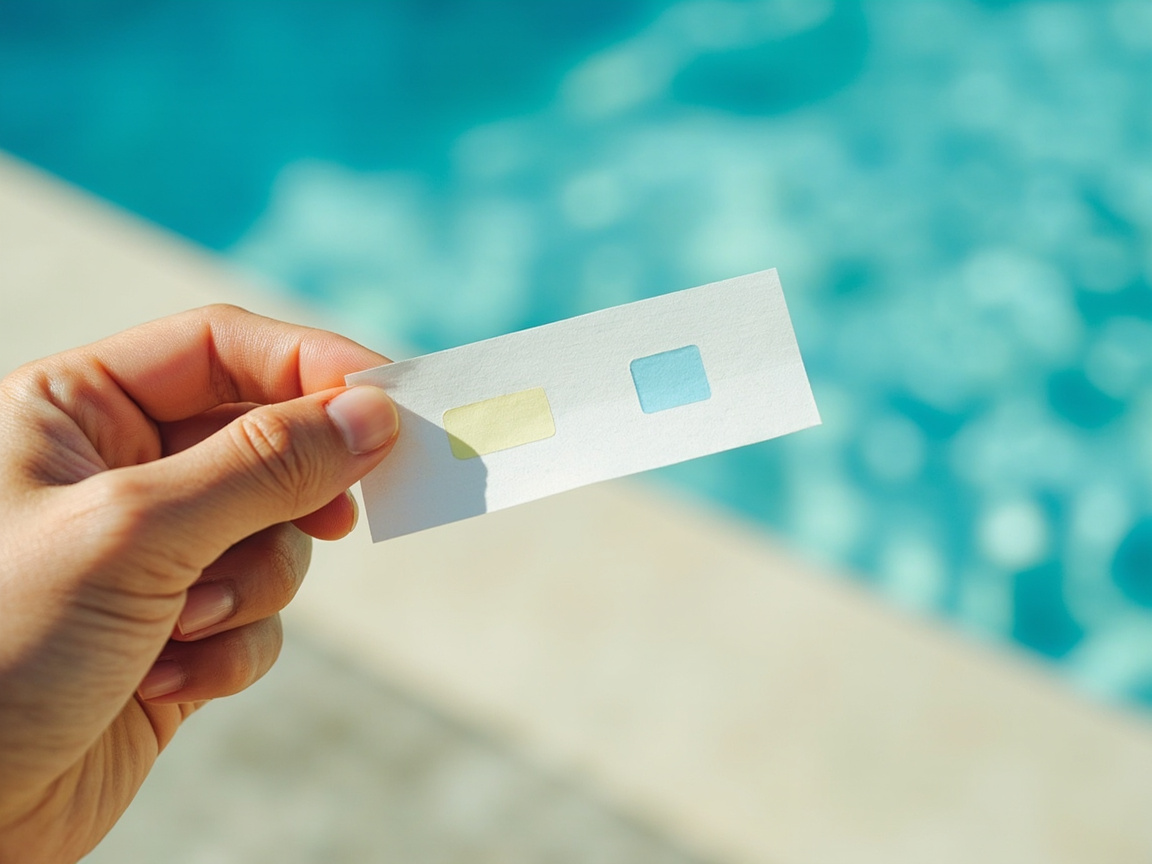
- Test-strip re-confirm: a fresh strip reads in the safe FC range AND pH is 7.2-7.6 before entry. If any one doesn’t pass, retest next morning.
Storage, kids, and pets
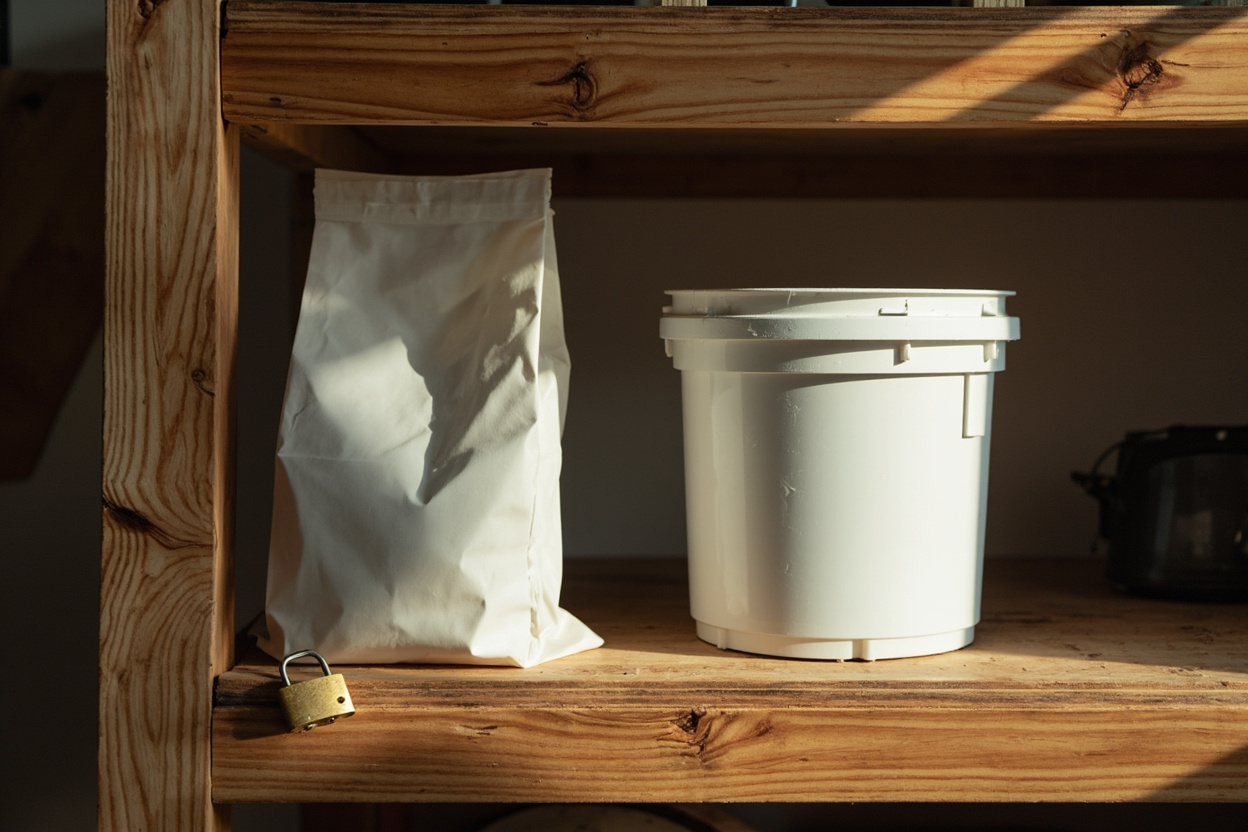
Store both chemicals locked, in original containers, in a dry spot away from acids, fuels, fertilizers, and metal. Cans of calcium chloride keep for years; opened chlorine containers lose potency in 1-2 seasons. Keep away from children and pets — neither is food-safe in concentrated form.
Eye and skin protection
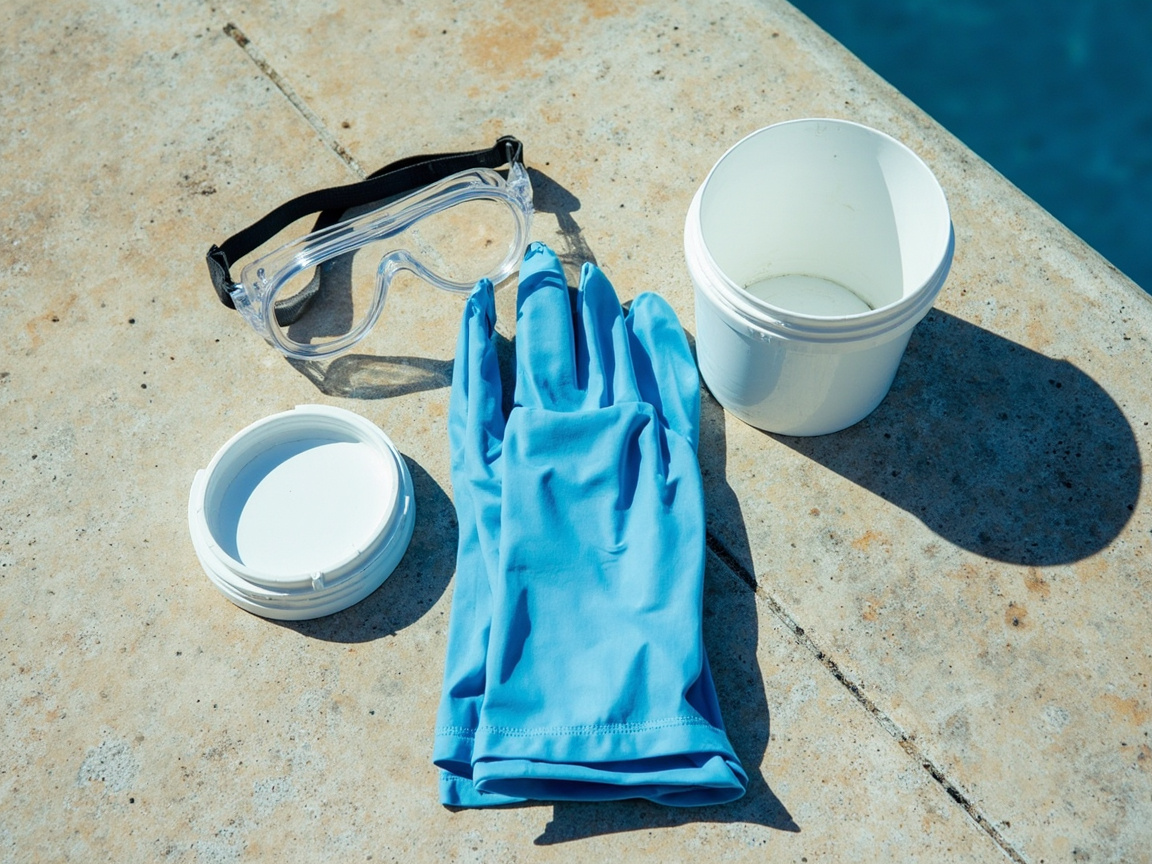
When dosing cal-hypo shock like HTH, wear gloves and eye protection. The dust irritates lungs; don’t breathe it. Calcium chloride dust is milder but still wash hands after handling. Splash any chemical in your eye: rinse 15 minutes with clean water and call poison control (1-800-222-1222 in the US). Skin contact with concentrated shock can cause chemical burns within minutes — rinse immediately.
When to call a pro
Keep DIY if: you can test water, brush, run the filter 24h, and the readings are moving the right way after a single dose.
Call a pro if CH won’t stabilize
You dose calcium chloride, retest 24h later, and CH drops back below 200. There’s likely a metal stain underneath — that needs a stain test, not another calcium dose like the Pool Mate bag.
Call a pro if FC stays low after proper shocking
You followed the shock dose, ran 24h, retested, and FC is still under 2 ppm. Either CYA is way off, ammonia contamination, or your pump/filter isn’t circulating enough. A service tech can run a SLAM safely.
Call a pro if you inherited a pool you can’t read
If you have a 5-year-old pool with no test log and the plaster looks etched, the water is cloudy, and you’re not sure what was added last — call a service tech for a one-time “start over” assessment. The cost is less than destroying the heater.
How to dose in the right order
When in doubt about which chemical to add first:
- Test FC and CH. If both are off, fix CH first (it moves slowly; chlorine reacts fast).
- Test TA. Adjust TA only if pH won’t hold and TA is off-range — the TA guide has the buffer math.
- Test pH. Adjust pH with the right acid or base (see pH guide) before any chlorine dose.
- Test CYA. Boost with stabilizer only if outdoor pool and CYA is below 30.
- Dose shock last if FC is still low or water is hazy. The pool water testing guide is the full reference.
(Order matters because adding chlorine first masks the underlying CH reading; you’ll overshoot one or both.)
Related
- Calcium Hardness in Pool Water — the rest of the CH picture (lowering CH, scale vs etching).
- Pool Water Testing Guide — order of tests and what each reading means.
- Chemical Dose Calculator — convert any target ppm change into actual lb or oz per your pool size.
Key takeaways
- Calcium chloride and chlorine are two completely different pool chemicals; one raises CH, the other raises FC, and neither replaces the other.
- Test CH (target 200-400 ppm) and FC (target 2-6 ppm) separately, in that order — fixing CH first lets FC readings become interpretable.
- Dose at dusk, run the pump overnight, never mix chlorine types, and follow the 4-gate re-entry rule before anyone swims after a chlorine dose.
- Bulk CH increaser (Pool Mate 25-lb) is cheaper per ppm than 4-lb packs, but only worthwhile if your fill is genuinely soft or you have plaster to protect.
- Use the chemical dose calculator any time the dose is over 2 lb per 10k gal — eyeballing either product is how over-doses happen.
- The whole comparison comes down to one question: what does your test say right now? If you can’t read the number, the cheapest chemical in the world becomes the most expensive mistake.