Phosphate is the most-misunderstood pool parameter. Pool stores will tell you to dose remover at any reading above 500 ppb. The Trouble Free Pool forum (the largest pool-method community) says don’t dose below 1000 ppb because chlorine handles the algae pressure on its own. Most pool owners are somewhere in between, and the right answer depends on what your test strip actually says. Test first, dose second, retest 48 hours later. That sequence costs $20 and saves $200 in wasted remover.
Quick answer
Pool phosphates are phosphorus compounds — algae food, but not the cause of algae. Sources: fill water, decomposing leaves, lawn fertilizer runoff, and some pool chemicals. Test before you dose: only remove phosphates when the level exceeds 1000 ppb. Under that threshold, chlorine handles algae pressure on its own; the remover is wasted money. Use a lanthanum-based product (Orenda or Natural Chemistry); follow with the test strip recheck in 48 hours.
What pool phosphates are (and are not)
Phosphates get blamed for a lot of pool problems they don’t actually cause. Knowing what they are and what they aren’t is the difference between spending $30 on remover you didn’t need and ignoring a real problem.
What phosphates ARE
Phosphorus compounds (PO4) dissolved in the water. They are a nutrient that algae can use to bloom faster if chlorine slips. Measured in parts per billion (ppb) — typical pools sit at 100-1000 ppb; high-load pools (fall leaves, lawn runoff) can hit 5000+ ppb.
What they are NOT
Not the cause of algae — chlorine and cyanuric acid are the controlling variables; phosphates just feed algae faster when chlorine drops. Sister link: cyanuric acid for the CYA-chlorine relationship. Not a sanitizer disruptor — phosphates don’t interact chemically with chlorine the way CYA does. Not visible — the water looks clear at any phosphate level. High phosphate is a test-strip reading, not a visual symptom. Not the same as TDS — total dissolved solids includes phosphates + calcium + chloride + everything else. You need a phosphate-specific test.
Why phosphates matter (and when they don’t)
The relationship between phosphates, chlorine, and algae is the most-asked question in pool chemistry. Most of the confusion comes from the pool store sales pitch.
The algae-phosphate connection
Algae need nitrogen, phosphorus, and light. Chlorine pools typically have enough nitrogen from bather waste and decomposing organics. Phosphorus is often the limiting nutrient — remove it and algae bloom is slower. But chlorine handles low phosphate (under 1000 ppb) fine without help.
The Trouble Free Pool position (forum method-ref)
TFP (the largest pool-method forum) recommends removing phosphates only when levels exceed 1000 ppb. Below that threshold, the chlorine + CYA relationship handles algae pressure. Spending $30 on a remover when your level is 500 ppb is wasted money.
Why pool stores push phosphate removal
Phosphate remover is a profitable add-on sale. Most stores will test your water and recommend remover at any level. Use the threshold (1000 ppb) and not the sales pitch. The free chlorine reading is the controlling variable, not the phosphate reading.
Where phosphates come from
Four main sources. Identifying the source is the difference between a one-time removal and a recurring problem.
Fill water
Some municipal and well water has measurable phosphate. Test your hose bib before assuming pool chemicals are the source.
Decomposing organic matter
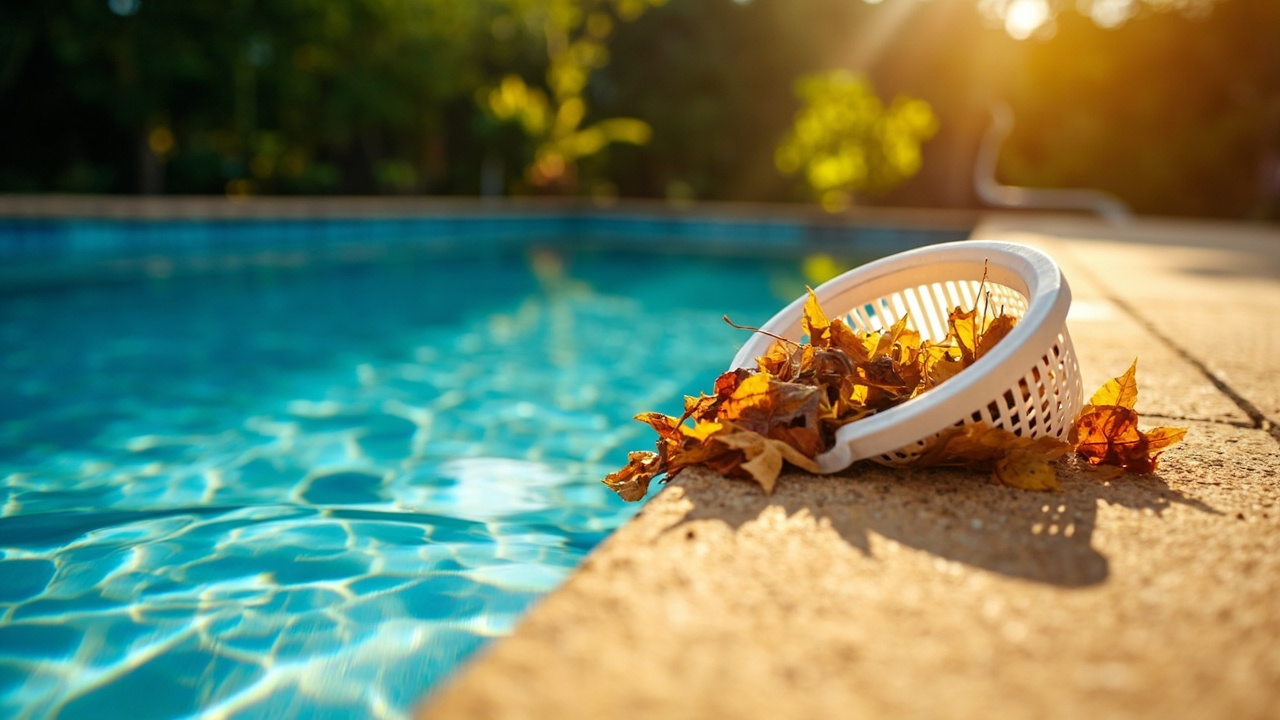
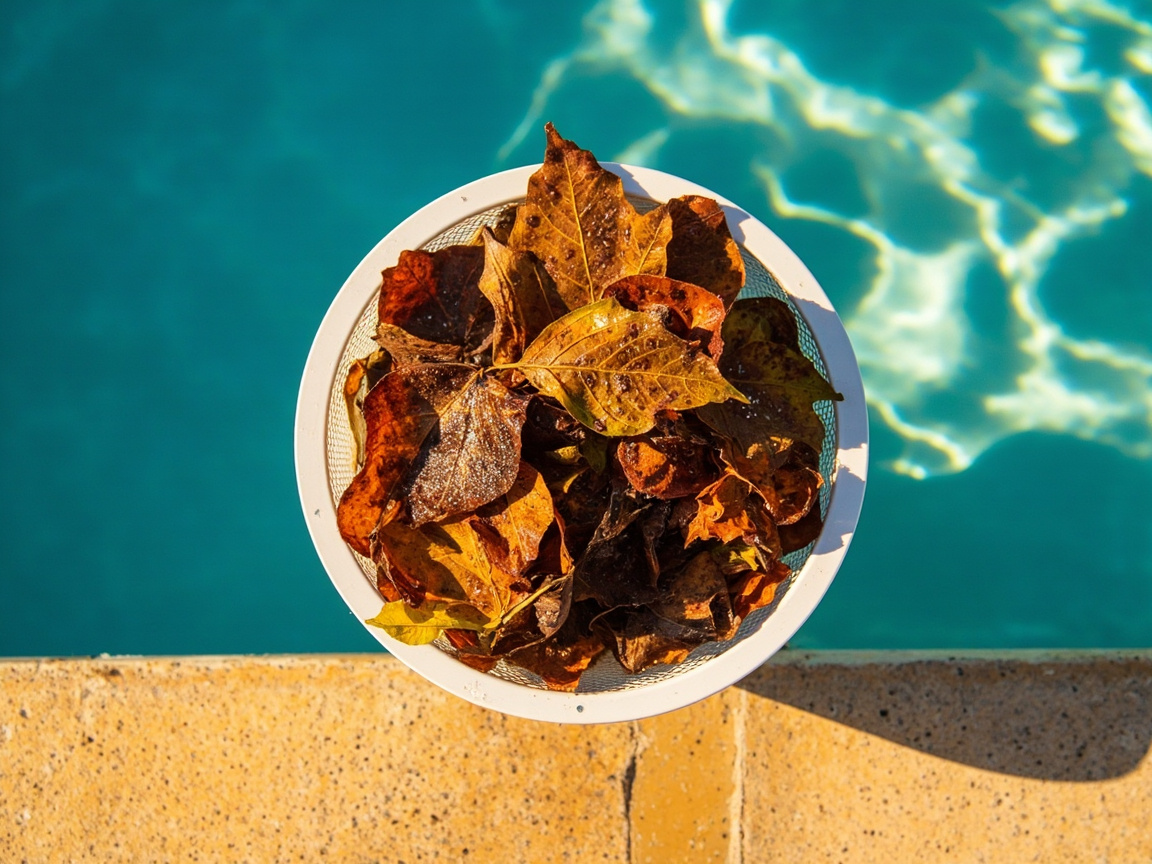
Leaves that fall in the pool and decompose. Algae that dies and breaks down (each dead algae cell releases phosphates back into the water — that’s why post-algae pools sometimes read high phosphate). Sister link: pool algae types for the algae lifecycle.
Lawn fertilizer and yard runoff
Phosphorus is a common lawn fertilizer component. Rain runoff into the pool carries it.
Some pool chemicals
A few phosphate-based products (rare; most modern chemicals are phosphate-free). Check the labels if you test high and have ruled out other sources.
How to test phosphates
Phosphate testing is fast, cheap, and gives a number you can act on. Three tools cover the spectrum.
Test strips vs liquid kit
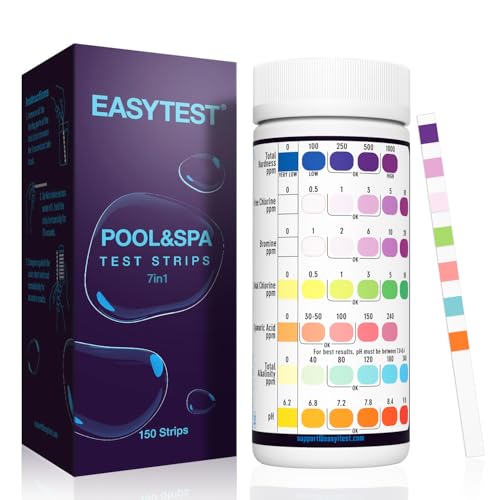
Phosphate test strips read 0-1000+ ppb in 15 seconds. Liquid kits (LaMotte or Taylor K-1105) are more accurate but cost more and take longer. Strips are fine for the threshold question. The 7-way strip above includes a phosphate pad.
When to test
At opening (after winter cover). When algae has been a recurring problem. After a leaf-heavy fall. Not every week — phosphate doesn’t change fast.
What your number means
Under 500 ppb = no action needed; chlorine handles it. 500-1000 ppb = monitor; add phosphate maintenance to weekly routine. 1000-3000 ppb = single remover dose, retest in 48 hours. Over 3000 ppb = two doses over a week; find the source.
When to remove vs when to skip (the 1000 ppb rule)
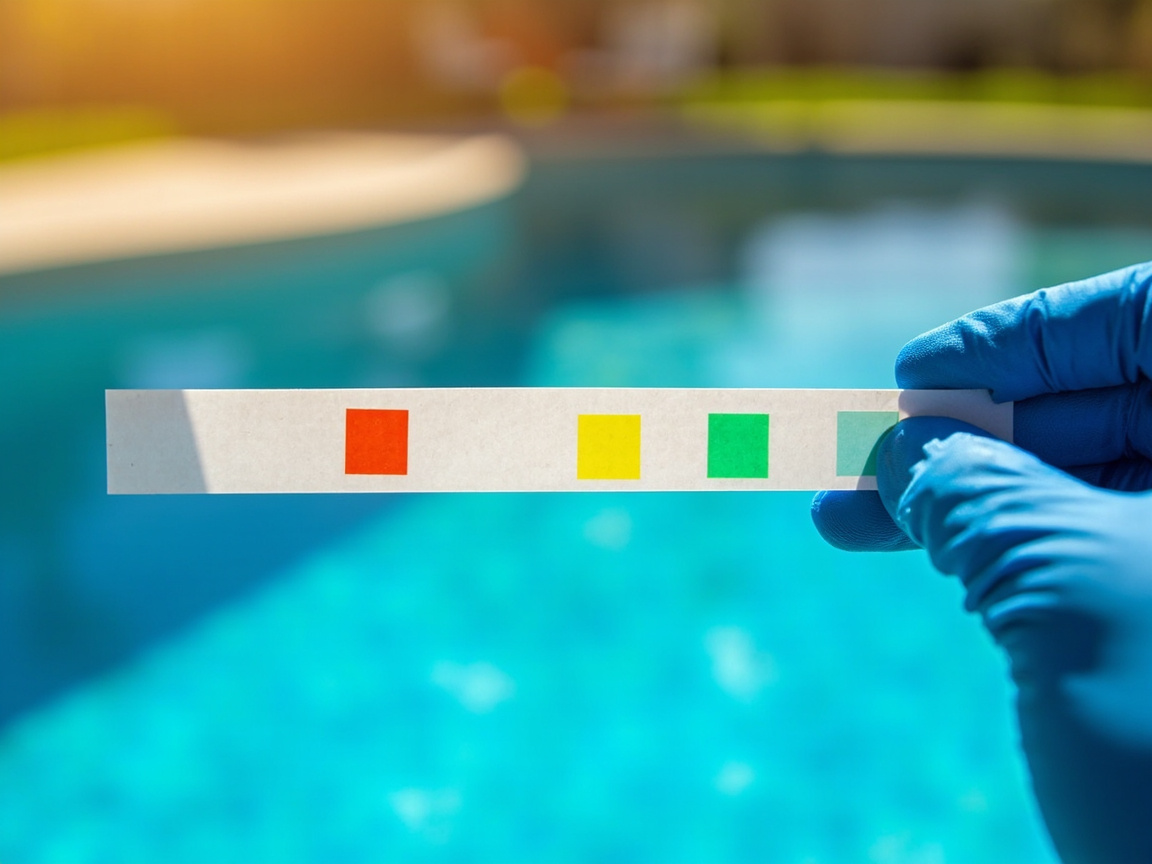
Four scenarios, each with a different protocol. The threshold question — when to dose vs when to skip — is the central decision.
Skip removal — under 1000 ppb
Your chlorine is handling algae pressure on its own. Adding phosphate remover at 500 ppb costs $20-30 for zero benefit. Save the remover for when the test actually reads over 1000.
Remove once — 1000-3000 ppb
Single dose of lanthanum remover (Orenda CV-700) or Natural Chemistry Phosfree. Run pump 24 hours. Retest in 48 hours; you should see a 70-90% drop.
Aggressive removal — over 3000 ppb
Two doses over a week. Investigate source (fill water test, check for ongoing organic input). May need partial drain if source is fill water.
Routine maintenance — after a confirmed algae kill
Dead algae releases phosphates back into the water. After clearing an algae bloom, dose remover to drop the residual spike. Otherwise the next chlorine dip will trigger a secondary bloom. Sister link: green pool for the full post-algae protocol.
What you’ll need
Five products cover every branch of the threshold question. Start with the test strips and a single remover bottle — the rest depends on your reading.
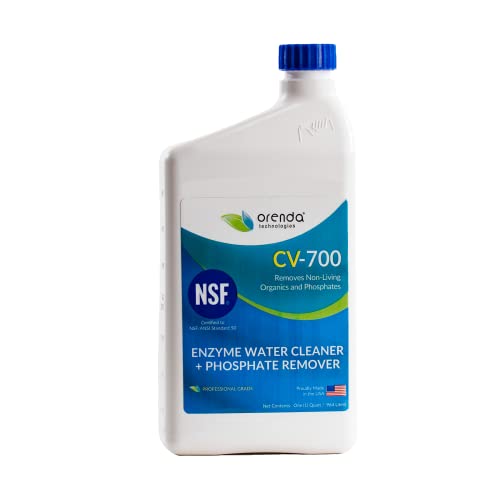
Orenda CV-700 Enzyme Cleaner & Phosphate Remover 1 qt (B003IJWEMC)
Industry-standard Orenda formulation with enzyme clarifier + lanthanum phosphate remover in one quart. Premium tier, fastest action (24-48 hours). Best for serious phosphate spikes. See price on Amazon.
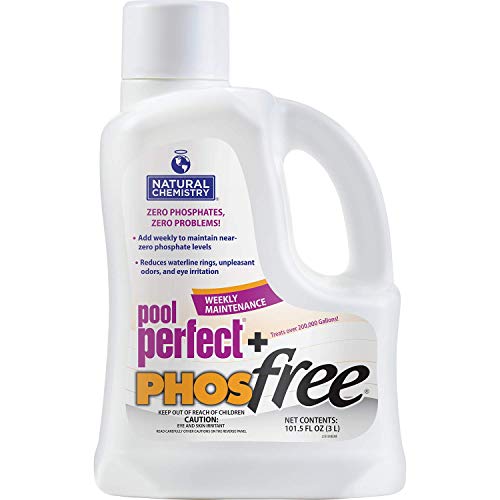
Natural Chemistry Pool Perfect + Phosfree 3 L (B000NSGNOG)
Routine monthly blend — enzyme clarifier + lanthanum in one bottle. Cheaper per ounce than Orenda at maintenance dose. See price on Amazon.
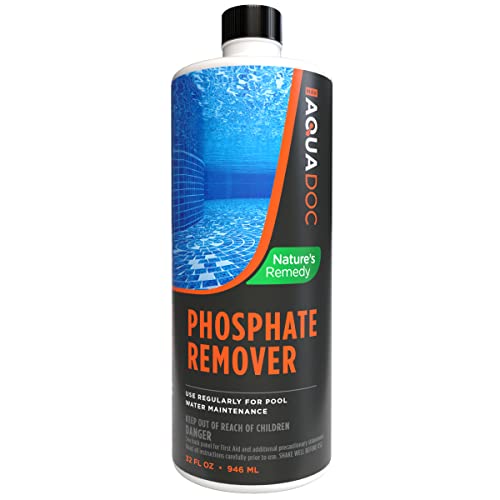
AquaDoc Phosphate Remover 32 oz (B0BZPF5TKM)
Budget phosphate remover. Same lanthanum active as Orenda, lower price. Use for first-time removal or one-shot dose. See price on Amazon.
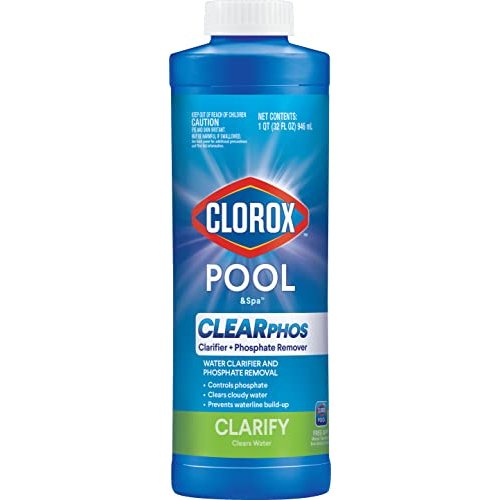
Clorox Pool & Spa ClearPHOS 1 qt (B0C4C1NZL3)
Clarifier + remover combo. Best when you also have cloudy water (often paired with phosphate issue post-algae kill). See price on Amazon.
EASYTEST 7-Way Test Strips 150 ct (B09MSY8BLB)
Mandatory first step — test before you dose. Don’t waste remover on a 500 ppb reading. See price on Amazon.
Step-by-step — how to remove phosphates
Six steps, 48 hours from test to retest, with most of the time spent waiting for the lanthanum to bind.
Step 1 — Test with a phosphate strip
Use the dedicated phosphate pad on a 7-way strip or a phosphate-only test. Record the ppb number. The Insta-Test phosphate strip bottle reads 0-2500 ppb and costs about $20 per 25 tests — cheap insurance before any $30+ remover dose.
Step 2 — Confirm over 1000 ppb
Don’t dose below this. Saving remover for when you need it is how TFP pool owners spend $30/year instead of $200/year.
Step 3 — Calculate the dose
Most lanthanum removers dose at 4-8 oz per 10k gal at 1000 ppb. Higher ppb = higher dose. Read the bottle for the brand-specific multiplier. Use the pool chemical dose calculator for the exact number.
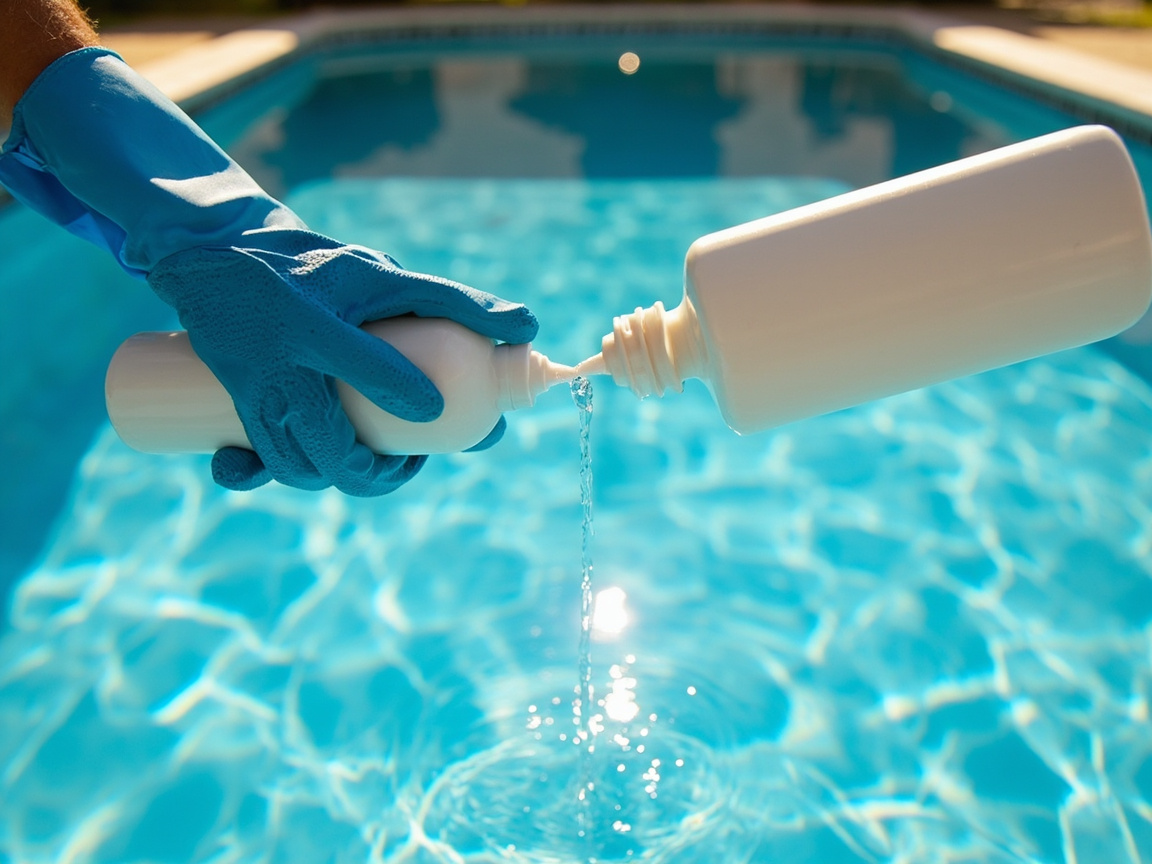
Step 4 — Broadcast evenly across the surface
Pump running. Pour slowly in a thin stream around the pool perimeter. Avoid concentrating in one spot (cloudy precipitation). The Orenda CV-700 quart handles a 1000 ppb removal in a 20k gal pool at the bottle’s labeled dose rate.
Step 5 — Run pump 24 hours continuously
Lanthanum binds phosphate and precipitates it; the filter captures the precipitate. Backwash after 24 hours. Sister link: total alkalinity for the TA effect on precipitation efficiency.
Step 6 — Retest in 48 hours
You should see a 70-90% drop. If phosphate is still over 1000 ppb, second dose.
Common mistakes
Five errors that waste remover or make the algae problem worse.
- Removing phosphates at low levels (under 1000 ppb). Wasted money. Chlorine handles this range without help. Save the remover for when you actually need it.
- Treating phosphates first instead of chlorine. Phosphate is a nutrient, not the cause. If your chlorine is low and phosphate is high, fix chlorine first; phosphate removal won’t help if chlorine is at 0. Sister link: free chlorine for the chlorine-first rule.
- Skipping the post-algae phosphate dose. Dead algae releases phosphates back into the water. If you don’t dose remover after clearing an algae bloom, the next chlorine dip triggers a secondary bloom. Sister link: green pool for the post-algae sequence.
- Using pool-store phosphate test strips exclusively. Some store tests over-report (high readings sell more remover). Cross-check with a home 7-way strip if you doubt the result. Sister link: pool test strips for the home-strip options.
- Dosing remover and chlorine shock at the same time. Lanthanum binds phosphate; chlorine oxidizes it. Add them at different times (chlorine first, remover 24 hours later, or vice versa). Mixed products reduce each other’s effectiveness. A standard Clorox Pool&Spa shock pound should always be the first or last step, never mixed into the lanthanum dose.
When to call a pro
Two situations where DIY becomes a service call.
Phosphate stays over 2000 ppb after two doses
Source is ongoing — likely fill water with high phosphate. Pro can install a phosphate-removing pre-filter or recommend a partial drain + refill with better fill water.
Algae keeps coming back despite phosphate control
Could be nutrient imbalance (nitrogen) rather than just phosphate. Lab test on the water identifies the actual limiting nutrient.
What to buy only if needed
Four conditional branches.
Only if your fill water has above 500 ppb phosphate
Install a phosphate-removing pre-filter on the fill hose. Cheaper than treating repeatedly. Test fill water first (hose bib into a clean glass).
Only if you have leaf-heavy fall season
Buy the Natural Chemistry blend for monthly maintenance instead of waiting for the spike to trigger emergency treatment. Prevention is cheaper than correction.
Only if you have a recurring algae problem despite normal FC
Test phosphates. If over 1000 ppb, the algae pressure may be too much for your normal chlorine level to handle. A single remover dose often breaks the cycle.
Only if you have a sand filter (not DE or cartridge)
Sand filters can struggle with the lanthanum precipitate. Use a clarifier or upgrade to DE if you dose phosphate remover more than 2x per season.
Related
- Pool algae types (sister problems hub) — phosphates feed algae but don’t cause it
- Cyanuric acid (sister chemistry hub) — the other major pool water parameter
- Pool water testing framework — test before you dose
Key takeaways
- Phosphates are algae food, not algae cause. Chlorine is the controlling variable.
- Test before you dose. The threshold is 1000 ppb; below that, remover is wasted money.
- Sources: fill water, decomposing leaves, lawn fertilizer runoff, some pool chemicals. Test your hose bib first.
- Post-algae bloom, always dose remover. Dead algae releases phosphates back into the water; without a remover dose, the next chlorine dip triggers a secondary bloom.
- Never mix remover with chlorine shock. Sequence them 24 hours apart so each can do its job.
- Orenda is the premium pick; Natural Chemistry is the routine-maintenance pick; AquaDoc is the budget pick. Same lanthanum active in all three.
- Pool stores will recommend remover at any reading above 500 ppb. The TFP forum says 1000 ppb is the real threshold. Save the remover for when your strip actually crosses it.