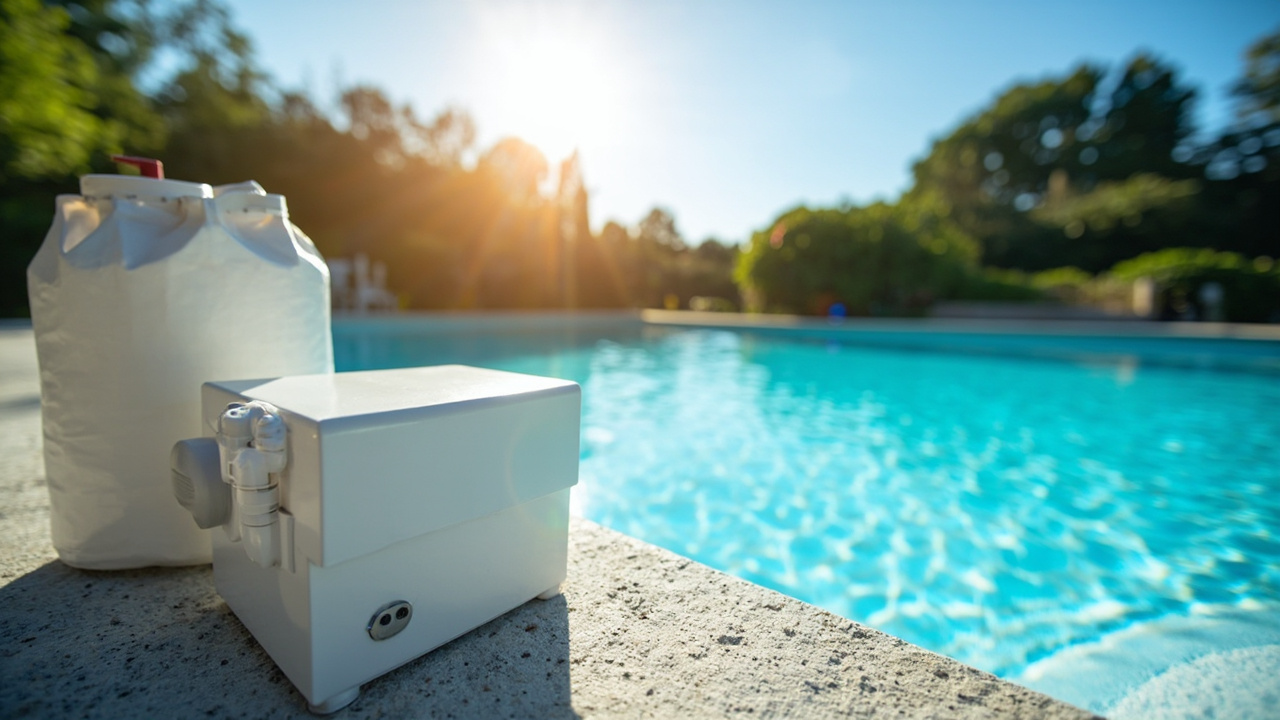
If your pool builder said “saltwater” and you pictured ocean water or a chlorine-free promise, you’ll buy the wrong equipment and fight chemistry you didn’t sign up for. Done wrong, a salt system costs you a fried cell, green water, and corroded fixtures. Done right, it’s a generator that makes chlorine on site while you test salt, pH, and CYA on a simple schedule.
Quick answer
A saltwater pool uses a salt chlorine generator (SWG) to turn dissolved salt into chlorine through electrolysis. Add pool salt to 3,000 to 4,000 ppm, and the cell produces a steady low dose of free chlorine automatically. The water feels softer and smells less than a puck pool — but you still test pH, alkalinity, CYA, and salt monthly. Saltwater isn’t chlorine-free. It just makes its own.
What a saltwater pool actually does
How electrolysis turns salt into chlorine
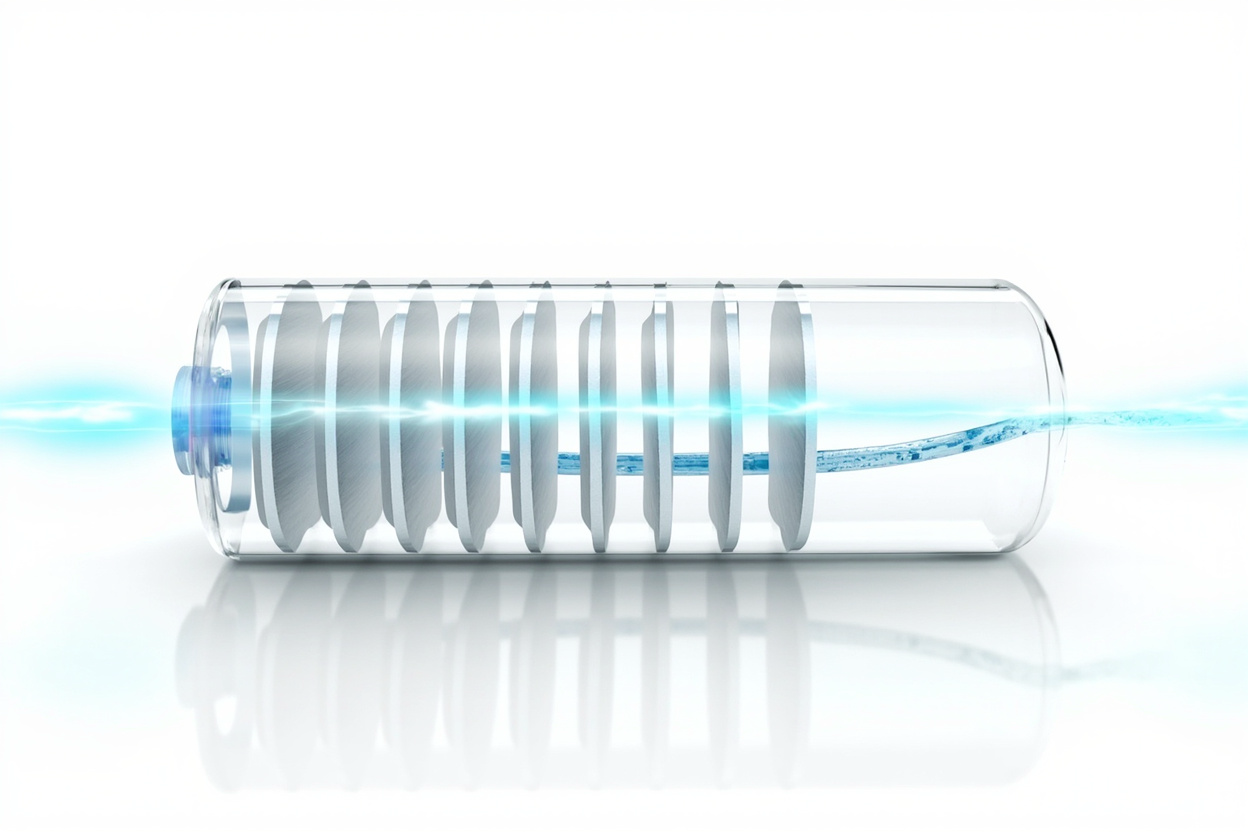
Dissolved sodium chloride (NaCl) passes through the SWG cell, which holds titanium plates charged with low-voltage DC current. Electrolysis splits the salt molecule, producing hypochlorous acid — the active sanitizer — at one plate and sodium hydroxide at the other. The chlorine dissolves straight into your pool water and sanitizes exactly the same way manually added chlorine does. Once it finishes killing bacteria and oxidizing waste, it reverts back to salt. That’s why you only top up salt after splash-out, backwashing, or rain dilution — the chlorine recycles itself.
Where the salt goes and stays
Salt doesn’t evaporate or break down in sunlight. It stays in the water at a near-constant level. You lose salt only when you physically remove water — backwash, drain, splash-out, or a leak. A typical pool holds 250 to 500 lb of salt at target range. You only add 40 to 80 lb at a time after a dilution event to get back to range.
What this is not
- Saltwater pools are not chlorine-free. They produce their own chlorine through the SWG. The difference is delivery method — continuous on-site generation versus manual pucks or liquid — not the sanitizer itself.
- Saltwater is not the ocean. Ocean salinity runs about 35,000 ppm. A salt pool sits at 3,000 to 4,000 ppm — roughly one-tenth the saltiness of seawater. The water barely tastes salty.
- Saltwater does not mean “no chemicals.” You still balance pH, total alkalinity, calcium hardness, and cyanuric acid. The SWG replaces the daily chlorine addition, not full water chemistry.
- Saltwater is not maintenance-free. The cell needs cleaning every 3 months, salt needs testing monthly, and pH drifts upward faster in salt pools because of the hydrogen off-gas from electrolysis.
Ideal salt and chemistry ranges
Salt level targets by SWG manufacturer
| SWG brand | Min salt (ppm) | Ideal (ppm) | Max salt (ppm) | Pool size |
|---|---|---|---|---|
| Hayward AquaRite | 2,800 | 3,200–3,500 | 4,500 | up to 40K gal |
| Pentair IntelliChlor | 3,400 | 3,400–4,000 | 4,500 | up to 40K gal |
| Intex Krystal Clear | 3,000 | 3,000–4,000 | 6,000 | up to 15K gal |
| Generic / budget SWG | 3,000 | 3,200–3,800 | 5,000 | varies |
Always follow your specific SWG manual — the low-salt alarm threshold varies by brand.
Full chemistry targets for a balanced saltwater pool
| Parameter | Target range | Why it matters in saltwater |
|---|---|---|
| Salt (NaCl) | 3,000–4,000 ppm | Below minimum the SWG stops making chlorine; above max it shuts off |
| Free chlorine (FC) | 1–3 ppm | SWG holds this automatically if salt and run time are right |
| pH | 7.2–7.6 | Drifts up in salt pools faster than chlorine pools — test weekly |
| Total alkalinity (TA) | 80–120 ppm | Buffers pH; matters more because electrolysis accelerates pH rise |
| Cyanuric acid (CYA) | 60–80 ppm | SWG chlorine needs more CYA protection than manual chlorine |
| Calcium hardness (CH) | 200–400 ppm | Low CH plus saltwater corrodes cell plates and etches surfaces |
Decision tree: what to do with your saltwater pool
Here’s how to work through the common saltwater situations. Each branch tells you what to check first and what action to take.
Switching from chlorine to salt
You need a complete SWG system, pool salt, and a salt test kit. Most existing plumbing and pumps work — only the sanitizer delivery changes. Use the Salt Dose Calculator to figure out initial salt volume.
Salt pool with low FC reading
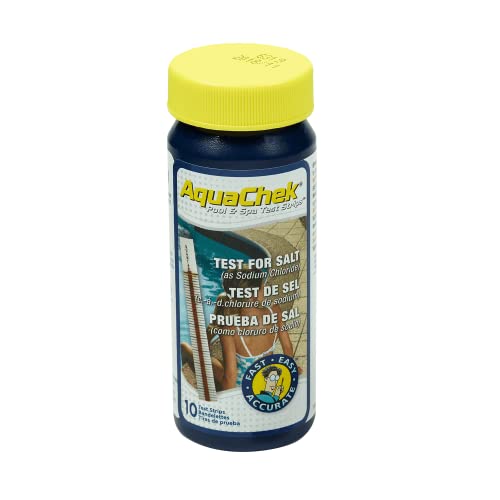
Check salt ppm first with AquaChek Salt Titrators (most common cause). If salt is in range, inspect the cell for calcium scale. Then verify the SWG output percentage setting.
pH keeps climbing above 7.8
Normal in saltwater. Add muriatic acid weekly. If TA is above 120, lower it first — high TA amplifies pH rise. See our pH guide for the full acid-dosing routine.
SWG says low salt but test reads 3,500+
The cell is probably scaled. Clean it with an acid wash. If the inspect-cell code persists after cleaning, the cell may need replacement — typical lifespan is 3 to 7 years.
Pool is green despite SWG running
SWG makes chlorine slowly. It cannot catch up to an active algae bloom. Shock manually with liquid chlorine first, then resume SWG for maintenance. See our Green Pool guide for the shock sequence.
How to test saltwater pool chemistry
Salt testing — three methods
- Salt test strips — AquaChek Salt Titrators dip and read in the 0 to 6,000 ppm range. Quick, plus or minus 200 ppm. Good for monthly checks.
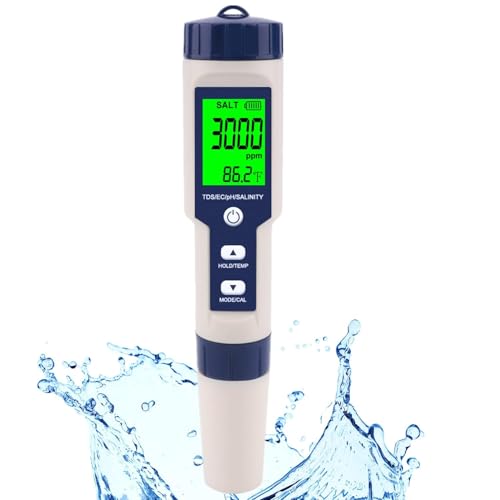
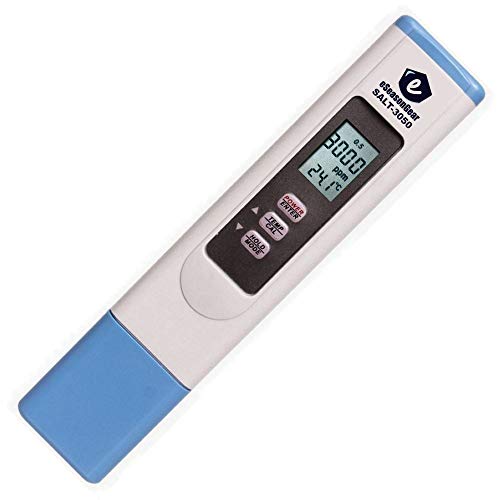
- Digital salinity meter — The Hofun 5-in-1 submerges a probe and reads ppm on a display. More precise than strips, and it also tests pH and temperature. If you want a dedicated salt-only tester, the eSeasonGear SALT-3050 is IP65 waterproof for poolside use.
- SWG built-in sensor — Most controllers display a salt reading, but the sensor sits in the cell housing and can drift. Cross-check with strips or a meter at least monthly.
Standard chemistry testing
Beyond salt, you test the same parameters as any pool. Use the same kits — Taylor K-2006C, AquaChek 7-way strips, or liquid drop kits. The SWG does not replace the need to test pH, TA, CH, and CYA. See our Pool Water Testing guide for the full testing routine and kit comparisons.
How often to test
| Parameter | Frequency | Why |
|---|---|---|
| Salt | Monthly | Only changes with water dilution |
| pH | Weekly | Drifts up fast in saltwater |
| FC | Weekly | Confirms the SWG is producing |
| TA | Bi-weekly | Buffers pH |
| CYA | Monthly | SWG chlorine still needs stabilizer |
| CH | Monthly | Low CH corrodes the cell |
If salt is low — how to add pool salt
How much salt to add
Add salt based on your pool volume and the gap between current and target ppm. Use the Salt Dose Calculator for exact amounts. For reference: to raise salt by 1,000 ppm in a 10,000-gallon pool, you need about 85 lb of pool salt — roughly two 40-lb bags.
Step-by-step: adding salt
- Test current salt level. If below your SWG’s minimum (usually 3,000 ppm), proceed.
- Calculate the amount. Use the salt dose tool or your SWG manual’s chart.
- Broadcast salt into the pool. Pour bags around the perimeter with the pump running. Salt dissolves fast — no skimmer socks needed.
- Brush the pool floor. Push any settled salt toward the main drain to speed dissolving.
- Run the pump for 8 hours minimum. Ideally 24 hours before re-testing.
- Do not switch on the SWG until salt is fully dissolved. Running a dry or under-salted cell can overheat and damage the titanium plates.
What kind of salt to use
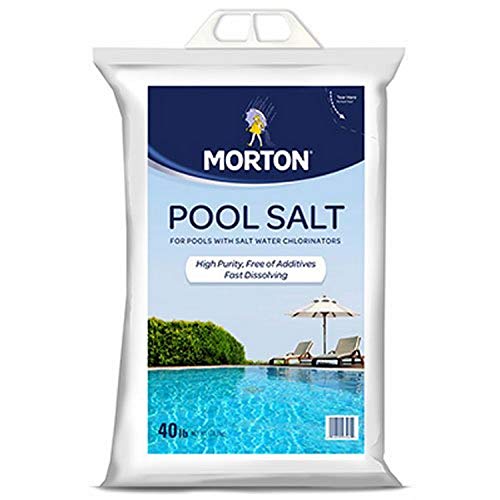
Use pool salt, solar salt, or food-grade NaCl at 99 percent or higher purity. Morton Pool Salt 40 lb is a reliable fast-dissolving option — one bag raises salt about 500 ppm in a 15,000-gallon pool.
Skip these:
- Rock salt — contains impurities and minerals that stain and scale.
- Table salt with iodine — iodine discolors pool surfaces.
- Water softener pellets with rust inhibitors — additives coat the SWG cell and reduce output.
If salt is high — how to lower it
The only fix is dilution
Like CYA, salt cannot be chemically removed. If your SWG’s high-salt alarm sounds (typically above 4,500 to 5,000 ppm), the only solution is to drain some water and refill with fresh water.
To lower salt by 500 ppm in a 15,000-gallon pool: drain about 2,000 gallons (13 percent) and refill.
Why high salt is a problem
- SWG auto-shutoff — Most controllers disable chlorine production above 5,000 to 6,000 ppm to protect the cell.
- Corrosion — Sustained high salt eats metal fixtures, ladders, heat exchangers, and pool light rings faster than normal.
- Taste and feel — Above 5,000 ppm the water tastes noticeably salty and can leave residue on skin.
Preventing salt creep
Over-salting is the most common cause. Always under-dose slightly — add 80 percent of the calculated amount, test after 24 hours, then top up if needed. It’s far easier to add salt than to drain.
How saltwater chemistry fights with pH and CYA

The pH rise problem
Electrolysis at the SWG cathode produces hydrogen gas (which off-gasses) and sodium hydroxide (a base). Every hour the SWG runs, it pushes your pH upward. A saltwater pool that started at pH 7.4 can hit 7.8 in a week without acid addition. Test pH weekly and add muriatic acid as needed. Keeping TA at 80 to 100 — the lower end of normal — slows the climb. See our pH guide for dosing tables.
CYA is still required — and higher than you think
SWG chlorine comes out in small, steady doses that are vulnerable to UV. Most manufacturers recommend CYA at 60 to 80 ppm — higher than a traditional chlorine pool at 30 to 50 ppm. Without enough CYA, sunlight destroys chlorine faster than the cell makes it. Add stabilizer separately. See our Cyanuric Acid guide for testing and dosing.
Saltwater vs. traditional chlorine
| Factor | Saltwater (SWG) | Traditional chlorine |
|---|---|---|
| Chlorine delivery | Automatic, continuous | Manual pucks or liquid |
| Chlorine smell | Minimal | Stronger |
| Skin and eye feel | Softer | Harsher |
| pH behavior | Rises fast | More stable |
| CYA needed | 60–80 ppm | 30–50 ppm |
| Monthly cost | Low (salt only) | Higher (pucks, liquid) |
| Upfront cost | $200–$2,200 (SWG) | $0 |
| Cell replacement | Every 3–7 years ($150–$600) | N/A |
| Shock needed | Rarely (only for algae) | Periodically |
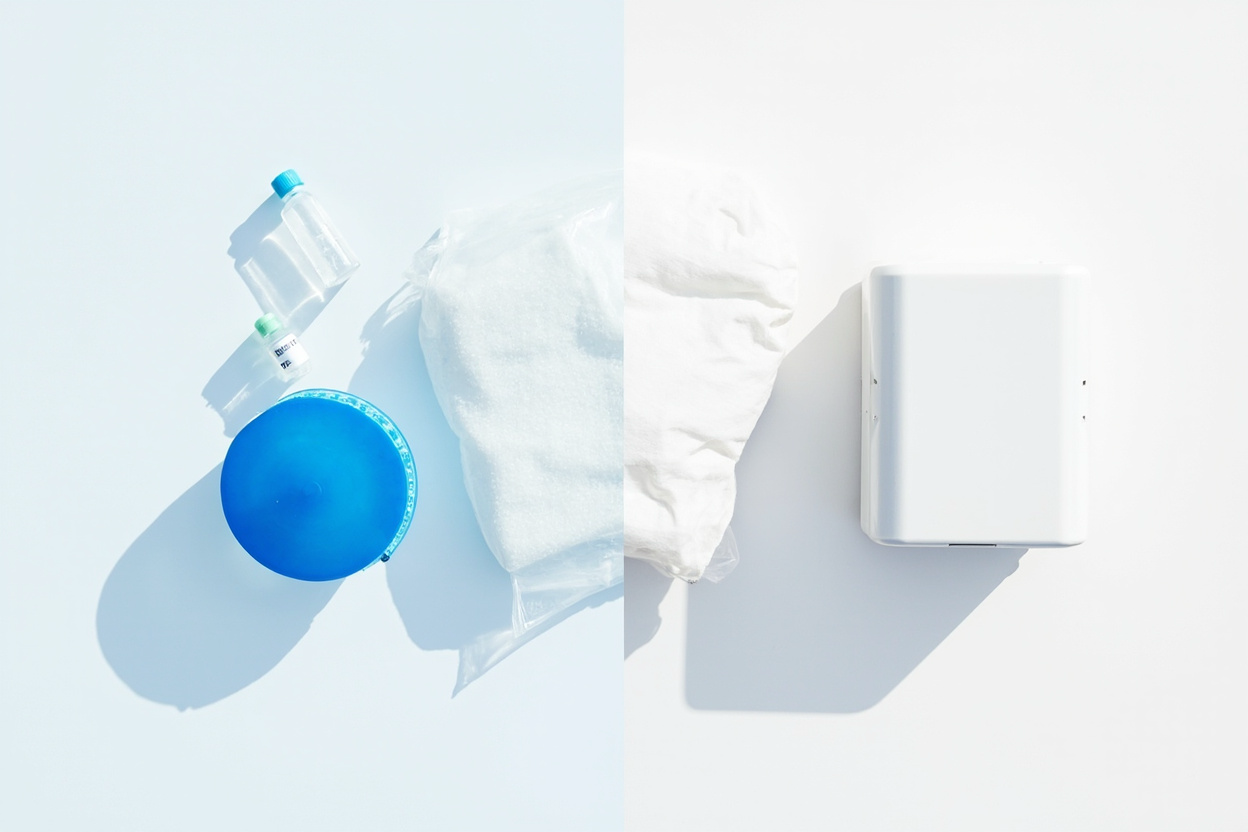
Free chlorine works the same way in both systems. See our Free Chlorine guide for FC targets and how to read low-FC results.
What you’ll need
For testing and maintaining a saltwater pool, here’s what matters and where it fits:
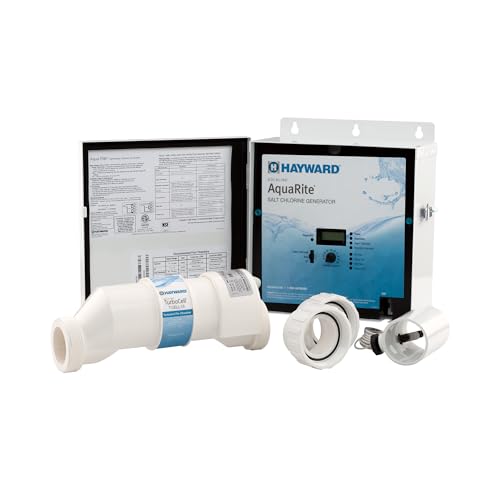
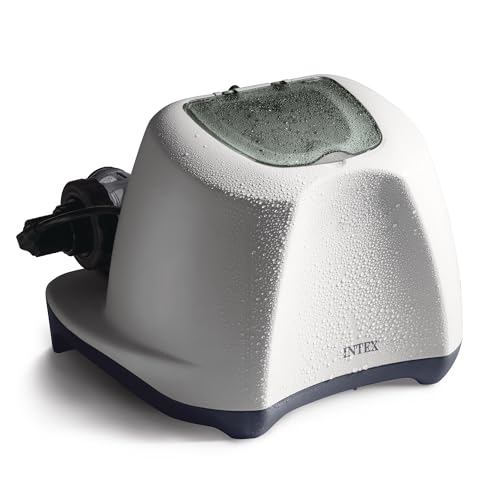
- SWG system — If you’re converting, pick the right unit for your pool type. The Hayward AquaRite W3AQR15 ($2,199) handles inground pools up to 40,000 gallons and is the industry standard. For above-ground pools up to 15,000 gallons, the Intex QS1200 Krystal Clear ($209.99) is the budget pick that gets the job done.
- Pool salt — Morton Pool Salt 40 lb ($22.85), 99 percent pure, dissolves fast.
- Salt test strips — AquaChek Salt Titrators ($12.67) for monthly salt checks.
- Digital salt meter — If you want more precision than strips, the Hofun 5-in-1 ($32.47) reads salt, pH, and temperature in one device.
Common mistakes
- Adding too much salt at once. Over-salting triggers the SWG’s high-salt alarm and forces a drain. Always add 80 percent of the calculated amount, test after 24 hours, then top up. Use the Salt Dose Calculator before pouring.
- Letting pH climb above 7.8 unchecked. Saltwater pushes pH up faster than chlorine pools because of electrolysis byproducts. Test weekly, not monthly — or you’ll get scaling on the cell and cloudy water.
- Skipping CYA entirely. Many saltwater owners assume “no pucks means no CYA needed.” Without CYA at 60 to 80 ppm, UV destroys SWG chlorine faster than the cell can make it. Add stabilizer separately — see our Total Alkalinity and Cyanuric Acid guides.
- Never cleaning the salt cell. Calcium scale coats the titanium plates every 2 to 3 months, cutting chlorine output and triggering inspect-cell errors. Soak in a 4:1 water-to-muriatic-acid solution for 10 to 15 minutes.
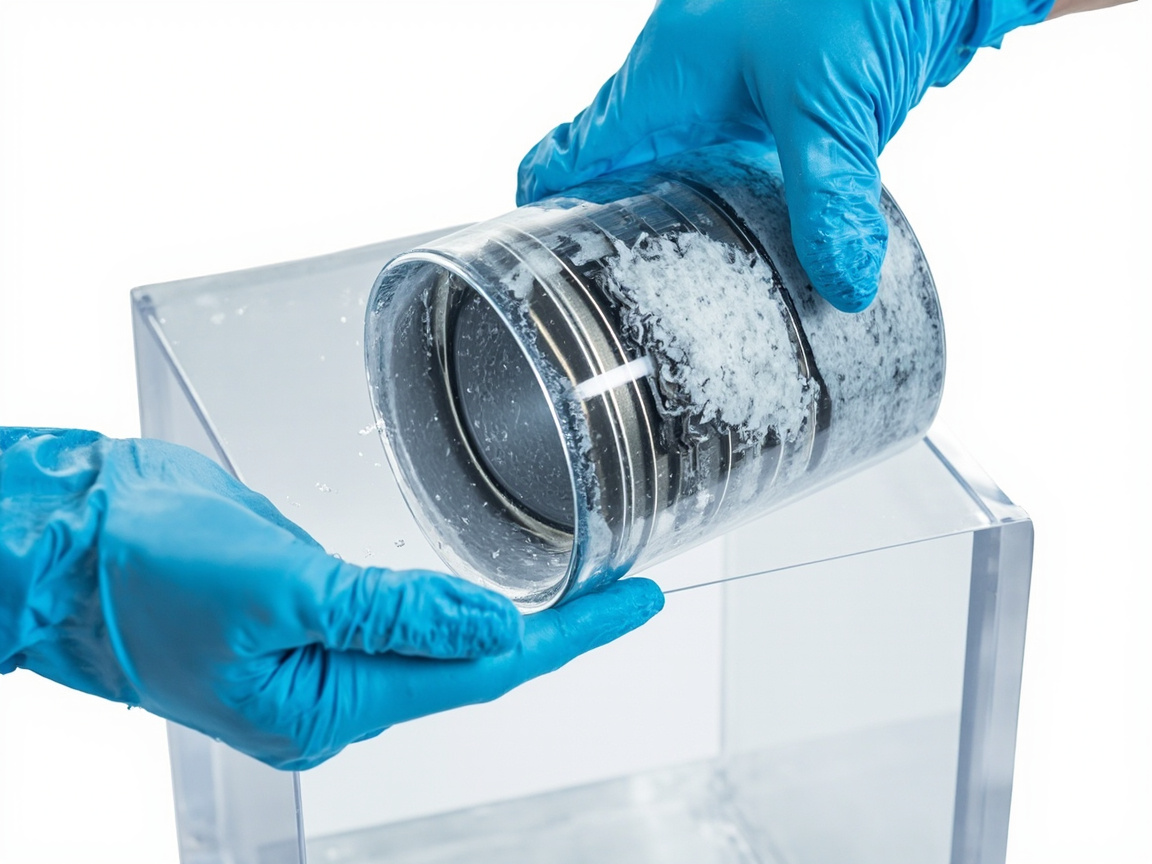
- Running the SWG with low or no salt. Turning on the generator before salt is fully dissolved can overheat and wreck the cell. Always confirm 3,000+ ppm with a digital meter before switching on.
What to buy only if needed
- Only if converting from chlorine to salt → You need a complete SWG system. The Hayward AquaRite ($2,199) is the proven choice for inground pools. The Intex QS1200 ($209.99) works for above-ground setups.
- Only if salt reads below 3,000 ppm → Add Morton Pool Salt 40 lb ($22.85). One bag raises salt about 500 ppm per 15,000 gallons.
- Only if you want more precision than strips → Upgrade to the Hofun 5-in-1 digital meter ($32.47) for salt plus pH, or the eSeasonGear SALT-3050 ($35.96) for salt-only waterproof testing.
Safety notes (read this)
Handling pool salt
Pool salt is safe to handle bare-handed — it’s the same NaCl as table salt, just coarser. But:
- Don’t ingest bulk pool salt. Non-toxic in small amounts, but 40-lb bags aren’t food-grade purity.
- Store in a dry place. Salt absorbs moisture and clumps, making it harder to dissolve.
- Rinse spilled salt off concrete decks. Concentrated salt can etch some decorative concrete over time.
Muriatic acid handling
Saltwater pools need more frequent acid additions than chlorine pools. Muriatic acid is dangerous:
- Always add acid to water, never water to acid. Splashing concentrated acid can cause severe chemical burns.
- Wear gloves and eye protection when pouring.
- Never pour acid near the SWG cell — the reaction can damage the titanium plates.
- Never mix acid with chlorine products. Mixing muriatic acid with trichlor or cal-hypo releases toxic chlorine gas.
- Store in a ventilated area with the cap sealed. Fumes corrode nearby metal.
Electrical safety around SWG systems
The SWG cell uses low-voltage DC, but the controller runs on 120V or 240V AC. Don’t open the controller box while powered. Have a licensed electrician handle all wiring. Bonding and grounding are critical — improper grounding can send stray voltage into the pool water.
When to call a pro
Consider professional help when:
- You’re converting from chlorine to salt and need help sizing the SWG, plumbing the cell into your return line, and wiring the controller. An electrician ensures safe 120V or 240V wiring.
- The SWG cell won’t produce chlorine despite correct salt level and a clean cell. The controller board, flow sensor, or cell itself may be faulty — diagnostics require a multimeter and manufacturer knowledge.
- Your pool surface is staining or corroding after going salt. Some older plaster, natural stone, and metal components aren’t salt-compatible. A pool builder can assess compatibility.
- pH refuses to stabilize even with weekly acid. High TA (above 140 ppm) or high CH (above 500 ppm) may need a professional drain-and-rebalance.
Related
- Cyanuric Acid — Saltwater pools need CYA at 60 to 80 ppm. Learn why and how to test.
- pH — pH rises faster in saltwater than in chlorine pools. Master the weekly acid routine.
- Salt Dose Calculator — Calculate exactly how much salt to add for your pool volume.
Key takeaways
- Saltwater pools make their own chlorine via electrolysis — they aren’t chlorine-free, just chlorine-auto-generated.
- Target 3,000 to 4,000 ppm salt. Below that the SWG stops working; above 5,000 ppm it shuts off and risks corrosion.
- pH rises faster in saltwater because of electrolysis byproducts. Test weekly and add muriatic acid.
- CYA is still required at 60 to 80 ppm — higher than traditional chlorine pools. Without it, UV outpaces the cell.
- Clean the salt cell every 3 months. Calcium scale cuts output and triggers error codes.
- Salt never evaporates. Only dilution lowers it. Add conservatively — it’s easier to add than to drain.
- You still test all pool chemistry. The SWG replaces daily chlorine dosing, not pH, TA, CH, or CYA management.