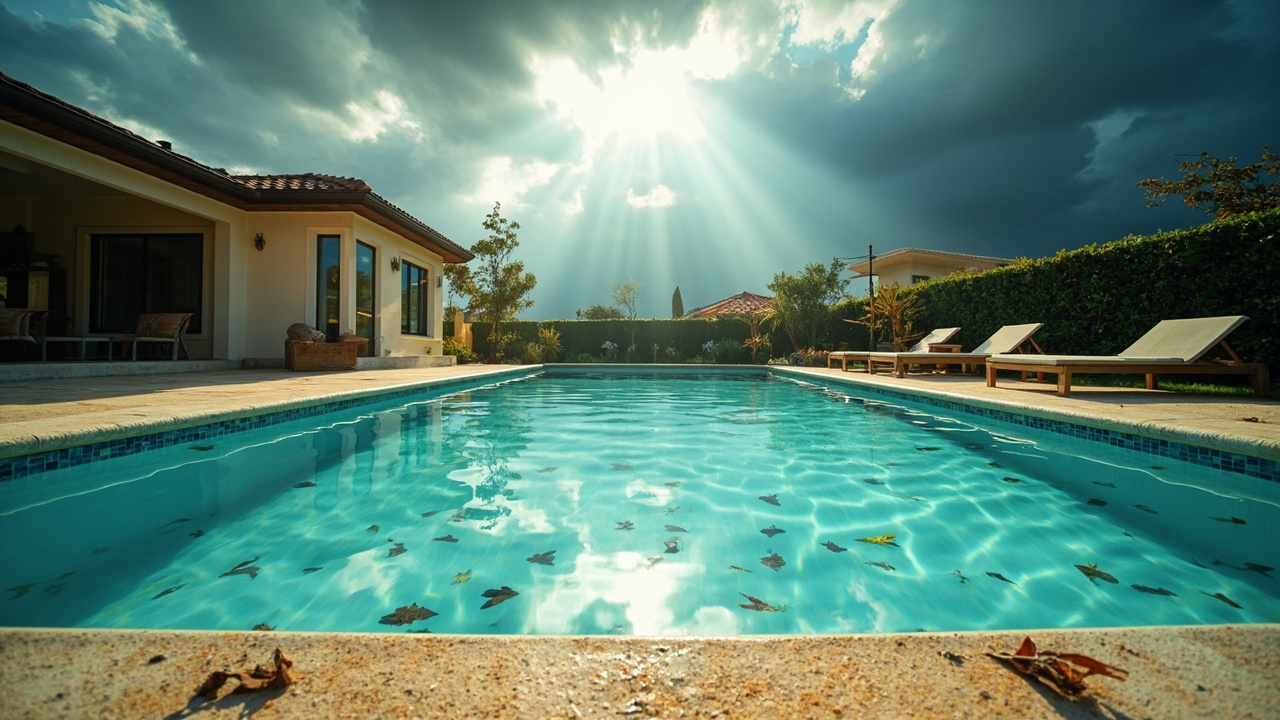



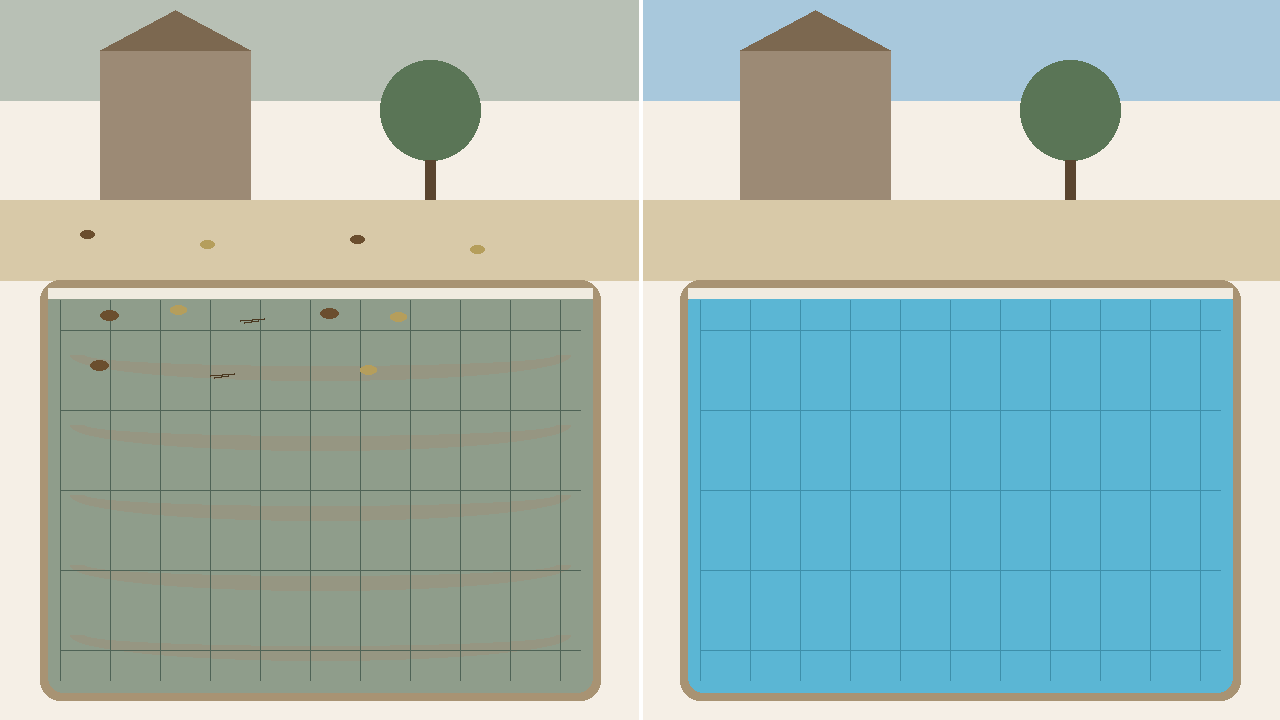
You walk out the morning after a summer storm and the deck is wet, the water is 3 inches higher than yesterday, and the pool has a green-grey film across the surface. Heavy rain doesn’t just dirty the pool — it dilutes every chemical you measured last week and dumps fresh organic load on top of it. Done wrong, you shock on top of a CYA that’s been washed out and your chlorine burns off in the sun before it kills anything. Done right, it’s a 5-step sequence that takes 24 to 48 hours from first test to clean water.
Quick answer
Heavy rain dilutes free chlorine, pH, total alkalinity, and cyanuric acid at the same time. The right order: remove debris first, test FC + pH + TA + CYA, shock to your new CYA-floor (FC = 7.5% of CYA), wait 24 hours, add polyquat algaecide, then rebalance pH and TA. Run the pump 24 hours. Skip backwashing until the end. Lightning damage to the pump is a separate problem — call an electrician, not a pool tech.
What this is not
After-rain-pool-care is a recovery event, not a diagnosis guide. Knowing what it isn’t saves you from chasing the wrong article.
- Not the same as green-pool recovery. A solidly green pool after the rain means the CYA drop let an algae bloom start. That’s a different fix path — see the green-pool hub. After-rain care is for the pool that was clear before the storm and is now cloudy, foamy, or just chemically off.
- Not the same as cloudy-pool clearing. Cloudy water is its own problem with a 48-hour clearing path. See the cloudy-pool hub if the cloudiness persists 48 hours after you’ve fixed the chemistry.
- Not a spring opening protocol. The summer-storm post-rain protocol shares 70% with spring opening but differs in three ways: the water is warm so algae grows faster, FC decay is faster because the rain diluted CYA so UV protection is weakened, and you have a working pump baseline — winter opening does not. See opening a pool for the seasonal version.
Why pools go wrong after heavy rain
Three things happen at once, and most of the post-rain frustration comes from treating only one of them.
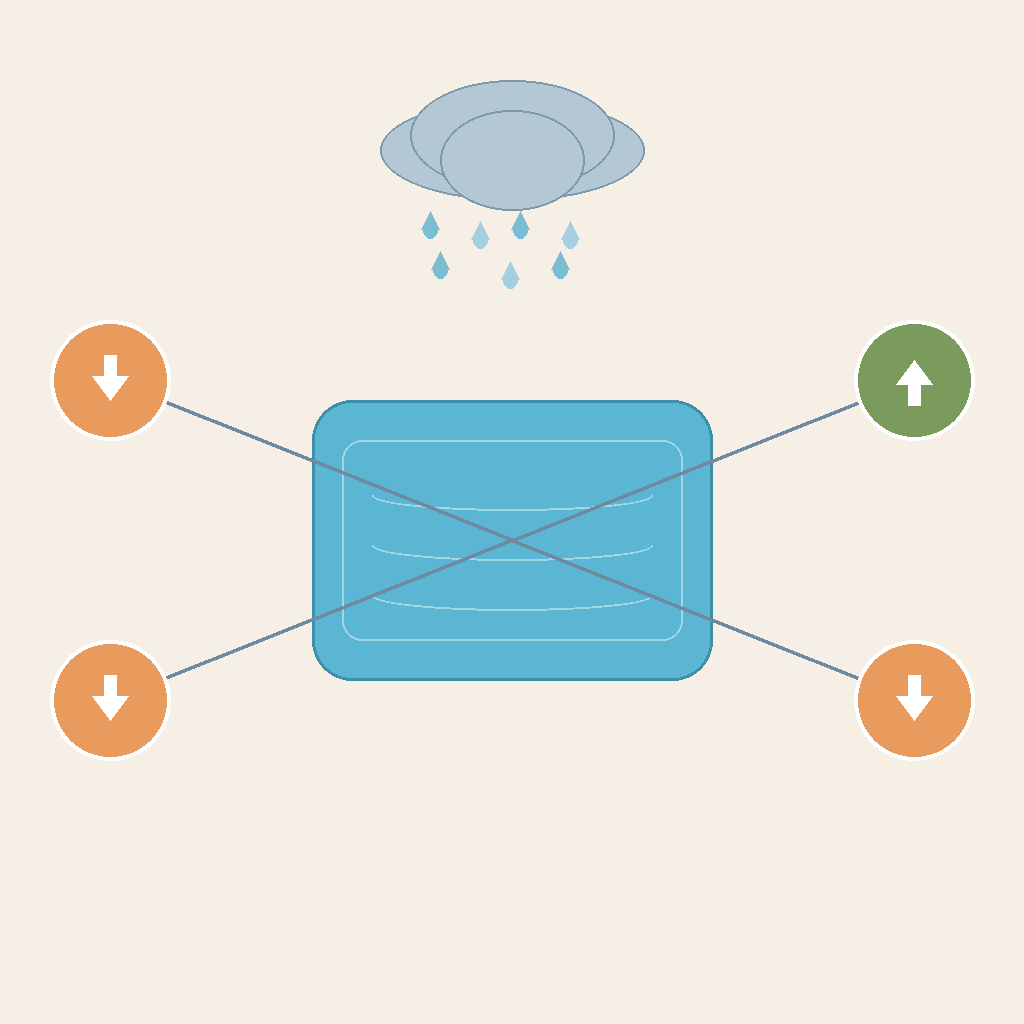
Rain dilutes everything you measured last week
One inch of rain on a 1,000 sqft pool adds roughly 620 gallons. A 2-inch rain event adds ~1,240 gallons — a 25%+ dilution hit on a 5,000-gallon pool. Your FC, CYA, and TA all drop proportionally; pH drifts upward because rainwater pH is ~5.6 (acidic, from dissolved CO2 in the atmosphere). Treating the rain as if it were clean fill water is the most common error — it isn’t. The math is in our CYA guide and the dose in our chemical dose calculator.
Rain washes organic load (pollen, leaf tannins) into the water
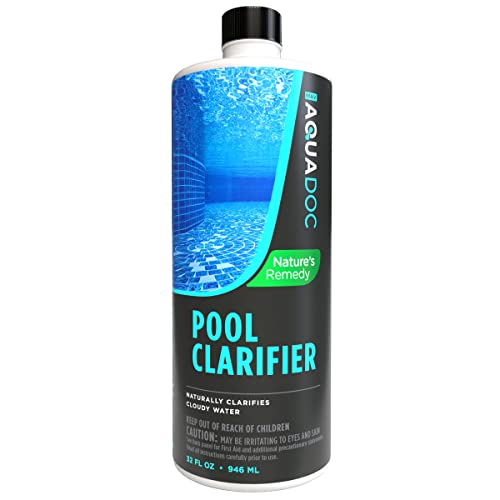
A clear-looking storm is not a clean storm. Pollen, leaf fragments, bird droppings, lawn fertilizer, and asphalt runoff all ride in. This is why your chlorine demand spikes after rain even though you didn’t add anything — your FC is now fighting more contaminants per gallon. Use an enzyme clarifier to break down the organics while the chlorine recovers.
Lightning damage to the pump is the only true emergency
Hail, wind, and lightning are the three weather threats that aren’t chemistry problems. Lightning that hits (or even strikes near) the pump or breaker panel can fry the motor windings. Don’t energize a pump that smells burnt or was under water. See the dedicated lightning section below.
Decision tree — choose your recovery branch
The post-rain state you actually observe drives the path. Test first; the test result picks the branch.
Branch 1 — Pool is cloudy within 6 hours of the rain stopping
Skim first (remove debris so the filter can do its job). Then test FC, pH, and CYA. Add the enzyme clarifier at the rate on the bottle label. Run the pump 24 h continuously. Skip flocculant — it clogs the sand filter fast. Cloudiness that persists past 48 hours is a filter problem, not a chemistry problem; jump to the cloudy-pool hub.
Branch 2 — Pool is going green within 48 h
Test CYA first. If CYA dropped below 30 ppm, your chlorine was burning off faster than you expected because the UV protection is gone. Shock to 2× your new CYA reading in ppm (e.g., CYA 25 → shock to FC 10 ppm). After shock, add polyquat algaecide 24 h later. For full green recovery, see the green-pool hub.
Branch 3 — pH reads above 7.8 but FC and CYA are in range
Do not add dry acid yet. Two inches of rain shifts pH upward by ~0.4. After the pool circulates for 8 hours, pH usually re-stabilizes downward as TA buffering reasserts. Re-test after the pump has run overnight. If pH still reads 7.8+, then dose dry acid per the chemical dose calculator. See the pH guide for the full procedure.
Branch 4 — TA dropped, pH bouncing, CYA still in range
Aerate. Run the pump with the multiport valve on “recirculate” (no filter cycle) for 4 hours, then back to “filter”. This raises TA naturally without muriatic acid. Only dose TA-up if TA stays below 60 ppm after 12 hours of aeration. The full TA-lowering or raising procedure is in the total alkalinity guide.
Branch 5 — CYA dropped below 30 but FC is still in range (rare but specific)
You don’t need to add CYA-stabilizer right now — you just got the chlorine working. Wait until the pool is fully recovered, then stabilize in calm weather. Adding CYA in turbulent post-rain recovery can over-stabilize. The full CYA dilution math is in the CYA guide.
Branch 6 — Pump lost power during the storm (the lightning branch)
Skip the chemistry entirely for now. See the lightning section below. Restart the pump safely, then resume the post-rain protocol once the pump has run 30 minutes cleanly.
Branch 7 — Above-ground pool with overflow visible at the deck
Backwash the filter only after you lower the water level with a submersible pump — otherwise you backwash out the chemistry you just paid to add. Above-ground pools benefit most from preventive drain-down before the next storm.
What you’ll need
Five items, all common, all already on most pool shelves. Pick the kit first; the rest of the protocol depends on the read.
- Lupo 3-in-1 Pool Test Kit — drop-test total chlorine, bromine, and pH in one kit. $16.99, 100 tests. Use it as the first read after the storm.
- Clorox Pool & Spa Shock XTRABLUE Plus — cal-hypo granular shock, 12-pack, $59.98. Fast-acting, swim-ready window. Use after the test confirms FC is below your CYA-floor.
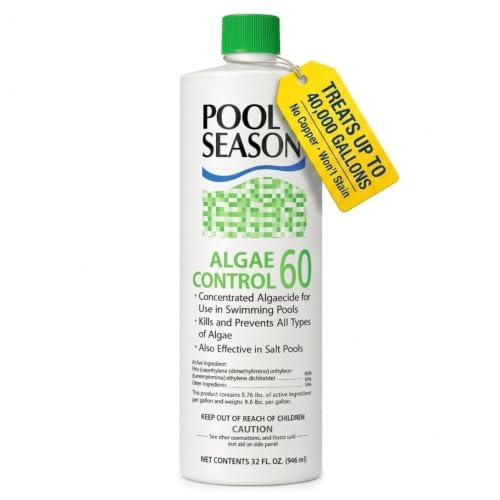
- Polyquat 60 Algaecide — 32 oz, non-foaming, $39.90. Use 24 hours after the shock, not at the same time.
- AquaDoc Natural Pool Clarifier — enzyme clarifier, 32 oz, $19.95. Use when the water looks hazy from organics.
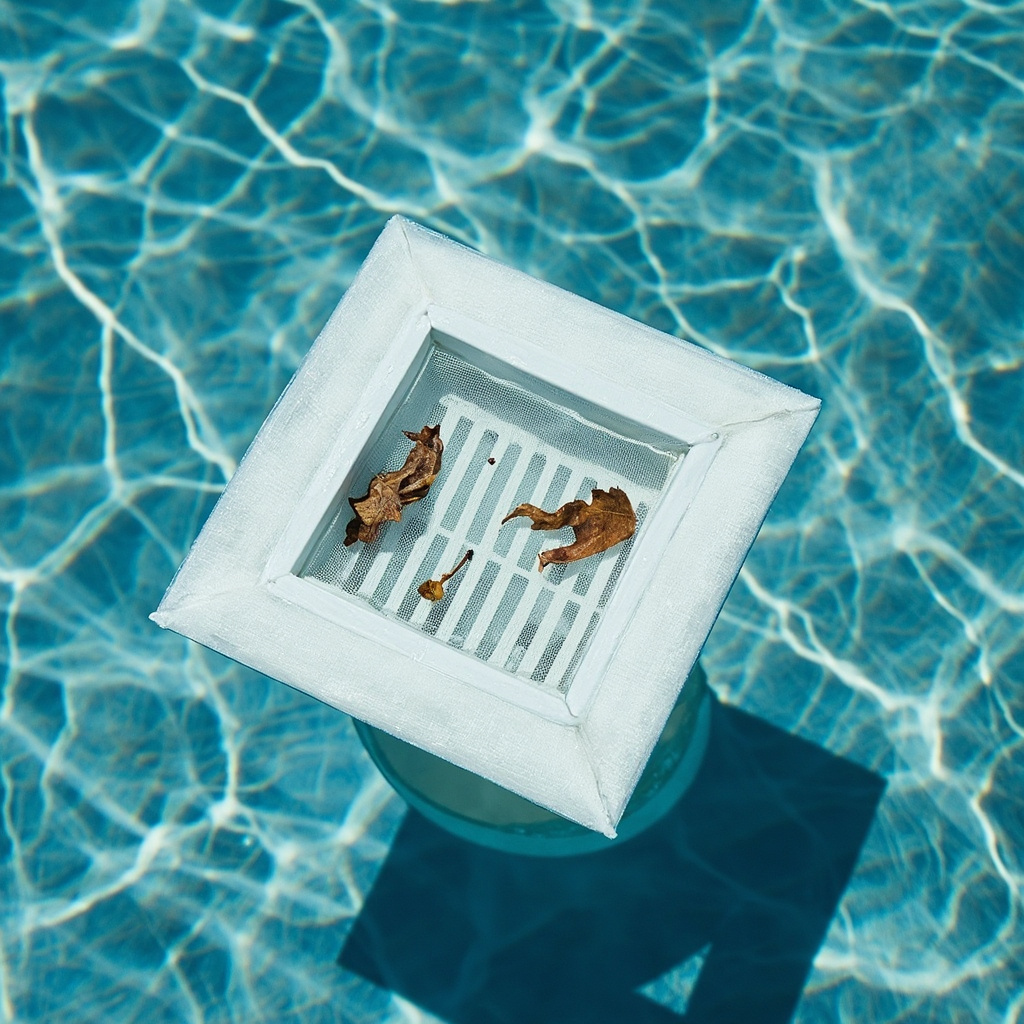
- Cosmos Skimmer Socks — 10-pack filter saver, $9.99. Stretch over the skimmer basket to catch debris without backwashing out chlorine.
Step-by-step protocol — the actual recovery sequence
Six steps. Don’t skip ahead — the order matters because each step depends on the previous read.
Step 1 — Remove debris while the pump is running
Skim the surface with a leaf net. Empty the pump basket. Stretch a skimmer sock over the skimmer basket to catch what the net missed. Don’t backwash yet — backwashing now sends the chlorine you still have down the drain.
Step 2 — Test before you add anything
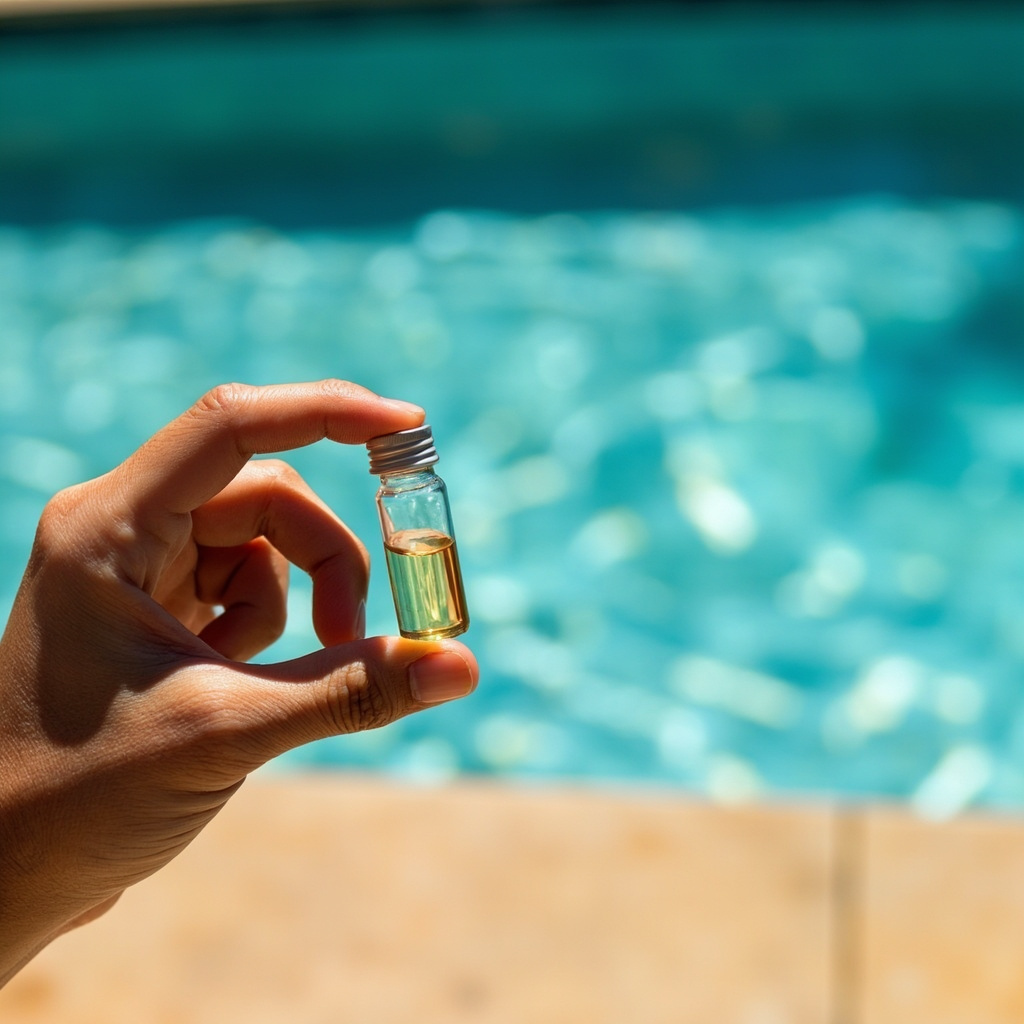
Order matters: FC → pH → TA → CYA. Use a drop-test kit for accuracy; strips are OK for a quick check but trust the drops for the dose. Always test full FC (combined + free), not just free — combined chlorine above 0.5 ppm means you need to shock. See the test methodology at the pool water testing hub.
Step 3 — Shock if FC is below the CYA-floor
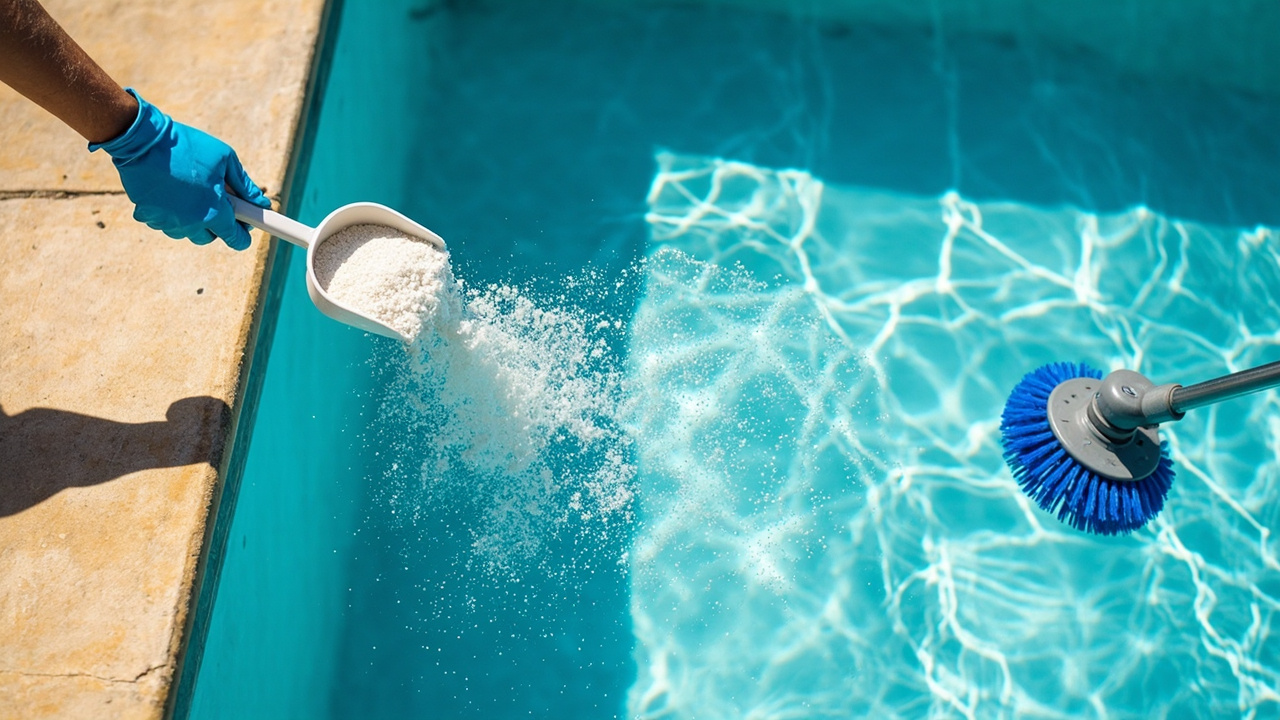
CYA-floor rule: FC must be ≥ 7.5% of CYA at all times. For a pool that started the storm at CYA 50, post-rain CYA might be 38. So post-storm minimum FC is 0.075 × 38 ≈ 3 ppm. Anything below that triggers a shock, not a dose-up. Use cal-hypo shock for the fastest effect. The full dose table by CYA level is in the pool shock guide.
Step 4 — Add algaecide 24 h after shock if FC is still recovering
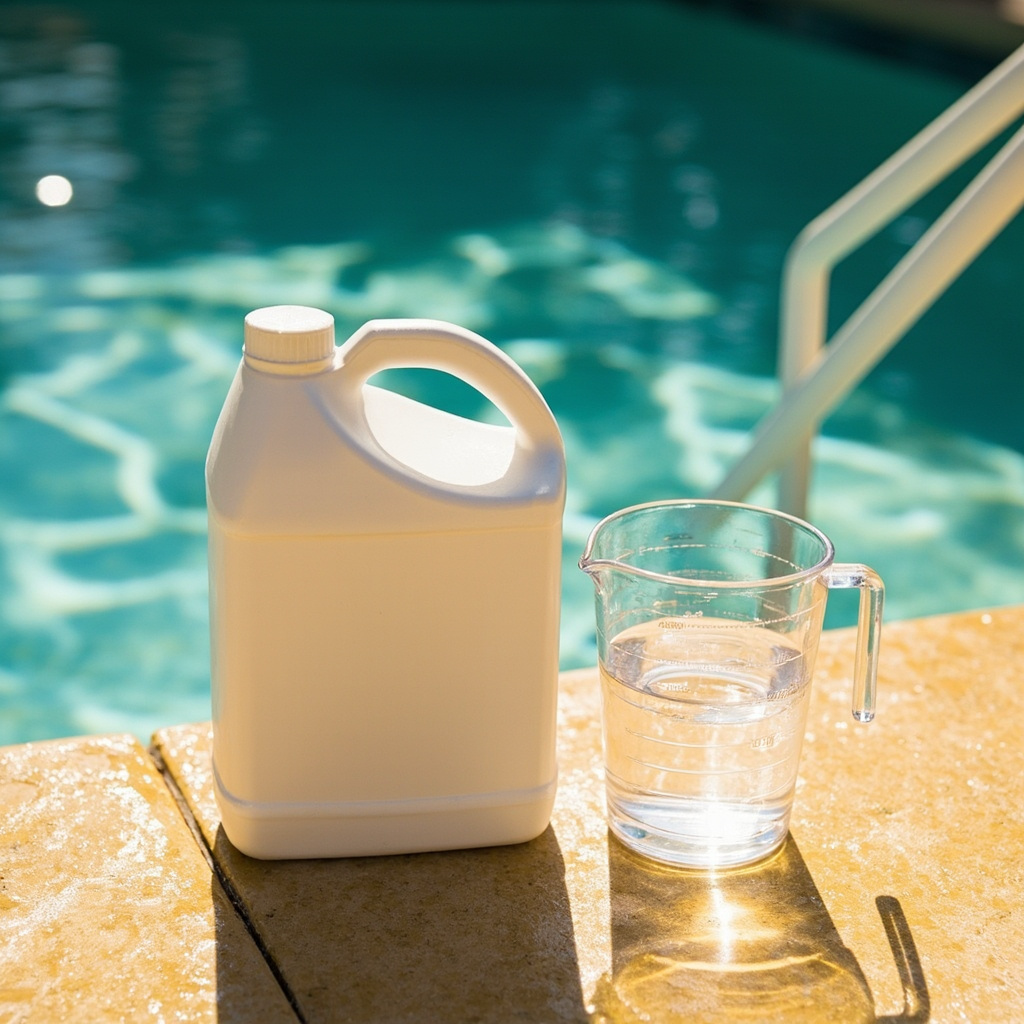
Polyquat 60 is the right call right after rain because it’s non-foaming and works alongside recovering chlorine. Wait 24 hours after shocking before adding polyquat; the chlorine will oxidize quat on contact. Use the polyquat 60 algaecide at the label rate. Skip for saltwater — your salt cell picks back up once the rain dilutes below its output threshold.
Step 5 — Rebalance pH and TA
After shock has run 8+ hours, re-test pH and TA with the drop-test kit so you know both numbers before dosing. Add dry acid (sodium bisulfate) per the chemical dose calculator if pH is above 7.8; aerate first if TA is also low. The FC ↔ CYA math is in the free chlorine guide.
Step 6 — Run the pump 24 h continuously and backwash once at the end
Backwashing too early wastes the chlorine you just added. Backwashing too late means the filter returns debris to the pool. End of step 5 is the right time.
Step 7 — Plan ahead for the next storm (preventive protocol)
Drain-down before the storm is the cheapest insurance. If the forecast shows 2+ inches of rain:
- Lower the water level 4-6 inches below the skimmer face. This gives the rain somewhere to go before it overflows the deck. Overflow carries sanitizer out of the pool and onto the deck — wasted chemicals and a slip hazard.
- Turn the pump off before the storm hits. Lightning-induced surges can fry the motor. Restart it after the storm has cleared.
- Stretch a skimmer sock over the basket before the rain starts. Easier than fishing debris out of the pump basket the morning after.
CYA dilution math — the worked example
This is the math most post-rain articles skip, and it’s the one that determines whether you shock the right amount or waste a $60 shock you didn’t need.
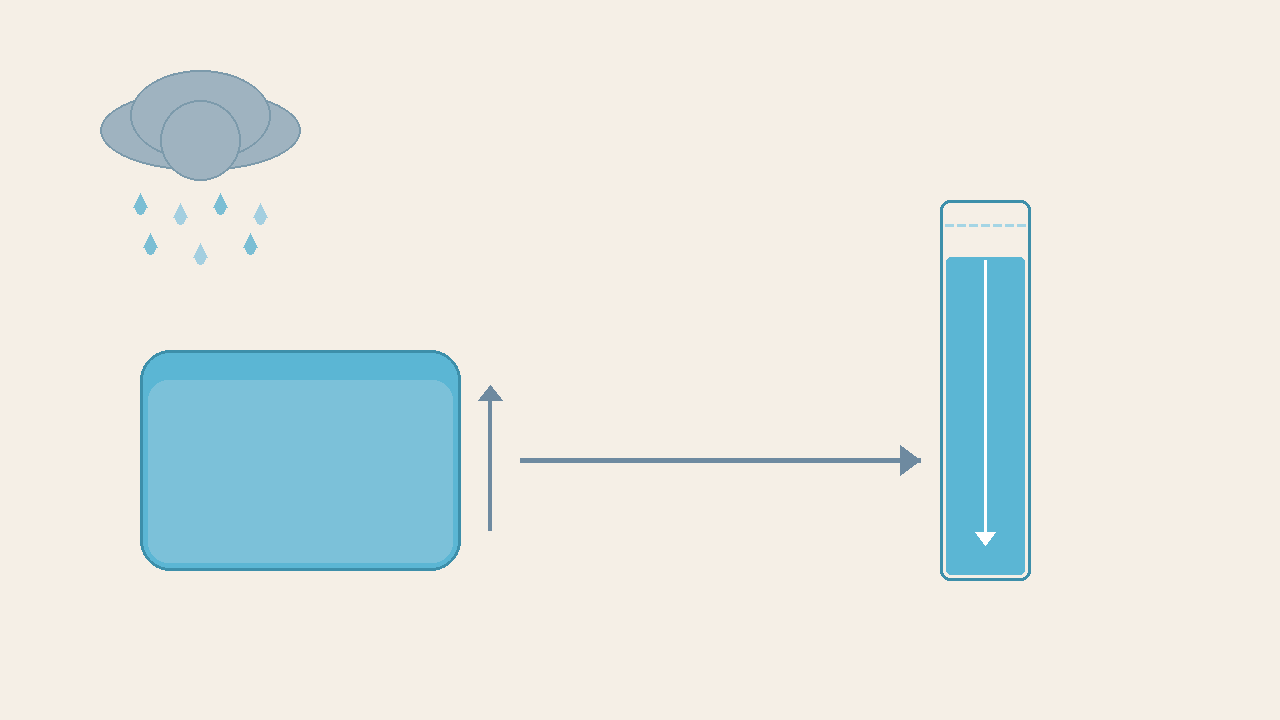
1 inch of rain on a 1,000 sqft pool ≈ 620 gal added
The math: 1 inch × 1 sqft = 0.623 gal. So 1 inch over 1,000 sqft = 623 gal added. Dilution factor: pool gallons ÷ (pool gallons + rain gallons). For a 12,000-gallon pool: 12,000 / 12,623 = 95.1%, so every chemical reading effectively drops 4.9%. For a 5,000-gallon pool: 5,000 / 5,623 = 88.9%, so readings drop 11.1%. Use the chemical dose calculator with “after rain” selected.
CYA floor checklist before you shock
- Was your pre-storm CYA reading recorded? If yes, multiply by your dilution factor (e.g., 50 × 0.95 = ~48 for 5% dilution on a 12k pool).
- Did you top off the pool with tap water during the storm? That raises the CYA back up.
- Is your CYA reading below 30 ppm after the storm? Then the rain was the trigger, and you should not add CYA-stabilizer yet — the FC math is what matters first.
Saltwater pool notes
The protocol is the same, with three salt-specific adjustments:
- Skip the algaecide. Your salt cell picks back up once the rain dilutes below its output threshold. Adding polyquat on top of a recovering salt cell is wasted money.
- Test the salt level too. A 2-inch rain on a 12,000-gallon pool dilutes salt from 3,200 ppm to ~2,900 ppm. Still in range, but worth a check. The full salt math is in the saltwater basics guide.
- Watch the cell for scale. If your TA crept above 100 ppm in the storm, calcium can drop out on the cell plates. Inspect visually before restarting the pump on full output. Re-test salt and CYA with the drop-test kit after the pump has run 4 hours — that’s the salt cell’s first read.
When lightning struck the pump
Lightning is the only post-storm event that isn’t a chemistry problem. When in doubt, call a licensed electrician, not a pool tech.
If lightning hit the pump or breaker panel
Don’t energize anything until you’ve checked three things:
- Is the motor warm or does it smell burnt? If yes, do not restart — call an electrician. Burnt windings can throw a dead short that takes out the breaker panel and anything else on the circuit.
- Is the pump basket full of silt? Empty it. Refill the pump strainer pot with water before restarting.
- Restart the breaker with the pump switch set to OFF. Turn the pump on after the breaker has held for 30 seconds. This prevents dry-run damage.

If you only lost prime (no lightning hit)
Re-prime the pump per the manufacturer’s procedure. If the filter won’t hold prime after 3 tries, the lateral assembly may be cracked — a $30 part, 30-minute repair. A pool service tech can swap it without draining the pool.
Common mistakes
- Shocking on top of a CYA you didn’t re-test. The post-rain CYA is lower than the pre-storm reading. If you shock to your old CYA’s target FC, you’re under-shocking. Test CYA first.
- Backwashing first thing after the rain. You dump 200+ gallons of treated water, lose chlorine, and add to the dilution problem. Backwash at the end of step 5, not the start of step 1.
- Adding shock and algaecide at the same time. The chlorine shock oxidizes the quat on contact. Wait at least 8 hours (overnight) between the shock and the algaecide.
- Reaching for flocculant to clear post-rain cloudiness. Floc pulls debris to the floor but clogs sand filters. Use an enzyme clarifier instead and let the filter cycle.
- Dosing acid to “fix” a pH above 7.8 immediately after the rain. Let the pool circulate for 8 hours first. TA buffering usually pulls pH back into range on its own. If you skipped the post-rain test and the drop-test kit is the first tool you reach for, you’re already in better shape.
When to call a pro
DIY: debris removal, testing, shocking, rebalancing pH and TA, algaecide 24 h after shock, backwash at the end.
Call a licensed pro if:
- The pump smells burnt or won’t restart after a storm. That’s an electrician call, not a pool tech call.
- The filter won’t hold prime after 3 attempts. Likely a cracked lateral in a sand filter or torn grid in a DE filter — a $30-$200 part, 30-60 minute repair.
- The pool turned fully green within 48 hours of the rain. You’re past the post-rain protocol — go to the green-pool hub and follow the full algae-kill path.
- CYA dropped below 20 ppm and you can’t raise it within 24 hours. A pool pro can swap a partial drain for full fill with stabilized source water in one visit (~$150-300). At under 20 ppm CYA, your chlorine is being destroyed by UV faster than you can dose.
Safety notes
Chemical handling rules for the post-rain protocol:
- Never add water to acid. Always add acid to water. Dissolving dry acid is endothermic and can splash concentrated acid onto your skin if you pour water on it. Pre-dissolve dry acid in a 5-gallon bucket of pool water before pouring it in the deep end.
- Wear gloves and eye protection when dosing shock or acid. Cal-hypo shock dust irritates skin and eyes. Dry acid is corrosive. Muriatic acid fumes burn airways — use outdoors with cross-ventilation.
- Store chemicals away from children, pets, and food. Post-storm cleanup is a busy time, and bags of shock stacked by the pump are a temptation for kids. Lock the shed.
- Never mix chlorine and acid. Even trace amounts of acid on a shock scoop or in a contaminated bucket can release chlorine gas. Use separate buckets and scoops.
- Don’t energize a pump that was under water or smells burnt. Lightning damage is electrical, not mechanical. Call an electrician before flipping the breaker.
When is it safe to swim again?
FC must be below 5 ppm AND at least 8 hours must have passed since shocking. The water should look clear (not cloudy) with no chlorine smell at the deck. Test again with fresh strips before getting in — confirm pH is 7.2-7.8 and FC is at or above 3 ppm (the minimum for a CYA-40 pool). If you added polyquat algaecide, wait the additional 8 hours after the algaecide dose before swimming.
Related
- See cloudy-pool care for the cloudiness-only path if the rain doesn’t bring a chemistry imbalance.
- See weekly pool care for the weekly cadence after recovery completes.
- See pool shock dosing for the shock dosing tables by CYA level.
Key takeaways
- Heavy rain dilutes FC, pH, TA, and CYA simultaneously — test all four before you dose any one of them.
- The first post-rain read is the CYA reading, not the FC reading — your target FC is
7.5% of CYA, which only sets after you know the new CYA. - Run the pump 24 h continuously after the rain; do not backwash first.
- Use a skimmer sock to catch debris without losing chlorine to backwash.
- Shock and algaecide are 24 h apart, not 24 minutes. Oxidation eats quat.
- Lightning damage is the only post-storm event that isn’t a chemistry problem — when in doubt, call an electrician.
- For saltwater pools, the salt cell handles the FC recovery; skip the algaecide entirely.