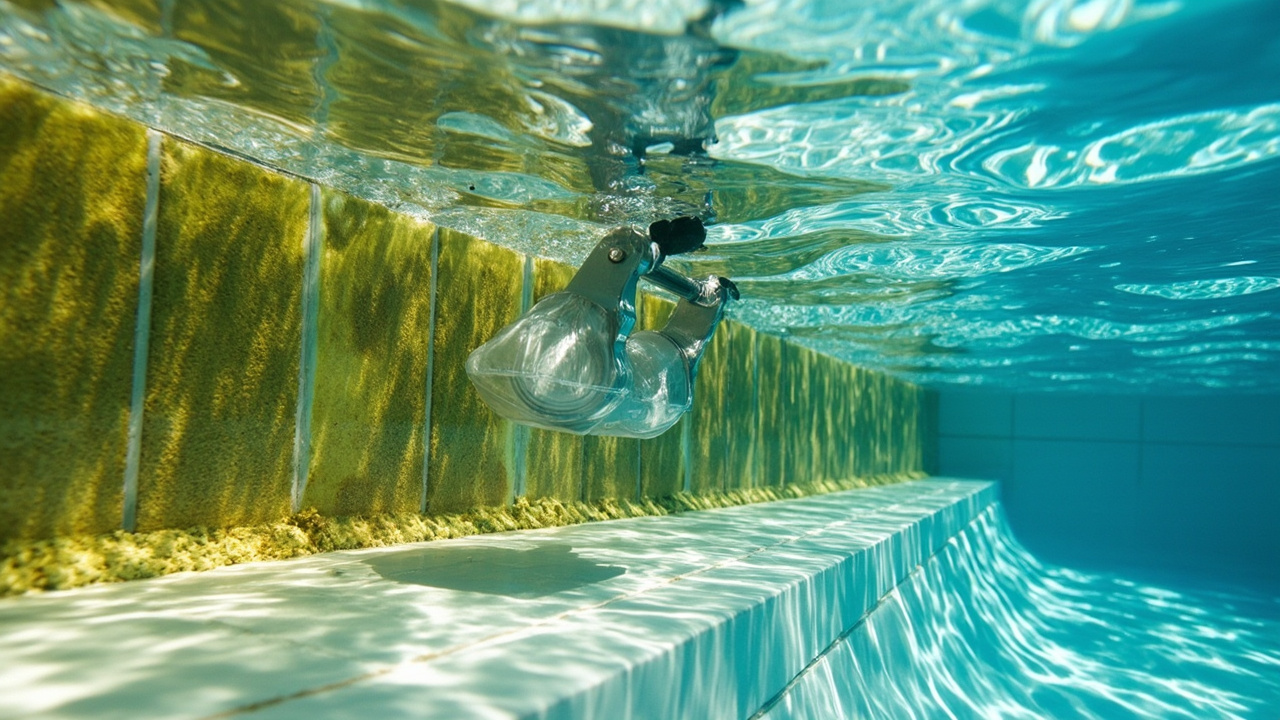



Yellow-green film that peels off in sheets and is back a week later means you’re shocking water that was never the problem. Four moves fix it, and the order is the whole trick.
Quick answer
Mustard algae is a surface biofilm, not cloudy water. Fix the balance, brush every shaded surface, hold free chlorine at roughly 7.5% of your cyanuric acid reading, then soak the filter and every piece of gear. Most repeat infestations trace back to a skipped filter clean, not too little shock.
| What you see | What it is | Route |
|---|---|---|
| Yellow film, water clear | Mustard algae | Protocol below |
| Black spots that won’t brush off | Black algae | Black algae |
| Water itself going green | Green pool | Green pool |
| Film that smears off as dust | Pollen or dirt | Nothing to do |
What this is not
Get this wrong and you run the wrong protocol.
Not a water problem
Nothing you dissolve in the water makes the film peel off the wall. The water can read perfect while the walls are thick.
Not pollen
Pollen rides the surface film and skims off. Mustard algae bonds under a finger and comes away as a rubbery sheet. The algae types hub has the side-by-side.
Not black algae
Black algae is spotty, gritty, and behaves differently under a brush. The black algae protocol runs on its own clock — don’t trade protocols halfway through.
Not a pH or balance problem on its own
pH in range doesn’t make it vanish, and a pH swing doesn’t create it. Balance still matters for how hard chlorine works — but that’s step 2, not the diagnosis. Milky water is a different job.
How to tell mustard algae from pollen, dirt and black algae
Five minutes decides which protocol you run. Do it before you spend money.
The finger test at a glance
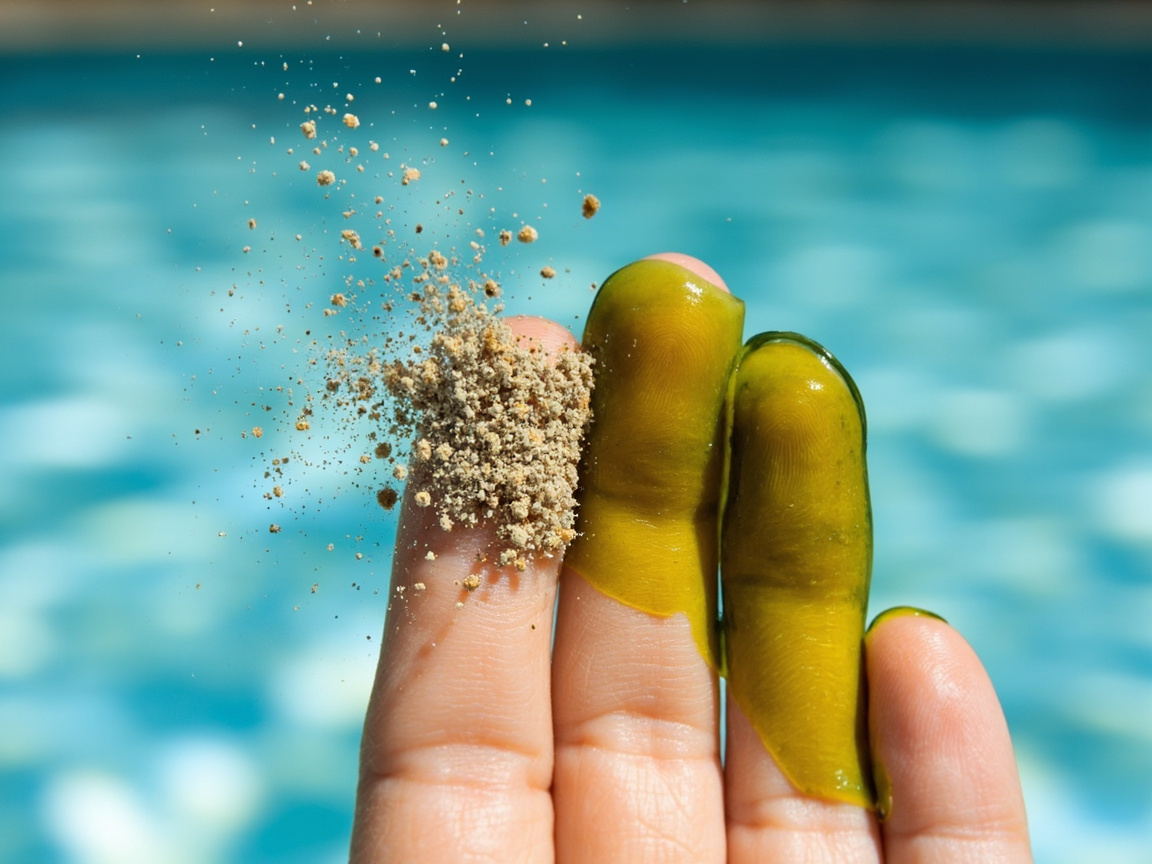
Rub it with a bare finger
Dirt and pollen smear and head for the skimmer. Mustard algae lifts in a thin sheet that holds together. Use a finger, not a cloth.
Drag a brush three or four inches
Dirt comes off as loose grit. Mustard algae lifts in a smear and leaves the wall visibly cleaner. Black algae leaves a stubborn gritty smear that doesn’t clear — if that’s what you get, run the black algae protocol instead.
Look at where it sits, then read the water
It concentrates in shade and low flow: under the waterline, the top step, ladder rungs, corners. Pull the cover and watch two hours of sun — mustard algae fades where the sun lands. Then one strip, four numbers: free chlorine, pH, total alkalinity, cyanuric acid. Clear water with a yellow wall means the chemistry is background and the surface is the infestation. See the full testing method.
Decision tree: which route do you actually need
Six branches. Find yours before you buy anything.
Yellow film on surfaces, water clear, FC low
The common case. Full protocol: balance, brush, ratio-driven breakpoint, polyquat, filter soak.
Water is green, not just the walls
Stop. Different job, different target — run the green pool route first and come back once the water clears.
CYA is 80 or higher
Raise the FC target with the ratio rather than skipping the step. High CYA is the most common reason mustard algae survives a shock cycle. Cyanuric acid has the mechanics; stop adding stabilizer and let it fall.
Saltwater pool with a salt cell
If the cell is already producing free chlorine at or above your ratio target, the breakpoint shock is optional. Check cell output and your free chlorine reading first. Scale on the cell is a cell-output problem, not an algae problem: a scaled cell under-produces, the reading drops, and the yellow returns. Saltwater basics and salt dosing sit upstream of that.
Vinyl, liner or fiberglass surface
Two changes and no others: never the stainless detail brush, never a copper-based algaecide.
Second treatment and it’s back within a week
The protocol worked, the source didn’t. Check the filter, the gear and the return jets. Going bigger on the shock won’t touch it.
What you’ll need
Get a copper-free polyquat algaecide first
In The Swim Algaecide 60 Plus is quat-based with no metal, so it won’t stain plaster, liner, vinyl or fiberglass. Skip it if your pool is bare concrete or gunite — the one surface where copper is safe and works.
Get 68% cal-hypo shock, but check calcium first
In The Swim 68% Cal-Hypo Shock oxidizes hard and adds calcium while it does — one pound per 10,000 gallons moves free chlorine about 6.8 ppm. Don’t buy it if your calcium hardness is already high, or your CYA is low enough that a non-calcium shock suits you better.
Get a 4-way strip that reads CYA
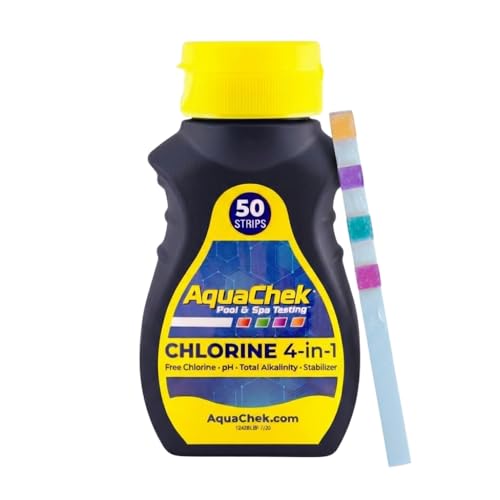
AquaChek Yellow 4-Way reads pH, free chlorine, total alkalinity and cyanuric acid in one dip. Without a CYA reading you can’t compute the target. Skip it if you own a liquid kit that reads CYA.
Match the brush to the surface
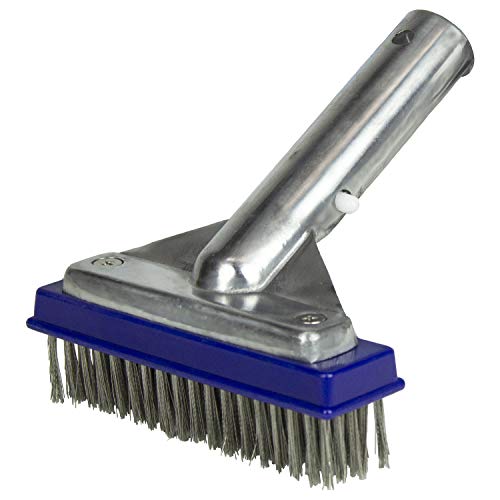
Concrete, gunite and tile get the Poolmaster 5-inch stainless detail brush — the narrow head reaches corners and step treads. Vinyl, liner and fiberglass get the POOLAZA nylon brush head and nothing else. Never put stainless on a liner — the scratches are where the next colony anchors.
Get filter cleaner only for a cartridge
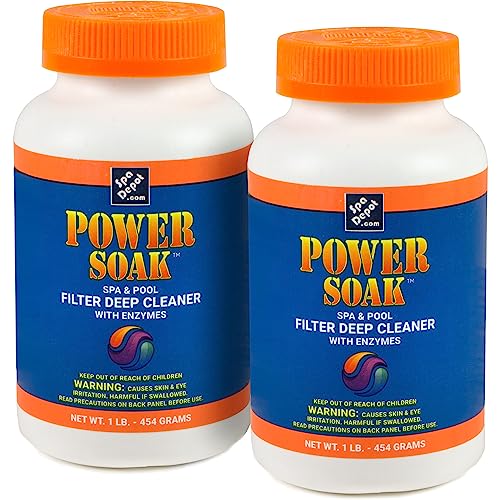
Spa Depot Power Soak is for soaking a cartridge element. Skip it if you run sand or DE — those are cleaned by backwashing.
Step-by-step: kill mustard algae
Order matters. The water gets fixed first because every dose below is computed from a reading.
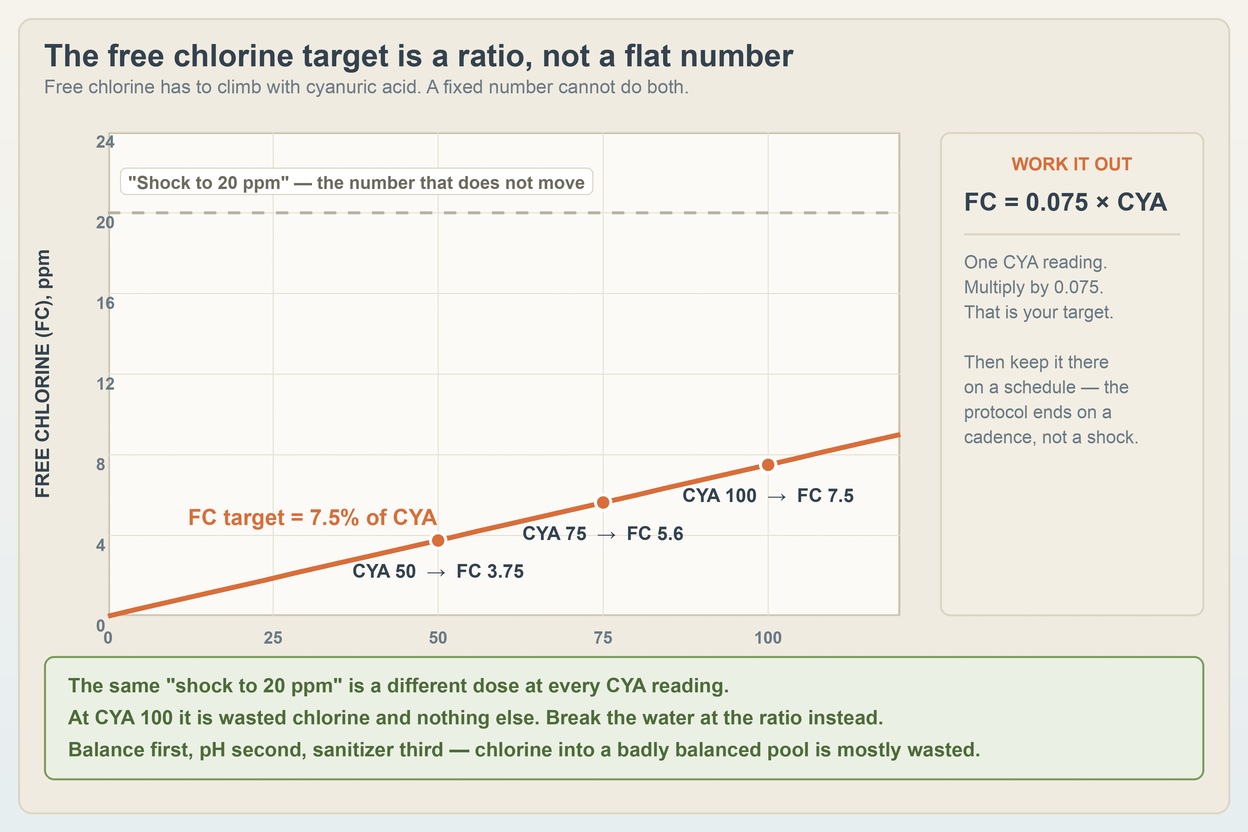
Free chlorine climbs with CYA
1. Test before you dose
Record free chlorine, pH, total alkalinity and cyanuric acid. Dose to the readings, not to a habit — a CYA-reading strip like this one gets you all four in one dip. If strips disagree with a liquid kit, the strip accuracy notes explain why.
2. Correct balance, then pH, then sanitizer
Total alkalinity first, then pH, then chlorine — adding chlorine to a badly balanced pool wastes most of it. Numbers are on total alkalinity and pH.
3. Brush every shaded surface
Steps, top tread, ladder rungs, the shaded wall, corners, behind the return fittings. The biofilm shelters the living layer and chlorine can’t reach through it. Use the surface-matched brush — on vinyl and liner, the nylon head.
4. Compute the target from your own CYA reading
Here’s the step most guides flatten into one number. The target is a ratio, not a flat ppm: free chlorine at about 7.5% of your CYA reading. At CYA 50 that’s 3.75 ppm; at CYA 100, 7.5 ppm. Free chlorine has the arithmetic. At CYA 100, “shock to 20 ppm” is wasted chlorine and nothing else.
5. Dose the shock, then the algaecide, at dusk
Pump running: broadcast the cal-hypo, circulate an hour until the reading climbs, then add the polyquat, and run the pump overnight. Per-10,000-gallon amounts are on the chemical dose tool; picking a different class is how to choose pool shock.
6. Re-test next morning and keep circulating
Free chlorine falling overnight is the oxidation working. What matters is whether it fell toward your target and whether the yellow is visibly thinner. Never re-shock on a hunch — re-shock on a reading.
7. Soak the filter and every piece of gear
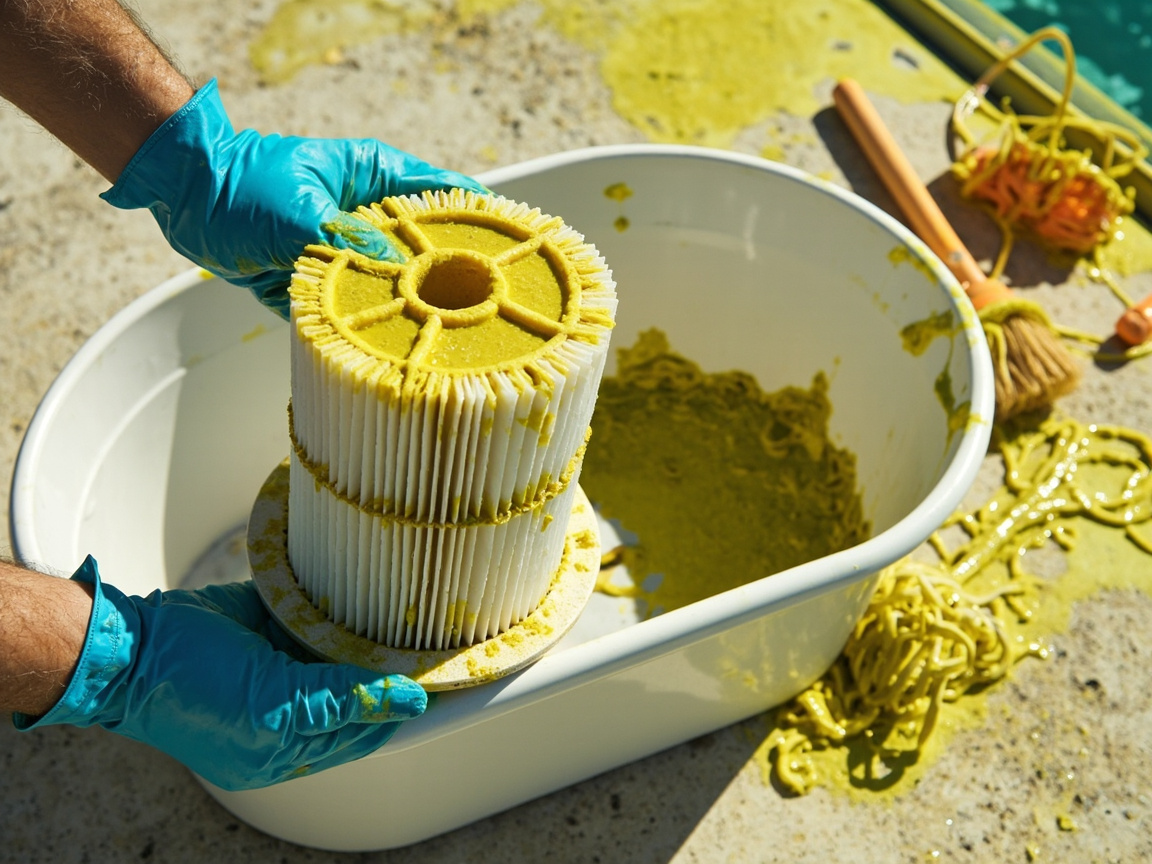
The dislodged film goes into the filter, and that’s where the next generation lives if you skip this. Cartridge: soak in filter cleaner per the label, rinse, back in service. Sand: backwash to a clear sight glass. Then soak or replace the toys, baskets, ladder and vacuum head.
8. Put the pool back on a routine
The protocol ends with a cadence, not a shock. Brushing shaded surfaces and checking the ratio target on a schedule is what stops the next wave — the weekly pool care routine is that cadence.
Why it comes back within days
Four things bring it back, and the first three are far more common than under-dosing.
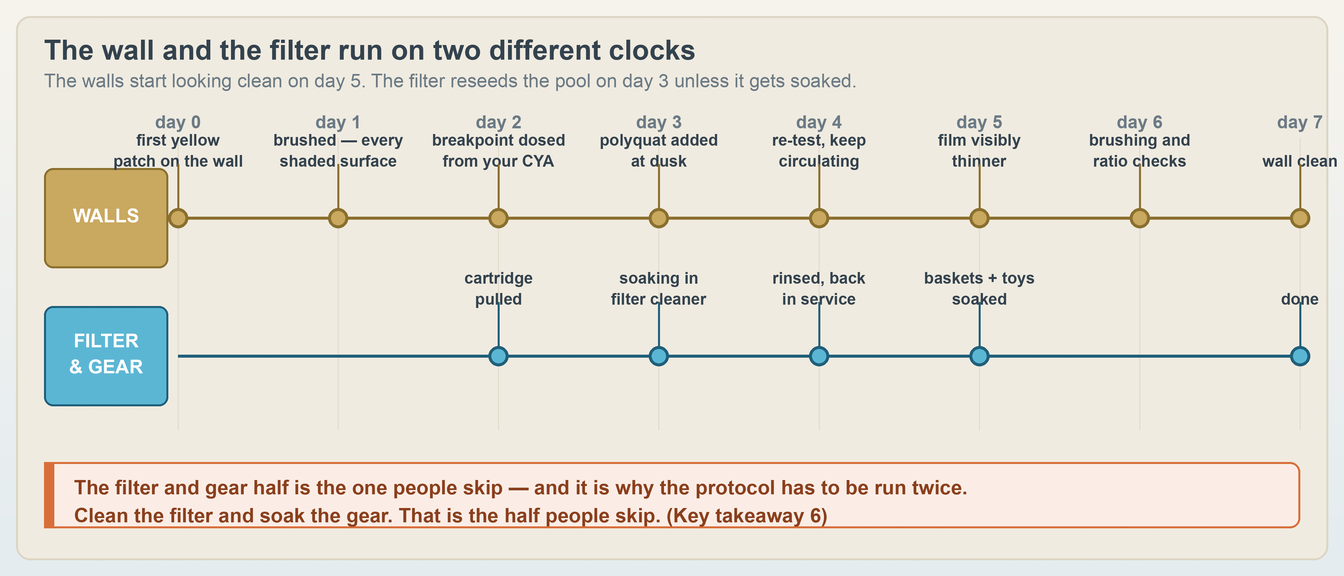
Two clocks, and the gap between them is the problem
The biofilm was never fully broken
One brush pass isn’t a brush. Any surface you skip keeps a living source, and the growth reappears in the same places first.
The filter and gear were not decontaminated
You pushed a load of dislodged algae into the filter. Left it there and you seeded the pool again — pool filter cleaning has the per-type method.
CYA absorbed the chlorine
At high CYA the same free chlorine reading does far less work. The target moves with the ratio, and if CYA climbs the target climbs with it.
Circulation gaps
Return jets aimed into each other, a badly placed inlet, or a plumbing dead zone all produce permanent shade.
When NOT to use a copper polyquat
Copper versus quat, surface by surface
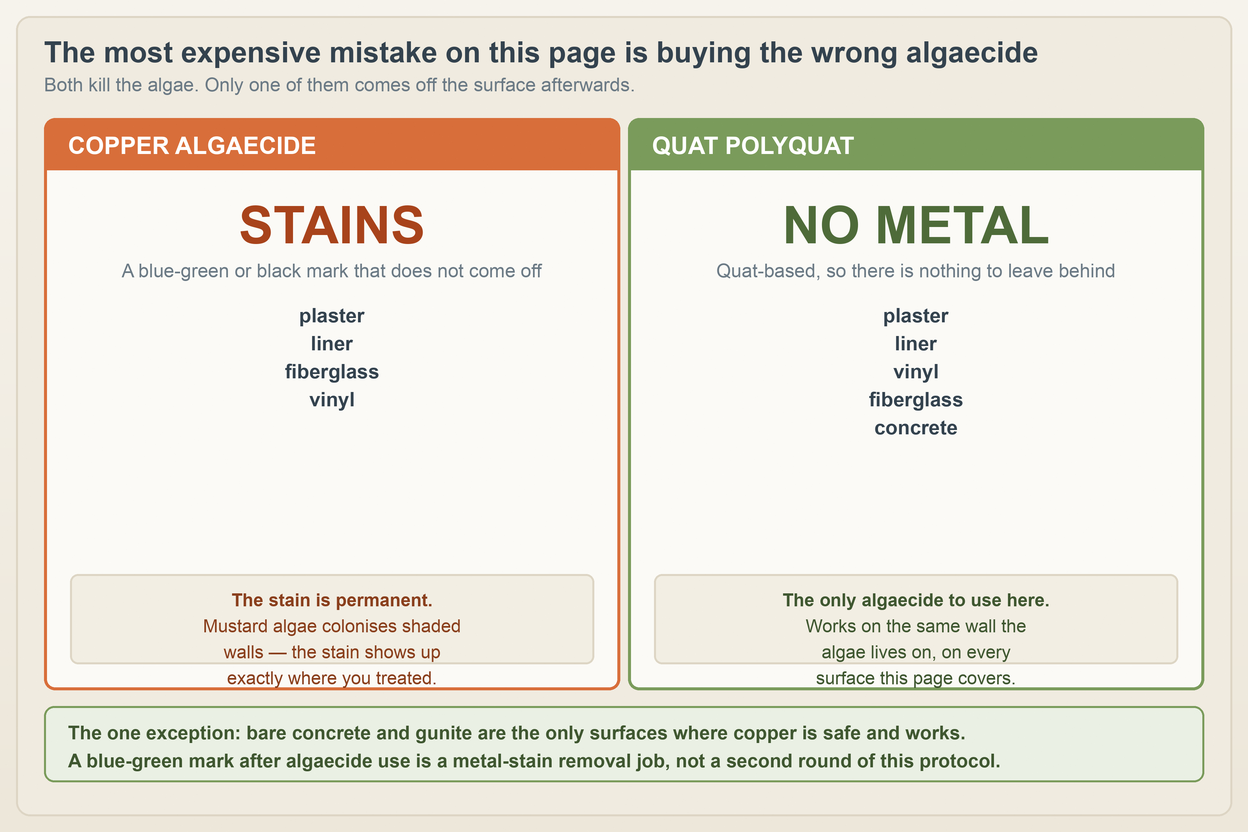
Copper stains the exact surfaces mustard algae lives on
Copper algaecides work on bare plaster, liner and fiberglass, and they put a blue-green or black stain on them that doesn’t come off. Mustard algae colonises shaded walls, which is where the staining shows first.
Concrete and gunite are the exception
On bare concrete or gunite with no plaster or tile, copper works. Any plaster, tile or vinyl puts it off the table — buy a quat-based polyquat with no metal instead, the Algaecide 60 Plus pick. Already see staining? Different repair, on the metal stains page.
What to buy only if needed
Only if your CYA is 80 or higher
Nothing to buy, but a stabilizer-free plan. A CYA-reading strip becomes mandatory — see test strip guidance and the strip vs liquid kit comparison.
Only if your filter is a cartridge, or your surface is concrete
Cartridge: filter cleaner for the soak — sand and DE are cleaned by backwashing, so check filter types. Concrete, gunite or tile: the stainless detail brush. On vinyl, liner or fiberglass buy the nylon head and keep stainless out of the pool.
Only if your saltwater generator is under-producing
Fix the cell scale first, then re-read free chlorine. Once the cell produces properly — see chlorine types — the protocol needs only the algaecide and the brush.
Common mistakes
- Buying a copper algaecide for a plaster or vinyl pool. It kills the algae and stains the surface, and the stain is permanent. Use a quat-based polyquat.
- Shocking to a flat number instead of to your CYA ratio. “Shock to 20 ppm” is meaningless advice at CYA 100.
- Skipping the filter and gear clean-up. You left a load of algae in the filter, the baskets and the pool toys. That’s why it’s back in a week.
- Brushing once and moving on. One pass doesn’t break the biofilm. The surface you skip regrows first.
- Using a stainless detail brush on vinyl or liner. The scratches are where the next colony anchors.
Safety notes (read this)
- Never mix two pool products, and never combine a pool chemical with a household cleaner. Acid plus hypochlorite releases toxic chloramine gas — it burns your eyes and lungs and eats concrete fast.
- Never pour shock through a skimmer that feeds an automatic chlorinator. Dry shock meeting a tablet in the plumbing can produce a heat-driven gas release inside the equipment.
- Open the packet outdoors, away from your face. Cal-hypo dust irritates airways and eyes. Gloves for every pour, and add chemical to water, never water to chemical.
- Store every product upright, in its original container, out of sun and reach. Pool chemical containers are not toys.
- Avoid adding algaecide and stabilizer in the same window. Stabilizer cuts the algaecide’s work.
- Keep it away from food and prep surfaces. Children and pets stay out until free chlorine is back in range on two consecutive tests.
- Don’t drain treated water to a storm drain or onto plants. Adjusting pH the same visit? Acid handling basics are the reference — never in the same pour as the shock.
When to call a pro
Keep it DIY if you can test the water, brush, run the filter overnight, and the numbers are moving the right way.
Call a pro if:
- The stain is already there. A blue-green mark after an algaecide application is a metal-stain removal job, not a second round of the same protocol.
- It’s failed twice. Two complete protocols with proper ratios, brushing and a filter clean, and it’s back inside a week, means something structural — a dead pump, a failed salt cell, a valve stuck in bypass.
- A repair is open, or the water won’t hold chemistry at all. Sanitizer dropping to zero within hours of dosing with the pump running full time is hardware or water volume, not dosing.
- It’s an above-ground pool with liner seams, or you’d have to cut anything to reach the growth.
Related
- Pool algae types: how green, black, yellow and mustard are told apart
- Cyanuric acid: the number that decides how much chlorine you actually need
- Chemical dose tool: work out shock and algaecide amounts for your pool
Key takeaways
- Mustard algae lives on surfaces. The water can be clear the whole time.
- Identify before you buy — finger, brush, location and cover tests take five minutes.
- The FC target is a ratio of free chlorine to CYA, not a flat number.
- Brush first, then dose. The biofilm shelters the living layer.
- Skip copper algaecide on anything but bare concrete or gunite.
- Clean the filter and soak the gear. That’s the half people skip.
- It comes back for four reasons, and only one is too little shock.
We do not promise rankings, indexing, traffic, or results from this page.