

Muriatic acid is the cheapest, fastest pH and alkalinity reducer you can buy for a pool — and the single most dangerous chemical most pool owners will ever handle. It burns skin, eyes, lungs, and concrete. It reacts violently with chlorine. Get the safety protocol right, and the actual dosing is a 5-minute job. Skip the protocol, and you’re rolling dice with permanent damage.
Quick answer
Muriatic acid (HCl, 31-35%) lowers pool pH and alkalinity fast and cheap, but it burns skin, eyes, lungs, and concrete. Test pH and TA first. Never add more than 1 quart per 10,000 gallons at a time. Wear chemical-resistant gloves + eye protection; pour slowly in front of a return jet; never mix with chlorine. For enclosed spas or renters, swap to dry acid — slower but no fumes.
What muriatic acid is (and is not)
Muriatic acid has a real job, and a real set of substitutes. Knowing which is which is the difference between buying the right product and creating a hazard.
What it IS
Liquid hydrochloric acid (HCl) at 31-35% concentration, sometimes labeled in Baumé degrees (18-22°). It’s the fastest-acting pH and total alkalinity reducer available to residential pool owners, and the cheapest per dose. Low-fume formulas add a surfactant to slow vapor release — still dangerous, but easier to handle outdoors.
What it is NOT
Not vinegar (acetic acid is too weak). Not dry acid (sodium bisulfate is a different chemical — granular, no fumes, slower). Not sulfuric acid (different chemistry, different use case). Not a sanitizer — it does not kill algae or bacteria. Chlorine or bromine does that. Muriatic is a balancer only.
Why muriatic acid needs special handling
Three real risks drive every safety rule on this page. None of them are theoretical.
Three real risks
Skin and eye burns come first. A splash of 31% HCl causes delayed-pain burns — you feel it 10 to 30 seconds after contact, by which time the damage is done. Lung damage from fumes is the second risk. Even a “low-fume” formula in an enclosed shed will choke you in under a minute. Concrete and metal etching is the third. A spill on a deck or near the equipment pad permanently etches the surface, and corrodes copper heat exchangers or salt cells within a season.
Why pools need acid at all
Pool pH drifts up naturally from aeration, sanitizer byproducts, and fill water alkalinity. Soda ash (pH Up) only raises pH. To lower pH and total alkalinity — the two parameters that wander most — you need an acid. If pH reads above 7.8, you need acid. Period.
How to read a muriatic acid label
Retail muriatic comes in three flavors, and the label tells you which.
Strength (Baumé)
31-45% HCl = 18-22° Baumé. Higher percentage = stronger per gallon = more dangerous per drop. The most common retail strength is 31-35% (around 18-20° Baumé), and that’s what most pool owners should buy.
Low-fume vs standard
Low-fume formulas add a surfactant that slows vapor escape. They’re safer to handle outdoors because the choking cloud is much smaller. They are NOT fume-free — never skip PPE, and never use them in an enclosed space.
”Acid Blue” or branded muriatic
Same HCl active ingredient, often slightly diluted for residential pool use. No performance advantage over generic muriatic for pH/TA work; the brand markup is mostly for the low-fume additive and the color-coded bottle (helps prevent accidental mixing with chlorine). A standard 1-gallon jug of 31.45% muriatic is what most pool stores sell.
Decision tree — when to use muriatic vs alternatives
Walk top to bottom. First “yes” wins. Each branch points to the right product and the right protocol. A standard 1-gallon jug of 31.45% muriatic covers the canonical Branch 1 dosing in most residential pools.
Branch 1 — pH 7.8+ AND TA 120+ AND outdoor pool
This is the canonical muriatic use case. Pour 1 quart of 31% muriatic per 10,000 gallons slowly in front of a return jet. Wait 4-6 hours, retest. Add more only if still high. Sister link: total alkalinity for the TA framework.
Branch 2 — pH 7.8+ AND TA 120+ AND spa or enclosed area
Dry acid (sodium bisulfate). 1 lb per 10k gal pre-dissolved in a 5-gallon bucket. Bromine + acid vapor reaction under a closed spa cover is real; granular is safer. Sister link: pool pH for the underlying mechanism.
Branch 3 — pH 7.8+ AND TA under 100
Muriatic still works — just use less (1 quart per 15k-20k gal instead of 10k). Alternative: aerate (run returns up to break the surface) to raise pH without raising TA. Free option, no acid, no PPE.
Branch 4 — pH high but you can’t test right now
Don’t dose blind. Wait until you have a 7-way strip reading. Adding acid without a starting reading is the #1 way first-time users crash pH to 6.8. Sister link: pool water testing framework for the test protocol.
Branch 5 — Saltwater pool with metal staining
Muriatic still works; add a sequestrant after dosing. Salt cells generate chlorine that pushes pH up, so weekly acid adjustment is normal. Sister link: saltwater pool basics for the full cycle.
Branch 6 — Rent / kids around / no outdoor storage
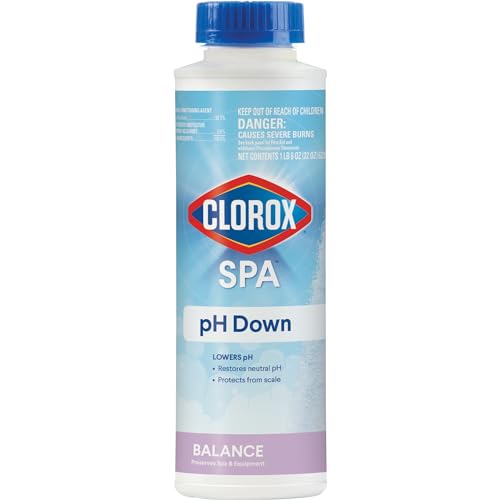
Dry acid only. Liquid muriatic in a closet is a liability — and a leak + closed door is an ER visit. The Clorox Pool & Spa pH Down 22 oz is sized for a hot tub, the MAV AquaDoc 5 lb pail covers a backyard pool.
Branch 7 — Above-ground vinyl pool with cartridge filter
Dry acid preferred. Cartridge filters are sensitive to the pH swing that liquid acid can cause. If you must use liquid, dilute in a 5-gallon bucket first, then pour in front of the return.
What you’ll need
Six products cover every branch of the decision tree. Start with the test strips and the gloves — the rest depends on which branch fits your situation.
Acid Blue Low-Fume Muriatic Acid, 2 gal (B0CZPSHZ6W)
Primary muriatic — low-fume formula, about $40 per dose block. Use when pH is 7.8+ and TA is above 100 ppm. The low-fume additive is the difference between a tolerable pour and a choking fit. See price on Amazon.
EZ Pools Muriatic Acid 4-gal pack (B0CVDD7CN6)
Bulk for 25k+ gal pools or repeat-dose owners. About $21.50/gal, half the per-dose cost of the 2-gal starter. See price on Amazon.
MAV AquaDoc pH Down (Sodium Bisulfate), 5 lb (B0DZ6MCKSZ)
Dry-acid alternative — scoop-and-pour, no fumes. Use for enclosed spa or no outdoor storage. See price on Amazon.
Clorox Pool & Spa pH Down 22 oz (B00PZZFVVS)
Spa-size dry acid — for hot tubs under cover. 6-10 doses per bottle, no liquid splash, no concentrated vapor. See price on Amazon.
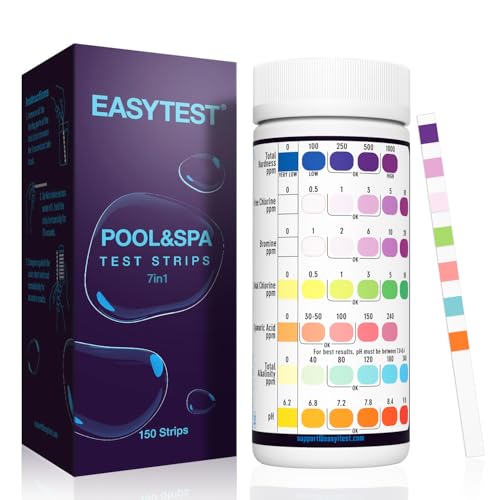
EASYTEST 7-Way Test Strips (B09MSY8BLB)
Mandatory first step — test pH + TA before adding any acid. Dosing without a starting reading is the #1 cause of first-time pH crashes. See price on Amazon.
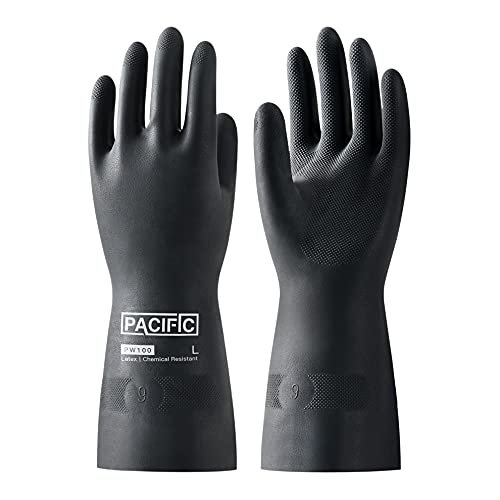
PACIFIC PPE Chemical-Resistant Gloves (B0978MNCF8)
$10 mandatory PPE — bare hands on muriatic = skin burn in 30 seconds. See price on Amazon.
How to add muriatic acid to a pool — step by step
Five steps, 4-6 hours from start to retest, with most of the time spent waiting for the acid to mix.
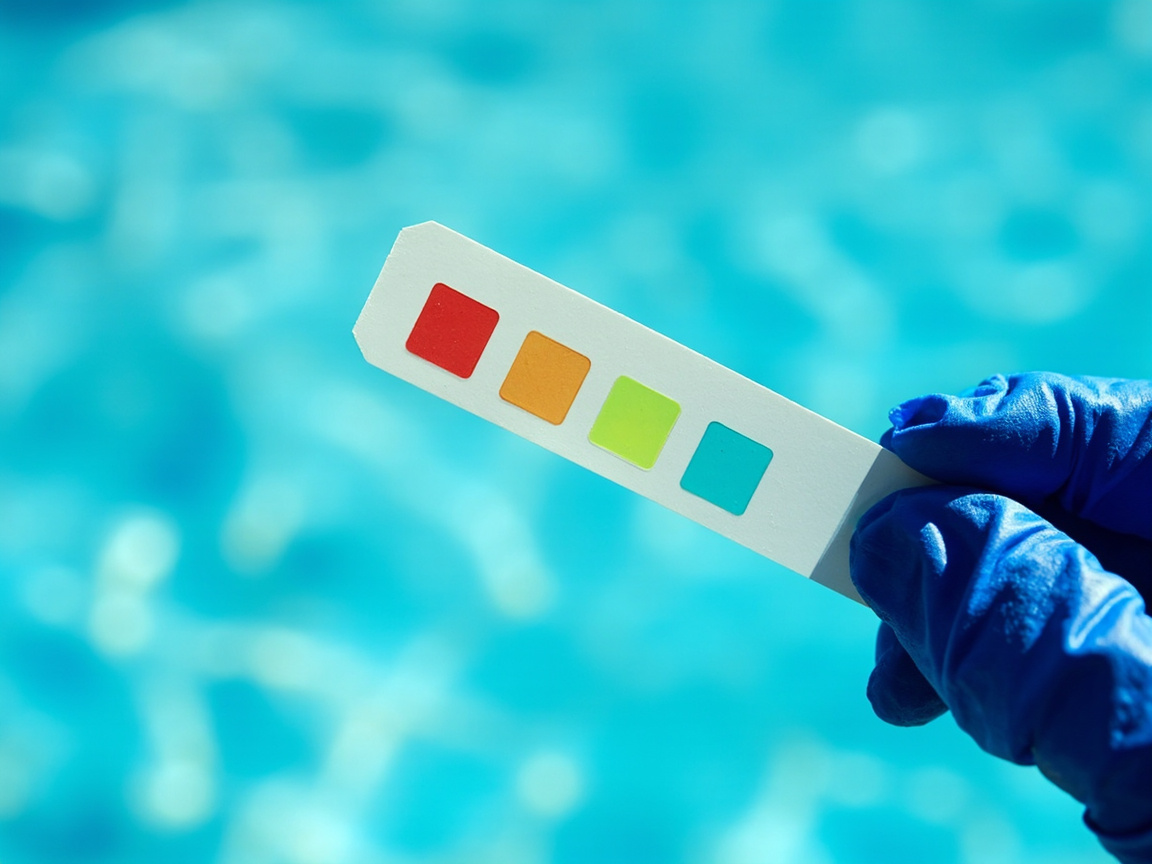
Step 1 — Test pH and TA
Use the 7-way strip. Record numbers. Confirm pH is above 7.6 before any acid is opened. If pH is 7.4 or below, do not add acid — you will crash the pool.
Step 2 — Calculate the dose
1 quart of 31.45% muriatic acid per 10,000 gal lowers pH about 0.2 and TA about 25 ppm. Use the pool chemical dose calculator for an exact number if your pool is an unusual size. Round down for the first dose — you can always add more, you cannot take it back.
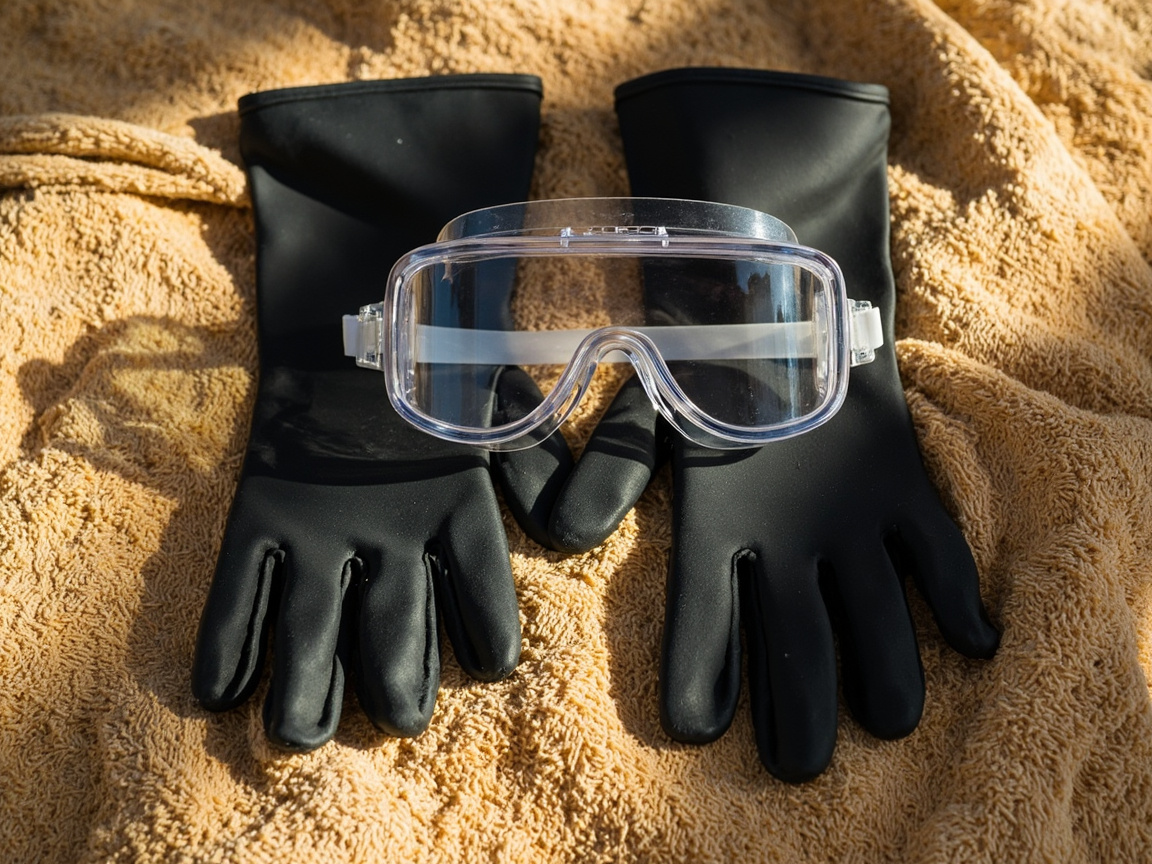
Step 3 — PPE on, acid container upright
Gloves + eye protection. Confirm the container is upright, not near a return jet or skimmer. The container is pressurized slightly by temperature swings; opening it sideways can splash. The single most important $10 you spend on this page is the PACIFIC PPE gloves.
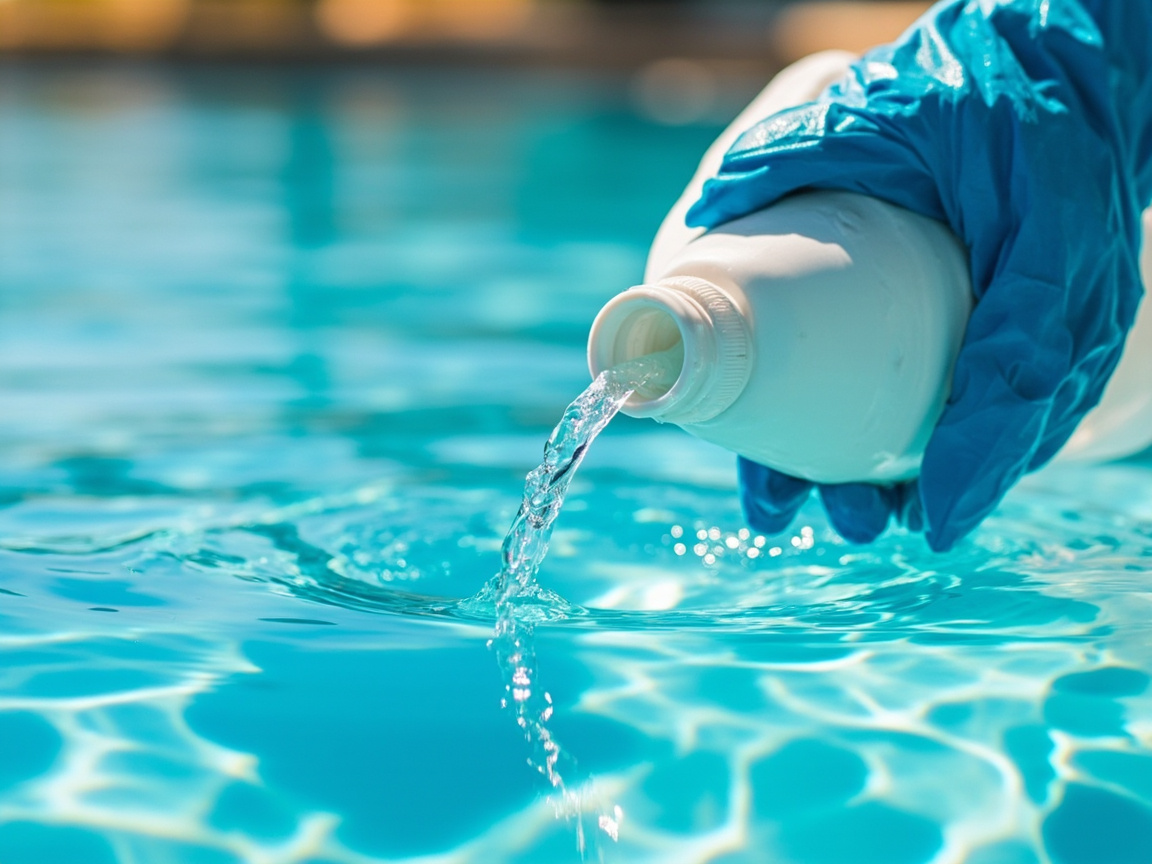
Step 4 — Pour slowly in front of a return jet
Pump running. Pour 2-3 feet from the jet in a thin stream, not a splash. The water flow dilutes the acid within seconds. Never pour through the skimmer if you have a chlorinator downstream — that’s the chlorine gas reaction that puts people in the ER. For large pours a 2.5-gallon jug gives a steady stream without tipping risk.
Step 5 — Wait 4-6 hours, retest
Pump keeps running. Wait 4-6 hours, then retest pH. If still below 7.0, you may add a small dose; do not re-dose within 30 minutes of last application. After the retest, the free chlorine reading is your next check. Re-dose the same acid jug only if pH still reads above 7.6.
Safety notes — non-negotiable
Six rules, each tied to a specific failure mode. Skip any one and you’re gambling.
PPE — always gloves + eye protection
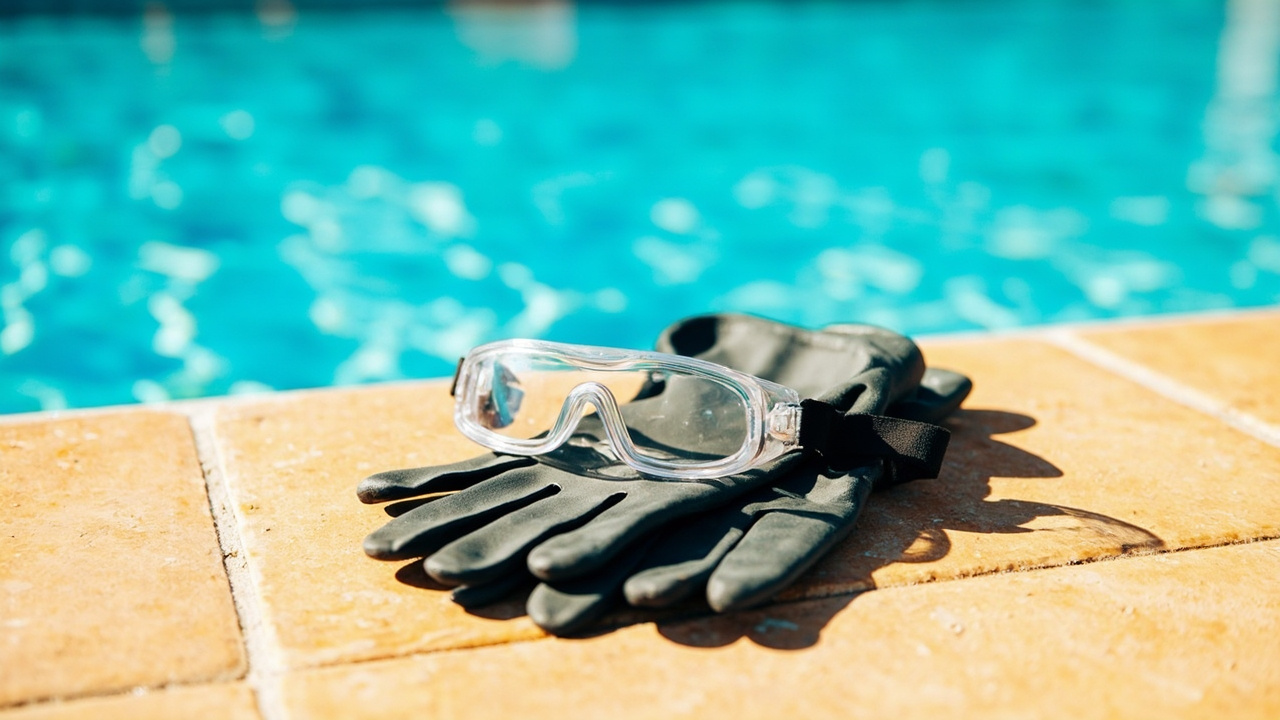
Even one drop of 31% HCl on bare skin burns within 30 seconds. Chemical-resistant gloves cost $10. Splash goggles or full-face shield for anyone nearby. First-time users add a long-sleeve shirt and closed-toe shoes. The first-year pool owner guide covers the rest of the PPE list for routine pool care.
Never mix with chlorine or other chemicals
Mixing acid with chlorine creates chlorine gas. Never store muriatic and chlorine tabs near each other. Never pour acid into a chlorinator. Never add chlorine to a container that had acid — even a rinsed container carries enough residue to react. Cross-contamination is the #1 cause of accidental gas exposure in residential pools.
Never store where children or pets can reach
Locked shed, high shelf, never on the floor. Children are attracted to bright containers — the colored Acid Blue bottle looks like a sports drink. A child-resistant cap is not enough on its own; physical height is the only sure prevention. Pet exposure is usually fatal at undiluted strength.
Ventilation — never use indoors without airflow
Muriatic fumes will overcome you in a closed shed. Work outdoors or with windows open and a fan running. Low-fume formulas reduce but do not eliminate vapor risk. If you can smell the acid, you are already over-exposed. Step out, get airflow, come back when you can’t smell it.
Spill response — baking soda neutralizes acid
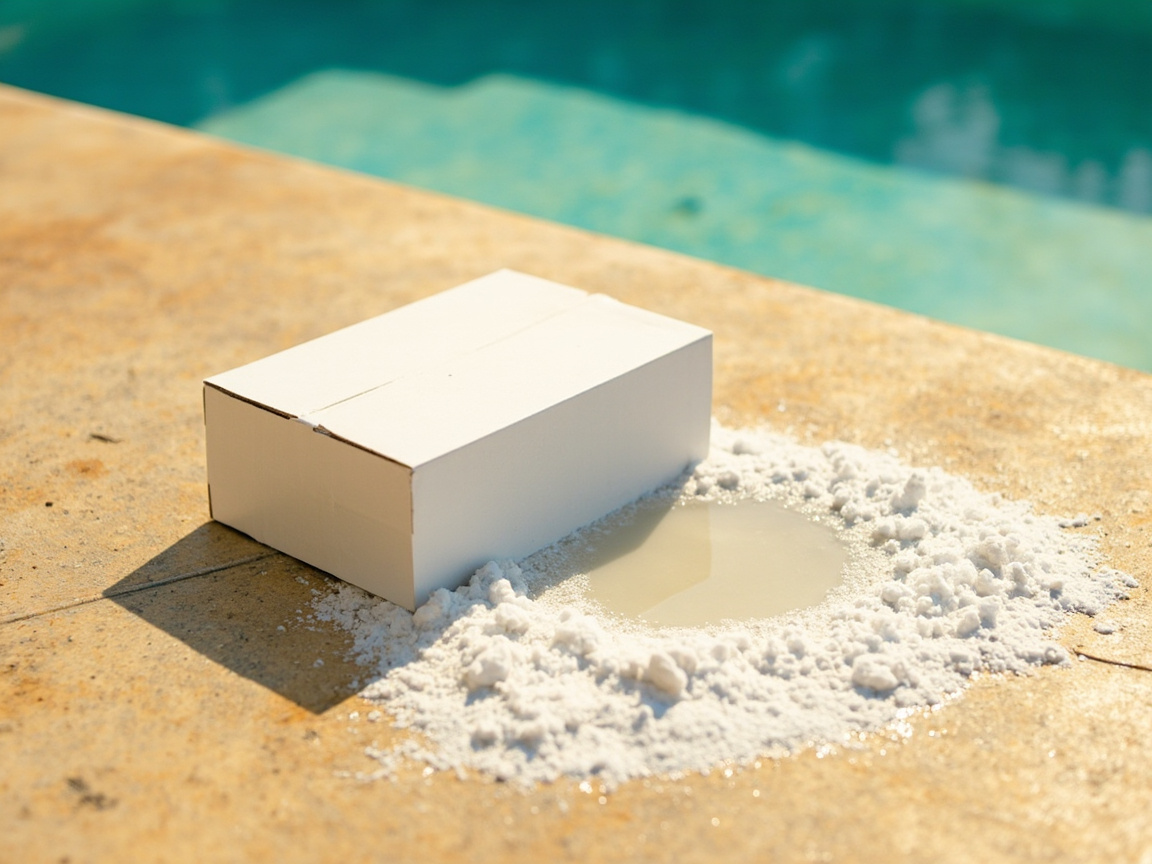
Keep a 5 lb bag of baking soda (sodium bicarbonate) near your chemical storage. A spilled puddle can be neutralized with a generous sprinkle; bubbling = reaction happening. Rinse with water after bubbling stops. Once the puddle stops reacting, the residue is safe to wipe up.
Disposal — never pour down a storm drain
Leftover acid must be neutralized (slowly add baking soda until bubbling stops, pH 6-8) before drain disposal. The container (rinsed three times) goes in regular recycling.
Common mistakes
Five errors show up over and over in pool forums and service-call reports.
- Adding acid without testing first. pH 7.6 with TA 80 doesn’t need acid. Adding muriatic because “the water looks off” without a reading is the #1 cause of pH crash.
- Pouring acid through the skimmer. A chlorinator downstream of the skimmer will mix acid with chlorine tabs and release gas. Always pour in front of a return jet — even if the skimmer is closer.
- Storing acid next to chlorine. Two containers, one shed. The most common cause of accidental mixing. Keep acid and chlorine on opposite walls.
- Using the same container for acid and chlorine. Even rinsed, residual acid in a chlorine container reacts. Use dedicated containers, label both sides.
- Re-dosing too soon after a prior dose. Wait 4-6 hours before re-dosing — acid takes that long to fully mix, and a second dose on top of the first is the classic crash-pH story.
When to call a pro
Three situations where DIY becomes a service call.
Recurring high TA despite correct dosing
Source water may be the problem (well water with TA over 200 ppm). A pool service can install a TA-neutralizing filter or switch you to dry acid permanently. Test your fill water (hose bib into a clean glass) before paying for a service call.
Acid burn injury
Even minor. Skin burns from HCl often look fine for 24 hours then blister. Eye exposure = emergency room, do not wait. Rinse the affected area with clean water for 20 minutes en route. Don’t apply ointments or neutralizing chemicals to the burn.
Equipment damage from acid splash
Heater core, pump seal, salt cell. Splash on the equipment pad corrodes in days. A service tech can flush the system and assess damage. If acid reached the heater or salt cell, do not run the equipment until the tech clears it.
What to buy only if needed
Four conditional branches — products that solve a problem most owners don’t have, but some definitely do.
Only if you have an indoor spa or no outdoor storage
Skip liquid muriatic entirely. Get the Clorox Pool & Spa pH Down 22 oz (dry acid) and a 5-gallon bucket for pre-dissolving. Cost: $10 more per year, much less risk. Sister link: hot tub foam covers the spa-side decision tree for foam and chemistry.
Only if your fill water TA is over 200 ppm
Add a TA-neutralizing pre-filter on the fill hose. One-time install that prevents the recurring acid problem. Worth it once you’ve tested fill water and confirmed TA above 200.
Only if you have asthma or chemical sensitivity
Switch to dry acid permanently. Muriatic fumes are a real respiratory trigger; your doctor will agree. The dry-acid pail costs more per dose but removes the trigger entirely.
Only if your pool is over 30k gallons
Skip the 2-gal starter, go straight to the 4-gal pack. A 30k gal pool can take 2+ gallons in one dose, and the per-gallon savings on the 4-pack are substantial.
Storage, spill response, and disposal
The full safety protocol beyond dosing.
Storage — 6+ months safely
Original container, upright, cool and dry, away from chlorine. Vent cap loose (pressure buildup) or use a vented replacement cap. Label clearly even if the bottle is branded.
Spill response — concrete and deck
Cover with baking soda. Let bubble. Rinse with water after bubbling stops. Repeat if a second bubbling happens. Don’t try to neutralize with ammonia or any other cleaner — that’s a separate chemical reaction you don’t want.
Disposal — household hazard waste
Neutralize leftover acid first (slowly add baking soda until bubbling stops, pH paper reads 6-8). The neutralized liquid is safe to pour down a sanitary drain with running water. The original container (triple-rinsed) is recyclable in most municipalities. Local household-hazard-waste programs accept un-neutralized acid for free.
Related
- Pool water testing framework — the test protocol that catches pH/TA problems before muriatic is needed
- Pool pH framework — the chemistry behind why pH drifts and how acid fits
- Weekly pool care — where acid adjustment fits in the routine
Key takeaways
- Test before you dose. Adding acid to a pool you haven’t measured is the classic crash-pH mistake.
- PPE is mandatory. Gloves + eye protection cost $20 and prevent permanent damage.
- Pour in front of a return jet, not through the skimmer. The skimmer-chlorinator mix is the gas-release reaction.
- Liquid muriatic vs dry acid is a real choice. Outdoor pool with ventilation: liquid. Spa, enclosed shed, kids, renters: dry.
- Never mix with chlorine. Storage separation, container separation, application separation — three layers.
- Baking soda is the spill response. Keep a 5 lb bag within arm’s reach of the chemical storage area.
- Drain disposal is for neutralized acid only. Un-neutralized muriatic goes to a household-hazard-waste program.