You’re in the pool aisle staring at three bags that all say “salt.” Buy the wrong one and you’ll either kill a $300 SWG cell in a season or push your stabilizer so high the chlorine stops working. Done right, picking pool salt takes about 30 seconds once you know what each type does.
Quick answer
Use pool-grade salt at 99 percent or higher NaCl purity. Solar salt, mechanically evaporated salt, and mined salt all work in a salt chlorine generator pool. Avoid water softener salt, iodized table salt, and de-icing salt — anti-caking additives and iodine coat the titanium plates, cut chlorine output, and shorten your cell’s life from 5 to 7 years down to 2 to 3.
What “good enough” pool salt looks like
Every working pool salt is the same molecule — sodium chloride, NaCl. The difference between types isn’t what they kill but how fast they dissolve, how clean the bag is, and what comes in the bag besides the NaCl. Three production methods all work for a salt chlorine generator (SWG).
Three production types that all work
Solar salt is harvested from seawater in evaporation ponds, washed, and bagged. Medium crystal, dissolves in 12-24 hours, cheapest per pound. Mechanically evaporated salt is vacuum-crystallized from brine — finer grain, dissolves in 4-6 hours. Mined salt is crushed from underground halite — coarsest grain, cheapest per pound, slowest to dissolve. All three run safely in any name-brand SWG cell (Hayward, Pentair, Intex, Jandy, Zodiac) at 99 percent or higher NaCl.
What purity really means — and why 99 percent NaCl is the floor
The bag label matters more than the brand name. Anything labeled “pool salt” or “salt chlorine generator salt” should meet ASTM D-632 or a similar 99 percent NaCl spec. The remaining 1 percent is moisture and trace calcium or magnesium — not enough to foul a cell. Bags below 99 percent (table salt, water softener pellets) carry other additives that shorten cell life.
What this is not: salt confusions that cost money
Salt selection has more wrong answers than right ones, mostly because the wrong answers are cheaper at the shelf. Naming them directly closes the biggest content gap between pool owners and the bag they bought.
Pool salt is not water softener salt
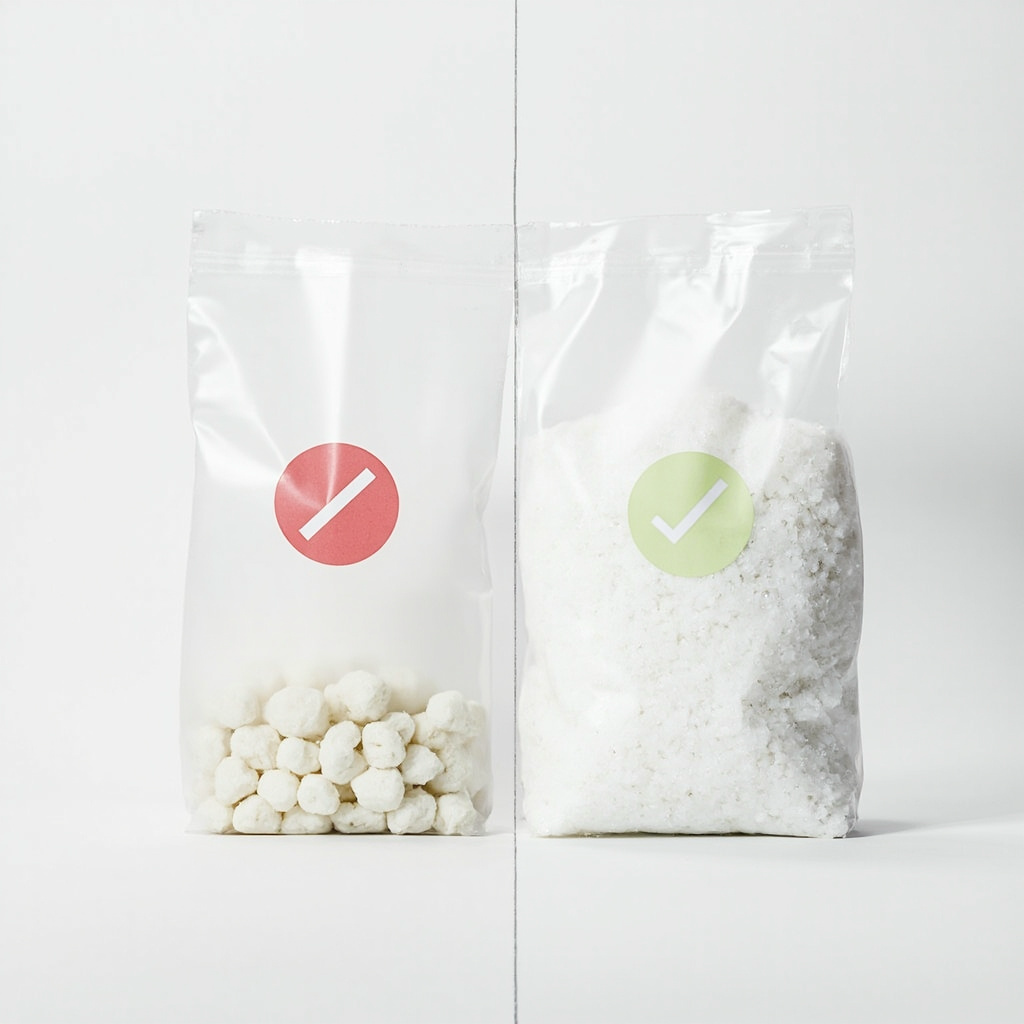
Water softener salt contains anti-caking additives — sodium ferrocyanide, calcium chloride, sometimes magnesium silicate — plus prills shaped to feed an ion-exchange brine tank. Those same additives coat SWG titanium plates and force the cell to work harder for less chlorine. Over a season the cell runs hotter, scales faster, and dies 2-3 years early. The saltwater pool basics guide walks through what a salt cell looks like inside.
Pool salt is not table salt
Table salt is iodized. Iodine at the doses you’d pour in — hundreds of pounds for a 20,000-gallon pool — coats metal and stains finishes. Non-iodized table salt is too fine; it dissolves in seconds, hits the cell as a concentrated slug. Skip both versions.
Pool salt is not rock salt or de-icing salt
Rock salt carries dirt, insolubles, and mineral grit that cloud your pool and settle on the floor. De-icing salt is often pre-mixed with cyanuric acid to slow the melt — that CYA ends up in your pool reading. See the cyanuric acid explained hub for the SWG-specific interaction.
Salt does not add CYA
A common misconception: people assume salt pools build up stabilizer like trichlor tablets do. They don’t. Pure NaCl contributes zero CYA. Your SWG pool still needs CYA in the 60-80 ppm range from a separate stabilizer dose. See the free chlorine level guide for the math and the pool water testing workflow for the test sequence.
Decision tree: pick your salt in 5 branches
Decision tree at a glance

Work through the five branches in order. Each one narrows your choice until you’ve landed on a single bag type, a Skip, or a “verify first” pause. The product appears in Our picks by scenario only after you’ve reached a branch — picking before then is how most of the common mistakes happen.
Branch 1: First fill on a brand-new SWG pool
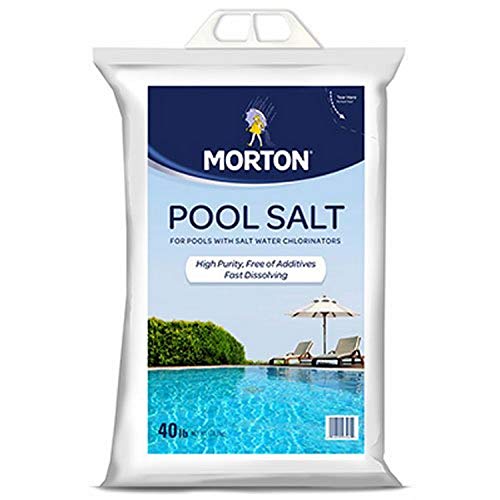
A 20,000-gallon pool starting from zero salt needs roughly 250 lb to hit 3,200 ppm. Buying bulk pool-grade solar salt from a local pool store is the cheapest path — one pallet of 40-lb bags fills the gap. Our default is Morton Pool Salt 40 lb. Verify with a salt test strip 24 hours after the last pour. For an exact pounds-per-gallon number, run your pool volume through the salt dose calculator before buying.
Branch 2: Annual top-up after splash-out
You splashed out 2,000-3,000 gallons over the season through backwash and splash-out. Salt does not evaporate (NaCl is non-volatile), so you only top up what the splash-out lost — usually 50-150 lb per season. Match the existing brand if you remember it; otherwise the same Morton 40-lb bag works fine. Slot the check into your weekly pool care routine.
Branch 3: Hard-water area with quick-scale cell
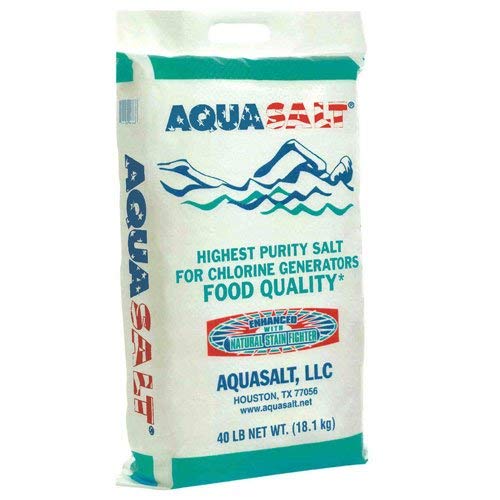
If your fill water runs 300+ ppm calcium hardness (common in the Southwest US), the SWG cell scales faster. Switch to mechanically evaporated salt — finer grain dissolves in 4-6 hours, so the cell sees steadier salinity. The right pick is AQUASALT 40 lb, or the budget alternative Aqua Joe 40 lb. See the scale and stain troubleshooting hub for diagnosis and the total alkalinity explained hub for the TA piece — high TA and high CH compound the risk.
Branch 4: On a budget with a large pool (25K gal and up)
Mined salt is the lowest cost per pound by 20-30 percent. Trade-off: it dissolves slowly, so pour over the deep-end return jet with the pump running and brush any piles toward the main drain. Plan to start adding 3-5 days before running the cell. Match TA and pH against the pH explained hub and total alkalinity explained hub before you start.
Branch 5: Salt on sale — is it actually pool-safe?
A pallet on clearance can be a steal or a disaster depending on three quick checks: (1) is the label “pool salt” or “salt water pool salt”? (2) is the purity 99 percent NaCl or higher listed? (3) is the only additive “no anti-caking” or “anti-caking agent: none”? If any answer is unclear, skip it. Saving $20 on a $300 cell replacement isn’t a deal.
Features that matter: read the bag like a chemist
Three specs separate a good bag from a bad bag. If the label is missing one, don’t buy it.
Purity
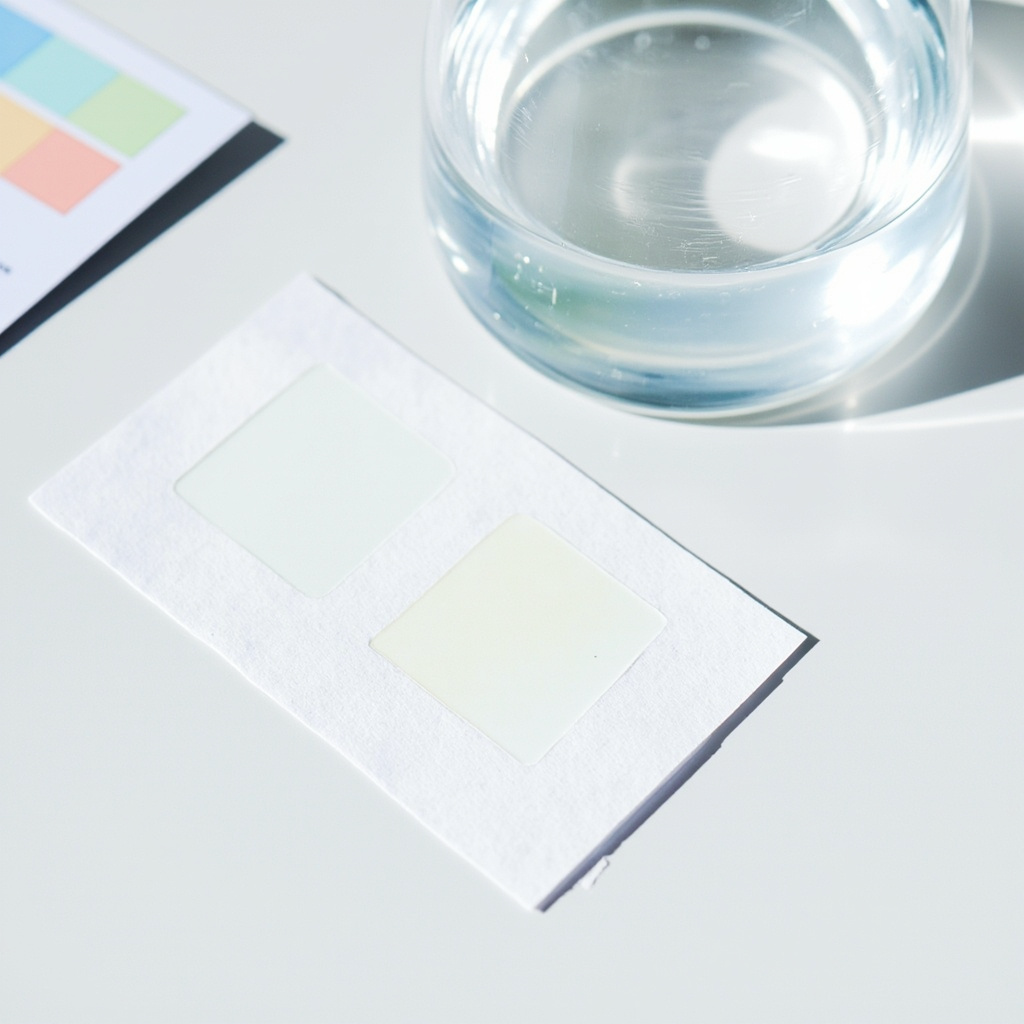
99 percent or higher NaCl is the floor. Anything below is a different product (table salt, water softener salt, ice-melt salt) regardless of what the front of the bag says. If a bag doesn’t list purity, don’t buy it.
Granule size vs cell type
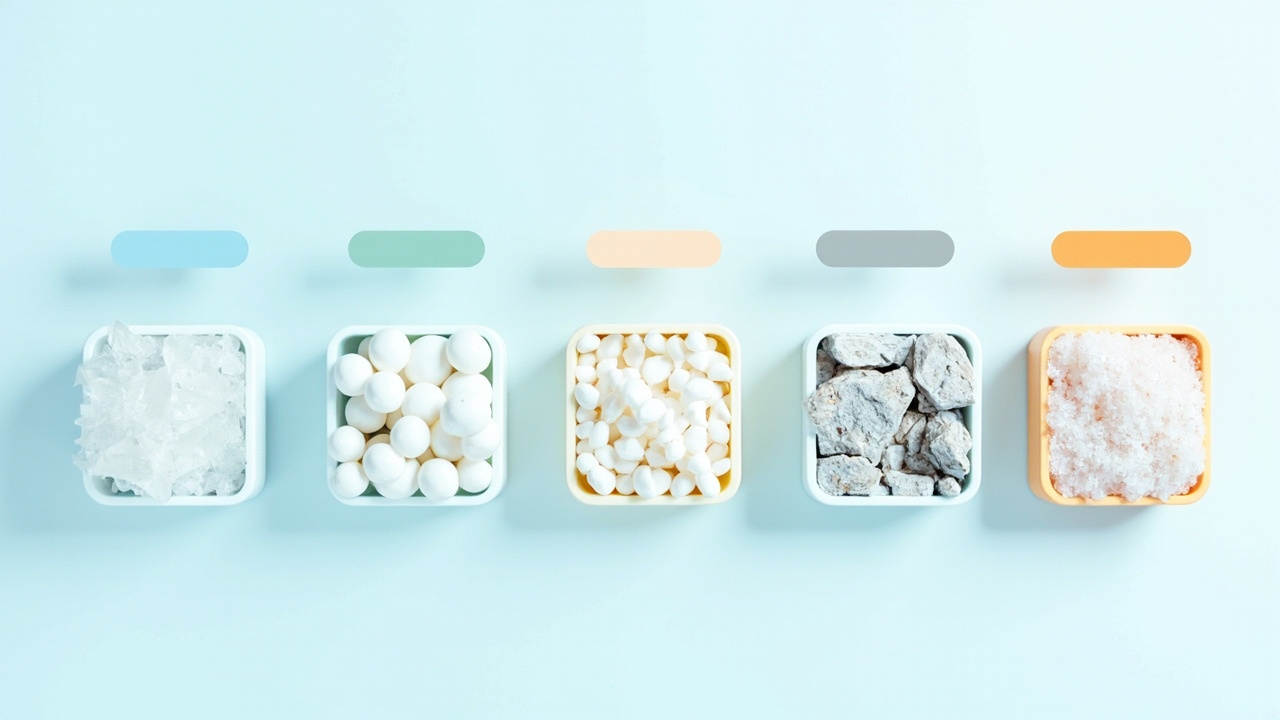
Fine grain (mechanically evaporated) dissolves in hours — ideal for hard-water SWGs. Medium grain (solar) dissolves overnight — the default. Coarse grain (mined) takes 24-48 hours — fine for large pools where you can plan ahead. All three are safe in any cell; the difference is convenience, not safety.
Price per pound vs total cost of a fill
Granule sizes at a glance
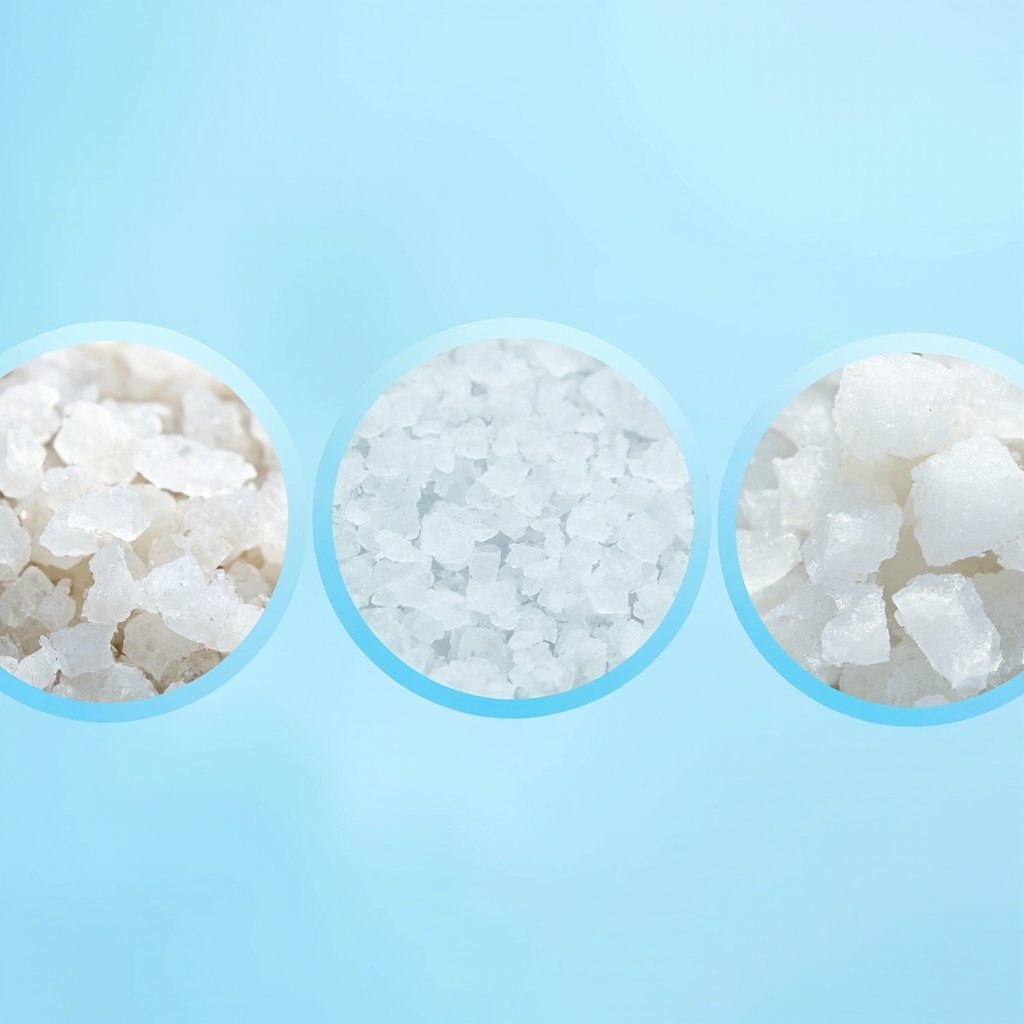
Bagged retail runs $0.40-0.70 per pound for solar, $0.50-0.80 for evaporated, $0.25-0.45 for mined. Bulk pool-store pickup often drops mined below $0.20 per pound. Cheapest per pound is rarely cheapest per fill once you add brushing labor.
What to skip: the wrong-answer shelf
The wrong answers are cheaper at the shelf, so they get bought first. None of these belong in an SWG pool.
Water softener salt
Already covered in “What this is not” but worth repeating as the single highest-frequency mistake. Anti-caking additives damage titanium plates. Even “pure” pellets are still the wrong grain shape for pool use. Skip entirely — including the rock-salt and solar-naturals variants sold for water softener brine tanks.
Table salt (iodized or non-iodized)
Iodine stains, fine grain causes slug-dosing at the cell. Skip — even if cheaper per pound, the trade-off is ruin.
Rock salt
Dirt and insolubles cloud the water and settle as a fine silt on the floor. Skip.
De-icing salt with CYA pre-mix
Some winter de-icers are blended with CYA to slow the melt. That CYA ends up in your pool. Skip — buy pool salt instead.
Our picks by scenario
The five picks below cover 95 percent of SWG-pool buyers. They map directly to the badges in the frontmatter products block so you can grab the link without hunting.
Best overall — Morton Pool Salt 40 lb (B000NHZIXY)
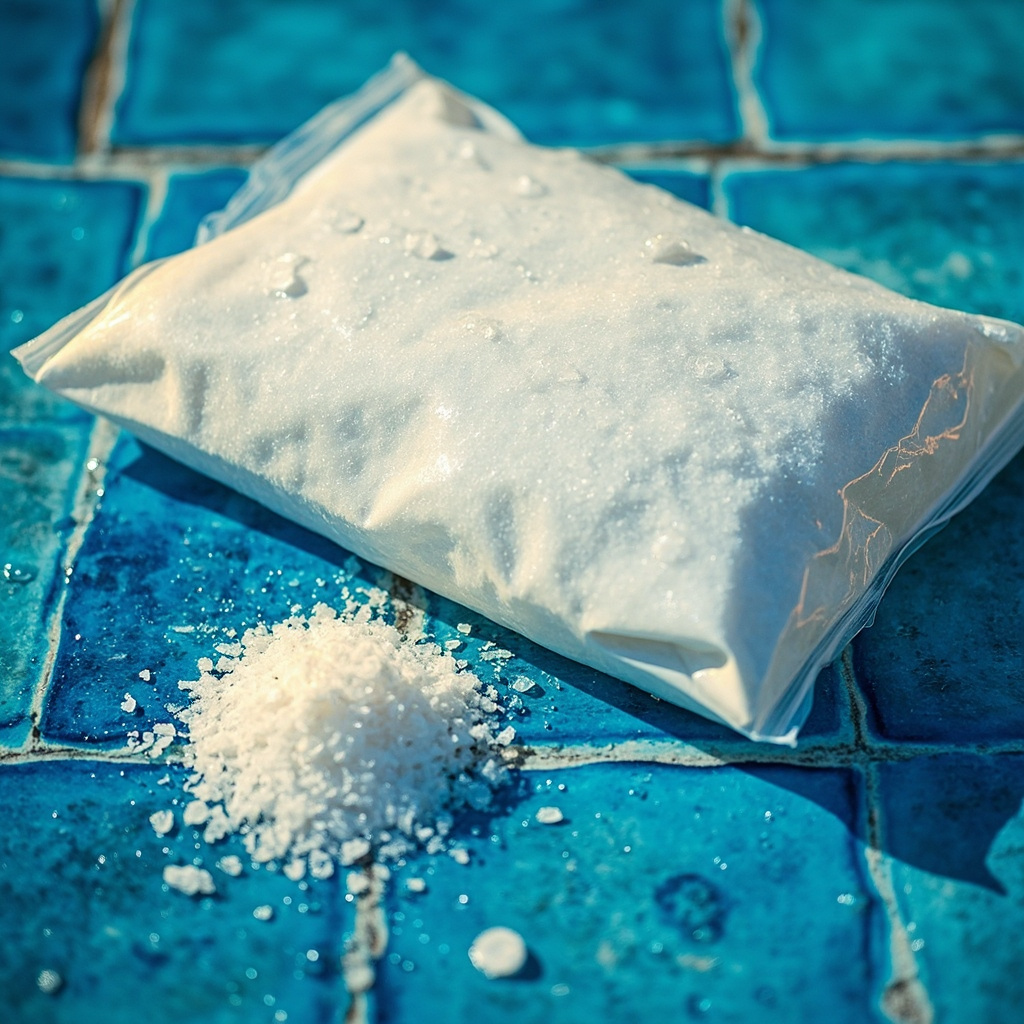
The safe default. 99 percent pure solar-evaporated NaCl, sold at every hardware and pool store, $22-25 per 40-lb bag, dissolves in 12-24 hours. Use for first fill and 95 percent of top-ups. If you’ve never bought pool salt before, this is the bag. Morton Pool Salt 40 lb on Amazon.
Best for fast-dissolving top-ups — AQUASALT Pool & Spa Salt (B008B9IVIA)
Mechanically evaporated, finer grain, dissolves in 4-6 hours. Costs slightly more per pound but saves you the brush labor. The right pick for small top-up batches or hard-water SWGs that scale fast. AQUASALT 40 lb on Amazon.
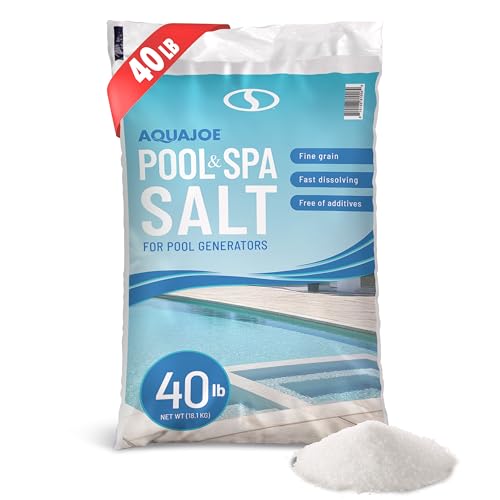
Best budget fast-dissolve — Aqua Joe Pool & Spa Salt (B0FKJK6R8S)
Fine grain that dissolves fast and pairs cleanly with Hayward, Pentair, and Intex SWG cells. About $33 per 40-lb bag. The right pick when AQUASALT is out of stock. Aqua Joe Pool & Spa Salt 40 lb on Amazon.
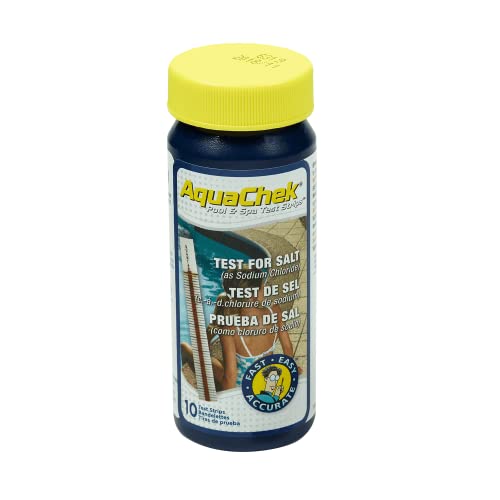
Best salt test strip — AquaChek Salt Test Strip Titrators (B0036UNV8E)
Before you buy another bag, confirm what your salt actually is. A monthly strip reading is the cheapest insurance against under-dosing and over-dosing. Reads 0-6,000 ppm in seconds, about $12-13 for a 10-strip pack. AquaChek Salt Test Strips on Amazon.
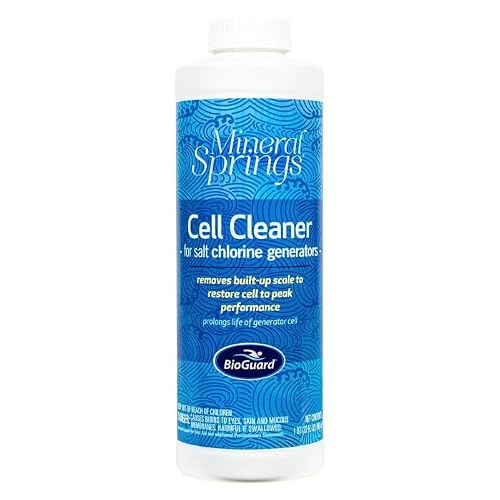
Best for cell maintenance — BioGuard Mineral Springs Cell Cleaner (B0CT486SVN)
Clean your SWG cell every 3-6 months regardless of which salt you buy — calcium scale builds up and reduces output. BioGuard’s acid-free formula is gentler than a 4:1 muriatic acid soak. Use quarterly and your cell stays in the 5-7 year life window. BioGuard Cell Cleaner on Amazon.
What to buy only if needed
Don’t pre-buy these — they’re situational, and buying before you know your pool’s actual state wastes money.
Only if you need a full chemistry panel
If you don’t already own a 7-way strip or liquid kit, the AquaChek 7-Way Pool Test Strips cover FC, pH, TA, CYA, and calcium hardness in one dip. For a wider comparison, see the pool test strips comparison. Skip if you already test salt with the dedicated strip above.
Only if you’re switching from chlorine tablets
If you convert a chlorine pool to saltwater, confirm CYA is in range (60-80 ppm) before powering on the generator. The full first-year routine is in the first-year pool owner guide. Skip the dedicated salt strip until salt has fully dissolved.
Only if your fill water is very hard (300+ ppm CH)
Lower your pH target and add a scale-control dose before salt. Pool salt itself doesn’t add calcium, but hard fill water does — and SWG cells run hotter, which plates calcium faster. Skip if your fill water tests below 200 ppm CH.
How to add it: a 30-minute first-fill sequence
The order matters. Wrong order means undissolved piles on the floor, localized high concentration at the cell, and a salt reading that drifts for days.
- Test the water before you add anything. Use the AquaChek Salt Test Strips to confirm the starting ppm (often 0 for a fresh fill, or 0-200 for a refill). Note the pool volume and target ppm from your SWG manual.
- Calculate the pounds. Run the numbers through the salt dose calculator. Default target is 3,200 ppm for most Hayward and Pentair cells.
- Pour slowly over the deep end. With the pump running, add one bag at a time over a return jet. Start with the Morton Pool Salt 40 lb for first fill, or AQUASALT for fast-dissolve top-ups. Don’t dump all 250 lb in one pile.
- Brush piles toward the main drain. Coarse-grain bags leave residue. Brush in 5-minute passes until the floor is clear.
- Run the pump for 24 hours. Salt needs circulation to dissolve and distribute. Skip brushing if you poured fine-grain evaporated salt.
- Retest with the salt strip. After 24 hours, take a fresh reading at the deep end with another AquaChek strip. You should be within 100 ppm of target.
- Power on the SWG. Only after the salt reads in range and the cell plates are free of undissolved granules.
For a brand-new spring opening sequence, see the how to open a pool guide.
Common mistakes pool owners actually make
These five cover 90 percent of the “I bought the wrong salt” calls from new SWG owners.
-
Buying water softener salt because it’s cheaper — Water softener salt runs $5-10 less per bag than pool-grade. It coats your cell and shortens its life by 2-3 years — the “savings” buy you a $300 replacement cell. Pool-grade salt only: start with Morton 40 lb and verify with an AquaChek salt strip.
-
Dumping 250 lb in one pile on the floor — Undissolved salt piles stain plaster, take days to dissolve, and leave a localized concentration spike. Pour slowly over a return jet with the pump running. Brush residue toward the main drain.
-
Powering on the SWG before the salt is fully dissolved — If you turn on the generator while salt is still on the floor, the cell runs at low effective salinity and trips the low-salt alarm. Most owners who see this within 48 hours think the cell is broken. It’s not — wait 24 hours, retest with AquaChek, then power on.
-
Trusting “pool salt” on the front without reading the back — Some brands print “pool salt” on the front and ship water softener salt in the bag. Read the additive panel. If it lists sodium ferrocyanide or “anti-caking agent” without specifying which, it’s softener salt in a different wrapper.
-
Topping up without retesting first — Salt doesn’t evaporate, but it does get lost to splash-out, backwash, and leaks. If you add 100 lb every spring “just because,” you’ll overshoot 4,000 ppm and trigger the high-salt alarm. Retest with AquaChek, then top up. Always cross-check pH and TA against the pH explained hub and total alkalinity explained hub at the same time.
Safety notes (read this)
Pool salt isn’t a shock chemical, but handling it still has rules. Skip them and you risk skin irritation, equipment damage, or an ER trip for a child who got into an open bag.
- Never reuse food-grade or table-salt containers for pool maintenance. Cross-contamination is a hidden hazard — a child who finds a “salt” container shouldn’t be drinking pool water.
- Store dry, sealed, off the ground, out of reach of children and pets. Bulk bags are 40 lb.
- Avoid pouring in wind or rain. Wet salt clumps, and a windy pour drifts dust into your eyes and lungs.
- Wear gloves with the cell cleaner (mild acid), and eye protection if you’re diluting muriatic acid.
- Keep chemicals away from any food-prep area. Pool salt and table salt look the same; storing them together invites a chemical contamination risk.
When to call a pro
Keep DIY if: you can test salt and chlorine weekly, brush and run the pump for 24 hours, and your numbers are moving in the right direction.
Call a pro if:
- Cell won’t prime or produce chlorine, or shows an error code that won’t clear after 24 hours of circulation
- Persistent white flakes in the skimmer after a full bag has dissolved (likely a much larger imbalance)
- Water loss over 1 inch per day (likely a leak, not an SWG problem)
- You’re not comfortable handling muriatic acid for an emergency scale clean
Related
- Saltwater pool basics: how SWGs work, ideal ranges, and maintenance
- Salt dose calculator: pounds of salt to hit your target ppm
- How to open a saltwater pool in spring
Key takeaways
- Pool-grade salt at 99 percent or higher NaCl. Skip water softener salt, table salt, rock salt, and de-icing salt.
- Solar, evaporated, and mined salt all work; pick by granule size and price.
- Test with a salt strip before adding anything; target 3,200 ppm for most SWGs.
- Pour over a return jet with the pump running. Brush piles toward the main drain.
- Clean the cell every 3-6 months with an acid-free scale remover — that’s what keeps it in the 5-7 year life window.