Hot tub foam isn’t a chemistry bug you can patch with a single chemical. It’s a structural signal that one of three things is happening: surfactants (detergent, body oils, lotion) are being agitated by jet aeration, the water is too soft, or dissolved solids have been accumulating for months without a drain. Diagnose which one you’re seeing, and the right fix is usually a single product plus a habit change. Misdiagnose, and you’ll spend $30 on defoamer and still foam the next weekend.
Quick answer
Hot tub foam is almost always one of three things: residual detergents from swimsuits or body wash, accumulated body oils that won’t break down, or high TDS from years of adding chemicals without draining. Test calcium hardness first — under 150 ppm means foam won’t go away with chemistry alone; you need to drain and refill. For quick knockdown, silicone defoamer works in 30 seconds but the foam comes back in 24 hours.
What hot tub foam is (and is not)
Foam is one of the most-misdiagnosed symptoms in residential spa care. Knowing what it IS and what it ISN’T saves you from buying the wrong product and from skipping the one that would actually fix it.
What foam IS
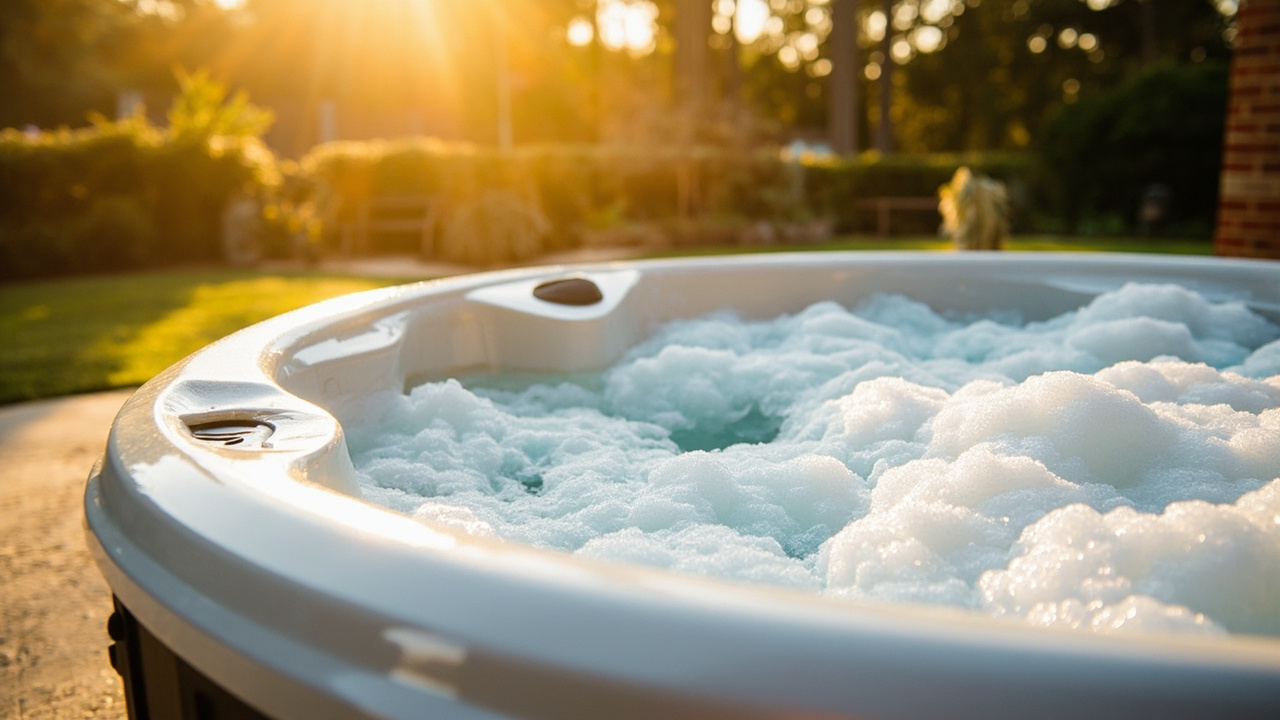
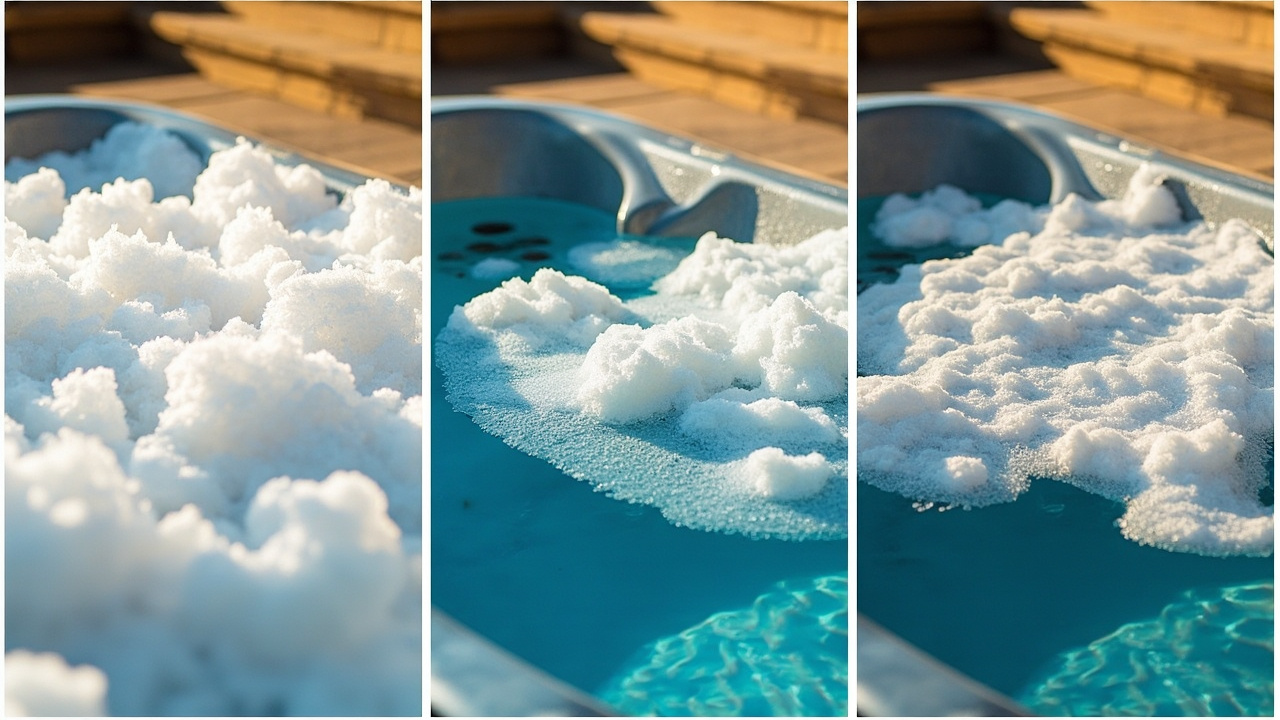
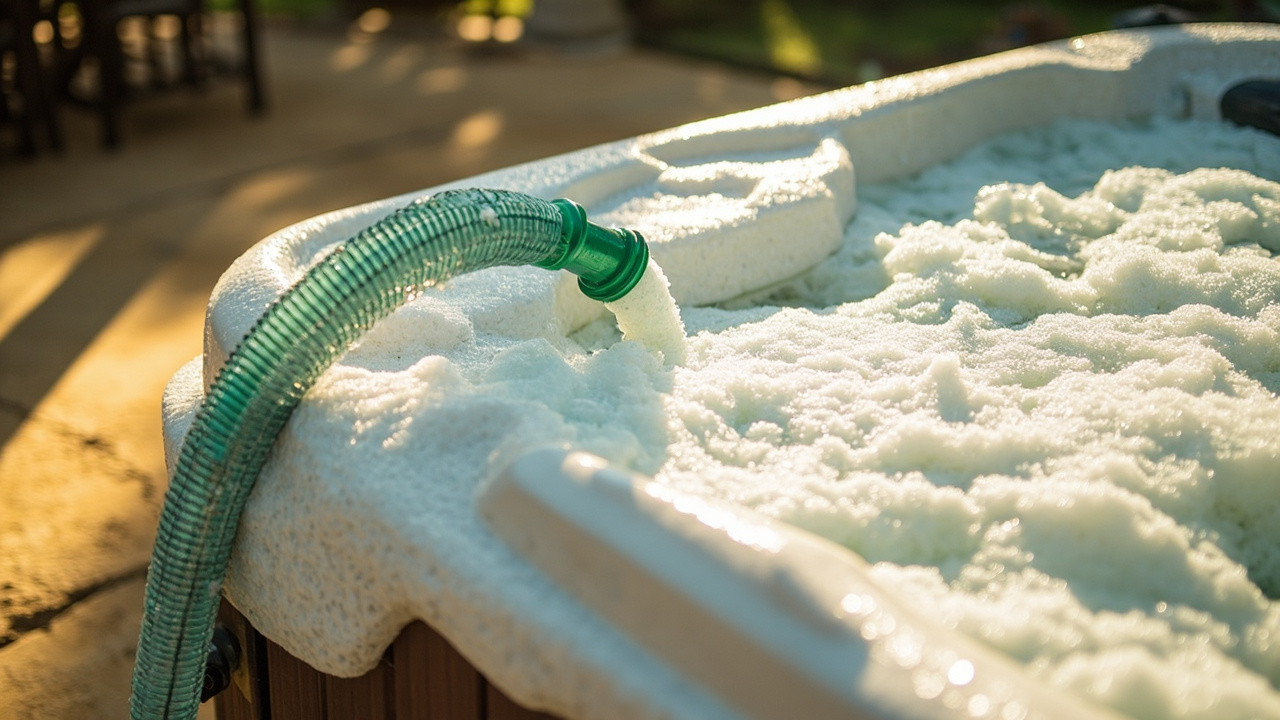
Persistent bubbles at the waterline or across the surface when jets run. Comes from surfactants (detergents, body oils) being agitated by air injection. Foam piles up, doesn’t pop in 1-2 seconds, and returns after you skim it off.
What it is NOT
Not a single cause problem. Detergent, body oils, and high TDS all foam differently. Treatment varies. Not always a chemistry problem. Mechanical causes (jet aeration, low water level, low calcium hardness) foam without any chemical trigger. Not a sign of unsafe water. Foam can be heavy in perfectly sanitized water (the opposite of what most owners assume). Not a reason to shock. Chlorine shock often makes foam worse — chloramines + body oils = foam amplification.
Why hot tubs foam more than pools
Three structural differences between hot tubs and pools make foam a hot-tub problem first, a pool problem second.
Three structural differences
Water volume — 300 gal vs 20k gal. Same bather load in 1% of the water = 100x concentration. Jet aeration — pumps inject air into the water. Air + soap = foam. Pools barely aerate unless you have a fountain or waterfall. Higher temperature — 100-104°F vs 80°F. Heat thins the water and breaks down surfactants faster, so foaming peaks when jets run hot. The spa vs pool chemistry framework covers the bather-load and temperature differences in detail.
Diagnose your foam — three cause patterns
Before you pour any chemical, name what you’re seeing. Three patterns cover almost every foam case.
Pattern 1 — Detergent foam
Big fluffy white bubbles that pop easily. Usually appears right after a soak with new swimsuits, fabric softener residue, body wash, or lotion. Goes away within 24-48 hours of filtration if you don’t add more soap.
Pattern 2 — Body oil foam
Smaller persistent bubbles that linger across the whole surface. Brownish/greenish tint sometimes. Caused by weeks of accumulated skin cells + body oils. Won’t go away without enzyme treatment or drain.
Why body oils accumulate: each bather leaves behind roughly 1-2 grams of skin oil per soak; sunscreen, lotion, deodorant, and hair product triple that number. A family of four using the spa twice a week deposits 15-20 grams of oil weekly — visible as a thin slick on the waterline after the second week without an enzyme. The slick is the precursor to foam; once enough accumulates, every jet cycle whips it into persistent bubbles. Enzyme treatment breaks the oil down into fatty acids the bromine can oxidize, but takes 2-3 weeks of weekly doses for the slick to disappear. Faster fix is drain-and-refill, but enzyme is the only sustainable path if soaks are frequent.
Pattern 3 — TDS foam
Thin persistent film that looks like wet soap film. Calcium hardness below 150 ppm. Build-up of dissolved solids from years of bromine/chlorine without draining. Only fix is drain + refill.
TDS accumulation rule of thumb: most residential hot tubs cross the 1500 ppm TDS threshold between months 9-15 of use, depending on bather load. Test strips only check calcium and chlorine, not TDS directly — but a TDS meter (~$15) gives the real number. Below 1000 ppm, defoamer handles foam fine. Between 1000-1500 ppm, defoamer works but enzyme is needed weekly to break down incoming oils. Above 1500 ppm, foam returns within hours of every defoamer dose regardless of how much you pour in — drain is the only fix. The AquaDoc Spa Enzyme treatment extends drain cycles by 1-2 months per weekly dose cycle, but doesn’t replace draining entirely on a chronically-loaded tub.
Decision tree — what to do
First “yes” wins. Walk top to bottom. Each branch points to a specific product + a specific habit.
Branch 1 — Foam appeared today, after a soak with new bathers
Detergent residue. Add 1 cap of HTH Spa Defoamer. Wait 12 hours. If foam is gone: cause was soap, no further action. If foam is back: it’s not soap, continue down the tree. Sister link: hot tub water care basics.
Branch 2 — Foam persists more than 1 week despite defoamer weekly
Body oils + lotions + detergent residue accumulating. Add spa enzyme weekly. Run jets 1 hour after dosing to mix. Foam reduces over 2-3 weeks. Sister link: pool foam (sister problems hub) — same enzyme logic, larger volume.
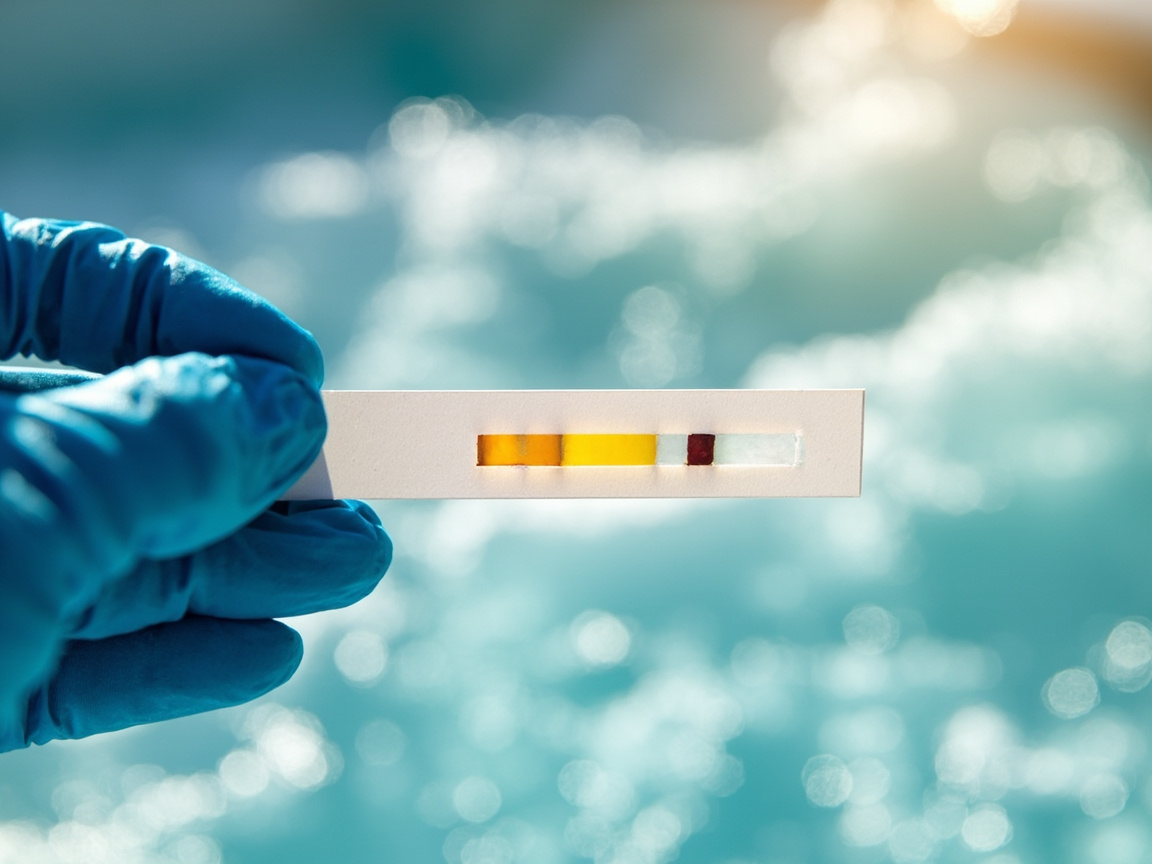
Branch 3 — Calcium hardness below 150 ppm on a 7-way strip
The water is too soft. Add calcium hardness increaser to reach 150-250 ppm. Soft water foams because there’s no mineral content to stabilize the surface tension. Sister link: calcium hardness for the full framework.
Branch 4 — Foam is back within hours of every dose, regardless
TDS is over 1500 ppm (typical after 12-18 months without drain). No chemistry fix exists. Drain and refill. Sister link: total alkalinity for the test before refill.
Branch 5 — Foam appeared right after a chlorine shock
Chloramines + body oils create foam amplification. Wait 24 hours for the shock to oxidize the oils. Don’t re-shock. Sister link: free chlorine for the chloramine explanation.
Branch 6 — Foam + cloudy water + low FC
Not foam problem — that’s algae or organic contamination. Go to green pool for the diagnostic framework (applies to spa water at small scale).
Branch 7 — Foam only when jets are running, clears when off
Mechanical cause — jet aeration is the trigger. No amount of chemistry will fix it. Lower jet pressure or accept foam as the trade-off for high-pressure jets.
What you’ll need
Five products cover the most common branches of the decision tree. The defoamer + enzyme pair is the foundation; the test strips and shock are support.
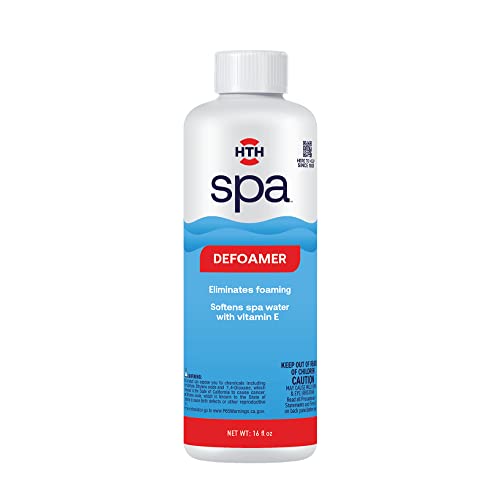
HTH Spa Defoamer 16 oz (B09RGRG1TR)
Quick knockdown — silicone-based, works in 30 seconds. Treats 6-10 doses per bottle. First buy for anyone with foam today. See price on Amazon.
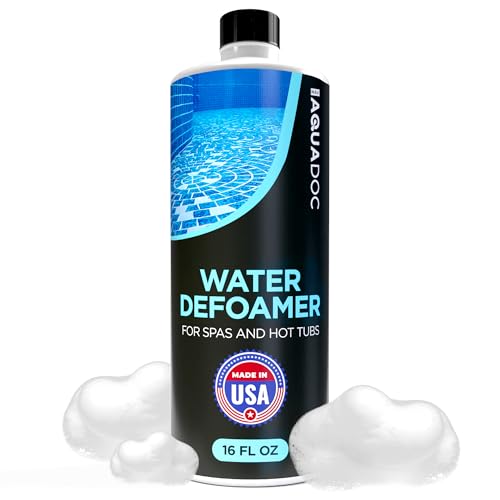
AquaDoc Hot Tub Defoamer 16 oz (B08QNH9QCT)
Concentrate — same chemistry as HTH but stronger. Use weekly if you foam often. About 32 doses per bottle. See price on Amazon.
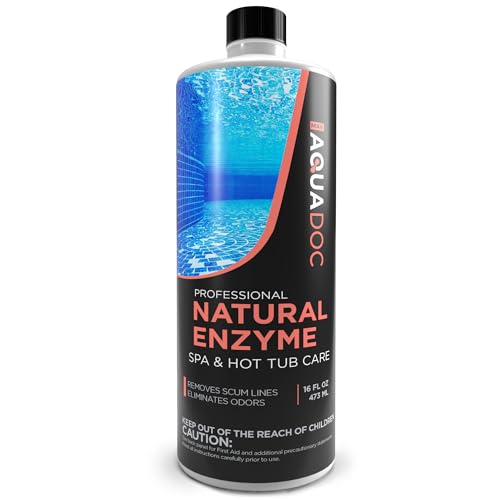
AquaDoc Spa Enzyme 16 oz (B08QNFR17J)
Weekly enzyme breaks down body oils and lotions at the source. Foam reduces over 2-3 weeks when combined with defoamer. See price on Amazon.
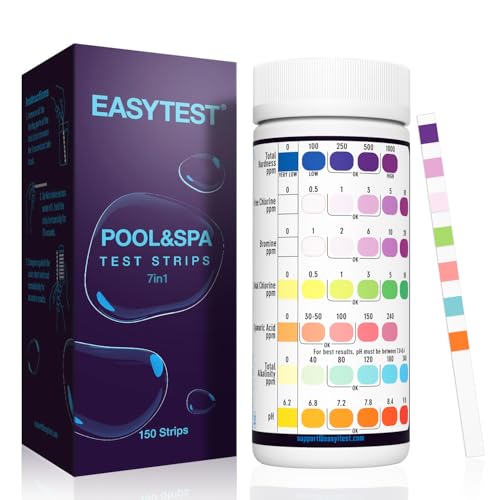
EASYTEST 7-Way Test Strips 150 ct (B09MSY8BLB)
Test calcium hardness + pH + TA + FC. CH under 150 ppm means foam won’t go away with defoamer alone. See price on Amazon.
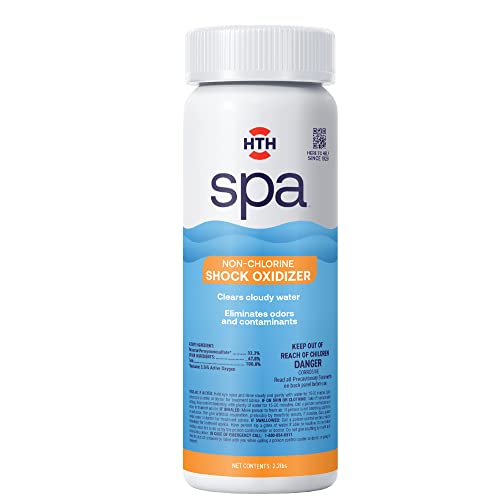
HTH Spa Non-Chlorine Shock 2.25 lb (B09K111PZR)
MPS shock oxidizes body oils without raising combined chlorines. Use weekly after heavy soaks. See price on Amazon.
How to fix hot tub foam — step by step
Five steps, 2-3 weeks from start to “foam gone,” with most of the time spent waiting for the enzyme to work.
Step 1 — Diagnose (use the decision tree above)
Identify which pattern you have. Skipping this step wastes money on the wrong product.
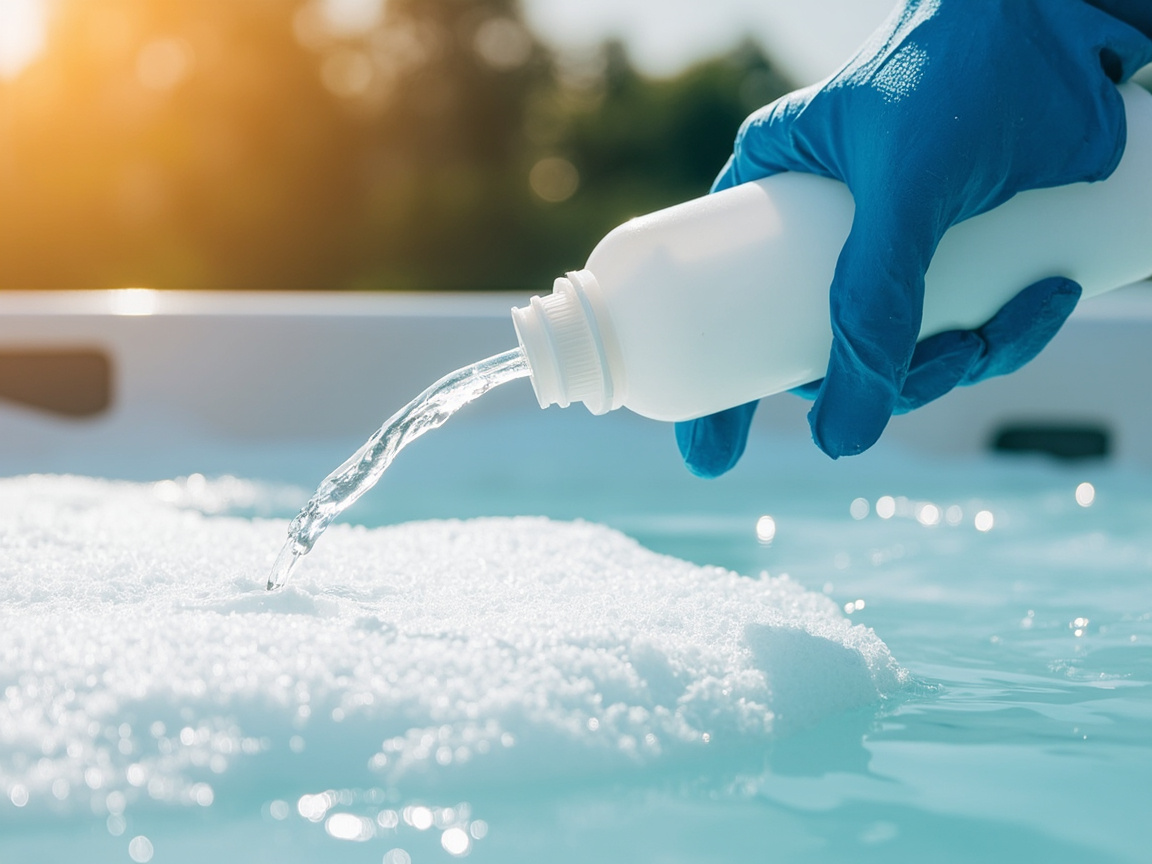
Step 2 — Dose defoamer if you need clean foam in 30 seconds
1 cap per 250 gal, pour around the waterline, run jets 1 minute. Foam knocks down immediately. A standard 16 oz HTH bottle covers about 32 doses for a 300 gal spa.
Step 3 — Add enzyme weekly for 3 weeks
1 oz per 250 gal once a week. Foam gradually reduces as the enzyme breaks down the body oil layer. Don’t expect overnight. The AquaDoc Spa Enzyme 16 oz bottle handles a 300 gal spa for ~16 weekly doses.
Step 4 — Test calcium hardness
Use the 7-way strip. If CH is under 150 ppm, raise to 200 ppm using calcium hardness increaser. Test before adjusting TA.
Step 5 — Drain and refill if TDS is over 1500 ppm
No chemistry helps at this point. Drain, refill, balance from scratch. Most spas need this every 12-18 months.
Safety notes — spa foam is its own safety zone
Five rules, each tied to a specific failure mode in a residential spa.
Defoamer is silicone — keep away from food prep surfaces
Silicone defoamer leaves a residue on counters and seats. Wipe with a damp cloth after dosing. Don’t let food contact the spa water.
Never mix defoamer with chlorine shock at the same time
Defoamer is silicone-based; chlorine is oxidizing. Add them at different times (defoamer first, shock 24 hours later) so each has time to mix. Mixed products can foam up out of the spa.
Enzyme products are eye irritants — wear eye protection
The enzyme concentrate can splash during dosing. Splash goggles or sunglasses are enough; full face shield for sensitive eyes.
Store defoamer away from children — it looks like candy
Bright bottles, sweet scents in some products. Locked cabinet or high shelf, same as any spa chemical.
Never use defoamer instead of fixing the cause
Defoamer is a Band-Aid. If you foam weekly for months and only dose defoamer, the underlying TDS / body oil problem gets worse. Eventually drain + refill is mandatory. If weekly defoamer is your only fix, you’ve spent more on the 16 oz HTH bottle than a refill would have cost.
Common mistakes
Five errors show up over and over in spa owner forums.
- Shocking the spa when you see foam. Chlorine shock creates chloramines when it meets body oils; chloramines amplify foam. Add defoamer first, shock 24 hours later. Use MPS non-chlorine shock if you want to oxidize oils without raising chloramine load. Sister link: pool shock for the chloramine mechanism.
- Not draining for years. TDS accumulates indefinitely. Most spa manufacturers recommend drain every 3-4 months with regular use. Skipping this leads to permanent foam that no defoamer fixes.
- Adding more soap without rinsing first. Swimsuits with detergent residue, body lotion, hair products — all foam. Rinse off in a fresh-water shower before entering the spa. Cheap and effective.
- Using laundry detergent to “clean” the spa. A user forum trick. Soap + hot water = foam city. Use spa-specific enzyme cleaner, not household soap.
- Draining without checking calcium hardness of fill water. If your fill water CH is under 100 ppm, the new spa water will foam from day one. Test fill water first with the same 7-way strip and raise CH before filling if needed. Sister link: pool pH for the broader fill-water framework.
When to call a pro
Three situations where DIY becomes a service call.
Recurring foam despite correct treatment
You’ve dosed defoamer + enzyme + raised CH for 3 weeks and foam is unchanged. Likely cause is a plumbing biofilm that a service tech needs to purge (Ahh-Some or equivalent).
Foam plus equipment problems (jets weak, pump noisy)
Could be a suction leak pulling air into the plumbing — that air is the foam trigger. Service call needed.
You can’t identify what’s causing the foam
Two foam samples sent to a pool lab can identify dissolved solids content. About $30 test, faster than guessing for months.
What to buy only if needed
Four conditional branches.
Only if CH is below 150 ppm after the test
Buy calcium hardness increaser. Otherwise the foam will not respond to defoamer or enzyme.
Only if you’ve skipped drain-and-refill for 18+ months
Buy a refill kit (calcium increaser + TA increaser + pH adjuster + sanitizer) for the new fill water. Don’t refill and immediately shock — balance first.
Only if your foam is brown/green-tinted
That’s likely algae, not foam. Add algaecide per spa directions and shock after 24 hours.
Only if jets run at high pressure (more than 80 psi)
Lower the jet pressure at the pump if possible. Foam is the inevitable trade-off for high-pressure jets.
Related
- Pool foam (sister hub) — same foam chemistry, pool-scale
- Hot tub water care basics — the spa-side playbook
- Muriatic acid safety basics — when foam points to pH/TA issues that need acid adjustment
Key takeaways
- Foam is a structural signal, not a chemistry bug. Diagnose the cause before you pour anything.
- Defoamer is a 30-second fix, not a season fix. It buys hours, not weeks.
- Calcium hardness under 150 ppm means soft water. Soft water foams regardless of use. Raise CH before chasing other causes.
- Body oils need an enzyme, not a defoamer. Weekly enzyme for 3 weeks; foam reduces as the source breaks down.
- Drain and refill is mandatory every 12-18 months with regular use. TDS accumulates indefinitely; no chemistry fixes 1500+ ppm.
- Shower before you soak. A 60-second rinse removes 60-90% of incoming surfactants.
- Don’t shock to fix foam. Chloramines amplify foam; wait 24 hours and the shock will oxidize the oils on its own.