If the spa looks milky the morning after a soak, another bottle of clarifier is rarely the first move. Done wrong, you glue particles the filter can’t catch, burn through oxidizer, and still sit out another night. Done right, it’s a short sequence: test, clean the filter, restore sanitizer and pH, then clarify—or drain when the water is past saving.
Quick answer
Cloudy hot tub water usually means a dirty filter, low sanitizer, off-balance pH, or bather oils—not a clarifier-only fix. Test first, clean or replace the spa filter, restore sanitizer and pH, then oxidize dull waste. Use clarifier only after filtration can catch particles. Drain when TDS stays high or cloudiness returns within hours. Spas cloud faster than pools because volume is small and heat multiplies oils.
What this is not
Not the same as cloudy pool water
Pool cloudiness guides assume thousands of gallons and different turnover. Start here for spas; use cloudy pool only as a sister path.
Not foaming
Foam is a surface surfactant problem—see hot tub foaming. Milky bulk water is suspended particles or precipitation.
Not “add clarifier and hope”
Clarifier without a clean filter and sane sanitizer recycles haze. Filter-first is non-negotiable.
Not medical advice
Eye or skin irritation needs chemistry correction and, if severe, medical care—this page is water care only.
How spa cloudiness differs from pools
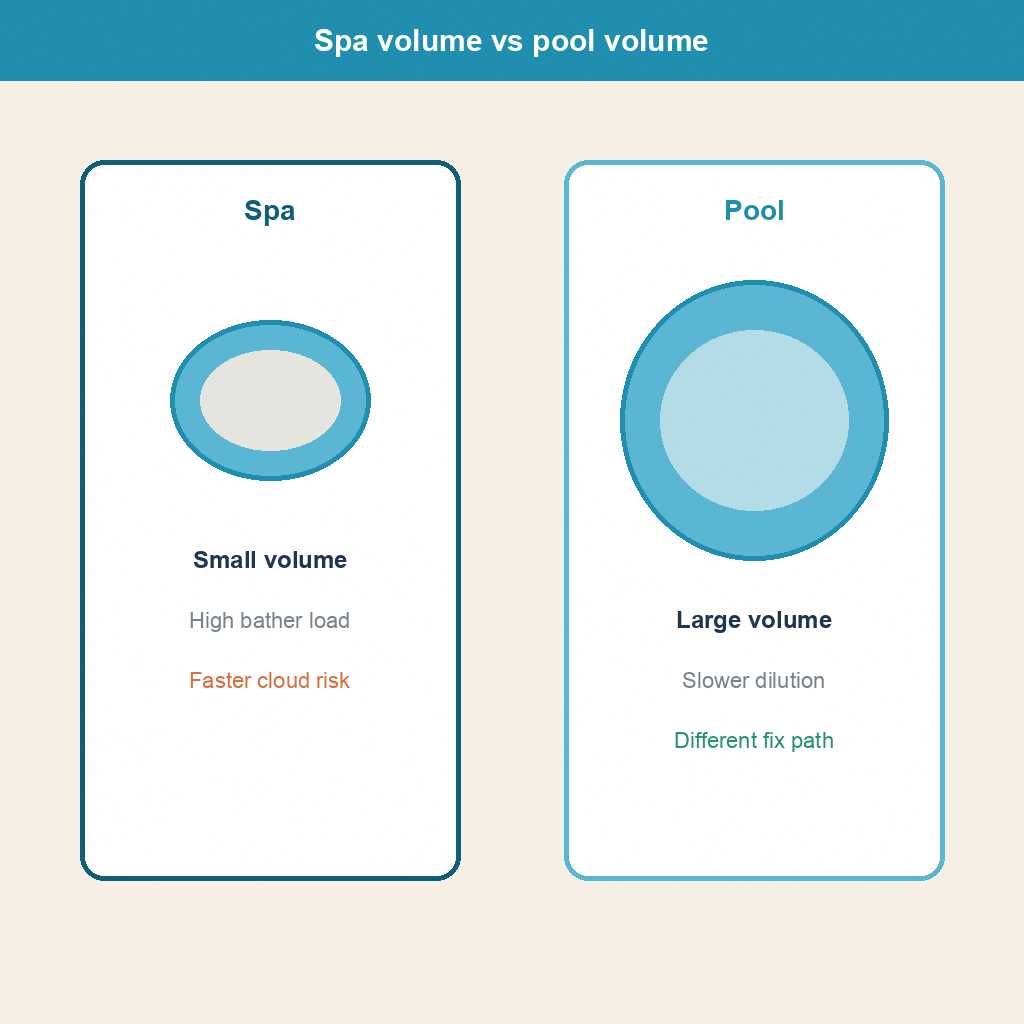
Here’s the thing: pool cloudiness advice fails in a spa because the math is different. You’re not managing a backyard lake—you’re managing a hot, heavily used bathtub with a tiny filter.
Volume and bather load
A 300–500 gal spa sees more skin oils per gallon per hour than a 15,000 gal pool. Four adults for 45 minutes can dump more organics into a spa than a dozen kids dump into a mid-size pool on a Saturday. That’s why the same “we showered” habit that keeps a pool fine still clouds a spa overnight.
Temperature
Hot water accelerates sanitizer demand and keeps oils dissolved until they re-precipitate as haze when the jets stop. Heat also speeds the breakdown of free sanitizer, so a spa that tested fine at 6 p.m. can sit near zero by morning if the cover stayed closed on a dirty filter.
Sanitizer systems
Bromine banks, chlorine spas, and mineral systems fail differently—always test the active sanitizer you actually run (spa vs pool chemistry). Bromine can look “present” on a strip while the bank is exhausted for real disinfection. Chlorine spas burn through FC faster at spa temps than pool charts imply. If you need a chlorine oxidizer path after a party, treat it like a deliberate pool shock event scaled to spa gallons—not a casual tablet toss.
Drain cadence
Residential spas often need drain and refill every 3–4 months; pools rarely drain for cloudiness alone. TDS and calcium climb in a closed loop. When every clarifier and enzyme win lasts only hours, fresh water is cheaper than another shelf of bottles.
What kind of cloudy — three patterns
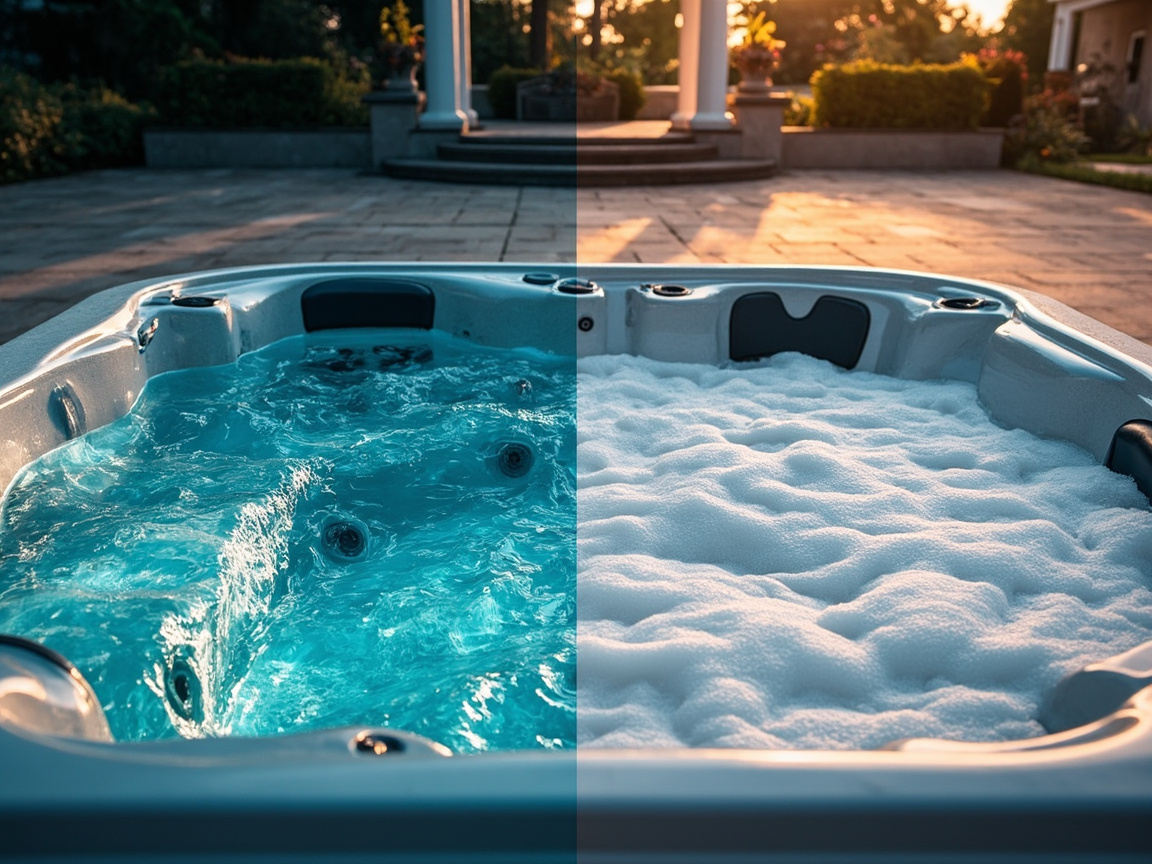
Match the look before you buy another bottle. Wrong pattern = wasted product and another cloudy soak.
Pattern 1 — Milky white after a soak
Classic organics plus low oxidizer. The filter may still look “OK” but is oil-loaded. Water often clears a little when jets run, then turns milk again when the spa sits. This is the pattern where MPS oxidizer plus enzyme prevention shines—after you confirm sanitizer is not at zero.
Pattern 2 — Gray or dull with high filter pressure
Media is packed. Rinse or replace the cartridge before chemistry theater. If pressure is up and returns feel soft, clarifier only glues fines the filter cannot catch. You’ll rinse gray slime out of the pleats and wonder why you waited.
Pattern 3 — Cloudy right after a fresh fill or big pH swing
Precipitation (calcium or metals) or plaster dust on new plaster—balance before clarifier. A big pH crash or spike can drop hardness out of solution as haze. Test TA, pH, and hardness first; sequester metals only if a metals test or fill-water history says so.
Decision tree — what to do next
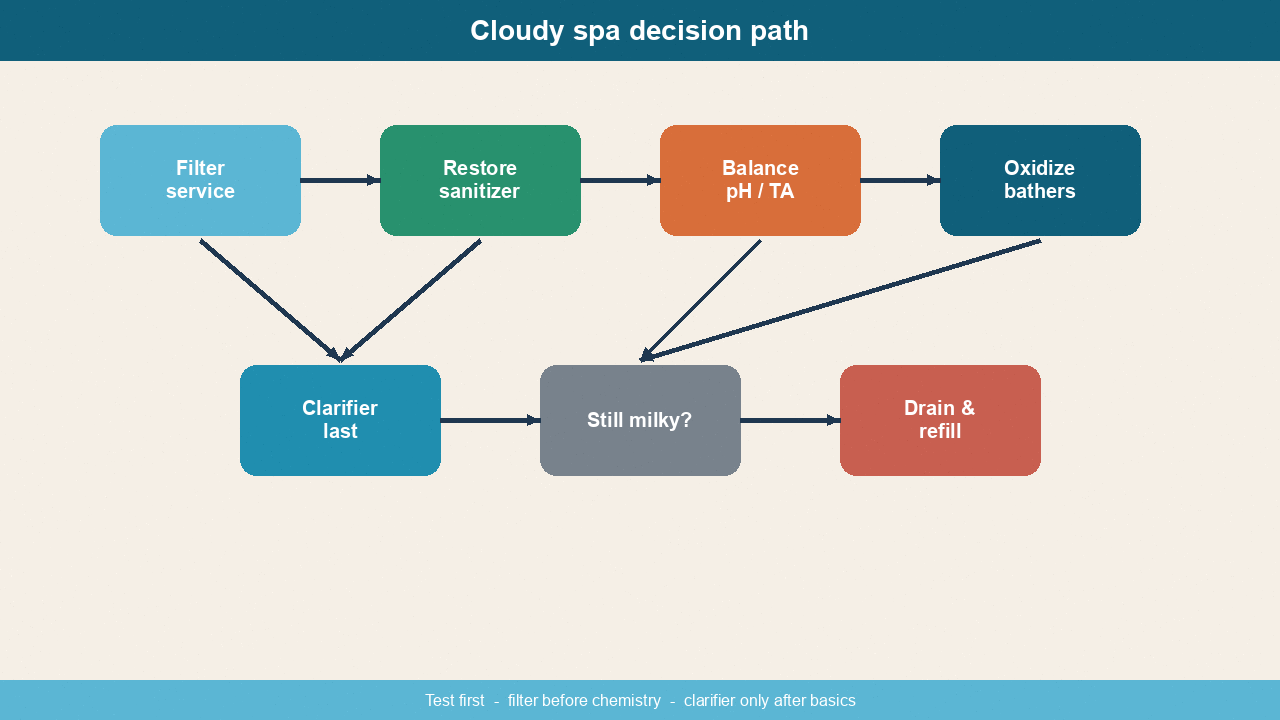
Branch 1 — Filter pressure high or cartridge gray/slimy
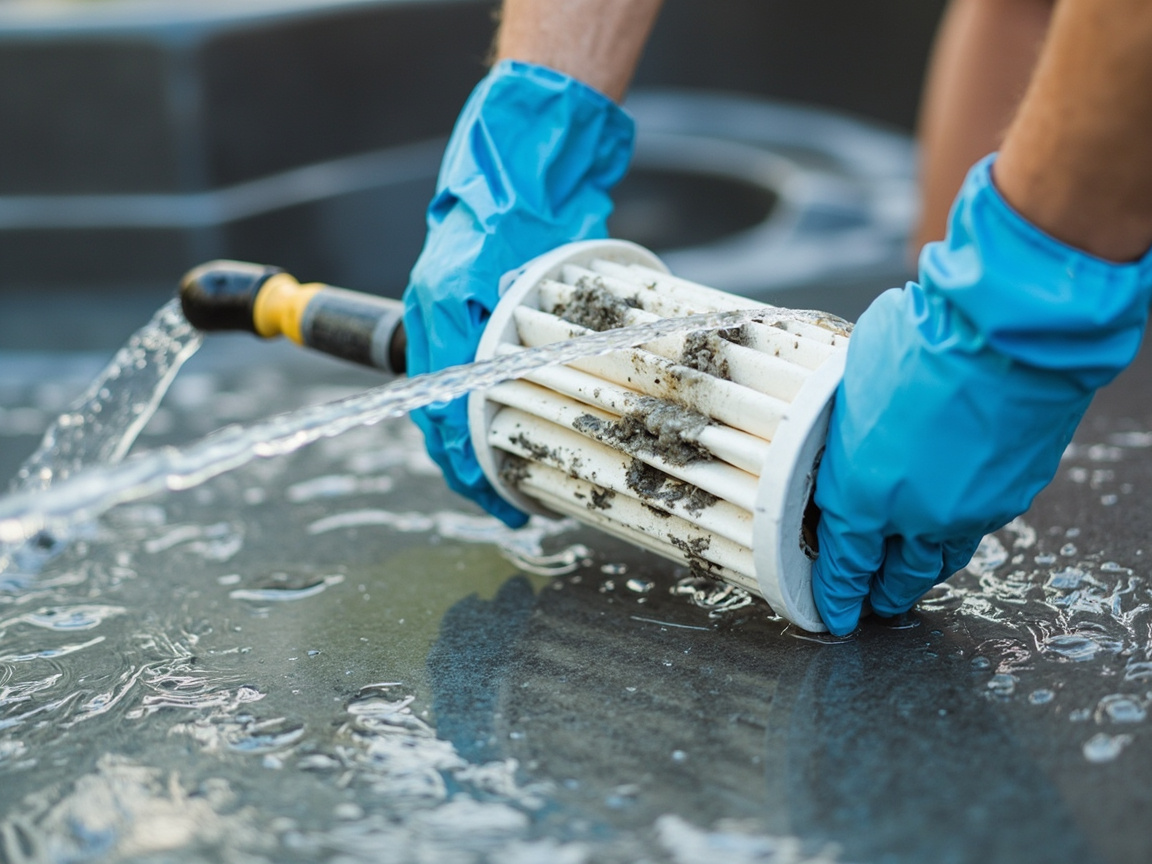
Shut down, remove the cartridge, rinse thoroughly; replace if worn. Do not dose clarifier first.
Branch 2 — Sanitizer (FC or bromine) at or near zero
Restore sanitizer to soaking range per your system; retest after circulation. See free chlorine for chlorine spas.
Branch 3 — pH above about 7.8 or TA wildly out
Balance TA then pH (pH, total alkalinity). Acid work: muriatic acid safety plus the dose tool.
Branch 4 — Sanitizer and pH OK, filter clean, water still milky
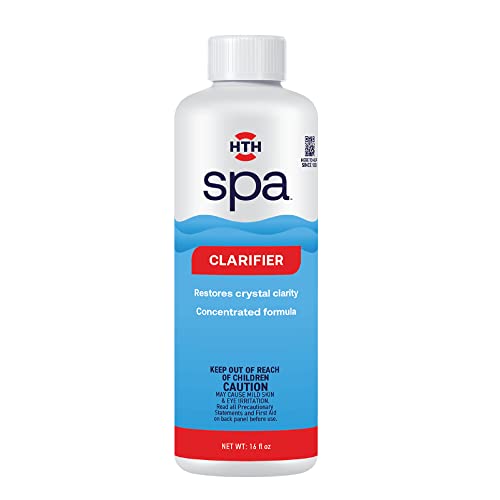
Dose spa clarifier (HTH Spa Clarifier) with jets and filter running; clean the filter again after it catches floc.
Branch 5 — Heavy bather weekend, water dull not green
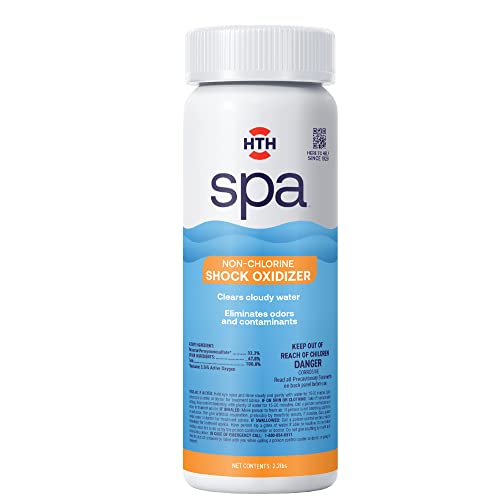
Non-chlorine oxidizer (HTH Spa MPS shock) after confirming the sanitizer path; retest before soak.
Branch 6 — Cloud returns within 24 hours of every fix
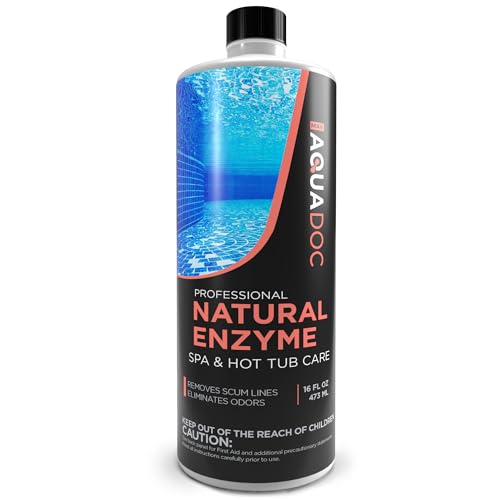
Start weekly enzyme (AquaDoc spa enzyme); audit lotions and detergents; consider drain if TDS is high.
Branch 7 — Past drain interval or calcium/TDS chronically high
Drain, clean the shell, refill, balance from scratch (hot tub startup, water care basics).
Branch 8 — Green tint or visible algae flecks
Treat as algae or sanitizer failure—not clarifier. Raise sanitizer aggressively; clean the filter after die-off.
Test before you dose
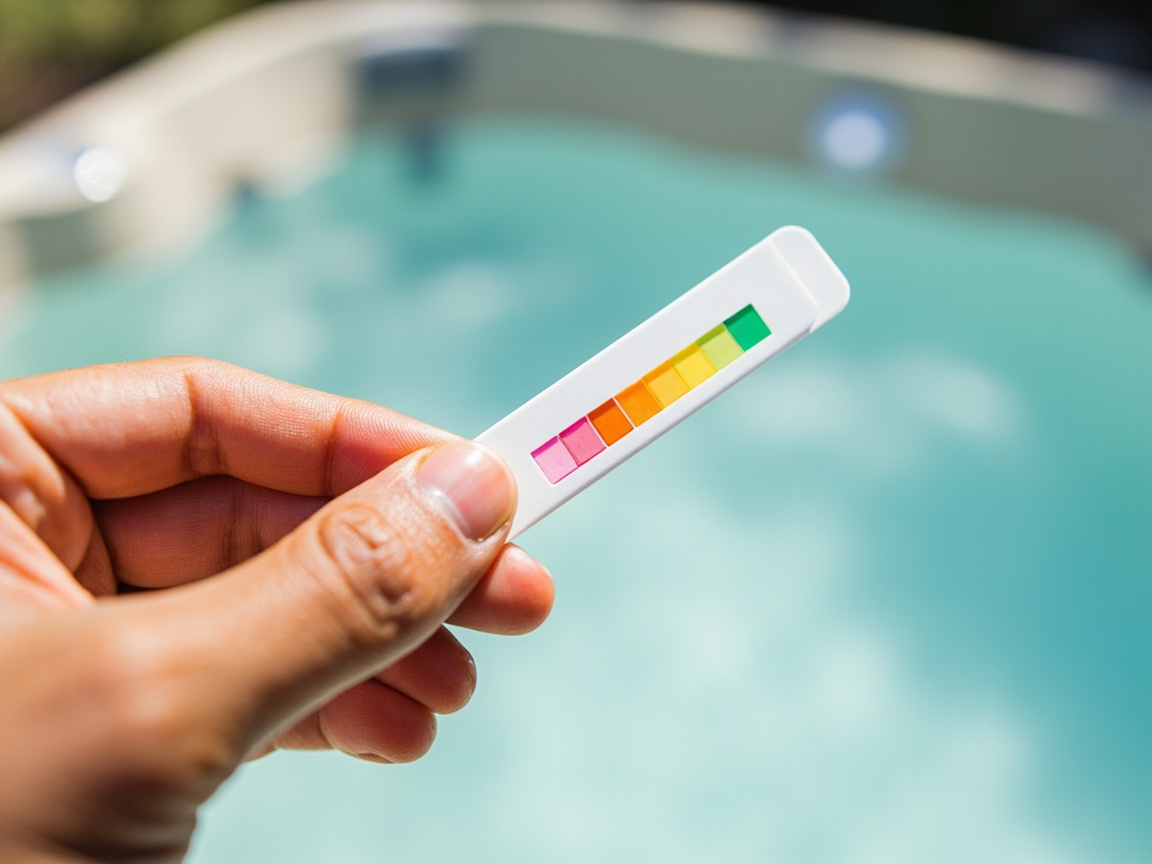
Minimum panel
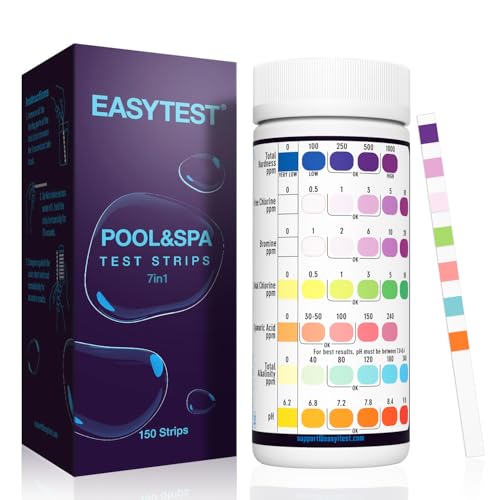
Sanitizer (FC or bromine), pH, TA, and hardness—use EASYTEST 7-Way strips or a spa drop kit. Framework: pool water testing adapted to spa ranges. Dip, hold the strip level, and read inside the bottle window—don’t wave it dry in the sun.
Write the numbers down. A spa that “looked fine last weekend” can sit near zero sanitizer after one covered hot night on a dirty filter. You’re dosing a bathtub, not a lake: small misses show up as big swings. If TA is far off, fix that before you chase pH with acid all evening.
What “good enough to soak” means
Follow your manufacturer’s sanitizer band; never soak on zero sanitizer even if water looks clearer after clarifier. Clarity without a strip reading is still a guess. Hardness only needs a hard look after many top-offs or a fresh fill from a well—don’t treat every cloudy soak like a calcium emergency.
What you’ll need
HTH Spa Clarifier 16 oz
First-line clarifier after filter and chemistry basics. Sized for mild milky haze when numbers already look sane.
Skip if: water is green-tinted or has visible particles that settle—that is filter failure or algae, not a clarifier job.
Don’t use if: you have not cleaned the cartridge in months; you’ll recycle the same haze.
AquaDoc Spa Enzyme 16 oz
Organic load reduction when haze is bather-driven. Fits a weekly maintenance loop.
Skip if: cloudiness started right after a fresh fill with unbalanced calcium or pH—fix chemistry first.
Don’t use if: you’re treating it as a sanitizer; enzyme is not disinfection.
EASYTEST 7-Way strips 150 ct
Diagnosis cadence spas need. Cover FC/bromine, pH, TA, and hardness in one dip.
Skip if: you already use FreshWater or dealer-lab tests weekly and trust those numbers.
Don’t use if: the bottle sat open and pads look bleached—bad strips create bad doses.
HTH Spa Non-Chlorine Shock 2.25 lb
Oxidize waste without always spiking chlorine. Fits bromine systems and short re-entry windows when you retest.
Skip if: FC is already zero and you suspect biofilm—you need a chlorine or bromine sanitizer raise, not oxidizer alone.
Don’t use if: you plan to soak on the clock without a strip; MPS is not a free pass to skip the test gate.
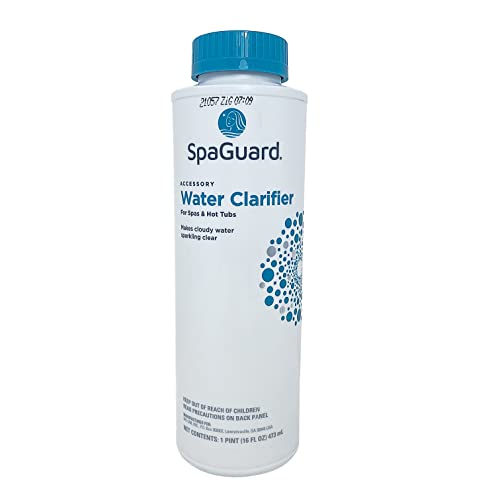
SpaGuard Spa Water Clarifier 1 pt
Upgrade path when commodity clarifier underperforms and the filter is proven clean. Second-line bottle after a clean cartridge and sane sanitizer numbers.
Skip if: you have not cleaned or replaced the spa filter in 3+ months—clarifier will lose.
Don’t use if: you’re stacking two clarifiers the same day; pick one path and run filtration hard.
Step-by-step — clear cloudy spa water
Step 1 — Test and write numbers down
No memory math. Photograph the strip pad if needed. Start with EASYTEST 7-Way strips.
Step 2 — Filter service
Rinse the cartridge top-to-bottom; replace if frayed, crushed, or permanently brown. Reset air relief per maker.
Step 3 — Restore sanitizer and pH/TA
Correct order: TA → pH → sanitizer when balancers are far off. Use the dose tool for acid or base math. Acid handling: muriatic acid safety.
Step 4 — Oxidize if dull from bathers
MPS or chlorine path per system; circulate; keep the cover ajar if the manufacturer allows off-gassing. HTH Spa MPS shock is the usual non-chlorine path for bromine tubs and short re-entry windows. If you run a chlorine spa and the bank is empty, you may need a true chlorine raise—think spa-scaled pool shock math, not a random handful. Either way, write the pre-dose and post-dose numbers down.
Step 5 — Clarifier only after Steps 2–4
Run filtration continuously until clear; expect to rinse the filter again. Start with HTH Spa Clarifier; step up to SpaGuard clarifier only if haze hangs on.
Step 6 — Prevention loop
Shower before soak, weekly AquaDoc enzyme, monthly drain decision, cover clean (hot tub cover care). Rinse swimsuits without fabric softener. Keep a spare cartridge if you host every weekend—waiting three days for a mail-order filter is how cloudiness becomes a lifestyle.
Re-entry after oxidizer (test gate, not folklore)
Spas tempt people to “wait an hour and hop in.” Don’t. After MPS or chlorine oxidation:
- Circulate long enough for the product to mix (jets on, cover cracked if the maker allows).
- Retest FC or bromine with a fresh strip—same EASYTEST pack you used before dosing.
- Confirm the band matches your OEM soaking range, not a pool chart printed for 20,000 gallons.
- Sensory gate last: water should not still look milky, and there should be no harsh chemical bite in the air at the waterline.
If any gate fails, wait, circulate, and retest. Clarity without sanitizer is still unsafe water.
Safety notes
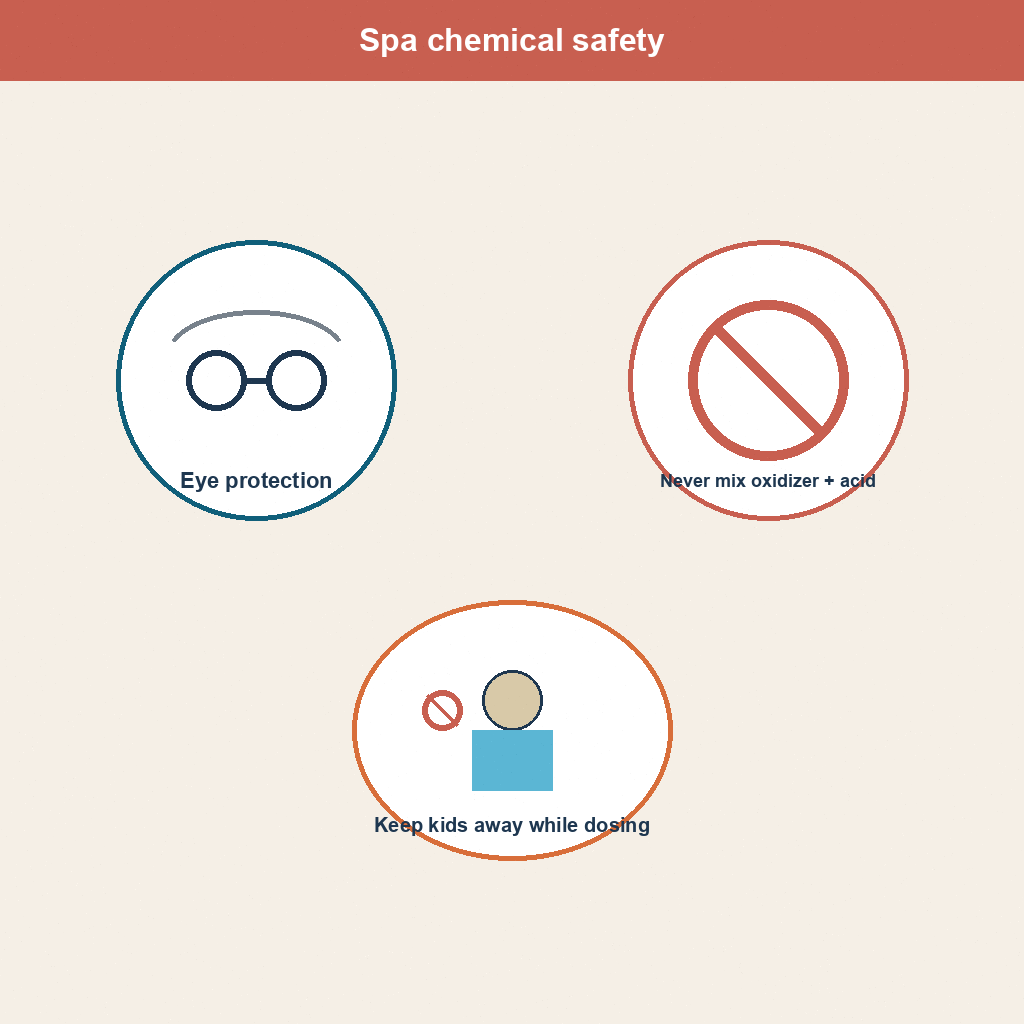
- Never mix oxidizer and acid in the water at the same time—stagger doses and circulate between additions or you risk a violent reaction in a small vessel.
- Retest sanitizer before soaking after shock; clock time is not a substitute for a test strip.
- Eye and skin protection when pouring chemicals; spa chemicals splash in tight pad spaces.
- Kids and pets out of the pad during dosing—concentrates are not bath bombs.
- Store chemicals sealed and separated; oxidizers away from acids and organics in a cool dry spot.
- Ventilation when using acid; outdoor airflow matters—see muriatic acid safety.
- Do not “shock until white”; overdose without testing wastes product and delays a safe soak.
Common mistakes
- Clarifier first, filter never. You glue particles the filter cannot catch. Rinse or replace media, then clarify.
- Soaking on zero sanitizer because water “looks better.” Clarity is not disinfection—confirm with EASYTEST strips.
- Ignoring oils and detergent residue. Swimsuits washed in fabric softener recreate haze overnight—add weekly AquaDoc enzyme.
- Treating spa cloudiness with pool-dose charts blindly. Volumes differ—measure gallons, then use the dose tool for acid or balancer math.
- Never draining. TDS and calcium climb until every fix fails within hours. A 3–4 month residential drain cadence is normal, not failure.
You’ll still need to treat foam as a separate problem when bubbles stack on the surface—see hot tub foaming instead of drowning the spa in clarifier.
When to call a pro
Keep DIY if: you can test, rinse the cartridge, balance TA/pH, and numbers move the right way within 24–48 hours. Most milky-after-soak cases clear with filter service, sanitizer restore, and one oxidizer cycle.
Call a pro if:
- Cloud plus equipment failure—heater errors, pump cavitation, control faults. Fix water after hardware diagnosis so you don’t chase chemistry on a half-dead circulation loop.
- Suspected biofilm in plumbing—persistent smell or slime after correct chemistry may need purge products and a pro flush of the lines and jets.
- Skin rash or illness after soaking—stop use; seek medical advice; professionally sanitize before the next fill. This page is water care only.
- Cloudiness returns within hours after a full drain, balance, and new filter—source-water metals or a hidden equipment bypass may need lab help.
If you’re draining yourself, follow hot tub startup order on the refill so you don’t recreate the same imbalance on day one.
What to buy only if needed
Skip this shelf until the filter is clean and the test strip shows a real sanitizer reading. Most cloudy nights don’t need a new brand—they need service order.
Only if the cartridge is older than one heavy season or damaged
Replacement cartridges beat endless HTH Spa Clarifier. Frayed ends, crushed pleats, or a permanent gray oil ring mean the media is done.
Only if enzyme for 3 weeks still loses to oils
Review bather habits; consider purge plus drain rather than more bottles of AquaDoc enzyme. Lotion, softener residue, and skipped showers beat any weekly pour.
Only if metals test positive after fill
Sequestrant path—not more clarifier. Fresh-fill haze that returns after every balance pass often traces to well water or aging heaters, not “weak clarifier.”
Only if you cannot get reliable strip reads
Upgrade testing habits or get a dealer lab once to recalibrate—don’t dose blind with HTH Spa MPS.
Only if commodity clarifier underperforms on a proven-clean filter
Step up to SpaGuard Spa Water Clarifier. Use it after the cartridge rinse and sanitizer restore—not as the first move on a dirty tank.
Related
- Hot tub water care basics
- Hot tub foaming — foam is not cloudy
- Cloudy pool water — pool sister path
Key takeaways
- Filter-first, then chemistry, then clarifier. If the cartridge is packed, no bottle fixes the haze for long.
- Spas cloud faster than pools: heat + low volume + oils. Four adults can outrun a dirty filter overnight.
- Test sanitizer and pH before any “clear in one hour” claim. Clarity without a reading is a guess.
- MPS oxidizer helps dull bather waste; it is not a sanitizer substitute on empty banks. Restore bromine or chlorine first.
- Drain on a 3–4 month residential interval, or sooner when fixes fail within hours and TDS has climbed.
- Foam and cloudy are different problems—don’t dose clarifier for bubbles stacked on the surface.
- Retest before soak after any oxidizer. Clock time is not a gate; the strip is.