Quick answer
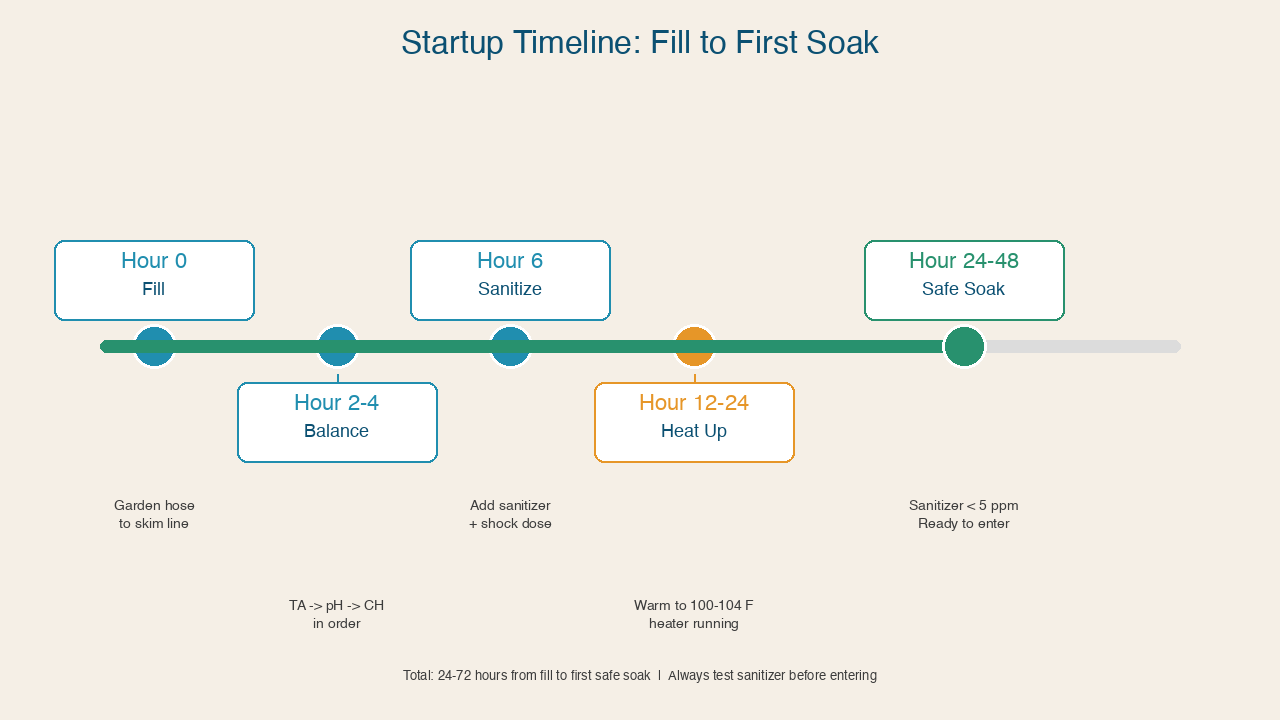
A hot tub startup is the one-time first-fill commissioning that takes a new or used spa from empty shell to safe-to-soak. Test the fill water, then balance in order: total alkalinity (80-120 ppm), pH (7.4-7.6), calcium hardness (150-250 ppm). Add sanitizer and shock, then wait until chlorine drops below 5 ppm before your first soak. Used tubs need a plumbing purge first; new tubs skip straight to balancing. Plan 24-72 hours total including heat-up.
What this is not (startup vs other spa tasks)
Startup is not ongoing weekly water care
Startup establishes baseline chemistry once. After it’s done, you switch to the weekly routine in hot tub water care basics. The two aren’t interchangeable — startup uses higher initial sanitizer doses and follows a strict addition order that weekly care doesn’t.
Startup is not a pool spring opening
Pool opening and spa startup share surface steps but differ in volume, temperature, and concentration. A 400-gallon spa at 104°F burns sanitizer 4-6x faster than a 15,000-gallon pool at 80°F, and pool doses added directly to a spa spike readings dangerously. See how spa chemistry differs from pool chemistry and the pool opening procedure.
Startup is not draining and refilling
Draining for routine water replacement every 3-4 months is maintenance, not startup. Startup happens once — when the spa is brand new, newly purchased used, or reopened after 6+ months of shutdown. After a routine drain-and-refill, follow the weekly protocol; the purge step is unnecessary.
How spa startup differs from pool startup
Water volume and chemistry concentration
A typical hot tub holds 200-500 gallons versus 10,000-25,000 for a pool. Every chemical addition is amplified — 1 oz of dichlor in 400 gallons produces a much higher chlorine spike than the same dose in 15,000 gallons. Use the chemical dose calculator to avoid over-treating.
Temperature and sanitizer burn rate
Hot tubs run at 100-104°F. At those temperatures chlorine degrades 2-3x faster than in a 78-82°F pool. Bromine is more heat-stable, which is why many spa owners pick bromine over chlorine for startup.
Bather load ratio
Four people in a 400-gallon hot tub equal the contamination load of roughly 160 people in a 16,000-gallon pool. Startup has to establish a strong sanitizer reserve because the first soak dumps a massive organic load into a tiny water volume.
Before you fill: the startup decision tree
What the decision tree covers
Work through these seven questions before turning on the hose. The answers determine whether you need a purge, what to add first, and when the tub is safe to enter.
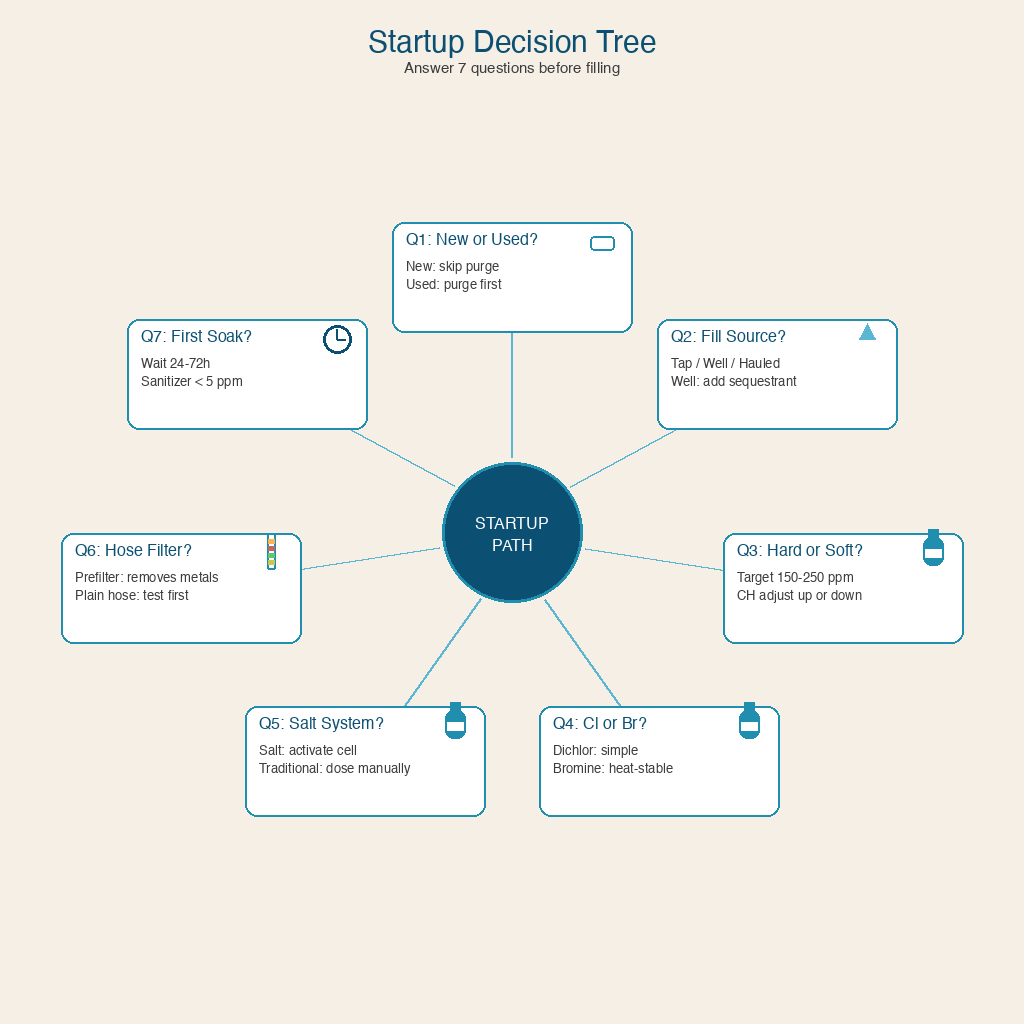
Q1: Is this a brand-new or used/pre-owned hot tub?
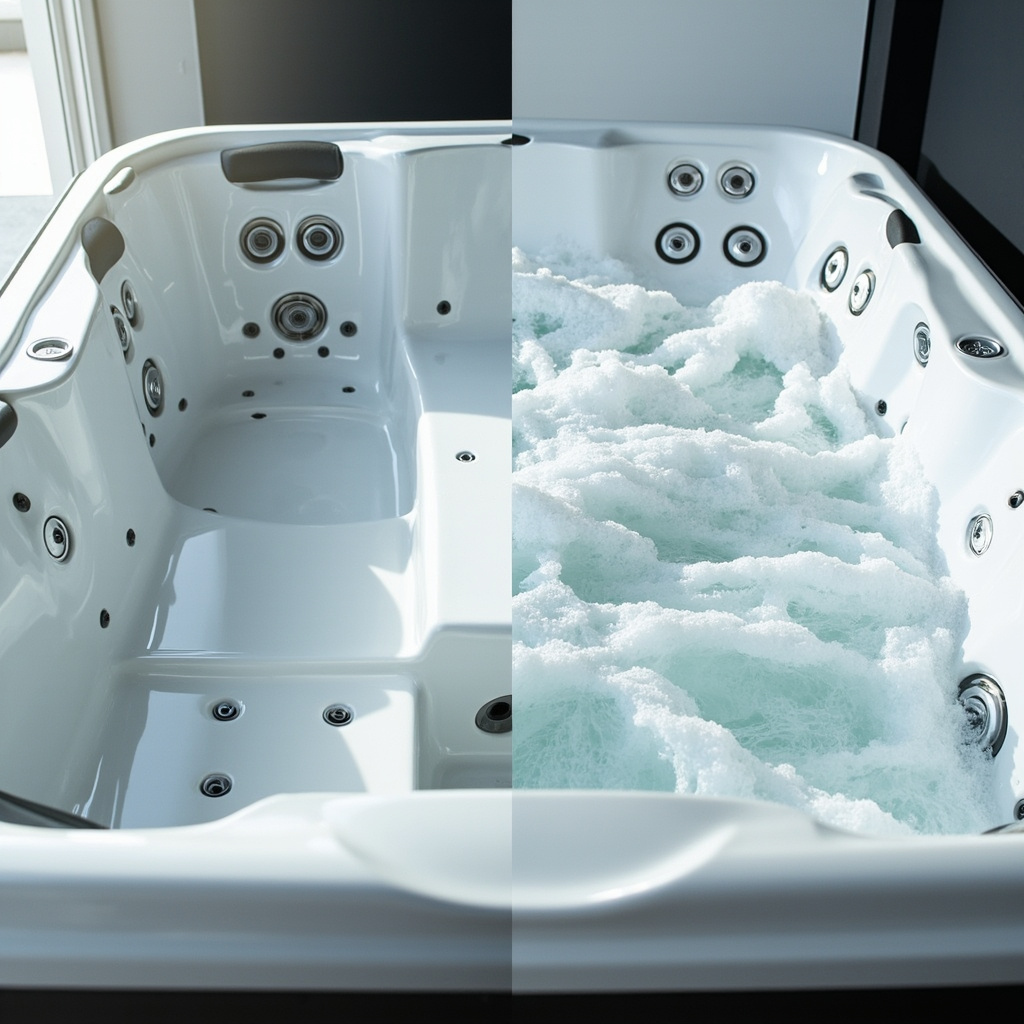
A new hot tub from a dealer needs minimal prep — wipe the shell, install the filter, and fill. A used tub (especially one that sat unused for months) needs a plumbing purge to flush biofilm from pipes you can’t reach. Skipping the purge on a used tub is the most common cause of cloudy, smelly water after startup.
Q2: Where is your fill water coming from?
Municipal tap water is the easiest baseline. Well water often contains iron, manganese, or copper that stains spa surfaces — add a metal sequestrant before balancing. Hauled water varies by source. Test fill water before adding any chemicals.
Q3: Is your fill water hard or soft?
Hard water above 200 ppm calcium hardness risks scale on the heater element and cloudy water. Soft water below 100 ppm is corrosive to spa components. Target 150-250 ppm — lower than the 200-400 ppm pool target because high heat amplifies scaling. See calcium hardness.
Q4: Chlorine (dichlor) or bromine sanitizer path?
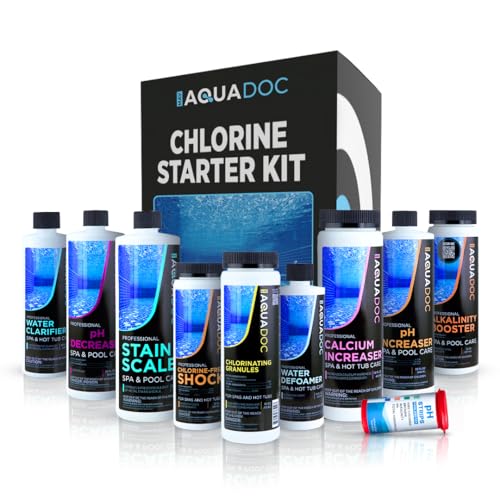
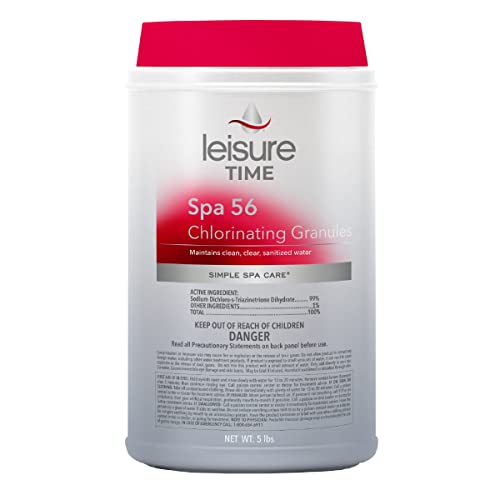
Leisure Time Spa 56 dichlor granules are the simplest startup sanitizer — fast-dissolving, no floater needed initially. Bromine requires two steps: add sodium bromide bank first, then oxidize with shock. Bromine is more stable at spa temperatures and less smelly, but the setup is more involved. First-time owners typically start with the AquaDoc chlorine starter kit and may switch to bromine later.
Q5: Is this a saltwater spa system?
Saltwater spas use a chlorine generator cell instead of manual dichlor. Startup differs: balance TA, pH, and CH first, but instead of granular chlorine add salt to the manufacturer’s specified ppm and activate the cell. The cell takes 24-48 hours to produce enough chlorine for the first soak.
Q6: Are you filling from a garden hose or a pre-filtered source?
A garden hose can introduce sediment, metals, and hose-manufacturing chemicals. A hose pre-filter removes chlorine, metals, and sediment before water enters the tub. Optional for municipal water but strongly recommended for well water.
Q7: How soon after filling can you get in?
After balancing and adding sanitizer, wait for the water to reach 100°F+ and for the sanitizer to drop to a safe range. For chlorine: wait until FC reads below 5 ppm (typically 12-24 hours). For bromine: wait until below 6 ppm (typically 24-48 hours). Do not soak with FC above 10 ppm — it can cause skin and lung irritation.
What you’ll need
The AquaDoc Chlorine Hot Tub Starter Kit bundles chlorine granules, pH up/down, calcium increaser, metal prevent, defoamer, and test strips in one box — the simplest path for first-time spa owners on the chlorine route. Skip the bundle if you already have chemicals on hand.
For individual components:
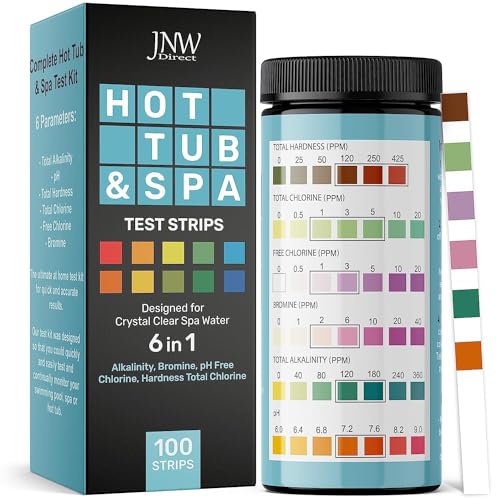
- Test strips — JNW Direct 6-in-1 spa test strips read chlorine/bromine, pH, total alkalinity, calcium hardness. 100 strips per bottle.
- Dichlor sanitizer — Leisure Time Spa 56 Chlorinating Granules dissolve fast and are stabilized for spa temperatures.
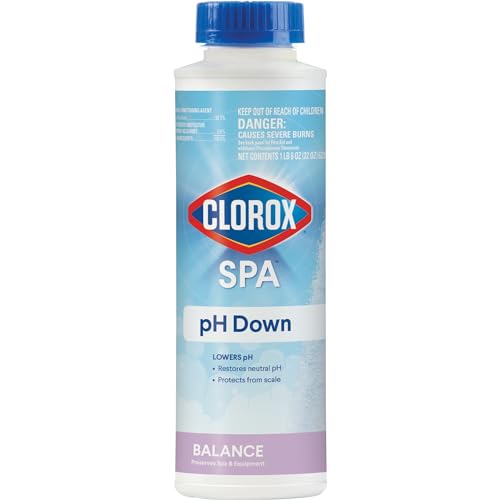
- pH down — Clorox Spa pH Down is sodium bisulfate — lowers pH without muriatic acid fumes.
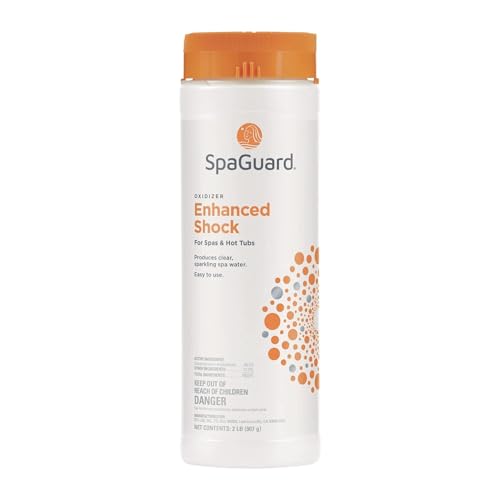
- Spa shock — SpaGuard Enhanced Shock oxidizes organic contaminants after the first fill.
See the pool test strips reference for strip selection.
The first-fill protocol: step-by-step
The 9-step sequence at a glance
The full startup runs from purge through first-soak clearance. Step 1 (purge) applies to used tubs only; new tubs start at Step 2.
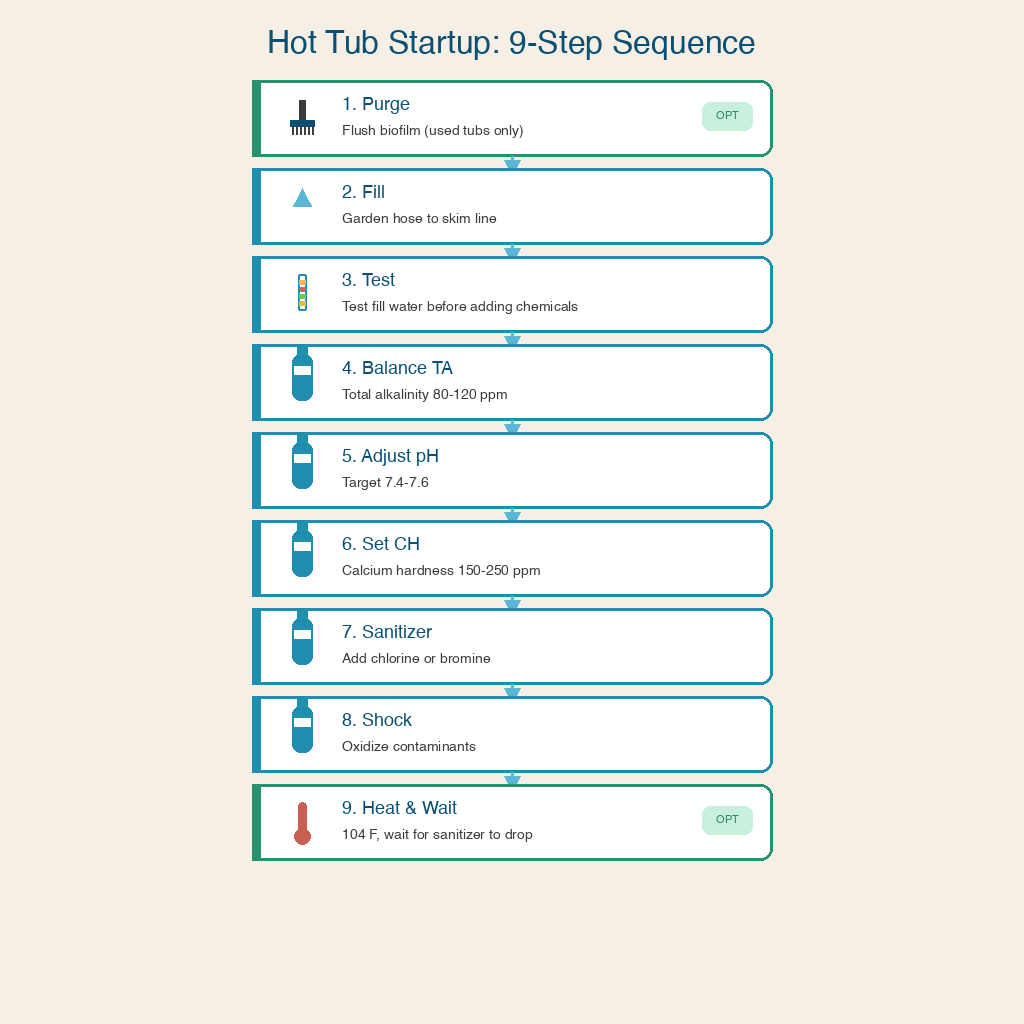
Step 1: Purge and clean (used tubs only)
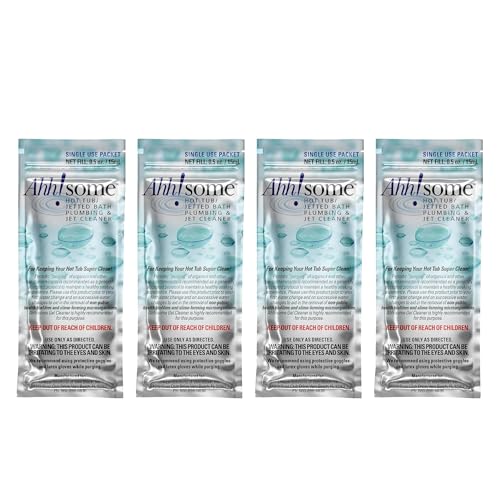
If your spa is used or has sat unused for 3+ months, run a plumbing purge before filling. Ahh-Some Hot Tub Cleaner and Purge flushes biofilm from jet lines, pipes, and heaters. Fill halfway, add the purge per label, run jets on high for 30 minutes, then drain completely and rinse the shell. New tubs skip this step.
Step 2: Fill to the correct level
Fill until water covers the highest jet by 1-2 inches. Use the chemical dose calculator with your exact gallon capacity — most 4-6 person tubs hold 300-450 gallons. If filling from a garden hose with well water, consider a hose pre-filter.
Step 3: Test fill water before adding anything
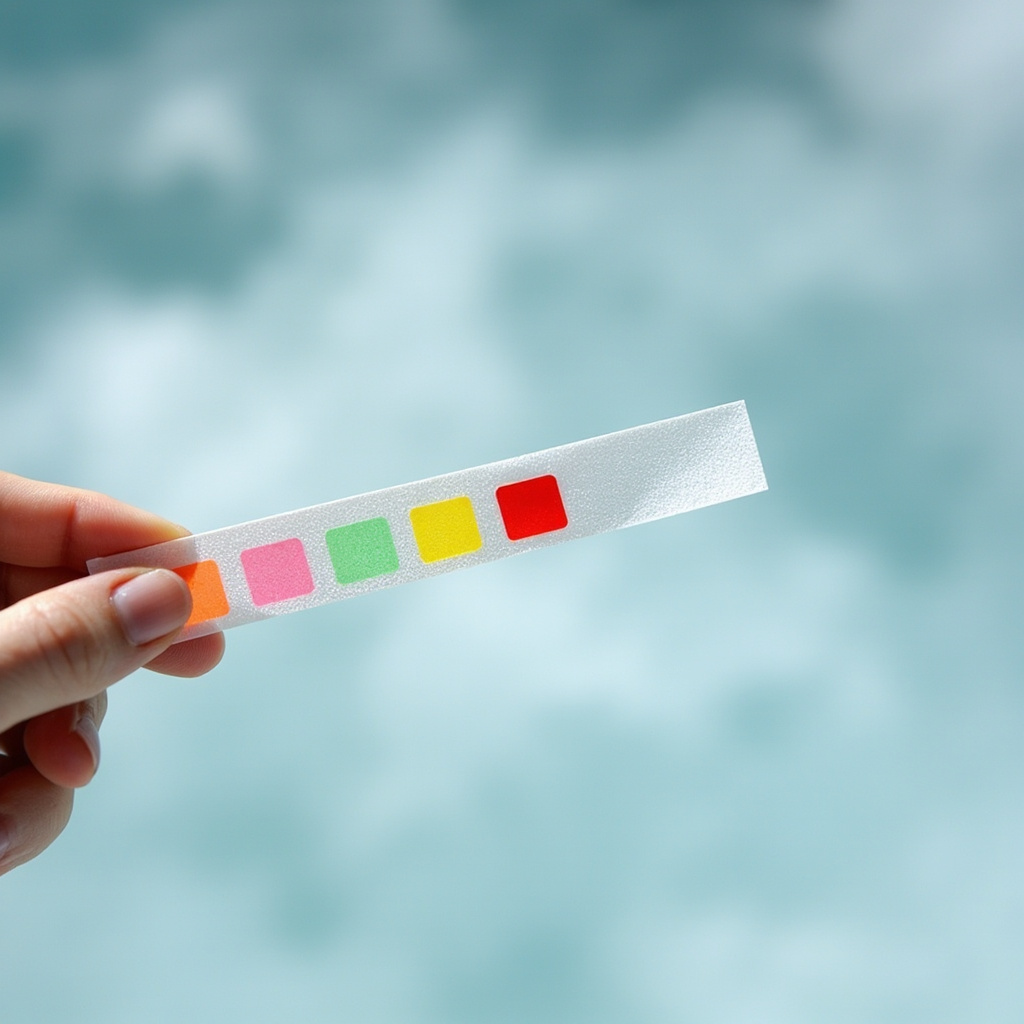
Dip a 6-in-1 spa test strip and read TA, pH, CH, and sanitizer. Write down the baseline — this tells you what needs adjusting. See pool water testing fundamentals for strip-reading technique.
Step 4: Balance total alkalinity first (80-120 ppm)
TA is the pH buffer — if TA is wrong, pH drifts uncontrollably. Add TA increaser (sodium bicarbonate) if below 80 ppm; add Clorox Spa pH Down in small doses if above 120 ppm. Run the pump for 30 minutes, then retest before moving on. Read the total alkalinity guide for dose charts.
Step 5: Adjust pH to 7.4-7.6
With TA locked in, adjust pH. If above 7.8, add Clorox Spa pH Down in half-doses and retest after 30 minutes of circulation. If below 7.2, add a pH increaser (sodium carbonate) sparingly. See pH chemistry for the spa-specific target.
Step 6: Set calcium hardness (150-250 ppm)
If below 150 ppm, add calcium hardness increaser to protect the heater and plumbing from corrosion. If above 250 ppm, partially drain and refill with softer water. Spa CH targets run lower than pool targets (200-400 ppm) because hot water precipitates calcium faster.
Step 7: Add sanitizer (chlorine or bromine)
For chlorine: add Leisure Time Spa 56 dichlor at the startup dose (typically 1-2 tsp per 500 gallons, per label). Dissolve in a bucket of spa water first, then pour near the return jet with the pump running. For bromine: add sodium bromide per label to build the bank, then shock to activate.
Step 8: Shock the water
Add SpaGuard Enhanced Shock to oxidize fill contaminants — dust, hose residue, manufacturing oils on a new tub. Run the pump and leave the cover cracked for 20-30 minutes to let gases escape. See pool shock chemistry.
Step 9: Heat and wait before first soak
Set the thermostat to 100°F. Heating from fill temperature (50-70°F) takes 12-24 hours for a 400-gallon tub depending on heater wattage. Once at temperature, test sanitizer — don’t enter until FC is below 5 ppm or bromine below 6 ppm. Re-verify calcium hardness after heating, since temperature shifts move the saturation index.
What to buy only if needed
Only if you have a used or long-stored hot tub
The Ahh-Some plumbing purge is necessary for used tubs — biofilm in jet lines defeats any chemical balancing afterward. New tubs from a dealer skip it.
Only if your fill water has CH above 250 ppm
If your tap water is already hard, consider a hose pre-filter or partial fill with distilled water. Adding calcium increaser is unnecessary and pushes CH into scale-forming territory.
Only if you have well water with metals
Iron and manganese in well water cause staining within hours of fill. Add a metal sequestrant before balancing pH — if pH rises above 7.8 with metals present, staining accelerates.
Common mistakes
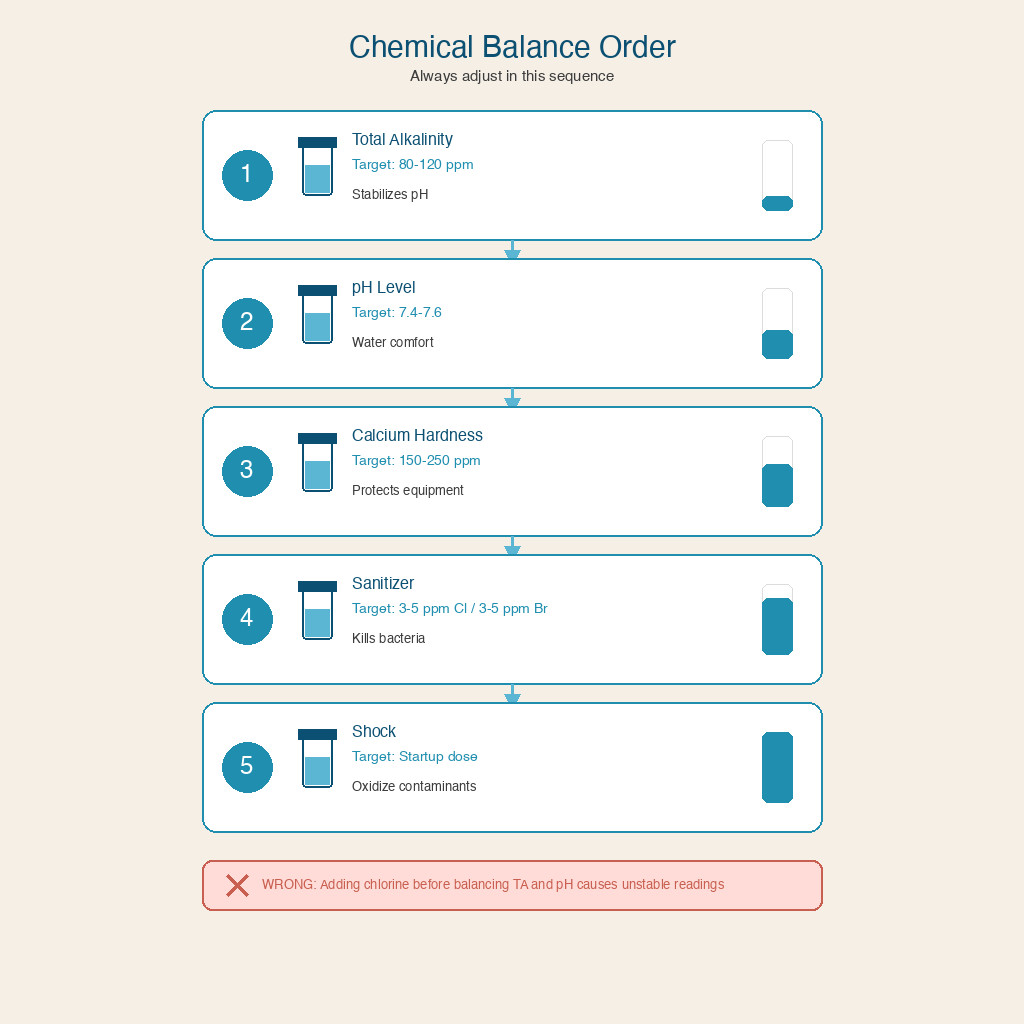
- Adding chemicals in the wrong order. Always balance TA first, then pH, then CH, then sanitizer, then shock. Adding chlorine before balancing pH wastes chlorine — high pH renders chlorine about 50% less effective. Start with the buffer (TA), then the target (pH), then the protectant (CH), then the sanitizer.
- Skipping the purge on a used tub. Biofilm in jet lines can’t be reached by normal sanitizer levels. Without a purge, the water turns cloudy and smells within days regardless of how much chlorine you add. Budget 1 hour for the purge — it saves weeks of fighting murky water.
- Using pool chemical doses in a spa. Pool doses are calculated for 10,000+ gallon volumes. In a 400-gallon spa, a “pool dose” of dichlor can spike FC above 20 ppm — unsafe for soaking and corrosive to components. Always dose by actual gallon capacity using the dose calculator.
- Soaking before sanitizer drops to safe levels. Entering the tub with FC above 10 ppm or bromine above 10 ppm can cause chemical burns, lung irritation, and damage to swimwear. Wait 12-48 hours after the initial shock before the first soak.
- Filling past the skimmer and flooding the equipment area. Overfilling can submerge the air controls and cause water to backflow into the equipment bay. Fill to 1-2 inches above the highest jet, not to the rim.
Safety notes (read this)
Chemical storage
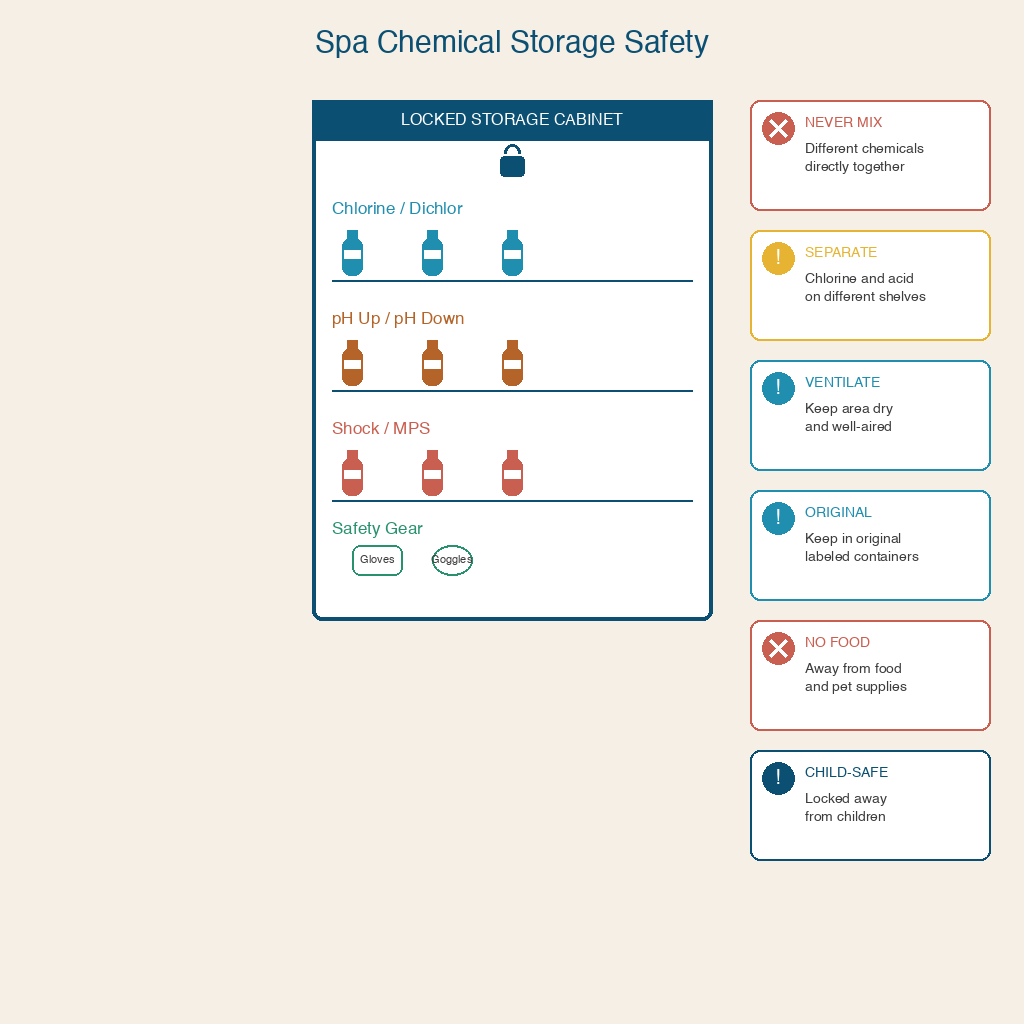
Store all spa chemicals in original containers in a cool, dry, well-ventilated area. Never store chlorine and acid products next to each other — mixing them can release toxic chlorine gas. Lock the storage area to keep children and pets away from concentrated chemicals.
Never mix chemicals directly
Always dissolve each chemical separately in a bucket of spa water before pouring into the tub. Adding granular chlorine directly on top of pH down creates a dangerous exothermic reaction. Add chemicals one at a time, circulating between additions.
Wear gloves and eye protection
Spa chemicals are caustic at full concentration. Wear rubber gloves and safety glasses when handling granular chlorine, pH adjusters, and shock.
Keep children and pets away during startup
Chemical levels during startup are higher than during normal use. Keep children and pets away during balancing and shocking. Store chemicals away from food areas — a locked garage cabinet is ideal.
Avoid breathing chemical dust
When measuring granular chlorine or pH adjusters, avoid inhaling the dust. Measure in a well-ventilated area or outdoors. Pre-dissolving in a bucket of water eliminates most dust exposure.
When to call a pro
Consider calling a spa service technician if:
- Your used tub has not been used in over a year. Deep biofilm and mineral deposits in the heater core may need professional descaling beyond a consumer-grade purge.
- Water won’t clear after 72 hours of balancing and shocking. Persistent cloudiness usually indicates a filter problem (worn cartridge, incorrect size) or an equipment issue (air lock, low flow).
- Your fill water has extreme chemistry. CH above 400 ppm or pH above 8.5 out of the tap may require a water softener or professional pre-treatment.
- You smell gas or burning plastic during heat-up. Shut off power immediately and call a licensed electrician or spa technician — this indicates a wiring or heater element fault, not a chemistry issue.
Related
- Hot tub water care basics — what to do after startup is complete (weekly maintenance routine)
- Spa vs pool chemistry — why spa startup chemistry targets differ from pool targets
- Chemical dose calculator — calculate exact chemical amounts for your spa’s gallon capacity
Key takeaways
- Startup is a one-time commissioning — distinct from weekly maintenance and quarterly drain-refills.
- Always balance in order: TA (80-120) → pH (7.4-7.6) → CH (150-250) → sanitizer → shock.
- Used tubs require a plumbing purge before fill; new tubs skip straight to balancing.
- Spa doses are smaller than pool doses — use the dose calculator for your exact gallon capacity.
- Wait for sanitizer to drop below 5 ppm FC (or 6 ppm bromine) before the first soak.
- Bromine is more heat-stable but needs a two-step activation; chlorine (dichlor) is simpler for first-timers.
- Pre-filter garden hose water if you have well water with metals.