If the water smells off, the eyes sting after a soak, or foam sits on the surface the next morning, the fix is rarely another chemical — it’s a rhythm. Get the rhythm right in year one and the spa stays clear, the bathers stay comfortable, and you stop buying things you don’t need.
Quick answer
Hot tub water care is not pool water care shrunk down to 400 gallons — hot water accelerates chemistry so mistakes concentrate fast. Test bromine, pH, total alkalinity, and calcium hardness before every dose. Drain and refill every 3 to 4 months, shock weekly with a non-chlorine oxidizer (MPS), and default to bromine over chlorine. Bromine stays active after binding contaminants and smells less, which is why every spa manufacturer recommends it.
What this is not — clear up the confusion first
Hot tub care is not small pool care
A 400-gallon spa at 102 °F is roughly ten times more reactive than a 15,000-gallon pool at 82 °F. Most indoor and covered spas don’t lose sanitizer to UV — skip CYA, since adding it makes bromine sluggish. The test-strip reading guide explains what each 7-way strip parameter means in spa context.
What “shock” means in a hot tub
Pool shock is high-dose chlorine. Hot tub shock is almost always a non-chlorine oxidizer (MPS) that burns out organic waste and bromamines without raising chlorine high enough to damage acrylic shells. Use chlorine shock only on a confirmed bacterial bloom or at refill. The pool vs spa shock comparison has the chemistry detail.
What bromine is not
Bromine stays active after binding to contaminants — it forms bromamines that still kill bacteria; chlorine’s equivalent (chloramines) are mostly “used up.” That is why hot tubs default to bromine. Chlorine still works, but you will shock more often and lose sanitizer faster.
How spa chemistry differs from a pool
A 300–500 gal hot tub at 100–104 °F with jets and a heavy bather load is roughly ten times more reactive than a 15–20k gal pool at 78–86 °F. Drain/refill drops from years to every 3–4 months. Adding CYA locks bromine into a slow-release state strips can’t measure — over-CYA’d tubs cannot be shocked back to clarity without draining. Skip CYA unless you run an uncovered outdoor spa in full sun.
Aeration and high temperature push pH up quickly. Every jet cycle drives carbon dioxide out of the water. You’ll often need a pH Down dose with sodium bisulfate — our pick for spa use once a week or more.
Decision tree: which system are you actually running?
-
Indoor or covered most of the time (most residential spas) — use bromine: 1-inch tablets in a floater + weekly non-chlorine shock.
-
Always uncovered outdoor, full sun — use chlorine or saltwater (chlorine generator).
- Already have a saltwater chlorine generator? Use the salt system.
-
Default: 1-inch bromine tablets in a floater at the minimum opening — adjust up if strips show bromine below 3 ppm.
-
Pick chlorine instead if: you have a salt chlorine generator, you are sensitive to bromine, or your store does not stock bromine.
-
Pick non-chlorine shock (MPS) for weekly oxidation regardless of which sanitizer you run.
How often will you drain and refill?
- 2–3 light users, weekly shock → every ~4 months
- 3–4 regular users, weekly shock → every ~3 months
- Heavy use, hard source water → every 6–8 weeks
Run the chemical dose calculator before your first 5 doses — spa numbers are pool numbers divided by a much smaller water volume.
What you’ll need — spa water care kit
7-way test strips
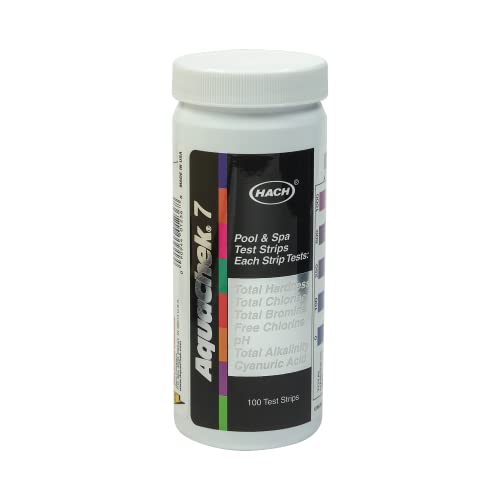
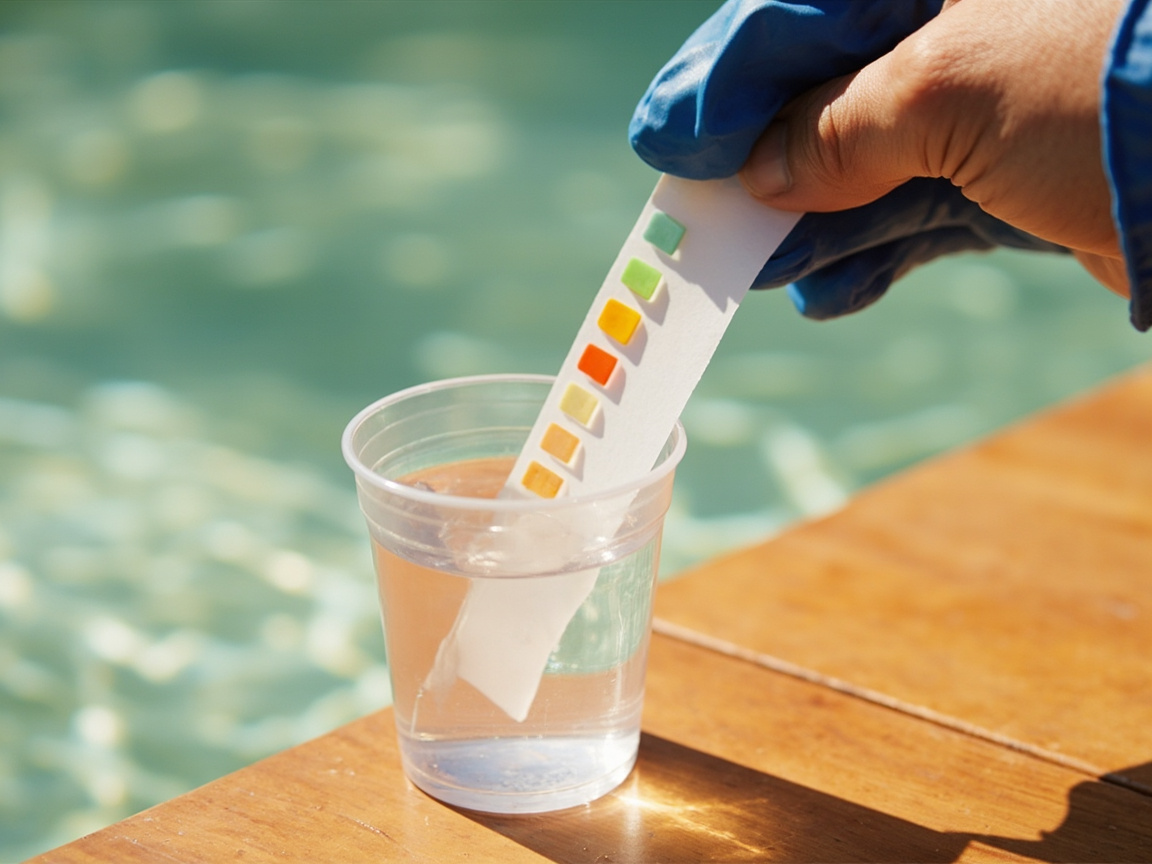
A 7-way strip covers bromine, free chlorine, total chlorine, pH, total alkalinity, calcium hardness, and cyanuric acid on one dip. Strips dry out once opened, so buy a smaller count bottle.
AquaChek 7-Way Pool and Spa Test Strips (100 count) is our pick because every parameter your spa cares about is on one strip. See the spa test strips decision guide.
Bromine tablets (1-inch, slow-dissolving)
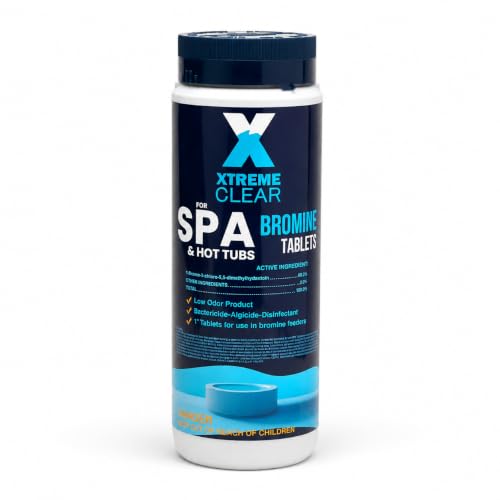
A 1.5-lb bottle of 1-inch bromine tablets lasts roughly the same drain cycle (3–4 months). Tabs lose potency in a humid garage once opened.
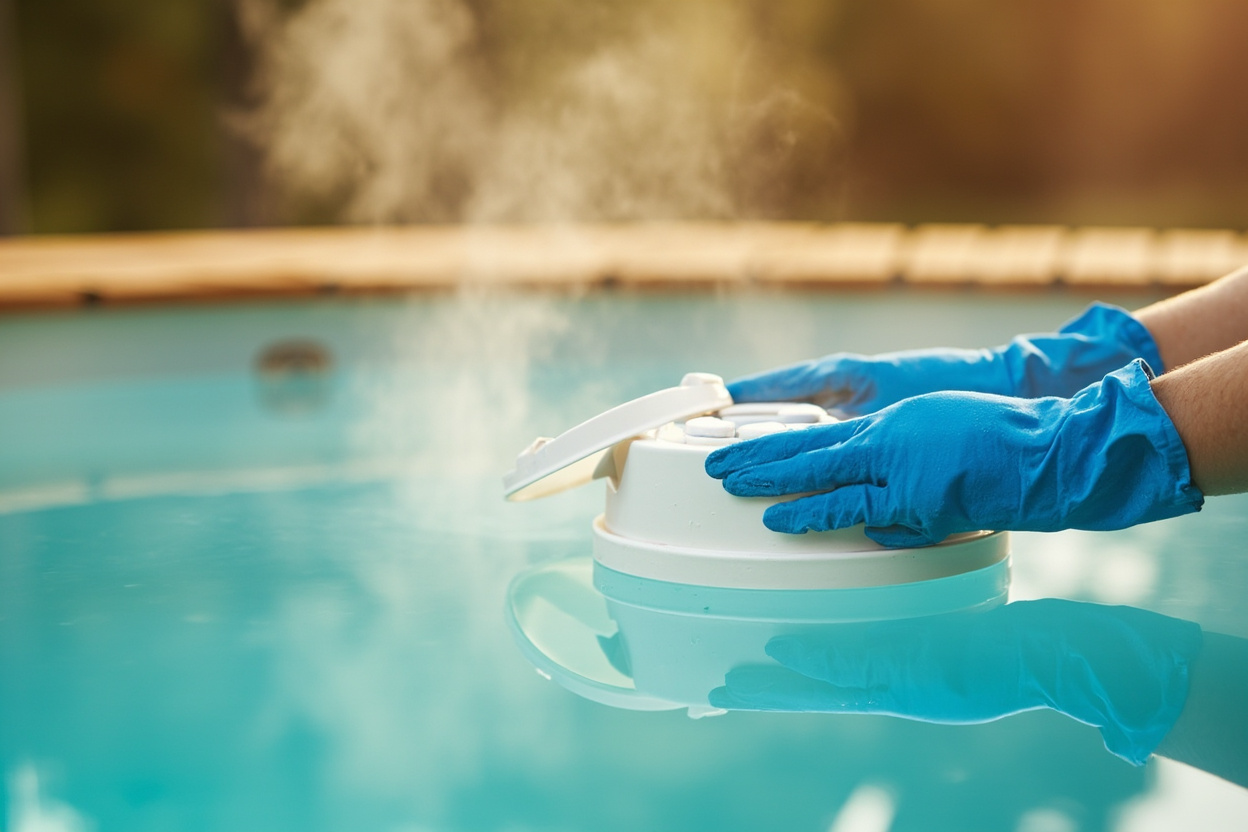
Xtremeclear Bromine Tablets, 1.5 lb are 1-inch slow-dissolving tabs in a 1.5-lb bottle sized for a drain cycle.
pH Down (sodium bisulfate)
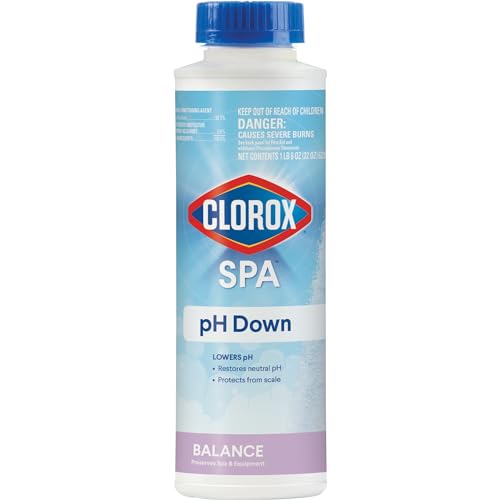
A 22-oz jar of dry acid (sodium bisulfate) covers the entire drain cycle of most spas. Use the chemical dose calculator for the exact number.
Clorox Pool & Spa pH Down, 22 oz dissolves cleanly in spa water. Muriatic acid is stronger but harder to dose in small volumes.
Non-chlorine shock oxidizer (MPS)
A 2-lb jar of non-chlorine shock lasts roughly two drain cycles. Dose weekly, after heavy use, or whenever the water starts to smell “off” but bromine is still in range.
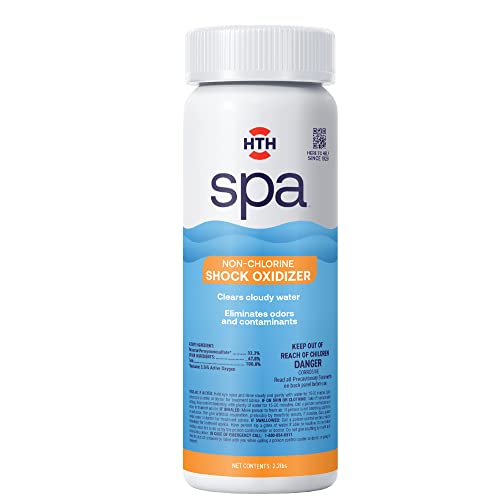
HTH Spa Non-Chlorine Shock Oxidizer, 2.25 lb is low odor and dissolves quickly. Skip chlorine shock unless you have a confirmed bacterial problem.
Filter cleaner
Skipping monthly filter cleaning is the fastest way to ruin a heating element or burn out a pump. Oils and scale bake into the cartridge when the heater runs at 104 °F.
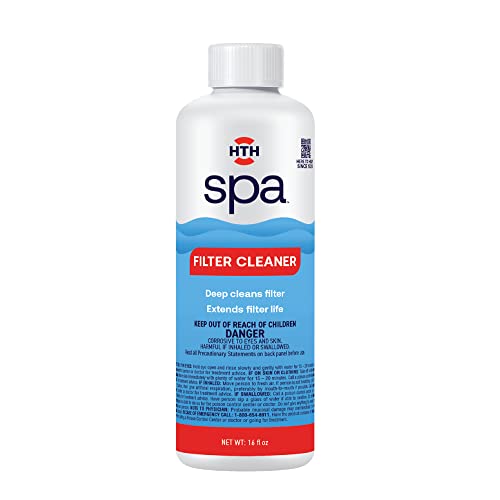
HTH Spa Filter Cleaner, 16 oz is a spray-on, no-soak formula (clean, rinse, dry, reinstall in 20 minutes). For heavily scaled filters, soak overnight with SpaGuard Filter Cleaner, 1 quart.
Weekly care — a routine that fits a real calendar
The 5-minute weekly check
Every 7 days (after heavy use, sooner):
- Test with a 7-way strip: bromine (3–5 ppm), pH (7.2–7.8), TA (50–80 ppm for a bromine spa), and CH.
- Skim the surface with a net — leaves and debris are the cheapest source of organics.
- Wipe the waterline with a soft cloth — biofilm starts there.
- Run jets 5–10 minutes to mix chemistry if you’ve added anything.
- Log the strip result + the date.
The 10-minute weekly dose
- Adjust pH first (always before adding sanitizer unless pH locked the sanitizer — dose pH Down with jets off, let it circulate, retest in 30 minutes).
- Top up the bromine floater if tablets are below the line — open one notch wider if the strip reads under 3 ppm, close one notch if over 6 ppm.
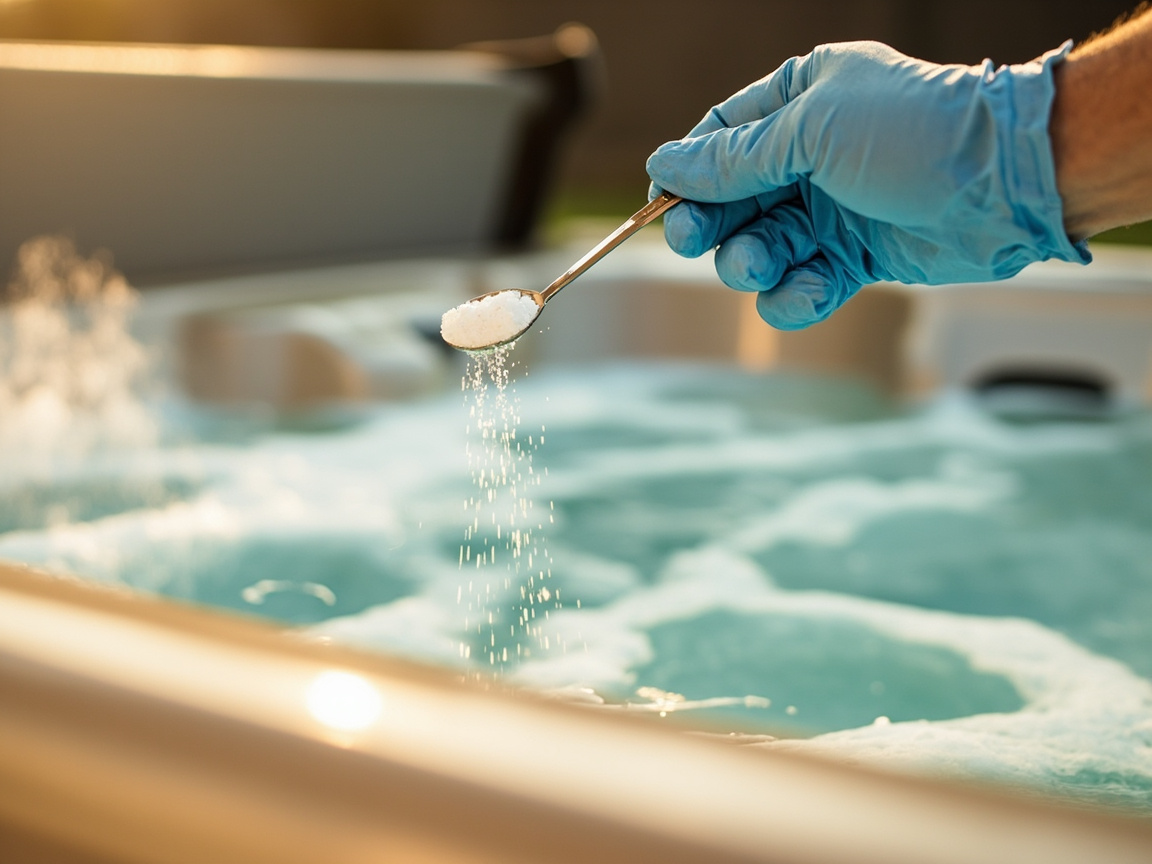
- Shock with non-chlorine MPS (about 1 oz per 250 gallons) — HTH Spa Non-Chlorine Shock Oxidizer, 2.25 lb is the standard pick. Dose in the evening, run jets 15 minutes, leave the cover cracked 30 minutes so off-gas vents. Retest in 24 hours.
Monthly and seasonal care
Monthly — filter, waterline, cover
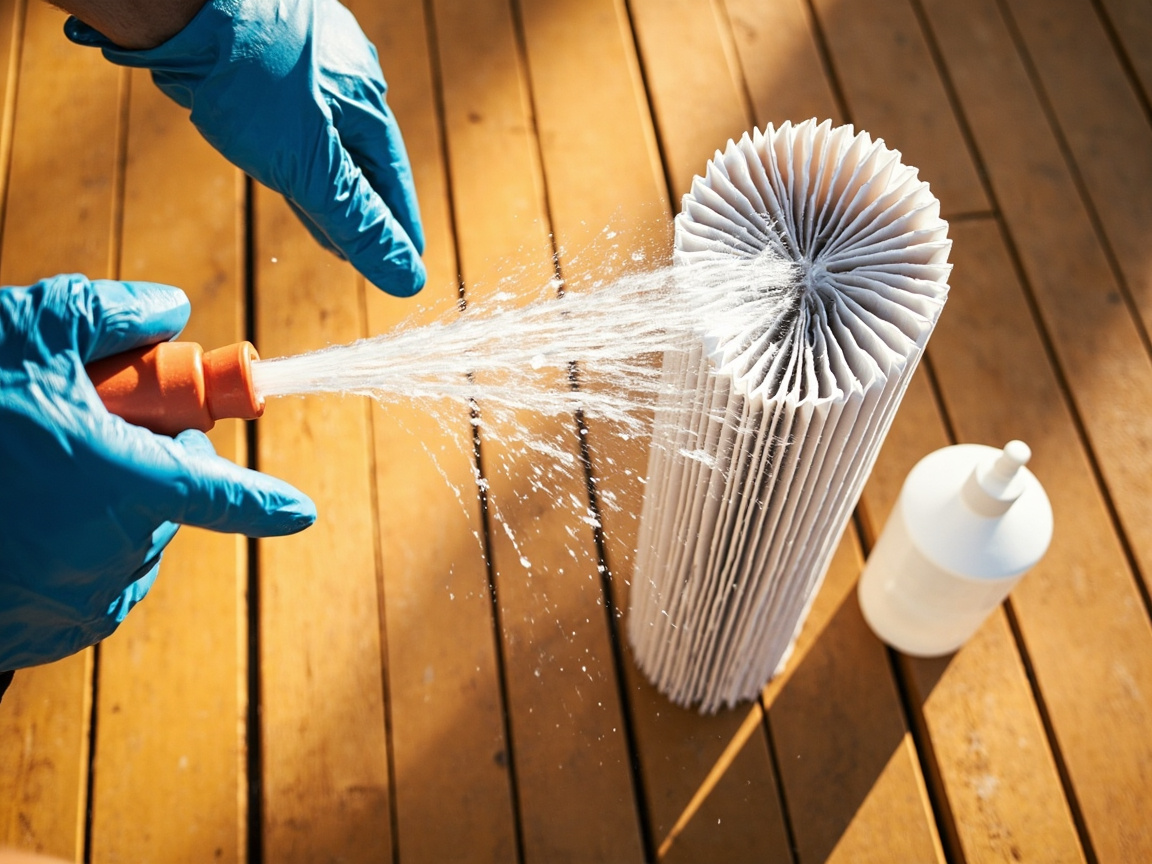
- Filter: rinse with a garden hose, then spray with HTH Spa Filter Cleaner if oils or scale are visible. Let it dry before reinstalling.
- Waterline and jets: wipe the tub shell at the waterline. Wipe the jet faces — biofilm hides in the nozzles.
- Cover: wipe the underside with mild soap and let it air dry before closing. Mildew inside the cover is the most common “smelly hot tub” cause that isn’t the water.
Seasonal — winter, shoulder, peak
- Winter: keep the tub running. A drained spa in freezing weather can crack the shell and plumbing.
- Shoulder: shock more aggressively during spring cleanups and fall shutdowns — pollen, leaves, and dust all add organics.
- Peak: bump non-chlorine shock from weekly to twice weekly after weekends with more than 4 bathers, kids, or pets.
The drain-and-refill calendar
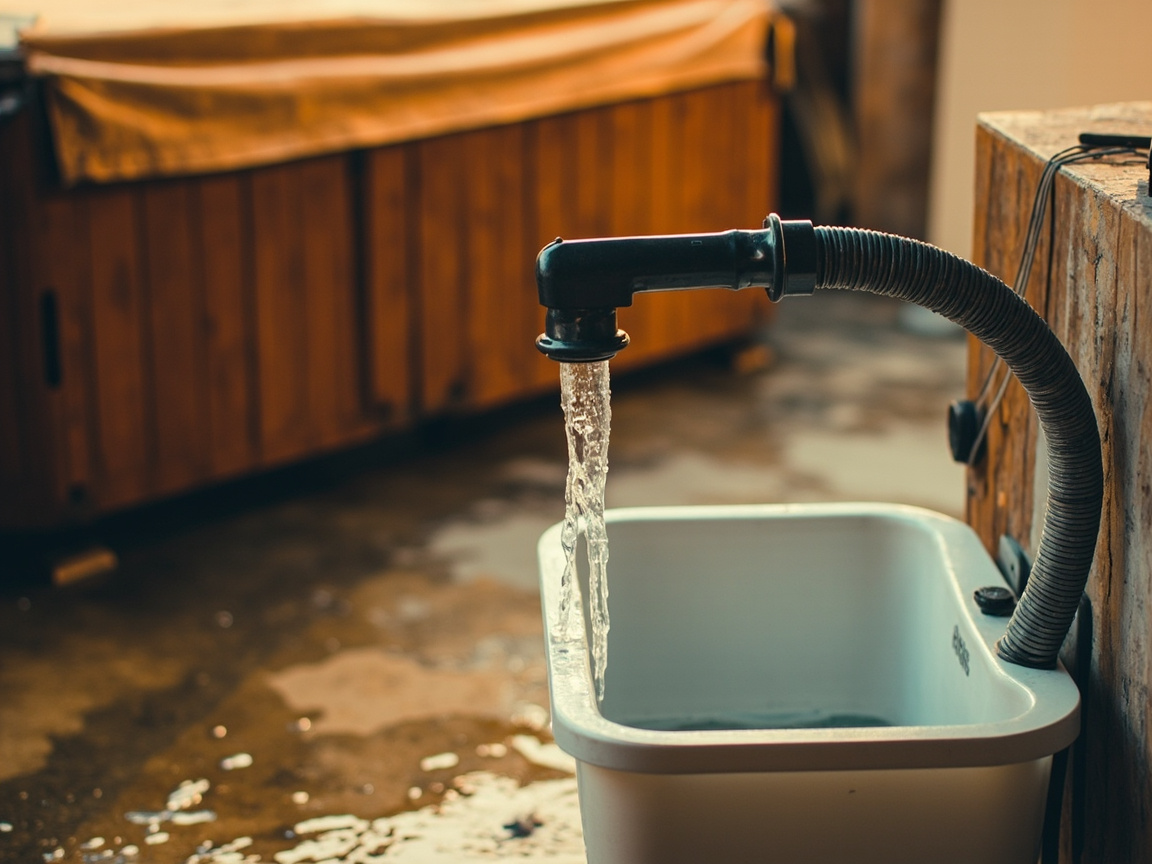
Most residential spas drain every 3–4 months. Confirm by dipstick: TDS reading above 1500 ppm above your source water = drain now. Heavy use, hard water, or missed weekly shock can shorten the interval to 6–8 weeks. The job itself is straightforward — attach a garden hose to the drain spigot, run it to a floor drain or utility sink, gravity does the rest. A submersible pump speeds it up but is not required for a 300–500 gallon spa.
Common problems — foam, smell, and the easy answers
Foamy water
Cause: detergent residue from swimwear, lotions, or body washes. Quick fix: spray foam with a hose at low pressure, run jets 5 minutes, add a small dose of non-chlorine shock.
Strong chemical smell
Cause: combined bromamines or chloramines — used sanitizer, not active. Fix: dose non-chlorine shock at the higher label dose, run jets 15 minutes, leave cover cracked 30 minutes. Retest in 4 hours. Persistent smell = drain, clean, refill.
Cloudy water
Cause: high pH, low sanitizer, dirty filter, or early biofilm bloom. Order: test and adjust pH → check sanitizer → clean the filter cartridge → dose non-chlorine shock → retest in 24 hours.
Skin and eye irritation
Cause: pH out of range (usually too high) or combined chloramines. Test pH first using the same 7-way strip you use for routine checks. If pH is in range and irritation persists, dose non-chlorine shock, wait 4 hours, retest.
What to buy only if needed
Only if bromine tablets don’t keep up
Add a floating bromine dispenser with the same tablets at a higher setting, or upgrade from 1-inch to 2.5-inch tabs. Don’t jump to a mineral stick until you’ve tried dialing the floater up for two weeks.
Only if you have hard or soft source water
Tests over 250 ppm CH → drain and dilute; under 100 ppm → dose to 150–200 ppm to protect the heater.
Only if you’re switching between chlorine and bromine
Do this at refill, not mid-cycle. Bromine residue fights new chlorine for 1–2 weeks; chlorine residue does the same to fresh bromine. Drain, wipe the shell, refill, swap chemistry.
Safety notes — bromine, pH Down, and what never to mix
Non-medical precautions about handling and storing chemicals, not skin-care advice. If irritation persists after balancing the water, contact a healthcare provider.
- Never mix bromine and chlorine in the same floater or feeder. A bromine/chlorine cross in a closed container can produce toxic gas.
- Never add water to acid. Always add acid to water, slowly, with the pump running. We recommend sodium bisulfate (pH Down) only — muriatic acid is harder to dose in small volumes.
- Never store pH Down next to chlorine shock. Keep dry chemicals sealed, off the floor, away from anything metal.
- Vent the cover after a shock dose. Leave it cracked 30 minutes. Off-gas can irritate eyes and lungs at high concentration in a closed shell.
- Heat + chemicals. Hot water makes every chemical more aggressive. A pool-style dose in a spa can scorch acrylic and damage heater elements.
- Pets and children. Spa water is not drinking water. Keep the cover locked when not in use.
- Drainage. Never drain onto grass where runoff water has had MPS or bromine. Most spas can drain to a sanitary sewer — confirm with local code.
Common mistakes first-year spa owners actually make
Mixing chlorine and bromine
The most common cause of “weird smell, eyes burning” support tickets. Use one or the other. If you switch, drain.
Treating the spa like a pool with smaller numbers
A pool is 15,000–20,000 gallons; dose numbers assume that. Half-fill a pool’s dose for a spa and you’re still too high. Use the chemical dose calculator for the first 3 months.
Skipping weekly shock because “the bromine is in range”
Range means the active sanitizer, not the used sanitizer. Without a weekly non-chlorine shock, bromamines build up. Weekly shock is the cheap insurance — HTH Spa Non-Chlorine Shock Oxidizer is the default.
Using cyanuric acid in a covered or indoor tub
CYA is for outdoor pools that lose chlorine to UV. Adding CYA locks bromine into a sluggish form strips can’t measure. If a previous owner used CYA, drain and refill.
Draining “to fix the problem” before testing
The number of tubs that get drained with perfectly recoverable water is too high. Test, dose, retest, then drain.
When to call a pro
Persistent cloudiness after two shock doses
Biofilm lives inside the plumbing, not just the water. A spa flush + full drain and refill is usually done by a service tech in 90 minutes.
Crack on the shell, water on the floor, or “wet” around the pump
Tubs don’t leak “a little”. A wet shell around the pump, water under the cabinet, or visible cracking = stop using the tub and call a service tech. Small leaks become big leaks fast under 100+ °F.
Repeated false strip readings across two bottles
Almost always means your testing technique needs a fresh sample. A service tech can do a Taylor K-2006 FAS-DPD drop test in five minutes.
Service is overkill — but not calling is also a mistake
You don’t need a weekly service contract. You do need one or two calls per year: a spring startup flush and a fall winterization check in freezing climates.
Related — connect this article to the rest of your water-care routine
- pH in your hot tub — what the strip number really means — pH drift is the most common spa issue.
- Total alkalinity in your hot tub — why the bromine-spa range is lower than a pool — TA is the buffer that keeps pH from swinging.
- Saltwater hot tubs — what changes when you add a chlorine generator — the salt-system branch of the decision tree.
Key takeaways
- Test before you dose, every time. 7-way strip + pH + bromine + TA + CH is the minimum.
- Default to bromine. It stays active after binding contaminants and tolerates hot water better than chlorine.
- Shock weekly with non-chlorine (MPS), even when sanitizer is “in range.” Bromamines build up silently.
- Drain every 3–4 months. Small water volume + heavy bather load means TDS climbs fast.
- Wipe the filter, the waterline, and the cover underside monthly. Biofilm starts there.
- Never mix bromine and chlorine in the same system. If you switch, drain and rinse.
- Use the dose calculator before your first 5 doses. Spa chemistry is pool chemistry divided by a much smaller number.