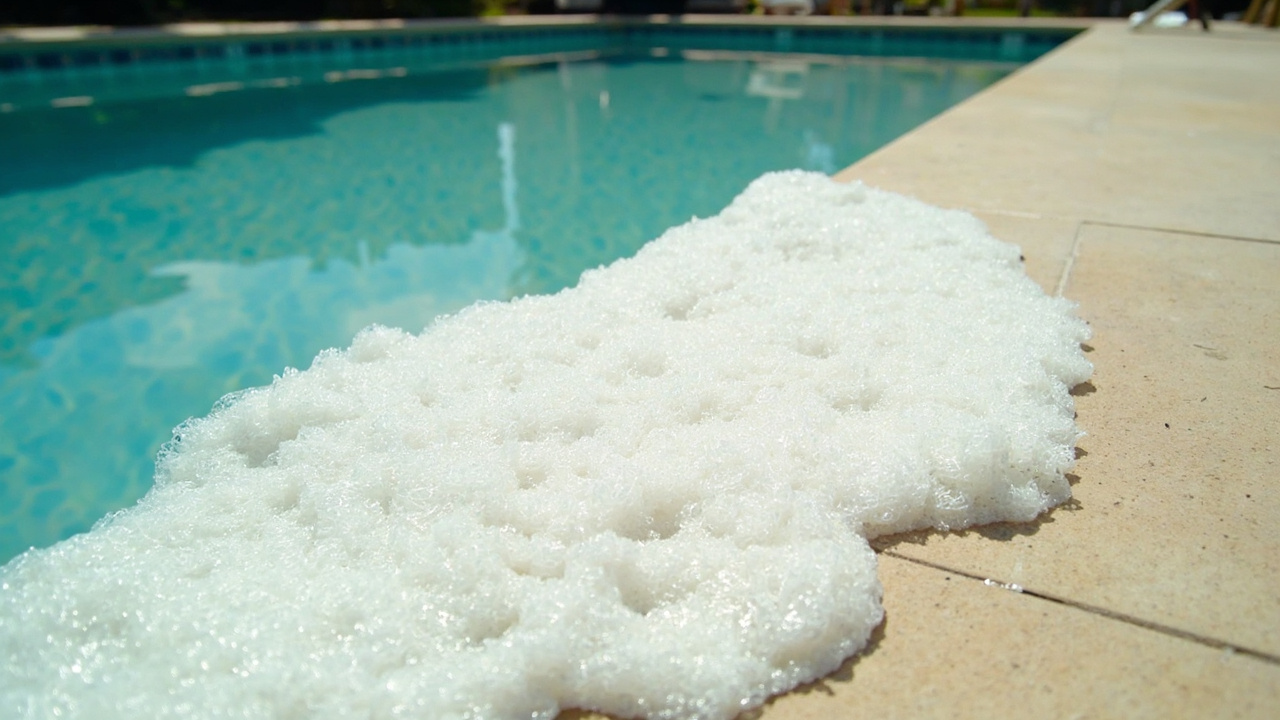
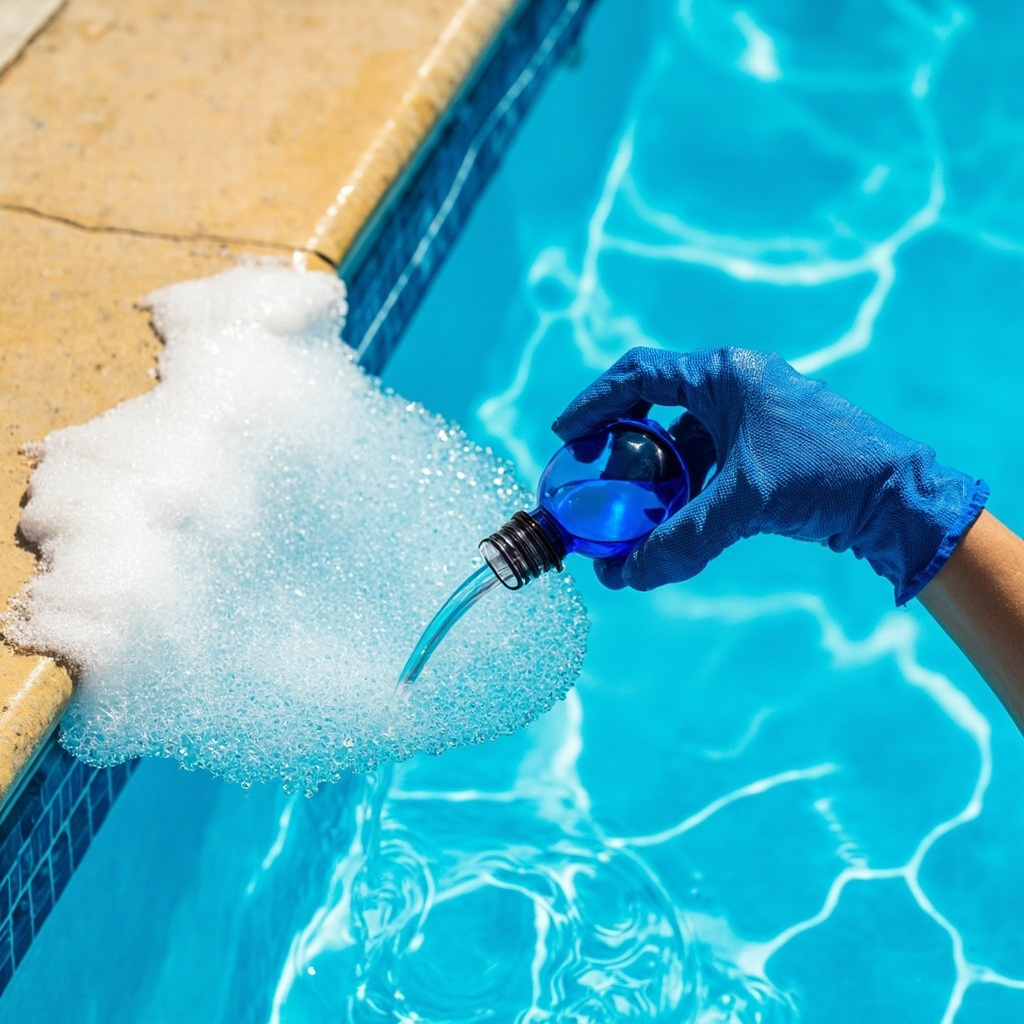
White foam lingering at the pool edge or piling up around the spa lip line isn’t decoration — it’s a chemistry signal. The bubbles tell you surfactants (body oils, lotions, leftover algaecide, detergent residue) have built up past what chlorine and your filter can absorb. Ignore it and the foam doubles within days and the underlying cause gets more expensive to fix. Get it right and it’s a short sequence: test the numbers, fix the cause, then treat defoamer as the last step.
Quick answer
Foamy water is usually surfactants — body oils, lotions, leftover detergent, or algaecide. In a pool, test TDS first (over 1,500 ppm = old water), then CYA and pH, then rinse the filter. In a hot tub, drain and refill if the water is over 3 months old, then shock and add 1-2 oz defoamer. Both systems: shower before you soak, and TDS — not defoamer — is the real fix.
What kind of foam is it?
Before you pour any chemical in, name what you’re looking at. Three questions get you to the right cause fast: where it sits, how long the bubbles last, and what you did in the last 48 hours.
If the foam piles at the return-jet edge and vanishes in 30 seconds, that’s entrained air — usually a low waterline or a pump-side air leak. If it’s a thick white layer after a busy weekend, it’s surfactant foam. If it shows up the day after you shocked, the shock itself is the trigger.
What this is not
Foam is not the same as a handful of related water problems. Knowing what foam is NOT saves you from treating the wrong thing — and from wasting chemicals, time, and money.
Foam vs bubbles
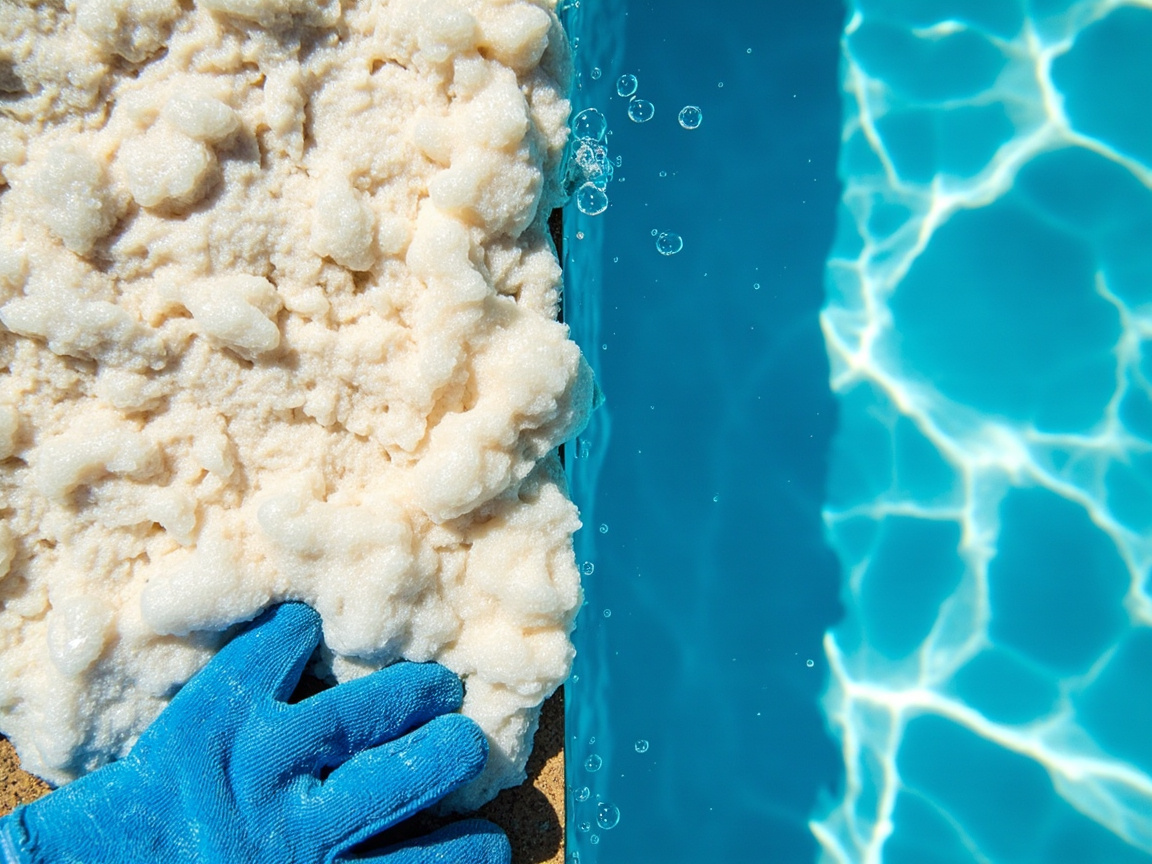
Bubbles are clear, small, and burst in 1 to 2 seconds — from a return jet, an air-side leak, or a freshly-opened cover. Foam is white, persistent, and piles up at the pool edge.
Pool foam vs hot tub foam
Same chemistry underneath, very different scale. A 350-gallon hot tub builds TDS in weeks; a 15,000-gallon pool takes years. Spa foam almost always means “time to drain”; pool foam almost always means “test the chemistry.”
Persistent foam vs transient foam
A short-lived ring right where you poured the shock is normal and clears in 1 to 2 hours. Foam that survives a full pump cycle is real foam. Anything lasting longer than 24 hours needs the full diagnostic below.
Foam vs cloudiness
Foam is surfactant-driven; cloudiness is calcium, filtration, or early algae. Different fixes — see our cloudy pool water diagnostic & fix for the cloudiness playbook.
Why your pool foams: the 5 root causes
Whatever the trigger, foam is a chemistry signal. These five mechanisms cover about 95% of cases — and they cluster, so you rarely see just one.
TDS high (the dominant cause)
TDS is everything in the water that isn’t H2O — chloride, sulfate, bicarb, body oils, lotions, algaecide residue. It can’t be oxidized or filtered out by chlorine cycles. Above 1,500 ppm it traps air. The only real fix is dilution — partial-drain for a pool, full drain for a spa.
Surfactants from bather load
Lotions, sunscreens, deodorant, hair products — every swimmer brings 50 to 200 mg of surfactants. The cheapest fix is a 60-second rinse before entry; the higher-cost fix is replacing the water.
Algaecide overdose (the most overlooked)
Algaecides are themselves surfactants. Copper and ammonium quats foam at any useful dose; polyquat foams less, but at overdose (above 30 ppm cumulative) any algaecide becomes a foam source. Switch to polyquat 60 at half-rate.
After-shock foam (chemistry side effect)
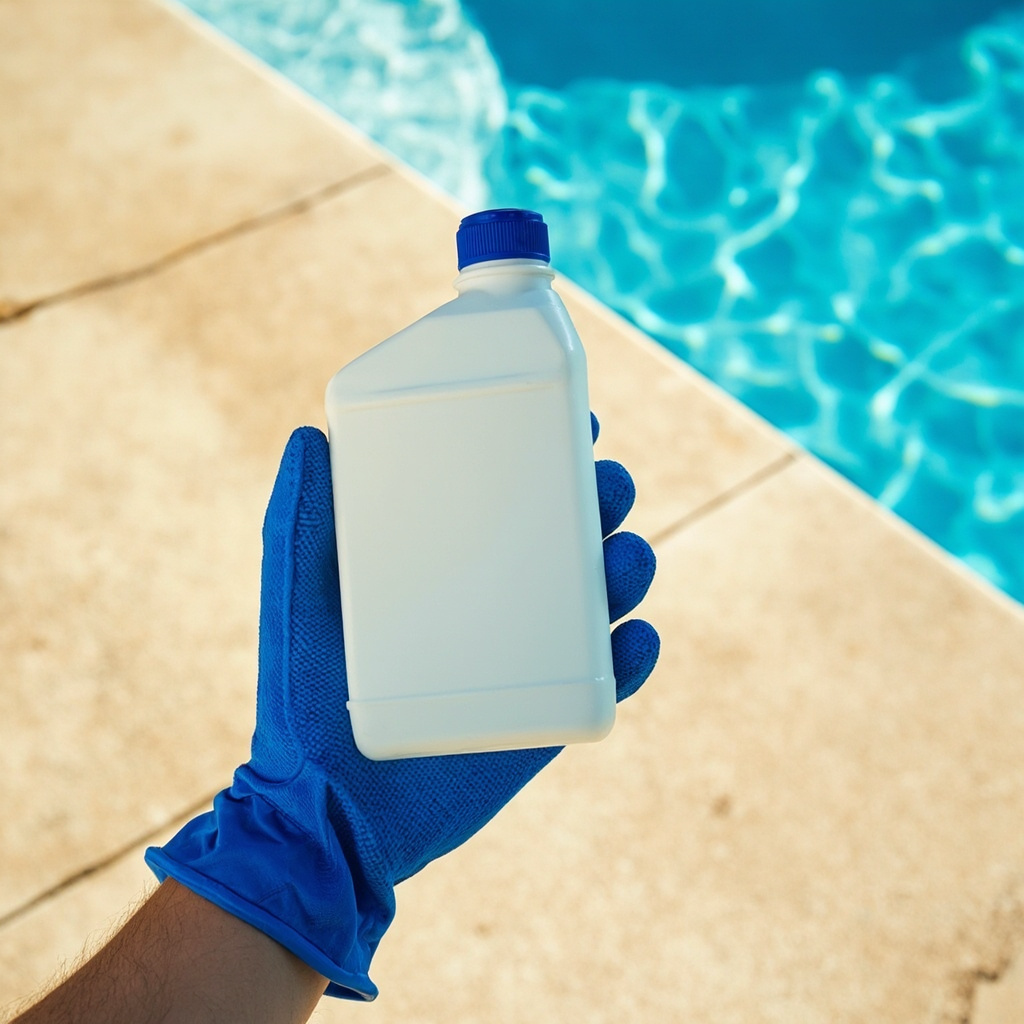
Cal-hypo, dichlor, and non-chlorine (MPS) shock all generate brief foam at the dose point. Cal-hypo foams least; non-chlorine MPS foams most. This is normal if it clears in 1 to 2 hours. If it persists, the shock reacted with high TDS — fall through to the dilution step below. The pool shock chemistry hub walks through each shock type; switching from MPS to cal-hypo usually fixes recurring after-shock foam — see how to choose the right pool shock for the decision.
Mechanical aeration (return jets, fountains, slides, spas)
Anything that pumps water through air will foam surfactant-heavy water. Spa jets at high speed are the worst case. Reducing agitation during peak TDS helps. See free chlorine and pH for what changes when aeration shifts your readings.
Test before you treat (the numbers that actually predict foam)
Three numbers drive 80% of foam diagnoses. A fourth often confirms it. Grab a liquid kit or TDS meter before you dose — strips miss all four.
| Parameter | Where to read it | Foam signal | Healthy band |
|---|---|---|---|
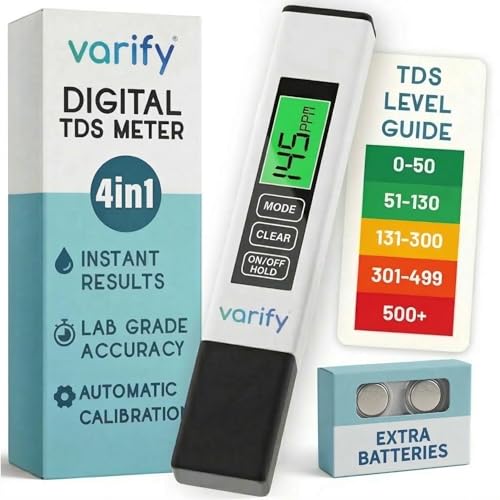
| TDS (Total Dissolved Solids) | TDS meter probe or K-1766 | Over 1,500 ppm = old water | Under 1,000 ppm fresh |
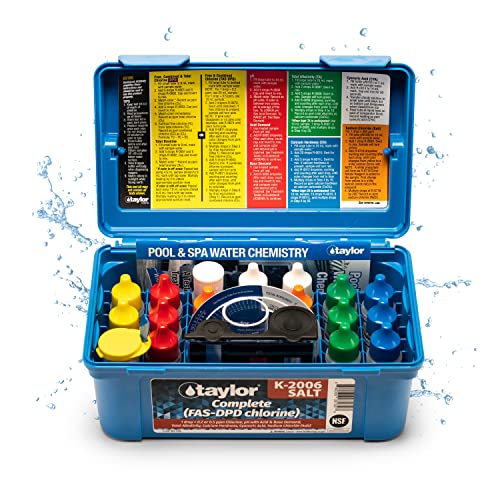
| CYA (cyanuric acid) | Taylor K-2006 | Over 50 ppm demands more algaecide | 30 to 50 ppm |
| pH | Any test method | Above 7.8 keeps surfactants in solution longer | 7.4 to 7.6 |
| CH (calcium hardness) | Taylor K-2006 | Below 200 ppm makes water “hungry” | 250 to 650 ppm |
Check TDS with a conductivity probe
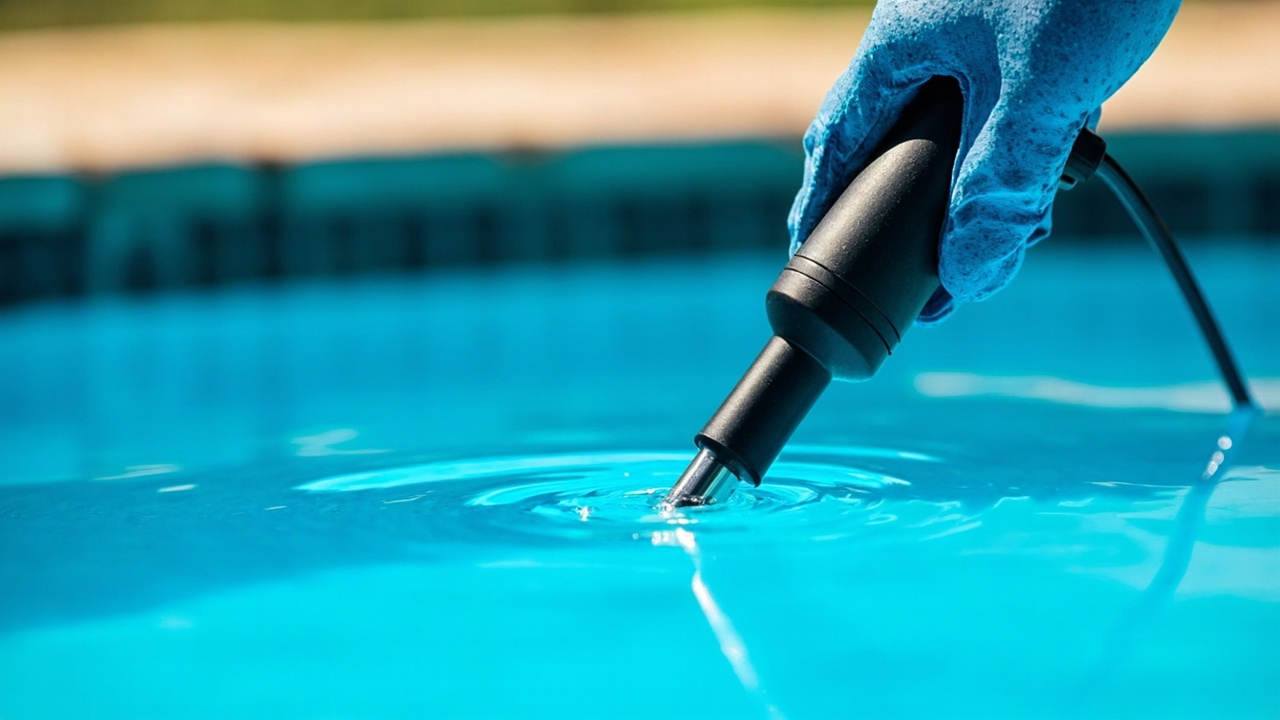
Most residential test strips miss TDS and CYA — the two biggest foam predictors. If you see foam more than twice a season, upgrade to a liquid test kit and learn the pool water testing sequence. Higher calcium hardness keeps surfactants from staying in solution; at pH above 7.8 the same surfactants stay in solution longer and foam persists.
Decision tree
Start at the top, answer yes/no, then read the action under the leaf that matches. Five branches cover what matters.
Branch 1 — Did you just shock in the last 24 hours?
If yes, this is normal chemistry. A faint ring at the pour point that clears in 1 to 2 hours is expected as the oxidizer reacts with organics. Wait one pump cycle, retest free chlorine, do nothing further. If foam persists, fall through to Branch 2.
Branch 2 — Is TDS over 1,500 ppm?
If yes, foam is the loudest signal. Dilution is the only real fix — partial-drain and refill 25 to 40% for a pool, or full drain and refill for a spa. If TDS is below 1,500 ppm, fall through to Branch 3.
Branch 3 — Are you using a copper or ammonium algaecide?
If yes, the algaecide is itself the foam source. Switch to polyquat 60 at half-rate and skip the next 2 weekly doses. If you are using polyquat or no algaecide, fall through to Branch 4.
Branch 4 — Heavy bather load in the last 48 hours?
If yes, surfactants are the cause. Lotions, sunscreens, deodorant, and “before swimming” soaps are the top four. Fix: 60-second shower before entry, plus a filter rinse after heavy weekends. If bather load is normal, fall through to Branch 5.
Branch 5 — Hot tub with jets on high and foam at the lip line?
If yes, you have aeration-driven foam compounded by biofilm and TDS in a 350-gallon system. Drain, refill, run a plumbing flush, then add 1 to 2 oz defoamer after the post-shock. If your jets are off and the water has aged 3 months, fall back to Branch 2 — old water in spa clothing.
How to get rid of pool foam: the 4-step method
If the decision tree above pointed to a clear cause, this is the play-by-play. Run the four steps in order — each one builds on the one before.
Step 1: Run a TDS, CYA, pH, and CH test
The VARIFY TDS meter is a $10 entry point. Pair it with a Taylor K-2006 liquid kit for CYA, pH, FC, and CH. Write down: TDS, CYA, pH, FC, CH. A temporary FC spike after shocking is normal — see free chlorine for the recovery curve.
Step 2: Rinse the filter
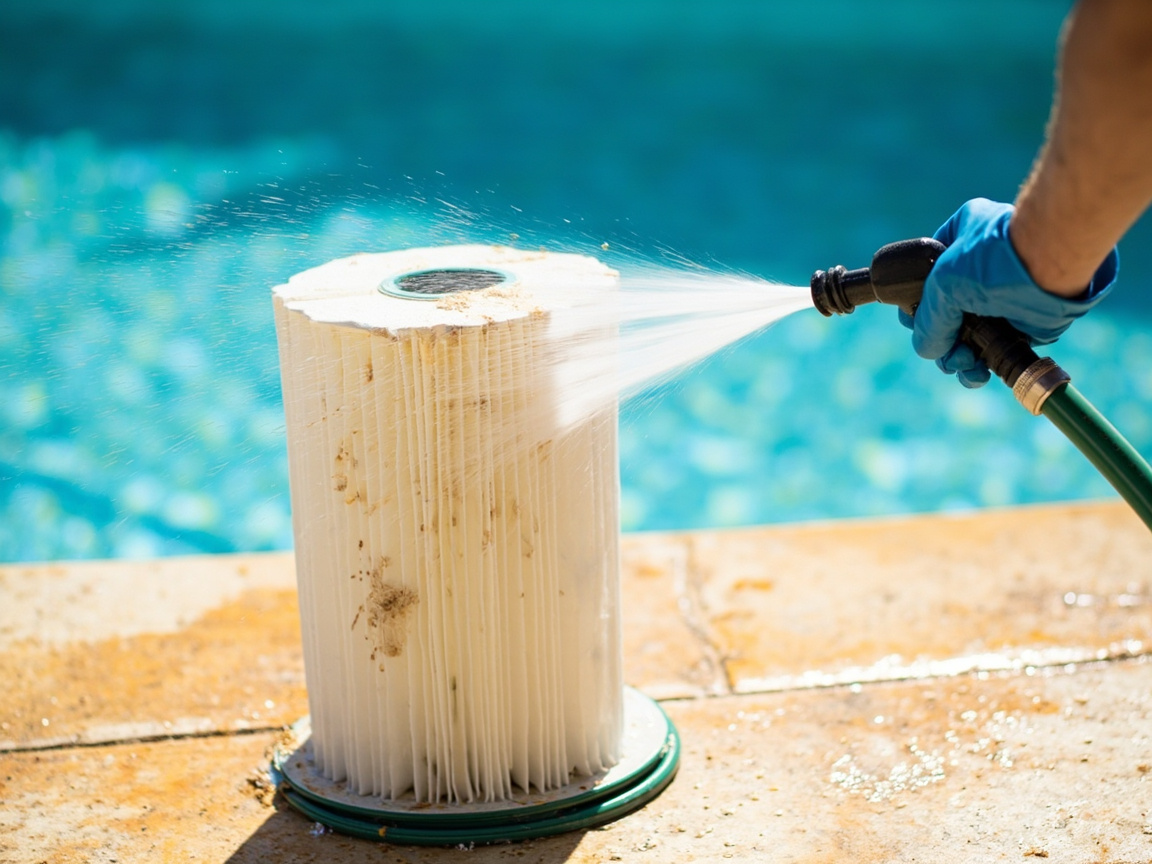
A saturated filter is a foam incubator. Backwash sand or D.E. filters, or rinse cartridge filters with a garden hose until the rinse water runs clear. If pressure is still 10+ psi over clean, deep-clean cartridges overnight in a 10:1 water-to-muriatic-acid soak (always add acid to water, never the reverse). See the total alkalinity hub for the bigger picture on how TA changes affect foam stability.
Step 3: Partial drain and refill (if TDS > 1,500 ppm)
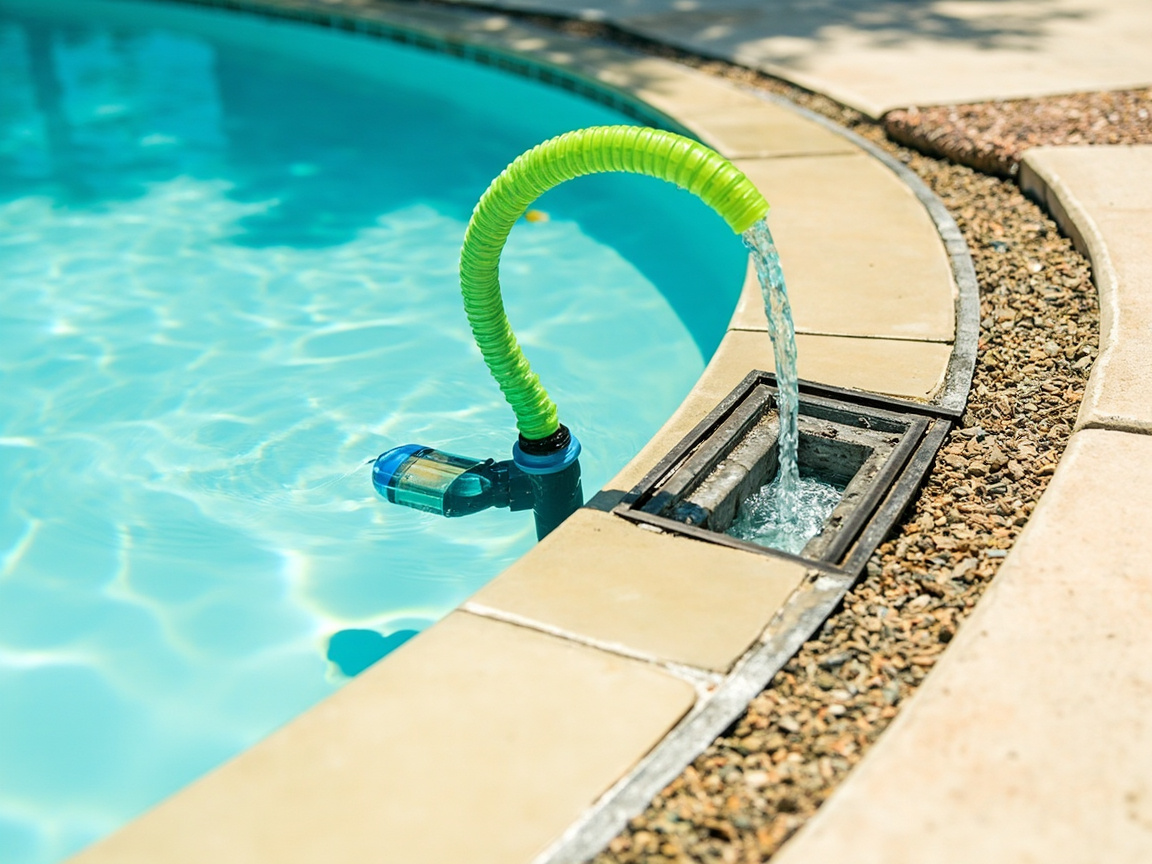
Drain 25 to 40% of the pool — never fully drain a vinyl-liner pool. Use a garden hose routed to a legal drainage area, then refill. Use the chemical dose calculator to figure out refill volume and how to rebalance CYA, pH, and CH. Skip this step if TDS is under 1,500 ppm — wasted water and money.
Step 4: Defoamer as a band-aid (last, not first)
After Steps 1 to 3 have addressed the root cause, a silicone pool defoamer knocks down visible foam for 6 to 12 hours. Dilute 1 to 2 oz in a 5-gallon bucket and broadcast across the surface — never pour straight into the skimmer. Defoamer breaks surface tension; it doesn’t change TDS or algaecide residue.
Hot tub foam: spa-specific causes and fixes
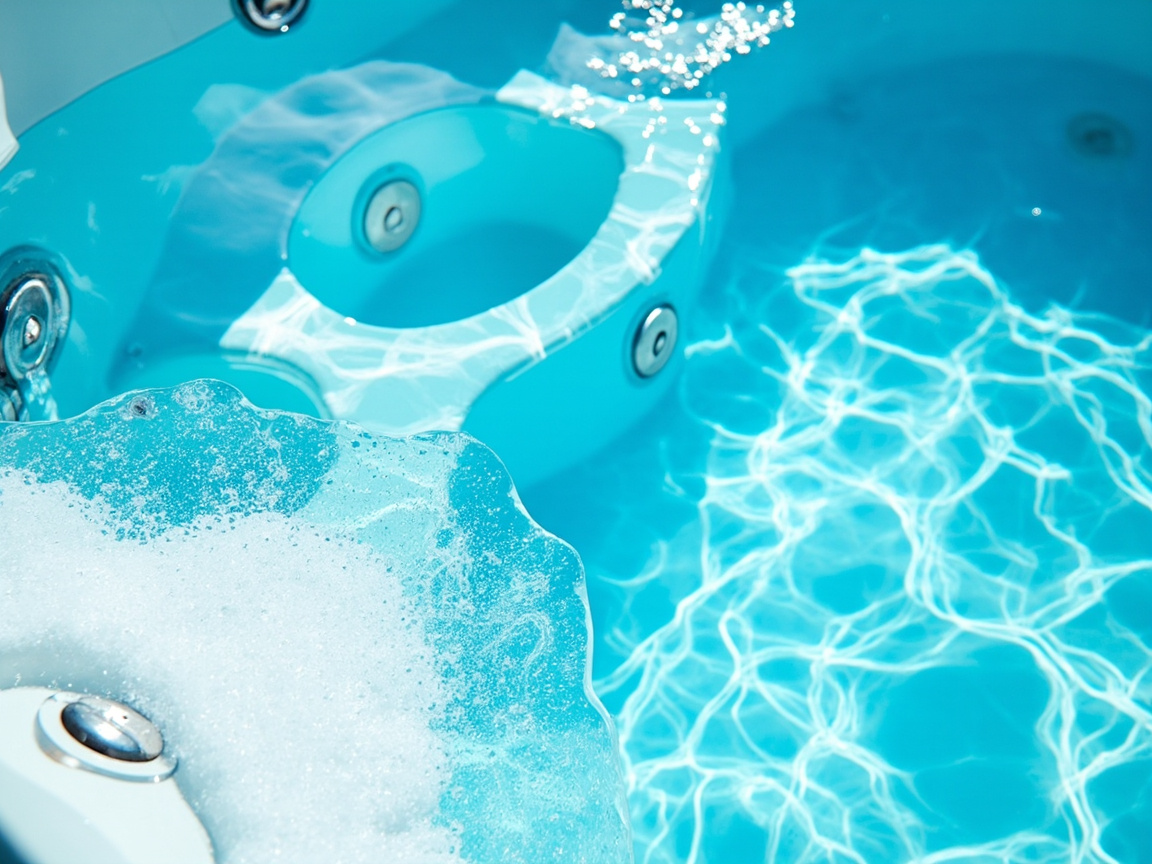
Spa foam and pool foam share the same chemistry, but the math is different and the timeline is compressed. A 350-gallon spa cycles through what a 15,000-gallon pool takes years to accumulate, in months. Treat the spa on its own terms.
Why spas foam faster
Three forces compound: high water temperature accelerates every reaction, jet aeration traps air, and the small water volume means TDS spikes after a handful of soaks. Biofilm forms inside plumbing within weeks and acts as a foam stabilizer. By 3 months, most residential spas have TDS high enough to foam on demand.
How to clear spa foam
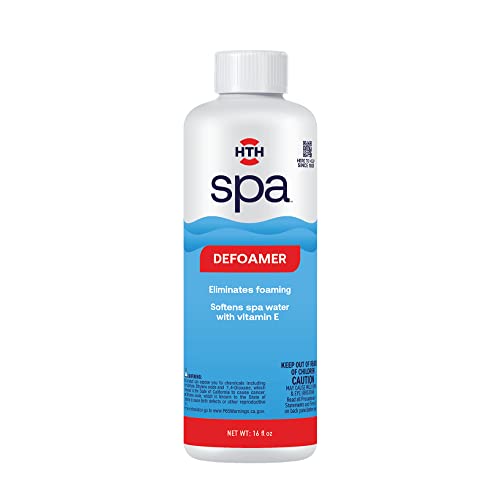
Drain and refill if the water is over 3 months old. Rinse the filter with a garden hose. Shock with dichlor at 2 ppm above target FC. Add HTH Spa defoamer at 1 to 2 oz across the surface after the shock. Run the jets on low for 10 minutes. If foam is still visible 24 hours later, flush the plumbing and replace the water.
Spa vs pool differences
A 350-gallon spa at 100°F holds about 29 lbs of water; a 15,000-gallon pool at 80°F holds about 125,000 lbs. Most spa fixes work in pools; most pool fixes (defoamer at pool doses) overdose a spa. Use spa-rated products and spa-appropriate dose sizes — see the spa water care basics hub for the full weekly cadence.
Cross-system prevention: the habits that stop foam coming back
Three habits prevent 80% of foam across both pools and spas. None require a chemistry lesson; they require repetition.
Shower before you soak
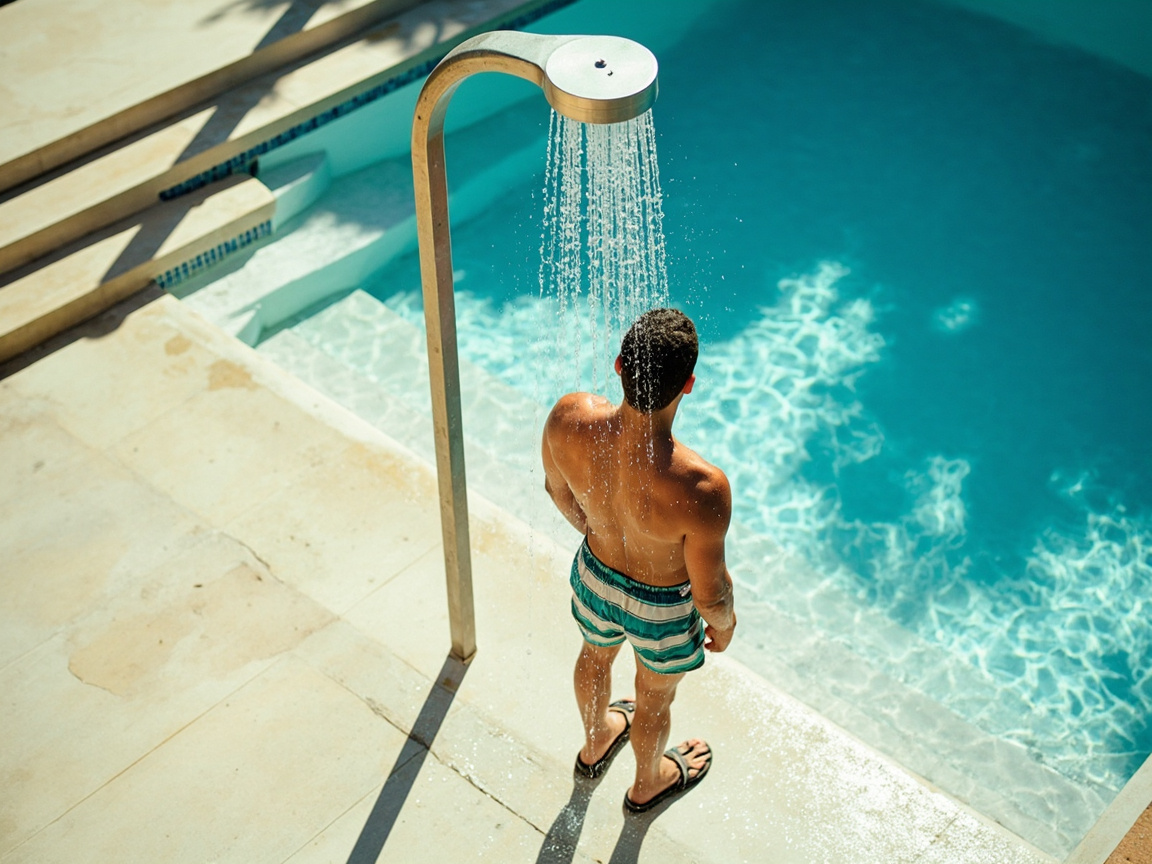
A 60-second rinse with plain water removes 60 to 90% of lotions, sunscreens, and hair products before they enter the water. Outdoor showers, even cheap ones, change the foam math more than any single chemical. This is the single highest-impact habit in any foam playbook — see the weekly pool care checklist for how it fits the rest of the routine.
Use low-foaming products
Switch to polyquat algaecide at half-dose if you’re still on copper or ammonium quats. Avoid copper quat algaecides entirely — they foam at any useful dose. The cyanuric acid interaction with algaecide is the silent driver behind chronic-foam pools.
Stick to a water-replacement schedule
Pool: partial drain 25 to 40% every 2 to 3 years or as soon as TDS crosses 1,500 ppm. Hot tub: full drain and refill every 3 months. A consistent schedule keeps foam events from compounding.
What you’ll need
Pull these together before you start. Products are listed in decision order — testing gear first, treatment last.
- TDS meter or Taylor K-1766 drop test — only way to read the foam predictor strips miss. The VARIFY 4-in-1 TDS meter is a $10 entry point.
- Taylor K-2006 liquid test kit — for CYA, FC, pH, CH, TA in one kit. The K-2006-SALT variant also reads salt if you’re on a salt system.
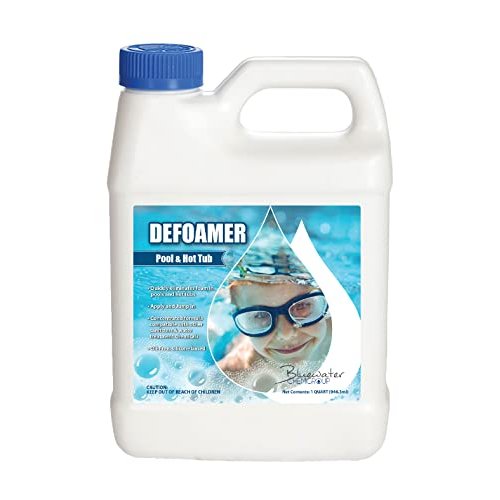
- Silicone pool defoamer (32 oz) — last-step band-aid after TDS, filter, and partial-drain. The Bluewater Chemgroup pool defoamer covers 4 standard doses for a 10k-gal pool.
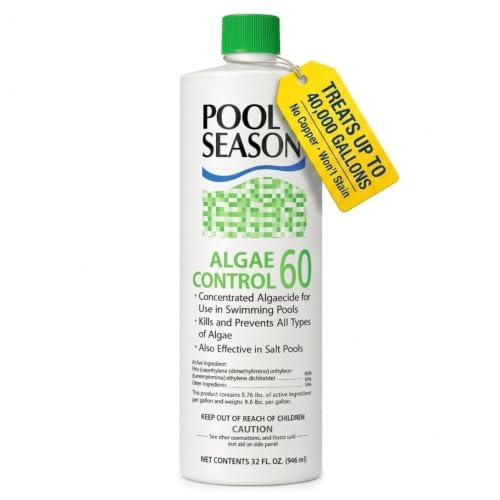
- Polyquat 60 algaecide — replacement for copper or ammonium quats that foam at any useful dose. Pool Season Polyquat 60 is concentrated; smaller dose = less foam.
For a spa, swap the pool defoamer for HTH Spa defoamer — gentler on acrylic shells and dosed at spa-appropriate ounces per gallon.
What to buy only if needed
Every product below is conditional. Don’t buy any of them until the matching trigger is confirmed.
Only if TDS is over 1,500 ppm (old water)
You don’t need more chemicals — you need a drain. A garden hose and a submersible 1/2-HP drain pump will remove 25 to 40% of a residential pool in a few hours. Skip this branch if TDS reads under 1,500 ppm.
Only if algaecide is the trigger
Polyquat 60 algaecide at half-rate, replacing whatever copper or ammonium quat is currently on shelf. No new test kit needed — your existing liquid kit already reads the CYA / pH / CH numbers.
Only if foam is persistent after Steps 1-3
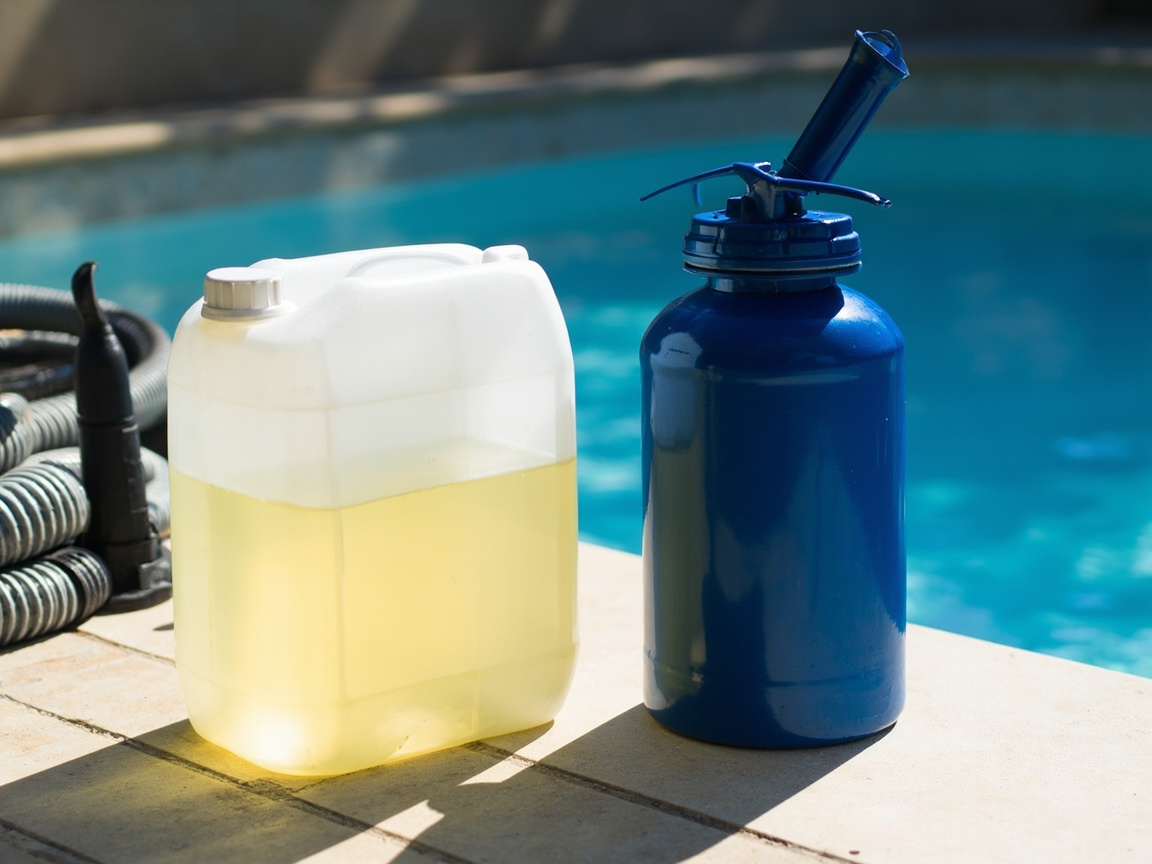
Silicone defoamer at 1 to 2 oz per 10,000 gallons — band-aid only. Pair with pool enzyme treatment if foam has been recurring for weeks: enzymes break down the body-oil residue that defoamer just sits on top of.
Only if you’re a chronic-foam pool owner
If you’ve seen foam more than twice this season, the strip-only test kit is the gap. Upgrade to a Taylor K-2006-SALT plus the VARIFY TDS meter — covers all four foam-predictor parameters.
Common mistakes
These are the recurring errors we keep seeing in pool & spa owner forums and our own customer-support transcripts.
Mistake 1 — Adding defoamer before testing
Defoamer deals with the symptom for 6 to 12 hours and leaves the cause untouched. Test TDS, CYA, pH, and CH first. Defoamer goes into a bucket of pool water, broadcast across the surface — never straight into the skimmer.
Mistake 2 — Doubling algaecide to “kill foam”
Algaecides are surfactants. Doubling the dose doubles the foam. Skip the next 1 to 2 doses and switch to polyquat at half-rate. Most pools don’t need algaecide if FC and CYA are balanced — see the algae types diagnostic.
Mistake 3 — “Foam after shock — so I’ll shock again”
A second shock reacts with the first shock’s by-products and often makes foam worse. Test free chlorine before any re-shock. If FC is at target, foam after-shock is just chemistry — wait one pump cycle.
Mistake 4 — Buying strips-only test kits for chronic foam
Strips don’t read TDS or CYA. Chronic foam needs both. Upgrade to a liquid kit — strips catch FC and pH but can’t tell you TDS is 2,300 ppm and your water is past due for a partial drain.
Mistake 5 — “The foam is in the spa so it’s a spa problem”
Spa foam traces to fill-water organics, biofilm, and aeration — same TDS / CYA / CH diagnosis as a pool. Treat both from the same ladder; skip the spa-specific bandaid.
Safety notes
Foam itself isn’t chemical-aggressive, but the standard fixes (algaecide switch, defoamer, partial-drain refill, plumbing flush) carry their own hazards.
- Never mix defoamer with chlorine concentrate: full-bottle defoamer dropped into a chlorinated skimmer will foam violently and splash. Always dilute into 5 gallons of pool water first.
- Muriatic acid for filter soak: 10:1 water-to-acid only. Add acid to water, never water to acid. Wear nitrile gloves and eye protection. Spill on the deck → rinse immediately.
- Algaecide swap timing: do NOT add polyquat within 24 hours of a copper-based algaecide — they react. Skip the next 2 doses, then start polyquat.
- Plumbing flush on an empty spa: keep the bath empty for at least 4 hours, then rinse twice before refilling.
- Defoamer on skin: silicone defoamer is non-toxic but slippery. Wipe up spills on the deck.
- Pool drain safety: never enter a partially-drained pool; never drain a vinyl-liner pool fully (liner shrinkage); never drain onto a slope.
- Hot tub temperature: keep spa water under 104°F and limit soaks to 15 to 20 minutes.
When to call a pro
Foam is 95% DIY-fixable. Some signals mean “stop and call a service tech.”
Keep DIY if: you can test water, brush, run the filter 24 hours, and the numbers are moving the right way.
Call a pro if:
- Visible foam + visible scaling on the wall or tile line. Water has been out of balance long enough to deposit scale; acid wash + refill + re-balance takes a service tech with a titration kit.
- Foam that persists 7 days after Steps 1 to 4. The remaining 5% is usually biofilm in plumbing, under-balanced make-up water, or a suction-side air leak. Pro: pressure-test the suction line, flush spa plumbing, refill with measured-TDS source water.
- Foam + skin or eye irritation in any bather. If foam precedes a rash or red-eye event across multiple bathers, treat as an unseen contaminant and call a service tech before the next swim session.
- Vinyl-liner pool that needs full drain for TDS correction. Full drain on vinyl can shrink the liner and require $4k–$8k to replace. A pool tech can do a calculated partial-drain that lowers TDS.
- Spa with persistent post-shock foam after drain-and-refill. Likely biofilm in plumbing needing a 50-ppm chlorine flush a service tech runs with proper ventilation.
Related
Three hub-style entry points carry the cross-system connections. The body above carries deeper internal links to chemistry, care, spa, essentials, and tools.
- Cloudy pool water — diagnostic & fix — foam usually turns cloudy within 24 to 48 hours if the cause is unaddressed. Same TDS / surfactant pattern, different symptom.
- Pool water testing — what to read and how — the discipline that catches TDS / CYA / pH before foam shows up at the edge.
- Spa water care basics — the spa-side playbook that prevents foam in a 350-gallon system.
Key takeaways
- Foam is a chemistry signal, not the problem itself. The foam is the symptom; the cause is TDS, surfactant loading, algaecide, or aeration.
- Test TDS first. Over 1,500 ppm means old water — defoamer or algaecide will not fix old water. Dilution is the only fix.
- Algaecide is itself a surfactant. Copper and ammonium quats foam at any useful dose; polyquat 60 at half-rate foams much less.
- Defoamer is a band-aid. It buys 6 to 12 hours; it does not buy the season. After the foam drops, find and fix the cause.
- Foam after a shock clears in 1 to 2 hours. Persistent foam after a shock is the oxidizer reacting with high TDS — fall through to dilution.
- Spa foam runs on a faster clock. Drain and refill every 3 months; jets and biofilm do the rest.
- Shower before you soak. A 60-second rinse removes 60 to 90% of incoming surfactants — the single highest-impact habit in any foam playbook.