
A hazy salt pool usually means the salt cell quietly quit on you, and every day it stays hazy the cleanup gets longer. The fix itself is a short sequence, not a chemistry degree.
Quick answer
A cloudy salt water pool almost always traces back to the salt cell: scaled plates make less chlorine, low FC lets haze and algae start. Test FC, pH, TA, CYA, and salinity first, inspect the cell, fix pH before anything else, superchlorinate with liquid chlorine, run the filter nonstop, then retest before anyone swims. Standard clarifier can foam in salt cells — use an enzyme formula.
What this is not
Saltwater pools are not chlorine-free. The cell makes chlorine from salt, and the water chemistry rules are the same ones in how a saltwater pool stays chlorinated. Salt doesn’t replace chlorine; it feeds it.
Cloudy is not “just how salt pools look.” A healthy salt pool is glass-clear. Haze always has a chemistry or equipment cause, and it won’t clear on its own.
The salt cell is not the filter. It makes chlorine; it doesn’t strain particles. A cloudy pool with a “perfect” cell still has a filtration or chemistry problem to find.
High salt is not a cleaner. Extra salinity doesn’t sanitize anything — it trips the high-salt shutoff and shuts chlorine production down entirely.
Why salt water pools turn cloudy
The salt cell chain: the failure mode that owns this category
High calcium and high pH scale the cell plates; a scaled cell makes less chlorine; low FC lets haze and early algae form. That chain — not tired sand — is why salt pools cloud up even when the test numbers look fine. Calcium hardness above 400 ppm is scale-forming and plates the cell: see what calcium hardness does.
The SWG pH drift problem
Electrolysis pushes pH up every hour the cell runs. A salt pool can drift from 7.4 to 7.8 in a week without anyone touching anything. Shock or clarifier added into high-pH water stays dissolved-hazy instead of clearing. Weekly pH checks are non-negotiable on salt.
Salinity outside the cell’s window
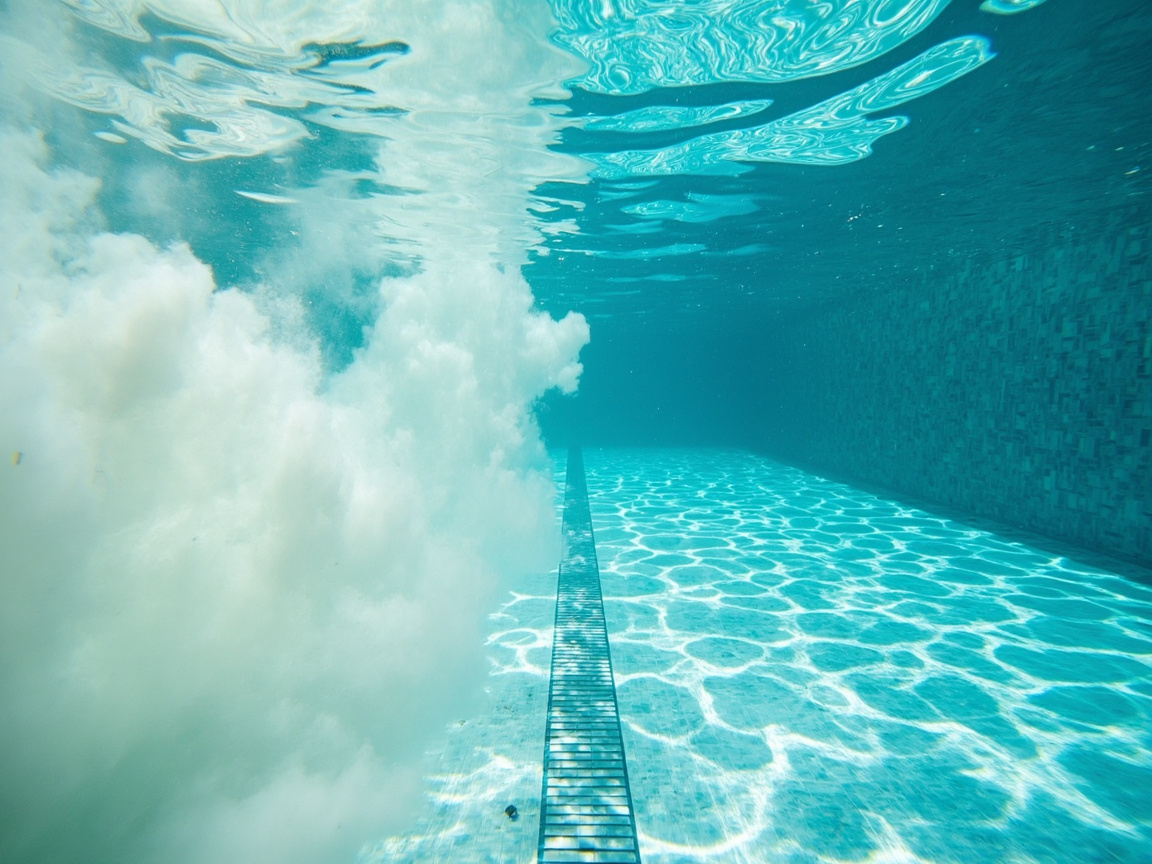
Below about 3,000 ppm most SWGs stop producing; above about 5,000 ppm they trip the high-salt alarm and shut off. Both ends leave you with no chlorine and a fogging pool. Top-offs after rain or drain-down are the usual culprit.
After rain, refill, and top-off water
Dilution drops FC and salinity at the same time runoff drags in phosphates and debris. Expect a cloudy window of 24-72 hours after a heavy storm if you do nothing.
Cloudy and green together
Haze with a green tint or slick walls is algae starting, not just dead stuff in suspension — that branch gets its own treatment in saltwater pool algae.
Decision tree: find your cloudy type
Match your situation to a branch, then jump to the step it points to.
Branch 1: Low FC with fine pH, and the cell shows “low output” or scaled plates
Inspect and descale the cell first (Step 3), then superchlorinate to catch up (Step 4).
Branch 2: pH above 7.8, or a blue-white haze right after adding chemicals
Fix pH and alkalinity before any other product (Step 2). Haze from high pH will not clear until the reading is back in range.
Branch 3: Salinity outside 3,000-4,000 ppm
Rebalance salt to the cell’s window (Step 3) and verify with strips — don’t trust the panel alone.
Branch 4: Cloudy with a green tint or slick walls
That’s the algae path: follow the saltwater algae treatment sequence, then come back here for the cleanup steps.
Branch 5: Cloudy within 72 hours of heavy rain or a big top-off
Retest everything (dilution) and top up stabilizer if CYA drifted — after-rain pool care walks through it — then run the standard sequence from Step 1.
Branch 6: Cloudy right after shocking or an algae treatment
Dead-algae load and oxidized debris. This is a filtration window problem — run the filter continuously and clean it as pressure rises (Steps 5-6).
What to test first
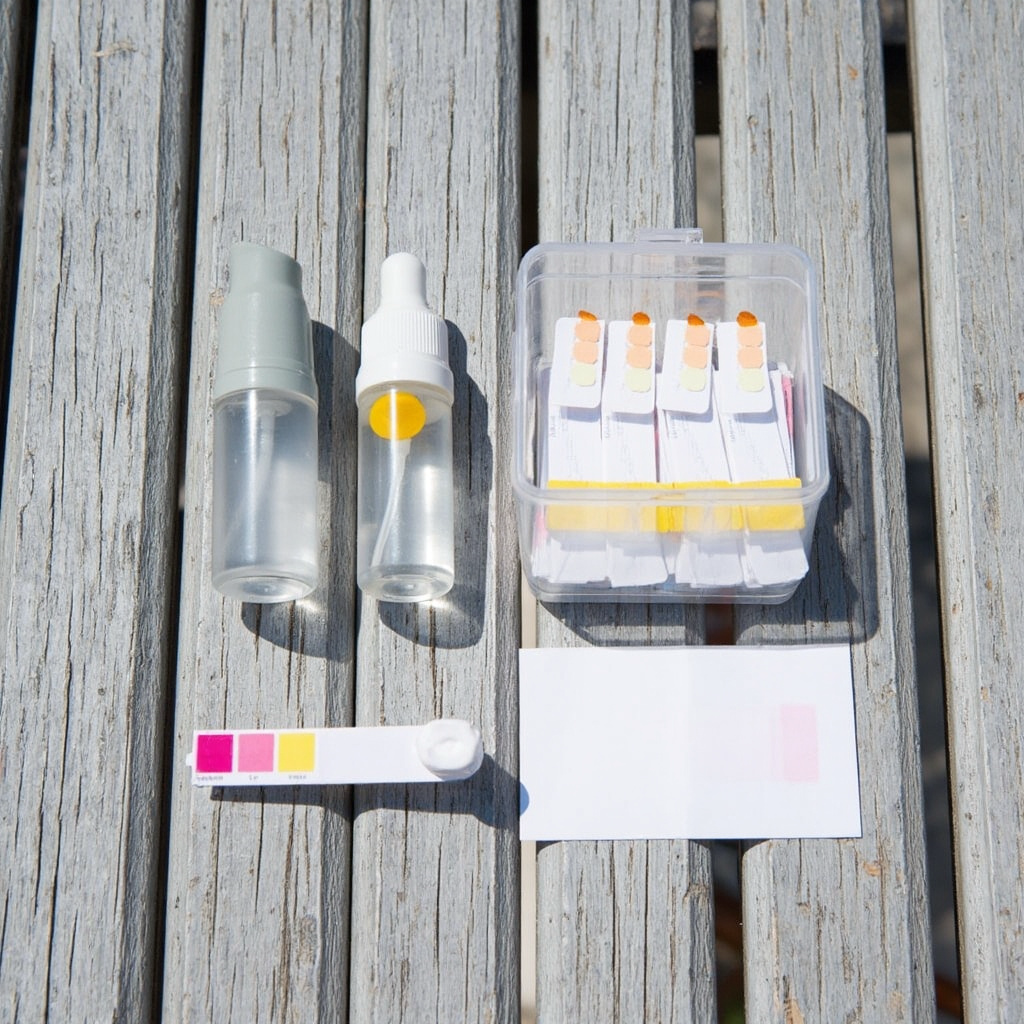
Order matters: FC, then pH, then TA, then CYA, then calcium hardness, then salinity. Cheap strips read FC wrong above 5 ppm and give you no CYA you can trust — the full testing sequence explains each target number, and free chlorine covers the FC levels that matter here. Write the numbers down before adding anything, because the fix branch depends on them.
The six numbers, in order
What you’ll need
- A DPD-based test kit — the most important tool on this page. Strips that skip CYA cause most repeat cloudiness. Our pick: Taylor K-1005 DPD kit ($44.99). Don’t step up to the pricier titration kits unless you test several times a week — this one covers everything this fix needs.
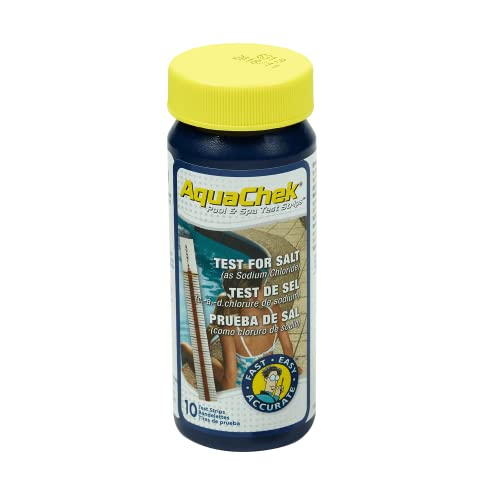
- Salt test strips — to check the panel’s salt reading: AquaChek Salt Test Strip Titrators ($12.67). Skip them only if a recent strip test already agreed with the panel.
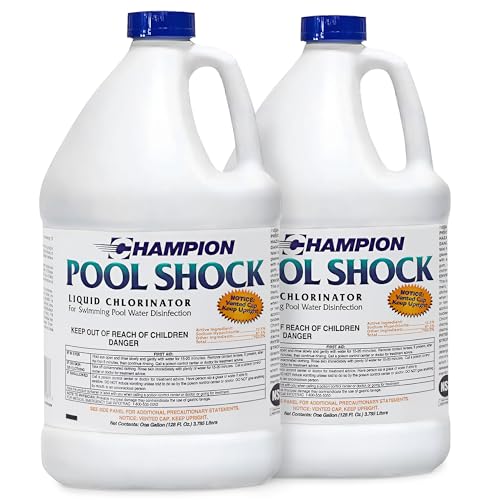
- Liquid chlorine (12.5% sodium hypochlorite) for superchlorination — no CYA, no calcium: Champion 12.5% liquid chlorine. Don’t substitute dichlor or trichlor; both add CYA.
- Cell descaler, but only if the plates are actually scaled.
- A brush and a filter that gets run — both show up in the steps below.
How to clear a cloudy salt water pool, step by step
Step 1: Test everything and look at the cell
Pull the numbers in the order above, then pull the cell and look at the plates. White flaky crust means scale; the panel light alone is not a diagnosis. This is where a DPD kit like the Taylor K-1005 earns its keep — you need FC and CYA readings you can act on.
Step 2: Fix pH and alkalinity first
Bring pH into the 7.2-7.6 window with TA around 80-100. Nothing else clears while pH runs high — this is the most common saltwater-specific trap. Give the pump an hour to mix everything, then retest before moving on.
Step 3: Restore salinity and descale the cell if needed
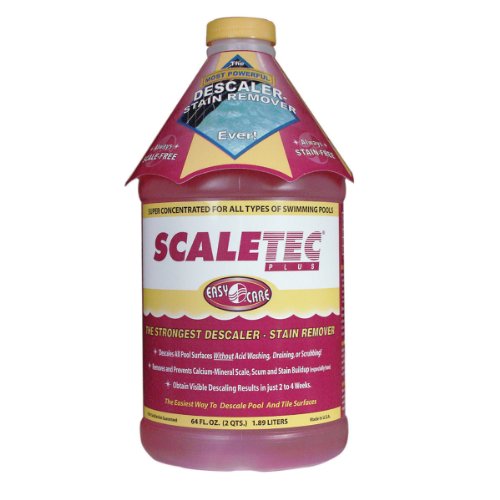
Bring salt back inside the cell’s window, topping up with the right kind — see which salt to buy. If the plates are crusted, soak the cell in a descaler such as EASYCARE Scaletec Plus ($51.75) per the label, rinse it thoroughly, and reinstall. Skip the acid soak if the plates look clean — you’d be wearing down O-rings for nothing.
Step 4: Superchlorinate with liquid chlorine
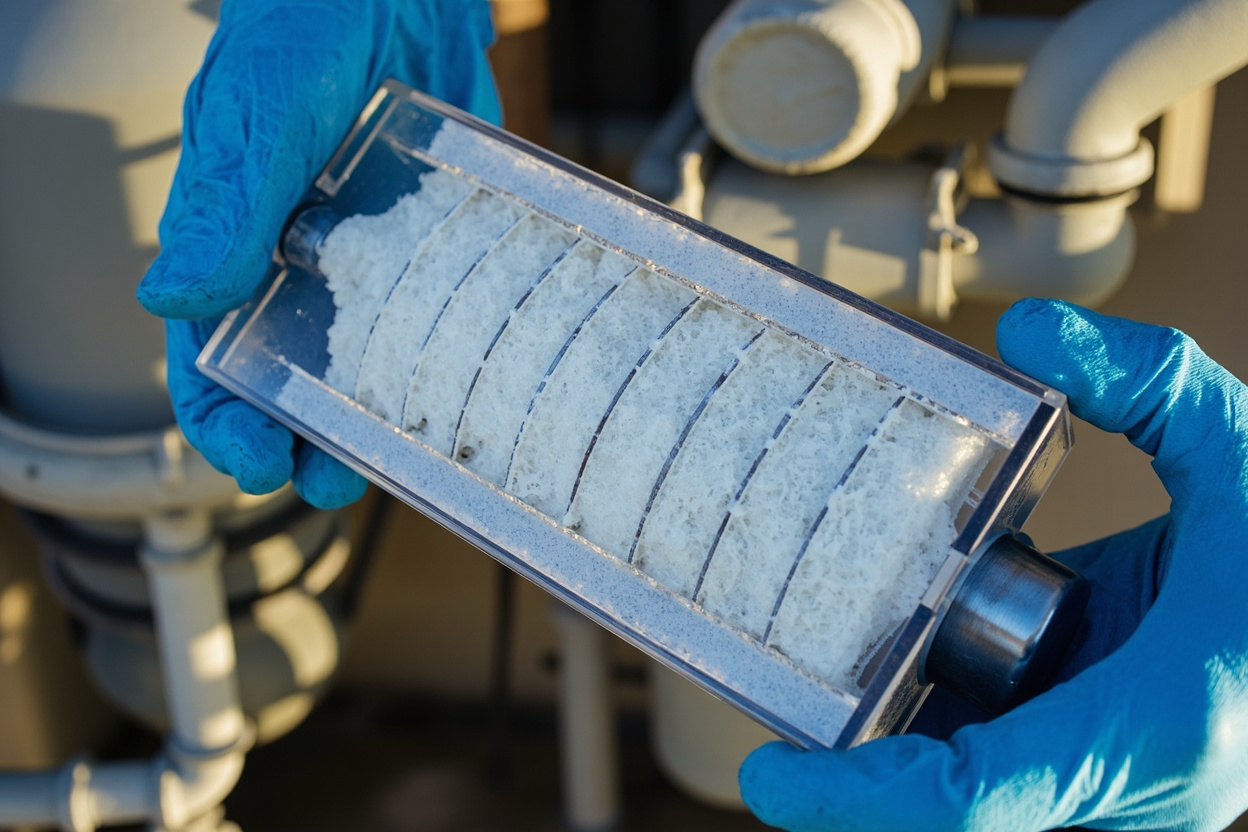
Dose for your pool size at dusk — the chemical dose tool does the math. Our pick: Champion 12.5% liquid chlorine. Liquid chlorine adds no CYA and no calcium, the two things salt pools over-accumulate. Run the pump overnight.
Step 5: Run the filter continuously and clean as pressure rises
Dead debris loads a filter fast. Backwash or rinse when the pressure gauge reads 8-10 psi over the clean starting point, and keep the system running around the clock until the water clears.
Step 6: If haze lingers past 48-72 hours, use a salt-safe enzyme clarifier
Standard polymer clarifiers can foam inside a salt cell — the enzyme-rated picks live on our cloudy pool hub. Don’t pour a generic floc into the skimmer on an SWG pool; it can gum up the cell.
Step 7: Retest before anyone swims
FC back in the 1-4 ppm window, pH 7.2-7.6, and water reading clearly to the floor. Verify the panel’s salt estimate with AquaChek strips while you’re at it. Then put the weekly rhythm on the calendar — weekly pool care is the template.
What to buy only if needed
Most cloudy salt pools clear with what’s already listed above. Buy something extra only when a specific condition is true.
Only if the plates are actually scaled
EASYCARE Scaletec Plus — a clean cell needs no descaler, and repeat soaks wear seals. A muriatic-acid soak is the old-school alternative but harsher on O-rings.
Only if you can’t verify salinity
AquaChek Salt Titrators — the panel’s salt reading is an estimate, and strips settle the disagreement for pocket change.
Only if FC won’t hold after two rounds
Another dose of the Champion liquid chlorine from Step 4, sized by the dose tool. Skip the second jug if FC holds overnight — more isn’t better. If it still won’t hold, jump to When to call a pro.
Skip entirely
An enzyme clarifier “just in case,” phosphate removers without a phosphate test, and extra salt without a strip reading.
Common mistakes
- Trusting cheap test strips alone. They misread FC above 5 ppm and skip CYA — the two numbers this whole page runs on. A DPD kit like the Taylor K-1005 fixes both, and the strips-vs-kits comparison shows why liquid beats strips here.
- Pouring standard clarifier into a salt pool. Polymer clarifiers can foam inside the cell and make the mess worse. Enzyme formulas only.
- Shocking week after week with dichlor. Every dichlor dose adds CYA; past roughly 80-100 ppm chlorine locks up and the pool clouds while the tests “look fine.” Liquid chlorine carries no CYA — that’s why it’s the pick in Step 4 (Champion 12.5%).
- Chasing chemicals while the cell is scaled. If the plates are crusted, no amount of product fixes output. Descale first, then re-dose.
- Ignoring the pH drift. The SWG pushes pH up around the clock; shocking into high-pH water wastes the dose and leaves blue-white haze behind.
Safety notes (read this)
- Never mix liquid chlorine with muriatic acid — toxic gas on contact. Store them on separate shelves and add them in separate sessions with the pump running.
- Keep liquid chlorine off your skin and add it diluted around the return flow at dusk; it burns skin and bleaches liners.
- Cell descaler is still an acid job. Gloves and eye protection, work outdoors, pour chemical into water (never water into chemical), and rinse the cell fully before reinstalling it.
- Store everything locked away from kids and pets, in original containers, out of direct sun.
- No swimming until the Step 7 retest passes. High-FC water isn’t “extra clean” — it’s a swim hazard.
When to call a pro
Keep the DIY route if: you can test water, brush, run the filter, and the numbers move the right way each day.
The cell still reports low output after descaling with correct salinity
Likely an end-of-life cell — most last 3-5 seasons. A tech can confirm with an output test before you buy a replacement.
Cloudiness survives the full sequence with normal pressure and chemistry
Suspect filter media failure. Channeling sand or torn DE grids need hands-on repair.
The SWG unit throws repeated error codes or trips the breaker
That’s electrical-fault territory. Stop DIY and get a licensed pool tech.
Related
- Cloudy pool water: the complete hub — all nine causes for both pool types, cost breakdown, and the clarifier picks.
- Saltwater pool algae — when the haze has a green tint, this is the treatment sequence.
- Pool still green after shocking — the sibling problem: shock done, water still wrong.
Key takeaways
- The salt cell is the first suspect: scaled plates mean low output, and low output means haze — even when the panel says “ok.”
- Test FC, pH, TA, CYA, calcium hardness, and salinity in that order before adding anything.
- Fix pH before dosing anything else; SWG pools drift high every day the cell runs.
- Superchlorinate with liquid chlorine — no CYA, no calcium, salt-cell safe.
- Keep salt inside the 3,000-4,000 ppm window and clean the cell every 3 months.
- Never pour standard clarifier near a salt cell; enzyme formulas only.
- Cloudy plus a green tint means algae is starting. Treat it as algae, not just haze.