Quick answer
You shocked the pool and it’s still green. That means the shock didn’t solve the root cause. Before you dump in another bag, test free chlorine, pH, CYA, and metals. The most common reasons: not enough shock for the algae load, high CYA locking your chlorine, pH above 7.8 making chlorine ineffective, oxidized copper tinting the water, or dead algae clouding it. Diagnose first, then treat the actual problem.
What this is not
Shocking again isn’t always the answer. A pool that stays green after a proper shock has a specific bottleneck, and adding more chlorine wastes money.
Shock is not everyday chlorine. A shock dose is a concentrated, one-time chlorine application that raises free chlorine high enough to oxidize contaminants. Daily tabs or a saltwater generator at normal output are maintenance, not shock. If you only added tabs and the pool is still green, you haven’t actually shocked it. See our pool shock chemistry guide for what counts as a true shock dose.
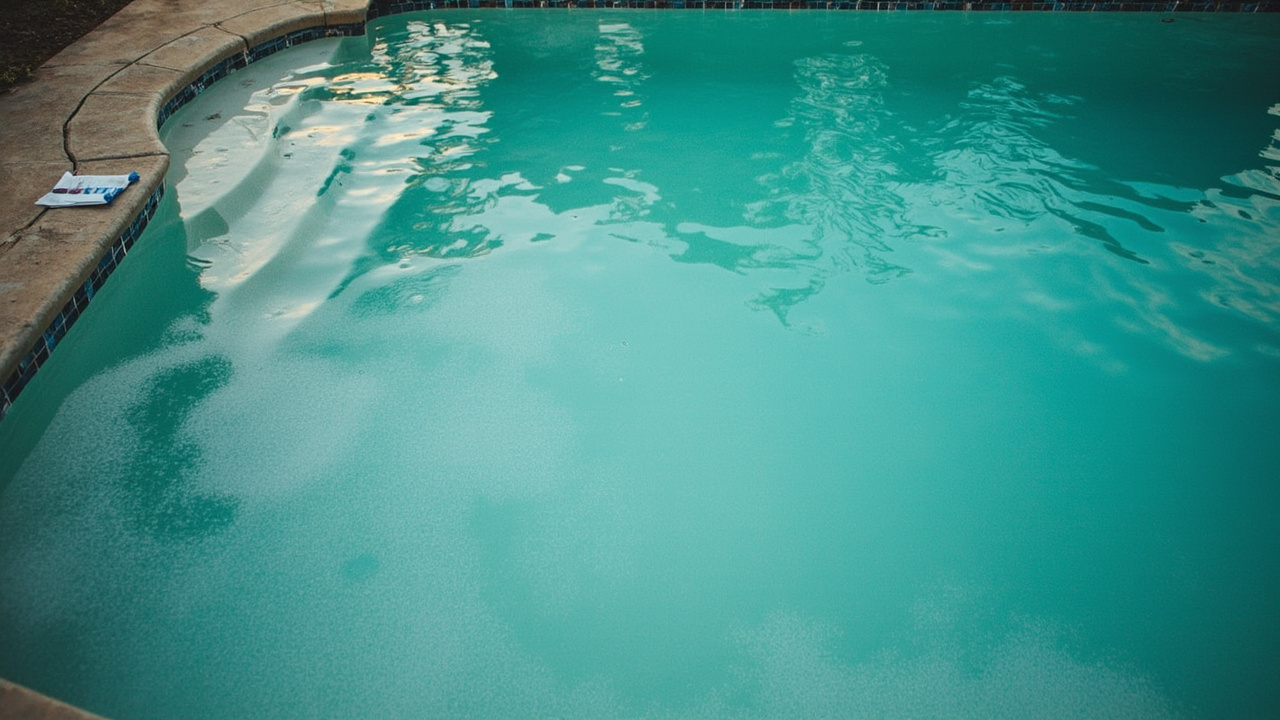
Green does not always mean algae. After shocking, the water can turn green for reasons that have nothing to do with living algae. Oxidized copper or iron turns clear water green with no slime. Dead algae particles cloud the water a murky green. Low sanitizer with high CYA means the algae is still alive. Each needs a different fix.
Still green doesn’t mean the shock failed. Algae blooms, especially mustard algae, can take 24 to 48 hours of sustained high chlorine and continuous filtration to clear. If the water is lighter than before and chlorine is holding, give it more time. If it’s the same shade or darker, something else is wrong.
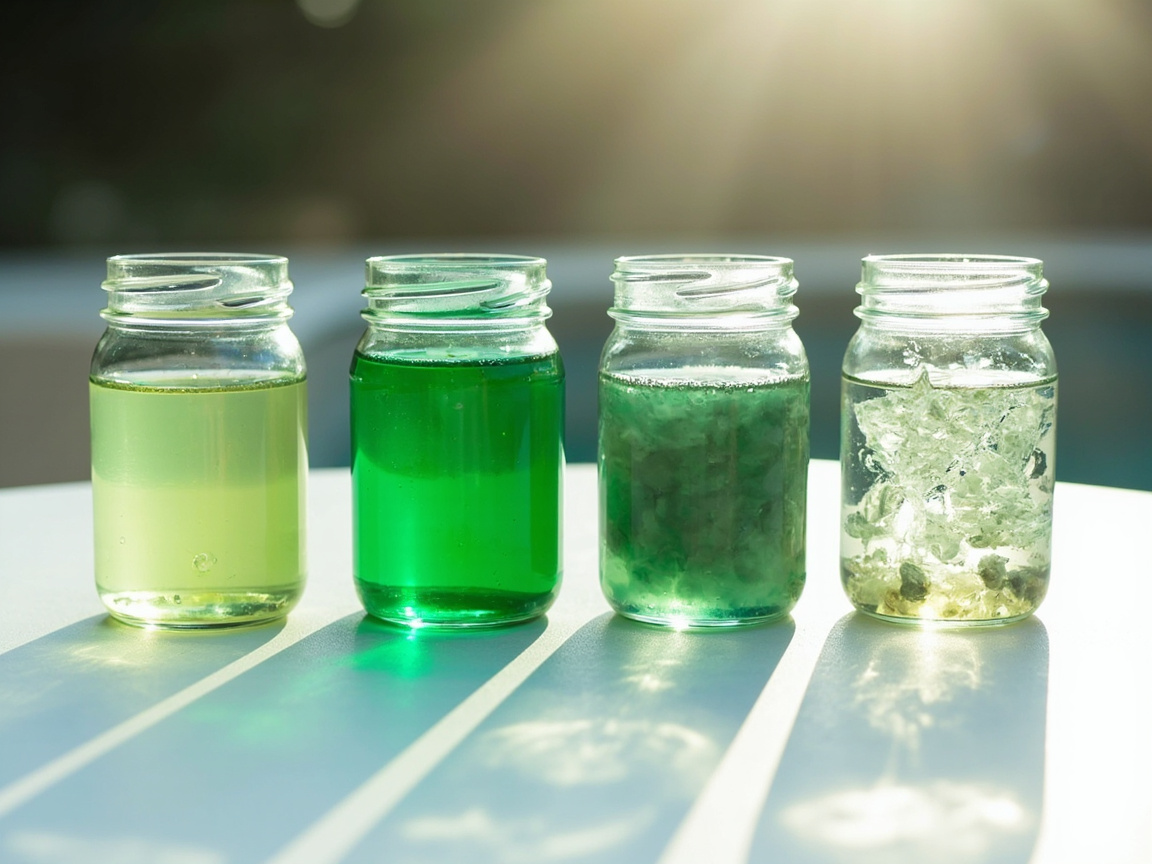
Decision tree: why the pool is still green after shock
Work through these branches in order. Each has a specific test and fix.
Branch 1: Free chlorine dropped to zero overnight
Measure free chlorine (FC) 12 hours after shocking. If FC is 0 to 1 ppm, the shock was consumed entirely by the algae load. The pool needed more chlorine than you added.
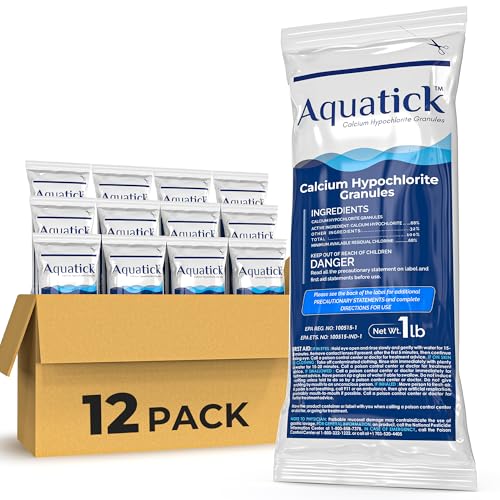
Re-shock at dusk with a cal-hypo shock at the label dose for your pool volume. Brush first, run the pump overnight, retest FC at dawn. If FC holds above 3 ppm, the algae is dying. If it drops to zero again, move to Branch 2.
Skip this branch if FC is above 3 ppm after 12 hours. The shock is working and the green is likely dead algae, go to Branch 6.
Branch 2: CYA is above 50 ppm (chlorine is locked)
Measure cyanuric acid (CYA). If CYA is above 50 ppm, your free chlorine is stabilized but much of it is bound to CYA and unavailable to kill algae. At CYA 100 ppm, you may need FC above 10 ppm just to maintain sanitation.
Do not add more stabilized chlorine (dichlor or trichlor). Use cal-hypo or liquid chlorine, which do not raise CYA. If CYA is above 80 ppm, the fastest fix is a partial drain and refill to dilute stabilizer, then re-shock.
Skip this branch if CYA is below 50 ppm. Stabilizer isn’t the problem.
Branch 3: pH was above 7.8 when you shocked
Check your pH reading from before you shocked. If pH was above 7.8, chlorine effectiveness drops sharply. At pH 8.0, only about 20% of your free chlorine is in the active hypochlorous acid form. At pH 7.2, nearly 70% is active.
Before re-shocking, adjust pH to 7.2 to 7.4 using muriatic acid or sodium bisulfate per the label. Wait for circulation, then re-shock. If TA is also high, pH will bounce back. Fix total alkalinity first to 80 to 120 ppm.
Skip this branch if pH was already 7.2 to 7.6 when you shocked.
Branch 4: The water is clear but green (metals or copper)
If the water is clear but green, not cloudy or slimy, suspect dissolved copper or iron, especially after a pH change or well fill. Use a copper test strip or take a sample to a pool store for a metals test.
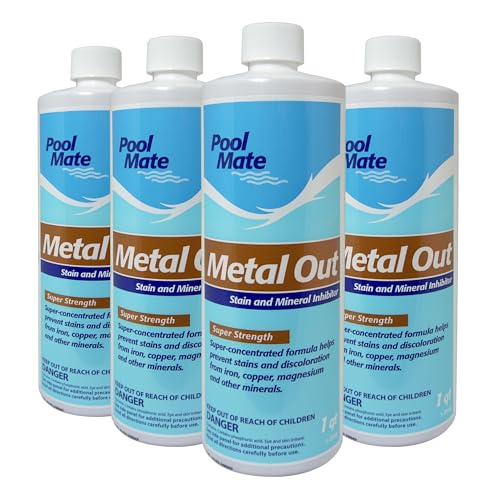
Do not add more chlorine. Adding more oxidizer will oxidize more metal and darken the tint. Add a metal sequestrant like Pool Mate Metal Out per the label dose. Run the pump for 24 hours. If the color fades, metals were the cause.
Skip this branch if the water is cloudy, slimy, or you can’t see the bottom.
Branch 5: Saltwater generator output is too low
If you have a saltwater pool, check the SWG cell output percentage, salt level (target 2700 to 3400 ppm), and inspect the cell for scaling. During an algae bloom, a salt cell at normal output cannot raise FC fast enough.
Boost the SWG to super-chlorinate mode for 24 hours, or add a manual dose of liquid chlorine. Clean the cell if scaled. Verify salt level with an independent test. See our saltwater basics guide for SWG-specific failure modes.
Skip this branch if you have a traditional chlorine pool with no SWG.
Branch 6: Dead algae is clouding the water (cloudy green)
If FC is holding above 3 ppm, the water is lighter green or cloudy green but not slimy, and brushing shows no live algae film, the algae is dead but the particles are too fine for your filter to catch.
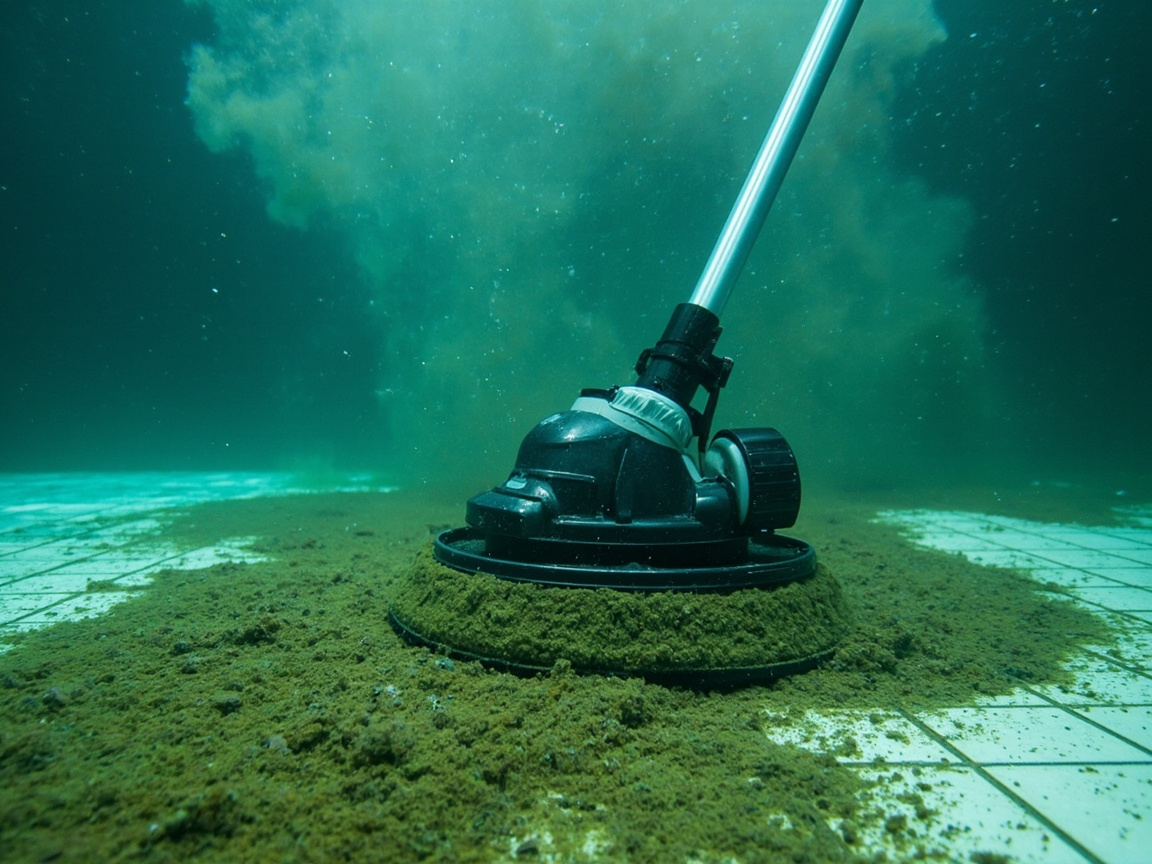
Run the filter 24/7 and backwash or clean it as pressure rises. Add a water clarifier to clump fine particles so the filter can trap them. Vacuum to waste if there’s a layer of dead algae on the floor. See our cloudy pool guide for post-treatment clarity steps.
Skip this branch if the water is still slimy and dark green. Algae is still alive, go back to Branch 1.
Branch 7: Filter or pump is not running properly
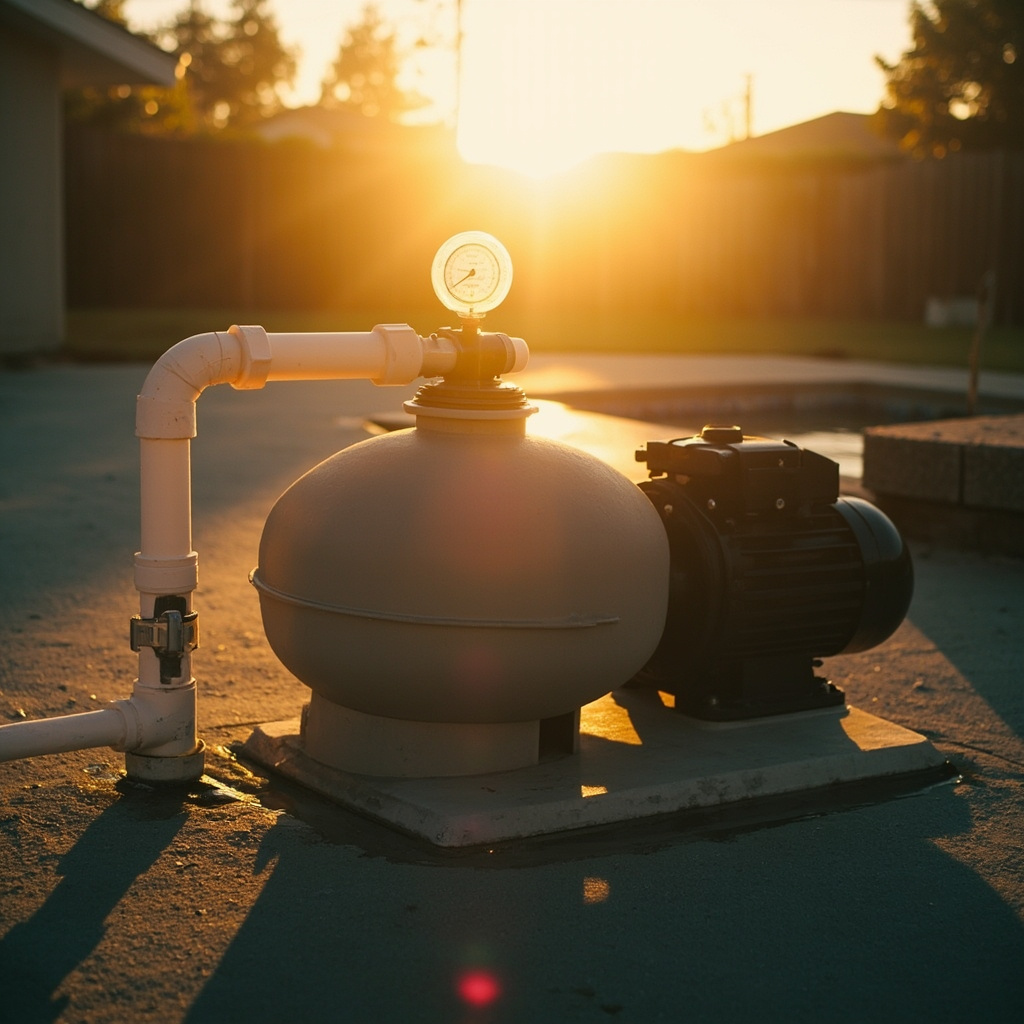
Check filter pressure against your clean baseline. If pressure is 8 to 10 psi above baseline, the filter is clogged and needs cleaning. If pressure is below baseline, there may be a suction-side blockage (skimmer basket full, pump impeller clogged, or air leak).
Clean or backwash the filter. Empty skimmer and pump baskets. Check that the pump is running and primed. If the filter media is old or degraded, consider replacing it. See our weekly pool care guide for filter maintenance intervals.
What to test first
Before adding any more chemical, get these numbers:
- Free chlorine (FC): Is there residual sanitizer, or did the shock get consumed entirely?
- pH: Was chlorine effective, or did high pH neutralize it?
- Total alkalinity (TA): Is pH unstable because TA is off?
- Cyanuric acid (CYA): Is your chlorine locked by too much stabilizer?
- Combined chlorine (CC): If CC is above 0.5 ppm, you have chloramines. Shock reached breakpoint but the water still needs oxidation.
- Metals test: If the water is clear but green, test for copper and iron.
- Filter pressure: Compare to your clean baseline.
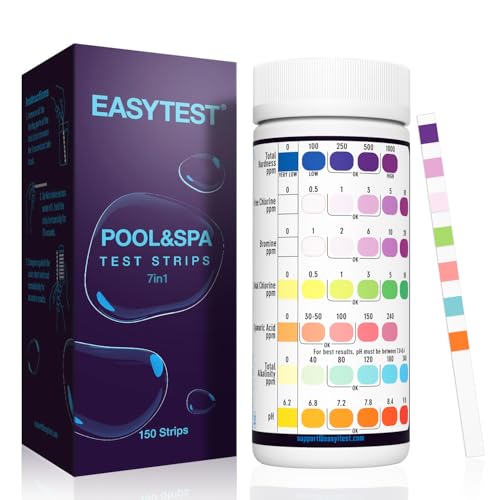
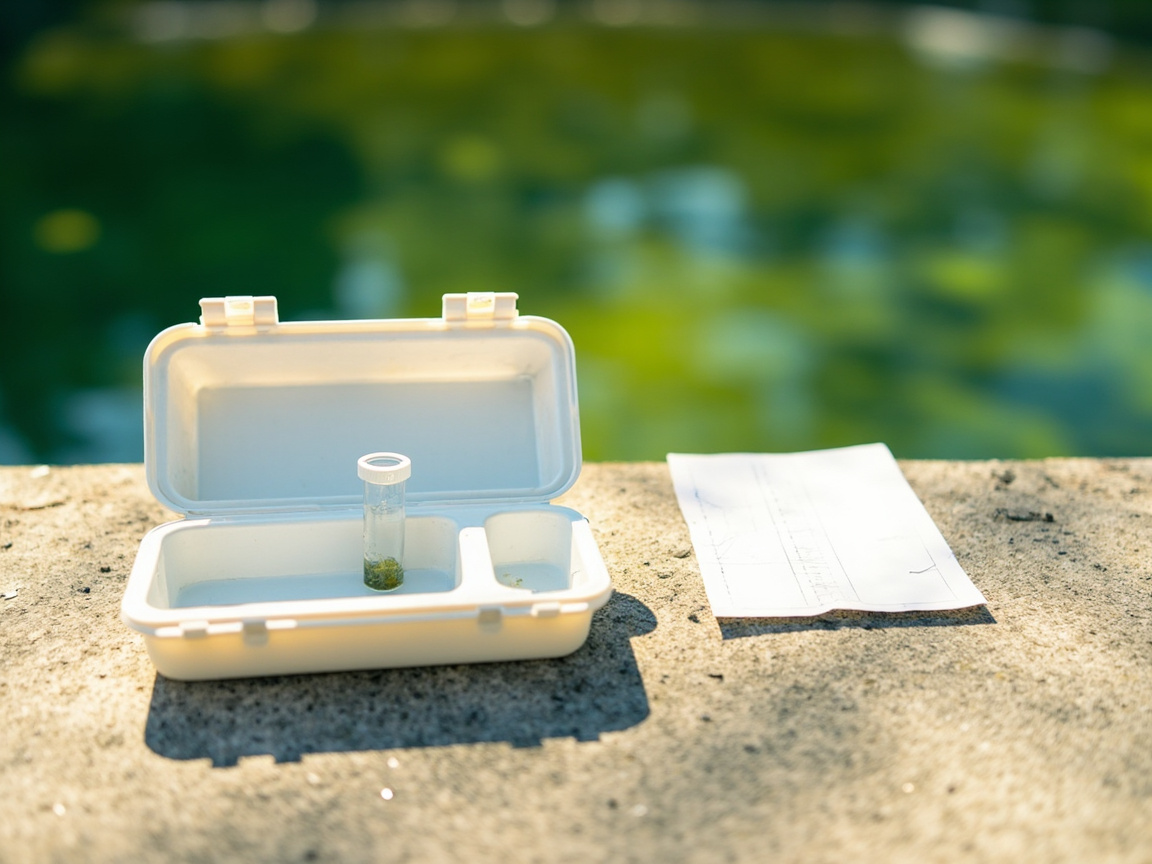
A 7-in-1 test strip gives a quick read on FC, pH, TA, and CYA. See our pool water testing guide for choosing the right method.
What you’ll need
| Item | Why | Product |
|---|---|---|
| Test strips | Read FC, pH, TA, CYA before dosing | EASYTEST 7-Way Strips |
| Cal-hypo shock | Re-shock if FC dropped to zero | POOLACC 68% Cal-Hypo |
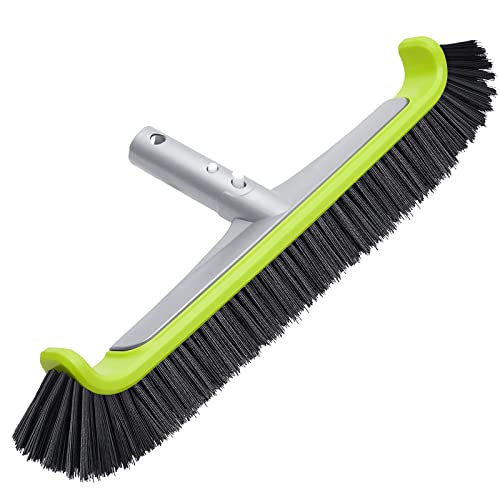
| Pool brush | Break algae film before treatment | Sepetrel 17.5” Brush |
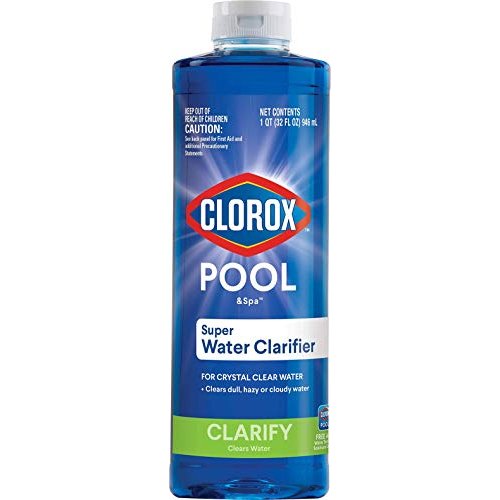
| Water clarifier | Clump dead algae for the filter | Clorox Super Clarifier |
| Metal sequestrant | Only if water is clear green from copper | Pool Mate Metal Out |
Step-by-step: fix a pool still green after shocking
Test all parameters before adding anything
Use test strips or a liquid kit to read FC, pH, TA, CYA, CC, and filter pressure. Write down every number. If the water is clear but green, also test for metals. Don’t skip this. Adding more shock without knowing why the first one failed is guessing.
Identify your branch in the decision tree
Match your test results to the decision tree above. FC at zero means Branch 1. CYA above 50 means Branch 2. pH above 7.8 means Branch 3. Clear green water means Branch 4. SWG pool means Branch 5. FC holding with cloudy green means Branch 6. High filter pressure means Branch 7.
Fix the root cause before re-shocking
If CYA is high, partially drain and refill before re-shocking. If pH is high, lower to 7.2 to 7.4, then shock. If metals are present, add sequestrant, not more chlorine. If the filter is clogged, backwash first. Use the chemical dose calculator to confirm every dose matches your pool volume.
Re-shock at the correct dose if algae is still alive
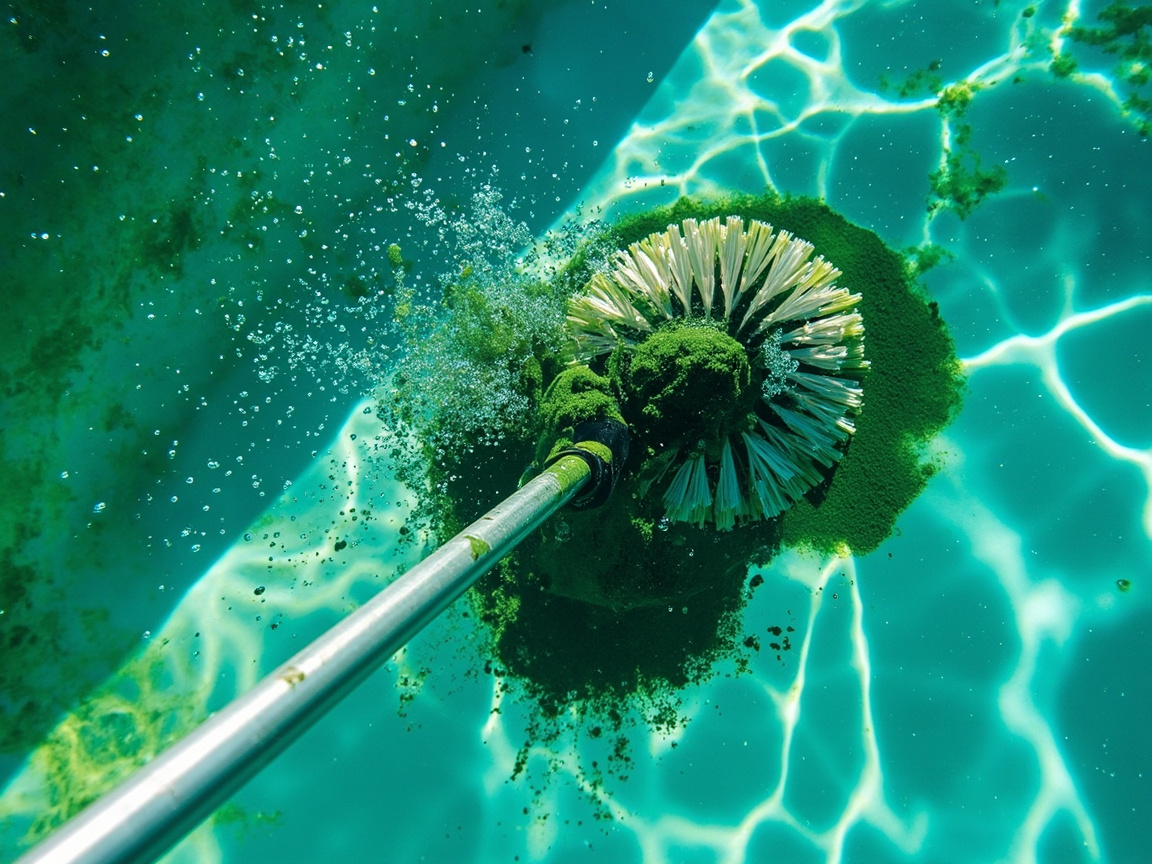
Brush all surfaces first. Algae forms a protective film that chlorine can’t penetrate without physical disruption. Use a cal-hypo shock at the label rate for your pool volume. Add at dusk to minimize UV loss. Run the pump overnight.
Run the filter continuously and clean as pressure rises
Dead algae and organic debris load the filter fast. Check pressure every 4 to 6 hours. Backwash or clean when pressure rises 8 to 10 psi above baseline. If you have a cartridge filter, have a spare cartridge ready so you can swap and clean without stopping filtration.
Add a clarifier if the water is still cloudy
If FC is holding and the water is lighter but still cloudy green, the algae is dead but the particles are too fine for your filter. Add a water clarifier to coagulate particles. If that doesn’t work after 24 hours, use a flocculant to drop everything to the bottom and vacuum to waste.
Retest before swimming
Wait until FC is within the label range for your sanitizer, pH is 7.2 to 7.6, the water is clear enough to see the drain at the bottom, and the filter is running normally. See our parent green pool guide for the full swim-readiness checklist.
What to buy only if needed
Only if CYA is above 50 ppm: You don’t need to buy a product to lower CYA. The fix is a partial drain and refill. Diluting stabilizer with fresh water is the only reliable method.
Only if pH is above 7.8: Use muriatic acid or dry acid per the label. The chemical dose calculator estimates the amount for your pool volume.
Only if the water is clear green (metals): Add a metal sequestrant per the label. Don’t add more chlorine until the tint fades.
Common mistakes
Adding more shock without testing. Most common mistake. If CYA is high, more shock won’t help. If pH is high, chlorine is less effective regardless of dose. If metals are the cause, more chlorine darkens the tint. Test first, always.
Using dichlor shock when CYA is already high. Dichlor adds CYA with every dose. If your CYA is already above 50 ppm and you shock with dichlor, you lock even more chlorine and make the problem worse. Use cal-hypo or liquid chlorine. See our how to choose pool shock guide for matching shock type to your situation.
Not brushing before shocking. Algae forms a biofilm on pool surfaces that chlorine alone can’t penetrate. If you skip brushing, the shock kills surface algae but the film underneath survives and regrows within days. Brush every surface, including walls, floor, steps, and behind ladders. A stiff pool brush makes this faster and more effective.
Turning off the pump after shocking. Shocking kills algae, but dead algae has to go somewhere. If the pump is off, dead particles settle to the floor and the water stays green. Run the filter 24/7 during and after treatment.
Ignoring the filter. A clogged filter at 15 psi above baseline can’t remove dead algae. If you never clean the filter, dead algae circulates back into the pool.
Safety notes
- Never mix different chlorine products dry or in the same container. They can react violently.
- Never pour shock through a skimmer that feeds an automatic chlorinator. The concentrated chlorine can cause a dangerous reaction in the chlorinator.
- Add chemical to water, not water to chemical, when pre-dissolving muriatic acid. Adding water to concentrated acid causes a violent exothermic reaction that can splatter acid onto skin and eyes.
- Wear safety goggles and chemical-resistant gloves when handling cal-hypo, muriatic acid, or any concentrated pool chemical.
- Store chlorine in a cool, dry area away from acids and oils. Keep containers closed and labeled. Keep children and pets away.
- Never add shock and acid at the same time. Circulate each chemical separately per the label.
When to call a pro
Keep DIY if: you can test water, brush, run the filter 24 hours, and numbers are moving the right way.
Call a pro if:
- You’ve shocked twice, brushed, filtered continuously for 48 hours, corrected pH and CYA, and the pool is still dark green.
- The water is clear green but you can’t confirm metals with a test. A pool service can run a full metals panel.
- The pump won’t prime or you suspect electrical issues. You can’t clear a green pool without working filtration.
- You suspect a structural leak or groundwater intrusion through a damaged liner. No amount of chlorine fixes a structural issue.
Related
- How to Clear a Green Pool (Step-by-Step) - The parent hub: full green pool treatment roadmap from diagnosis to clear water
- Cloudy Pool Water: Causes and Fixes - Post-shock clarity: dead algae particles and filter management
- Pool Shock: Types, Dosage, and When to Use - Matching shock type to your pool situation
Key takeaways
- A pool still green after shocking has a specific bottleneck. Test before adding more chemical.
- If FC dropped to zero, the shock was consumed. You need more.
- If CYA is above 50 ppm, chlorine is locked. Drain and dilute before re-shocking.
- If pH was above 7.8, chlorine was mostly inactive. Adjust pH to 7.2 to 7.4 first.
- Clear green water after shocking points to metals, not algae. Use a sequestrant.
- Cloudy green water with FC holding means dead algae. Filter 24/7 and use a clarifier.
- Never skip brushing or filtration. Shock kills algae, but the filter removes it.