Quick answer
Above-ground pools share the chemistry fundamentals with inground — free chlorine 1-3 ppm, pH 7.2-7.6, total alkalinity 80-120 ppm — but smaller water volume cuts doses, pump size, and equipment roughly in half. Vinyl liners cap calcium hardness at 200 ppm, not 400. Winterizing is plug-and-cover, not a full blowout. Pick the right ladder and pump fit and the rest of the routine follows the same weekly pattern.
What this is not
This is not a buying guide for choosing an above-ground pool — tank shape, frame material, size, and brand don’t belong here. It also isn’t an installation guide for site prep, leveling, ground cloth, or frame assembly. We start from “the pool is full of water.” And it’s not a zero-maintenance routine — above-ground pools still need chlorine, pH control, and CYA.
Decision tree: which above-ground system do you actually run?
Your care routine branches on five questions. Pick the branch that matches your setup and the rest of this article fills in the AG-specific details.
Round vs oval footprint
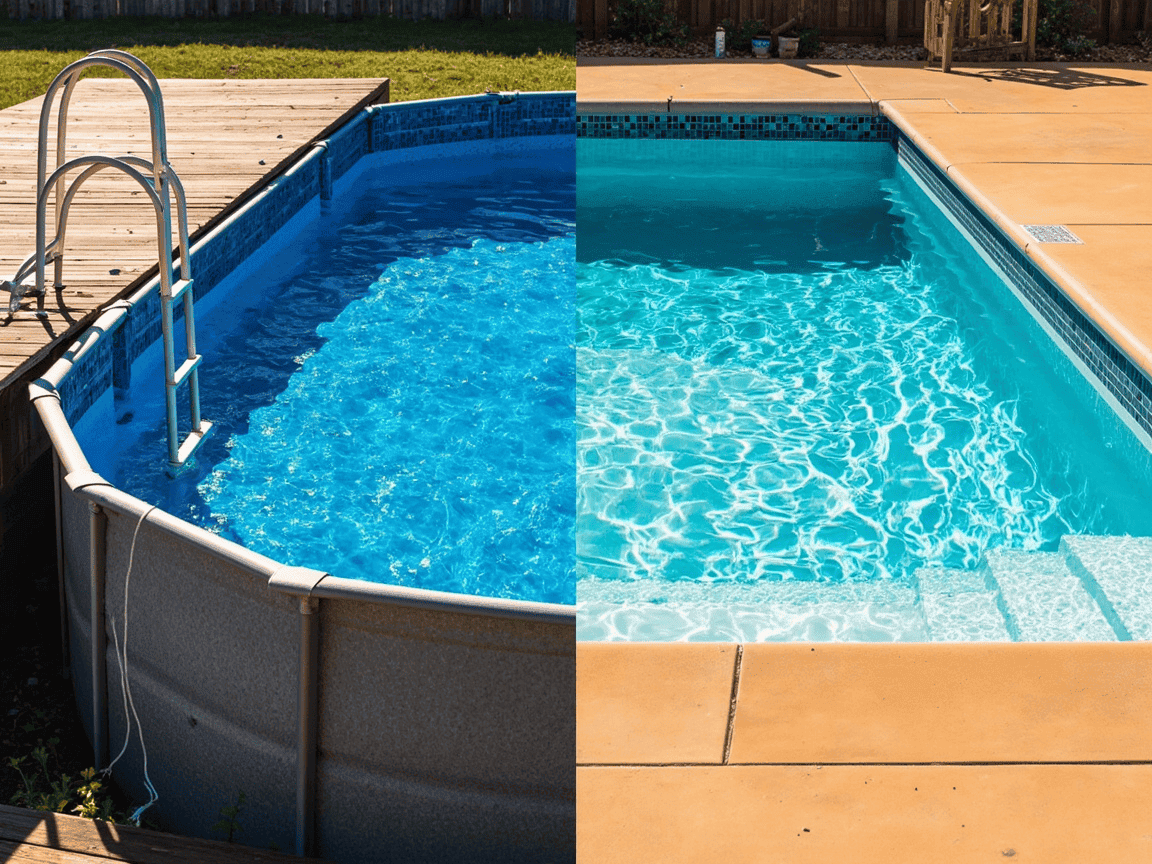
A round 24 ft AG pool holds about 13,000 gallons. An 18x33 ft oval pool holds closer to 9,000 gallons in the same backyard footprint — less water, longer wall. Skip this distinction if your pool is under 5,000 gallons — the dose math below roughly halves again.
Chlorine vs saltwater above-ground
Saltwater AG pools need a salt chlorine generator (SWG) sized to your volume. Most off-the-shelf SWG cells are rated for 15,000-20,000 gallons — oversize for many AG pools. If your pool is under 12,000 gallons, look for an SWG with a lower output rating or you’ll over-chlorinate and waste salt. Skip this branch if you’re running trichlor tabs or liquid chlorine — your routine is the standard chlorine path in Step 3.
Hard-plumbed vs flexible-hose above-ground
Most above-ground pools run on flexible hoses and over-the-wall skimmers, not hard PVC. The pump-to-return path can leak at any fitting.
Climate: year-round vs seasonal
Mild winters: leave the pool up, keep FC 1-3 ppm, cover nightly. Any freeze: drain below the skimmer, plug the return, and cover. AG plumbing can’t survive a hard freeze.
Vinyl liner vs hard wall
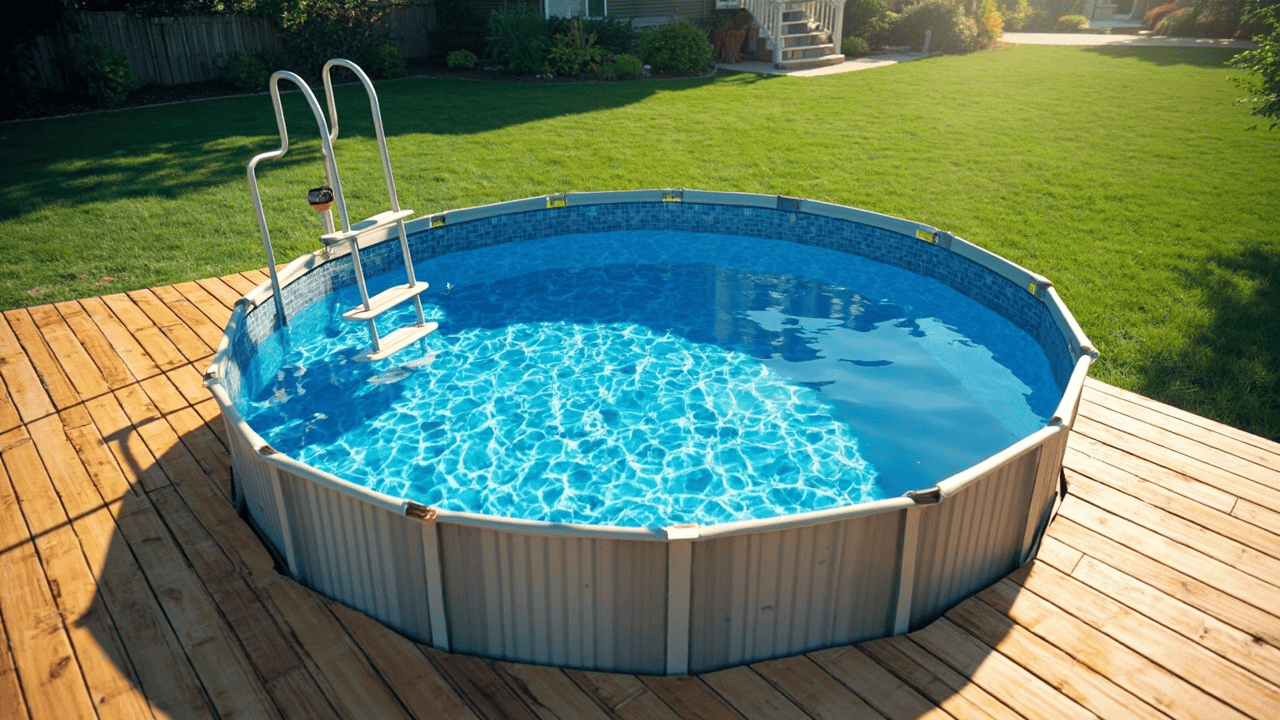
Above-ground pools are almost always vinyl liner over a steel or resin wall. The liner caps calcium hardness at 200 ppm and calls for gentle brushing — the main chemistry difference from plaster. See Step 7 and the calcium hardness hub.
Above-ground vs inground: the differences that change your care
Purchase guides cover cost. For care, the differences come down to volume, liner, and equipment — they move doses, brushing, and closing. Smaller water swings faster, evaporates faster, and recovers from green faster.
What stays the same
The routine and the target numbers are identical for both pool types: test, adjust TA then pH then chlorine, brush, run the pump. Free chlorine 1-3 ppm, pH 7.2-7.6, and TA 80-120 ppm don’t care what the pool is built from. New to all of it? The first-year pool owner guide walks the same sequence for either pool.
What changes: volume, liner, and equipment
| Care difference | Above-ground | Inground |
|---|---|---|
| Water volume | 10-15k gal | 20-30k gal |
| Shock for a 4 ppm FC target | 0.6 lb cal-hypo per 10k gal | 1.2 lb per 20k gal |
| Calcium hardness | 200 ppm ceiling on vinyl | 200-400 ppm on plaster |
| Pump and runtime | 0.5-1 HP class, ~8 h a day | 1.5-2 HP |
| Brushing | Soft brush on vinyl | Stiff brush on plaster |
| Winter closing | Drain, plug, cover | Full line blowout |
What it costs over a season
Per treatment, chemistry runs about half: the 4 ppm FC shock that takes 0.6 lb of cal-hypo in 10k gallons takes 1.2 lb in 20k. Equipment spends less too — the 0.85 HP AG pump class lists around $399, and a $15 patch kit buys years on a sound liner. The gap narrows at replacement: vinyl is a wear item on an 8-12 year clock, while inground owners trade that for a costlier plaster resurfacing job.
What you’ll need
Beyond the pool itself, an above-ground owner needs a test kit, a pump sized to the pool volume, an over-the-wall skimmer, a safety ladder with a barrier gate, a winter cover matched to the pool footprint, and a winterizing plug set for the return line. Each piece has a dedicated section below with the model we’re recommending for a typical 15k-gallon round AG pool.
What to buy
Pump: Hayward PowerFlo LX
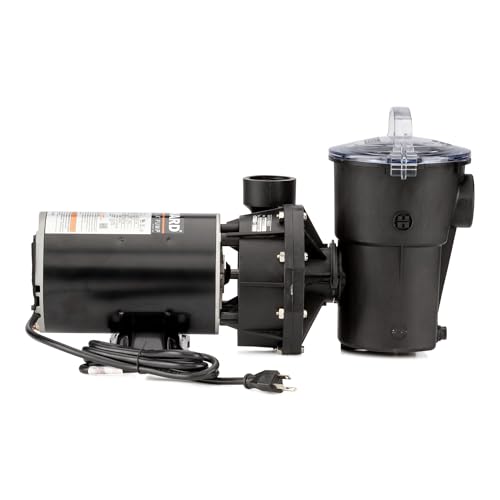
For an above-ground pool up to about 24 ft round, the Hayward PowerFlo LX 0.85 HP pump is the workhorse pick. Single-speed, 1 HP class (DOE-relabeled 0.85 HP, same hydraulic output as the older 1.1 HP listing), sized for vinyl-liner water volumes under 15,000 gallons. It turns over a typical AG pool in roughly 8 hours. Skip it if your AG pool is under 10,000 gallons; a smaller 0.5 HP pump will do the same job on less electricity.
Ladder: Confer Roll Guard A-Frame
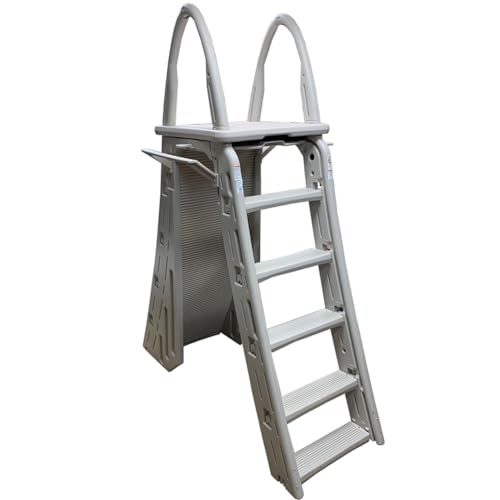
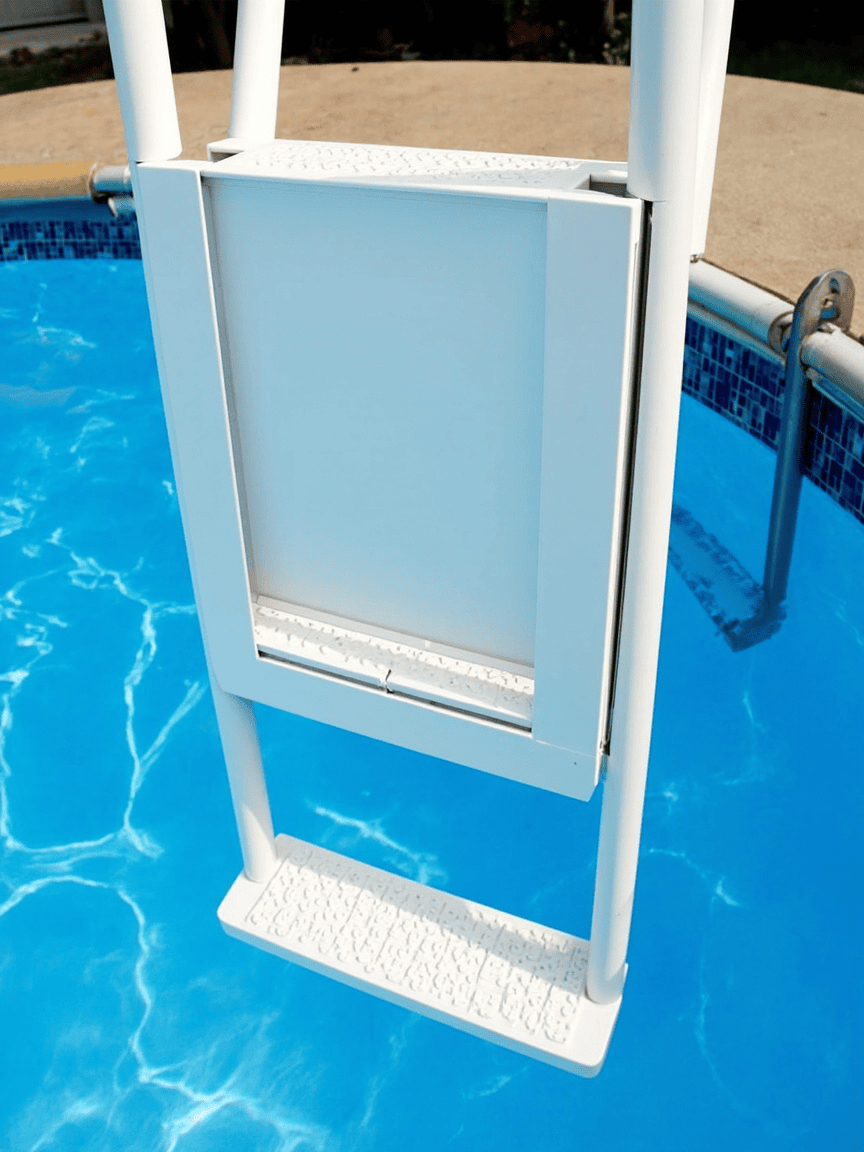
The Confer Plastics 7200 Roll Guard A-Frame Safety Ladder fits AG pools with 48-56 inch wall heights and includes the swing-up outer steps that block unsupervised kid access. Don’t leave a fixed ladder up year-round — kids climb it, and the sun degrades the vinyl top rail. Lock the gate closed when you’re not swimming.
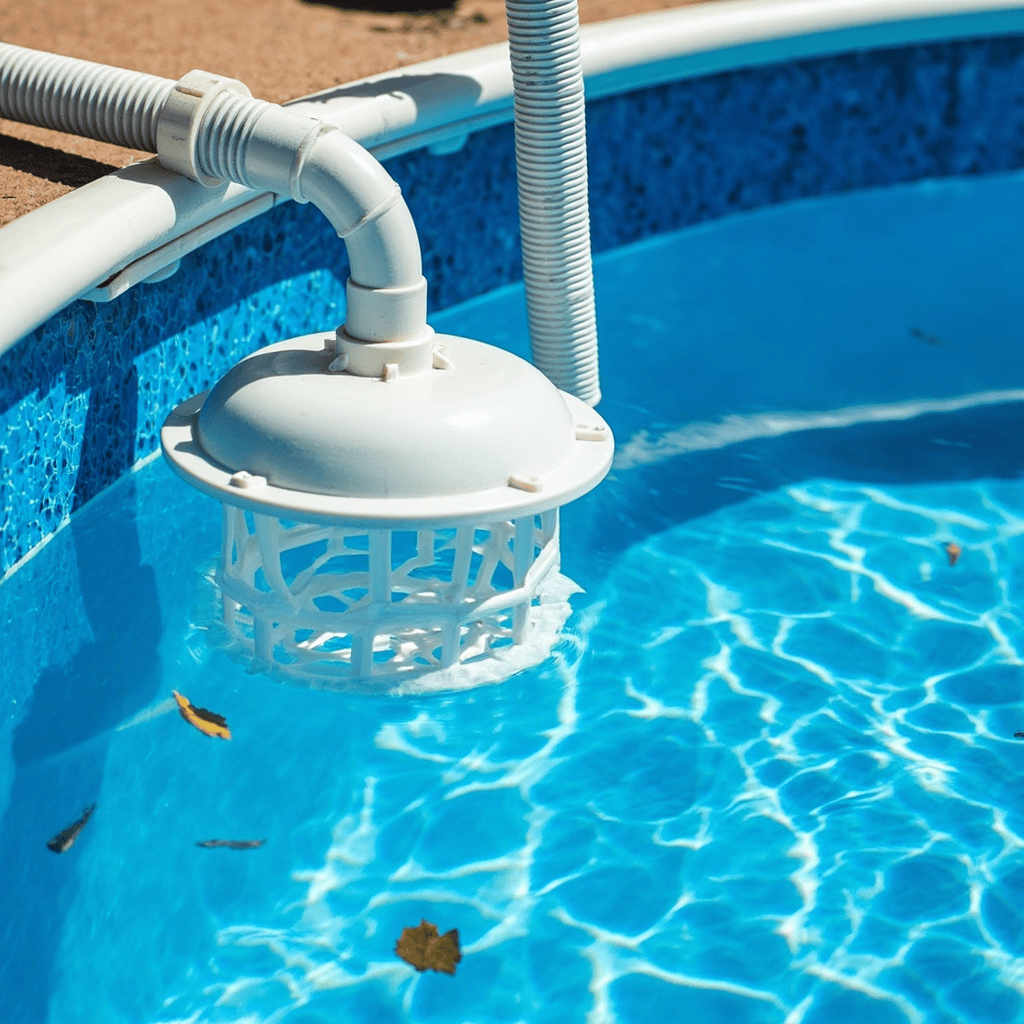
Skimmer: U.S. Pool Supply AG Floating Skimmer
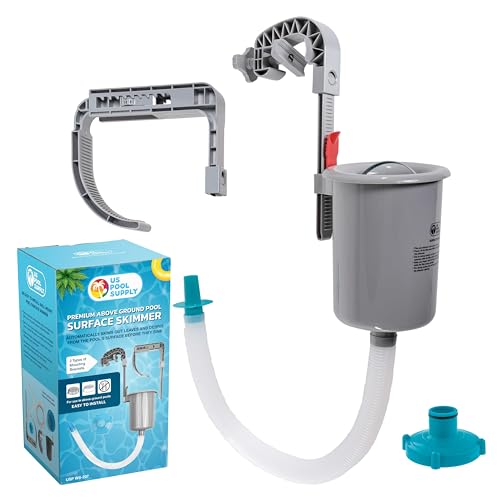
The U.S. Pool Supply Above Ground Pool Skimmer hooks over the AG wall and connects to your pump via included adapters. Removable debris basket for easy cleaning.
Winter cover: Robelle 24 ft Heavy Duty
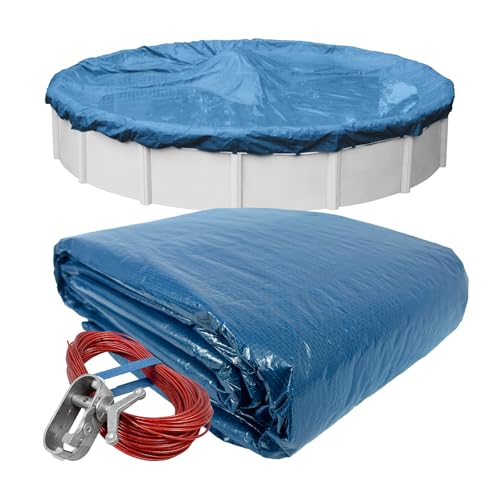
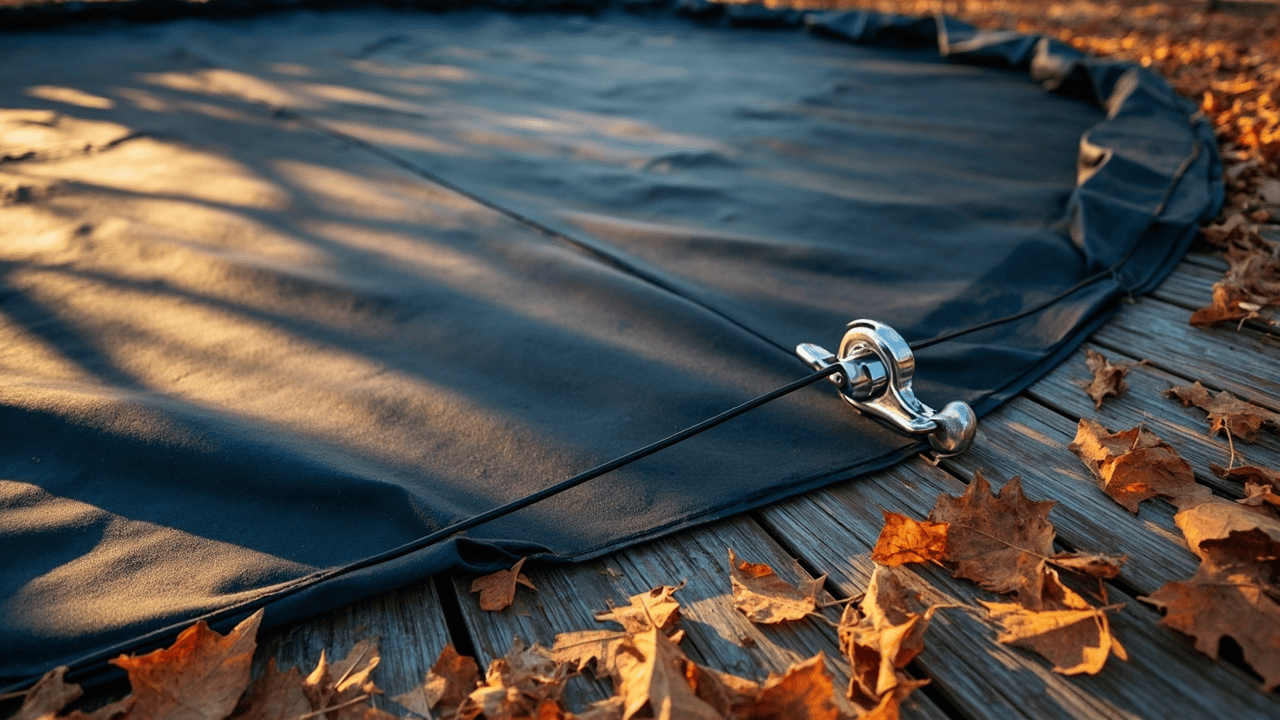
For round AG pools up to 24 ft, the Robelle Heavy Duty Winter Pool Cover with 4 ft overlap secures with a cable and winch. Solid 8x8 scrim, 10-year warranty. Don’t reuse an inground cover on an AG pool — the footprints and anchor systems differ and the cover will slip or tear in the first hard wind.
Winterizing plug: ATIE 1.5” Plug Set
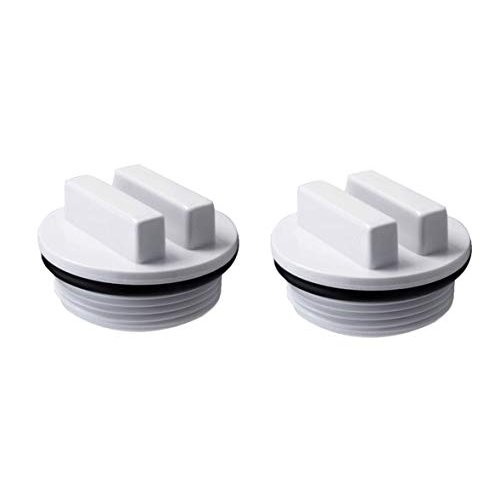
The ATIE 1.5 inch Threaded Pool Winterizing Plug Set seals the return line and filter drain for the off-season. Two-pack covers both fittings. Don’t try to “cap” the return with a rag or plastic wrap — a hard freeze will split the fitting and you’ll be replacing the return jet.
What to buy only if needed
Only if your liner is wrinkle-prone
A vinyl liner patch kit (~$15) is worth keeping on hand. Wrinkles usually come from over-shocking, low pH, or improper closing. Skip the patch kit if your liner is under warranty and the wrinkle is from a single shock overdose — most liner makers replace wrinkling from chemical damage on a case-by-case basis.
Only if you live in a region with freezing winters
The winter cover and plug set above are mandatory in freeze zones. Skip a portable air compressor for blowing out lines — AG pools don’t need a full blowout, just plug-and-cover. If you want the full seasonal checklist, see our winterizing guide.
Only if your CYA keeps climbing past 80 ppm
Cal-hypo shock is the fix. Trichlor pucks in a small AG pool push CYA over 100 ppm fast and lock your chlorine. If you’re stuck with high CYA, partial-drain-and-refill is faster than any chemical — see the cyanuric acid hub for the CYA/FC ratio table and the dilution math.
Step-by-step: the care routine that actually differs from inground
The sequence below mirrors the weekly-care routine but trims every dose and runtime for a smaller water volume. The first seven days are setup; weeks two onward are the repeating rhythm.
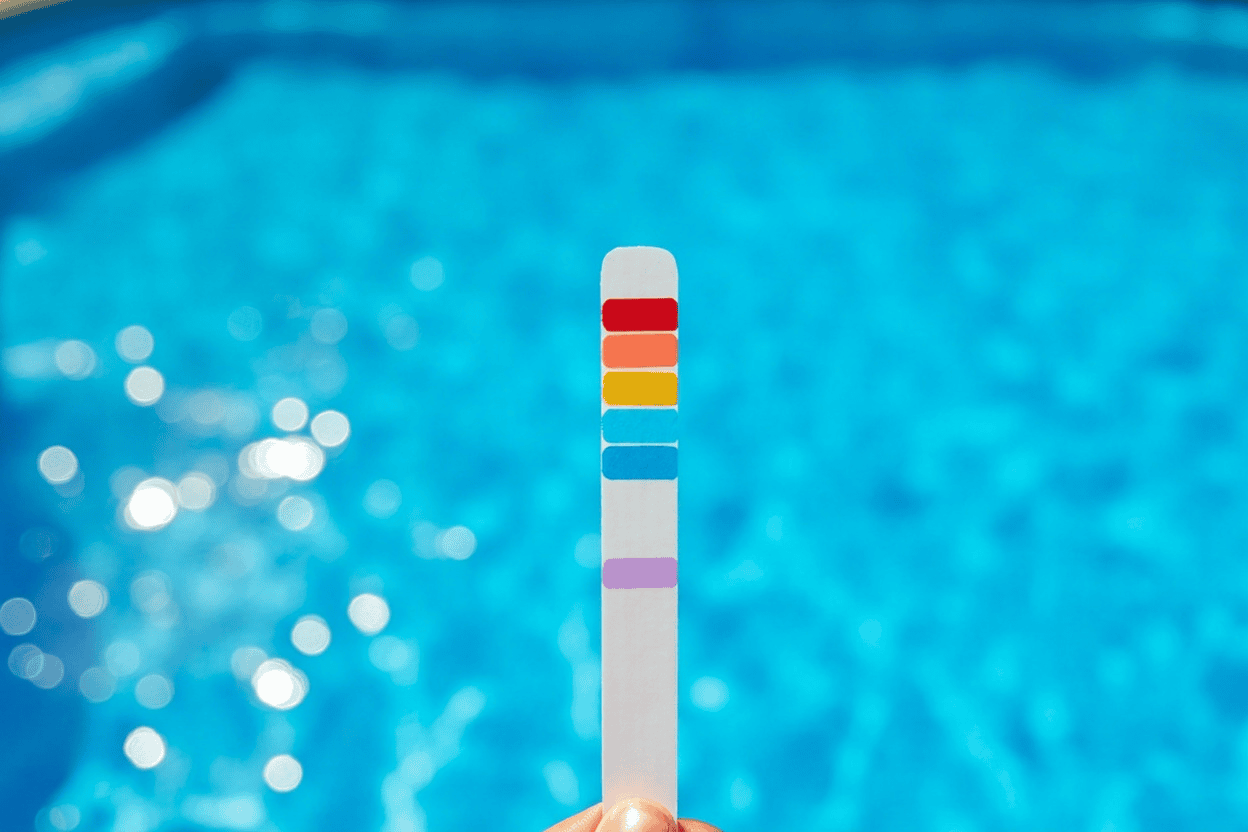
Step 1: Test with a 4-way strip, then confirm CYA separately
Use a 7-in-1 test strip for FC, pH, TA, and CH. CYA needs a separate test — strip CYA pads are unreliable on AG pools because the lower stabilizer level falls in the most inaccurate range. If CYA reads above 30 ppm by strip, confirm with a liquid test before adjusting. See the pool water testing guide for which method fits your routine.
Step 2: Adjust TA first (smaller dose), then pH, then chlorine
For a 10,000-gallon AG pool, adjusting TA from 60 ppm to 100 ppm takes about 1.4 lb of sodium bicarbonate. Order matters: TA first, then pH, then chlorine. Wait 30 minutes between additions so each chemical has time to circulate. Use the chemical dose calculator for exact amounts based on your actual pool volume.
Step 3: Shock at half the inground amount, then retest FC before swim
For a 10,000-gallon AG pool with CYA at 50 ppm, the FC target is 4 ppm. To raise FC by 4 ppm, you need about 0.6 lb of cal-hypo shock. Add shock at dusk, run the pump overnight, retest the next morning. Don’t swim until FC reads 1-3 ppm. See the pool shock hub for break-point dosing and combined chlorine recovery.
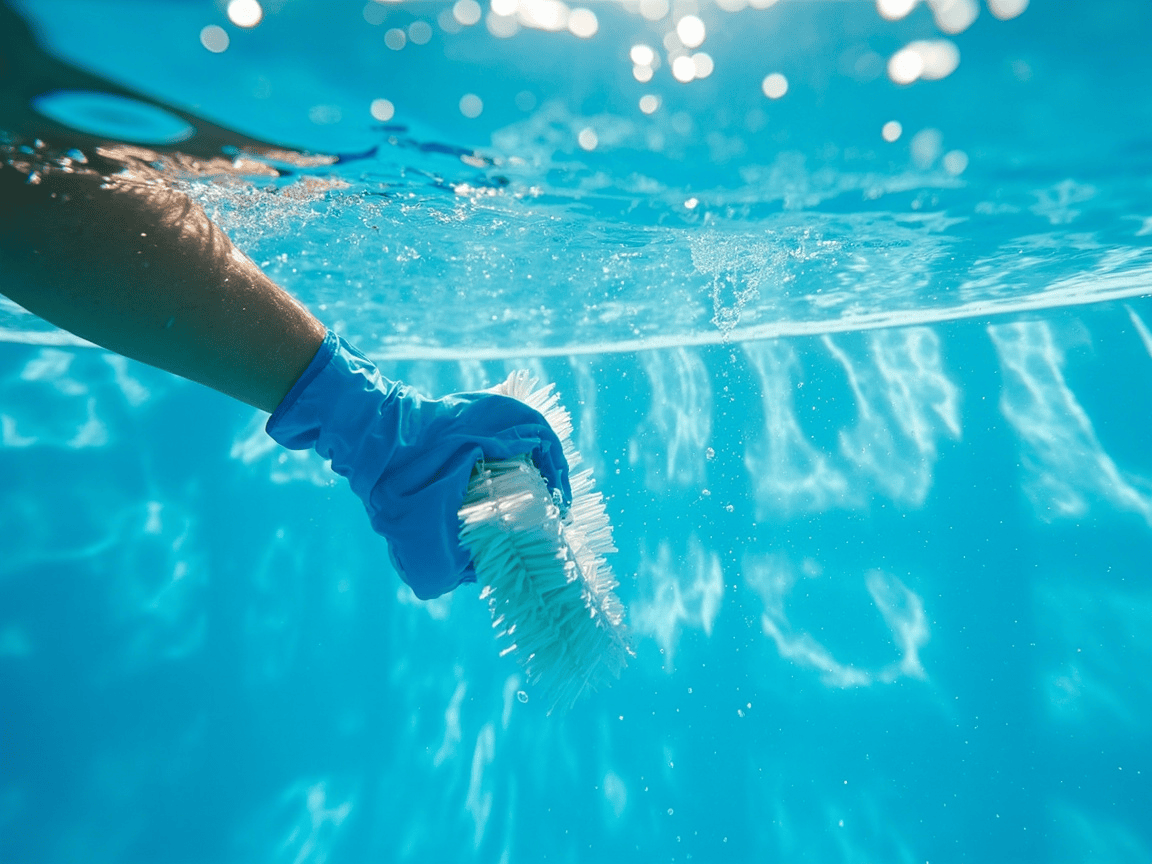
Step 4: Brush the vinyl liner gently, vacuum the floor
Vinyl liners need a soft-bristled brush. Stiff brushes scratch the surface and create algae anchor points. Vacuum any settled debris with a manual vacuum — don’t use a robotic cleaner in an AG pool under 12,000 gallons without checking pump capacity first. Brush walls, steps, and floor even when they look clean.
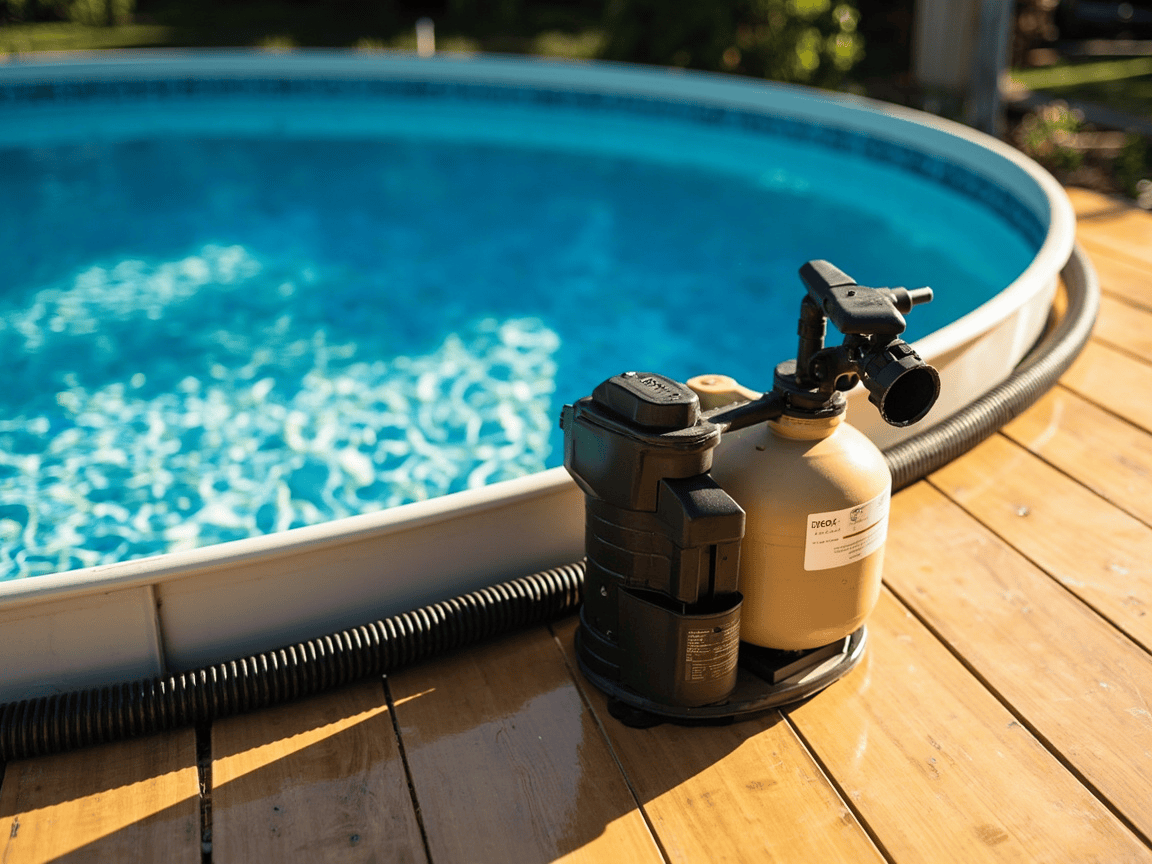
Step 5: Check the pump basket and backwash the sand filter
The pump basket on an AG pump is small — clean it weekly during summer. Backwash the sand filter when pressure rises 8-10 psi above the clean reading. Don’t run the Hayward PowerFlo LX 24/7 on an AG pool; the 0.85 HP motor isn’t designed for continuous duty and will burn out in 2-3 seasons.
Step 6: Top off from evaporation, watch for liner float
Top off when the water drops more than 2 inches. Watch the liner — if it floats (shifts up the wall), your chemistry is off (low pH or high TA) or your ground water is pushing the liner up. Float damage voids most liner warranties.
Step 7: Mid-season spot-check calcium hardness under 200 ppm
Vinyl liners scale when CH climbs above 200 ppm. The scale looks like white streaks on the wall and roughens the surface. Test CH once mid-season. If it’s climbing, switch your calcium source — cal-hypo shock adds calcium, dichlor doesn’t. See the calcium hardness hub for the dose math and the vinyl-vs-plaster distinction.
Common mistakes above-ground owners actually make
Five patterns we see over and over in the first two seasons. Each one burns a liner or a pump before the owner knows what went wrong.
- Dosing inground rates into an above-ground pool. A 25,000-gallon inground pool and a 10,000-gallon AG pool can take the same 1 lb of shock — but the resulting FC ppm is wildly different. Always dose by gallons, not by pool type. Use the chemical dose calculator and read your pool’s actual volume from the manual.
- Letting calcium hardness climb above 200 ppm. Liner scale starts at 200 ppm and becomes visible at 250 ppm. The liner roughens, becomes brittle, and shortens its 8-12 year life. Switch to dichlor shock or liquid chlorine if cal-hypo is pushing your CH up. See the calcium hardness hub for the vinyl ceiling rule.
- Shocking into a high-CYA pool that already smells chlorinous. If your AG pool has the classic “chlorine smell” and combined chlorine reads above 0.5 ppm, you’re already past break-point. A standard shock dose won’t fix it — you need 2-3x the FC target and a partial drain if CYA is over 80 ppm. Seal the winterizing plugs and store them indoors over winter — frozen plugs crack and won’t seal next year. See the pool shock hub for the recovery sequence and the green-pool roadmap for the full plan.
- Covering with leaves still in the pool. Leaves decompose under the cover, stain the liner, and feed massive algae blooms when you open. Skim and empty baskets before you put the Robelle winter cover on. Vacuum or net the floor last — anything left in the pool will stain the vinyl by spring.
- Using an inground skimmer on an AG wall. Cutting a hard-plumbed skimmer opening into an AG wall compromises the wall’s structural integrity and creates a leak path that voids the warranty. Use an over-the-wall floating skimmer like the U.S. Pool Supply AG skimmer instead — it’s the only AG-rated option that hooks over the top rail without cutting the wall.
When to call a pro
Keep DIY if you can test the water, brush the walls, run the pump 8 hours a day, and your numbers are moving the right direction within a week. Call a pro if:
- Pump or filter won’t prime, or you suspect electrical issues
- Liner is bulging, floating, or showing structural wall damage
- Persistent black algae after a correct break-point shock effort
- Structural leak with more than 2 inches of water loss per day
- You’re not comfortable handling muriatic acid for pH adjustments
Safety notes
- Never mix different chlorine products dry or in a bucket — even a small splash can produce a dangerous reaction. Add one chemical, let it circulate, then add the next.
- Never pour shock through a skimmer that feeds an automatic chlorinator — you can get a dangerous reaction from trapped gas.
- Add chemical to water, not water to chemical, when pre-dissolving. Pouring water onto dry shock sends up a chlorine cloud.
- Wear gloves and eye protection when handling shock, muriatic acid, or cal-hypo. Don’t breathe the dust from open containers.
- Lock the pump motor and electrical connections away from splash zones. A wet motor connection is a GFCI trip hazard and a shock risk around the pool.
- Keep the Confer Roll Guard ladder gate closed and locked when the pool isn’t in use. AG pools are easy targets for unsupervised kid access — the ladder is the entry point.
- Store all chemicals locked, away from kids and pets, in their original containers.
Worth knowing
SWG sizing for AG pools
Most off-the-shelf SWG cells are rated for 15,000-20,000 gallons — oversize for many AG pools. If your pool is under 12,000 gallons, look for a 10-15k gallon cell or you’ll over-chlorinate and waste salt. FC will routinely read 5-8 ppm and salt consumption will double what it should. Pair the SWG with the Hayward PowerFlo LX for AG sizing.
Deck and ledger board care
If you’ve built a deck around the AG pool, the ledger board and pool wall need a 1/2 inch gap for expansion. Wood decking traps moisture against the wall and accelerates corrosion on steel-walled pools. Check the ledger annually for rot. Keep the deck clear of leaves so they don’t blow into the pool — the Robelle winter cover does the heavy lifting in winter but not in summer.
Vinyl UV exposure and the first-year owner path
The top 6 inches of the AG liner (above the waterline, exposed to sun) degrades faster than the rest. Don’t leave floating chlorine tabs in the corner where they’ll rest against the sun-exposed vinyl. Rotate the floater position weekly or use a tab dispenser that keeps tabs off the wall. When you close for winter, plug the return line with winterizing plugs before pulling the Robelle winter cover. If this is your first season with an above-ground pool, the first-year pool owner guide covers the broader weekly routine; for the day-to-day, see the weekly pool care checklist and the spring opening guide.
Related
For the deeper chemistry behind above-ground targets, see the calcium hardness hub, the cyanuric acid hub, and the pool shock hub.
Key takeaways
- Smaller volume roughly halves every dose, pump size, and runtime. Use the chemical dose calculator before adding anything.
- Vinyl liners cap calcium hardness at 200 ppm. Above that, scale forms and the liner life shortens from 12 years to 6-8.
- Winterizing is plug-and-cover on AG pools, not a full line blowout like inground. Plug the return, drain the pump, cover the pool.
- A 1 HP pump is the AG work range. Don’t run a 1.5-2 HP inground pump or run the AG pump 24/7 — both shorten motor life.
- CYA builds faster in small water because trichlor tabs add CYA without removing it. Watch your CYA and switch to cal-hypo or liquid chlorine when it climbs past 50 ppm.
- Use an over-the-wall skimmer, not a hard-plumbed cut-in skimmer. The wall is structural, not a fixture panel.
- Close the Confer ladder gate every time you leave the pool. The ladder is the top kid-access risk on an AG pool.