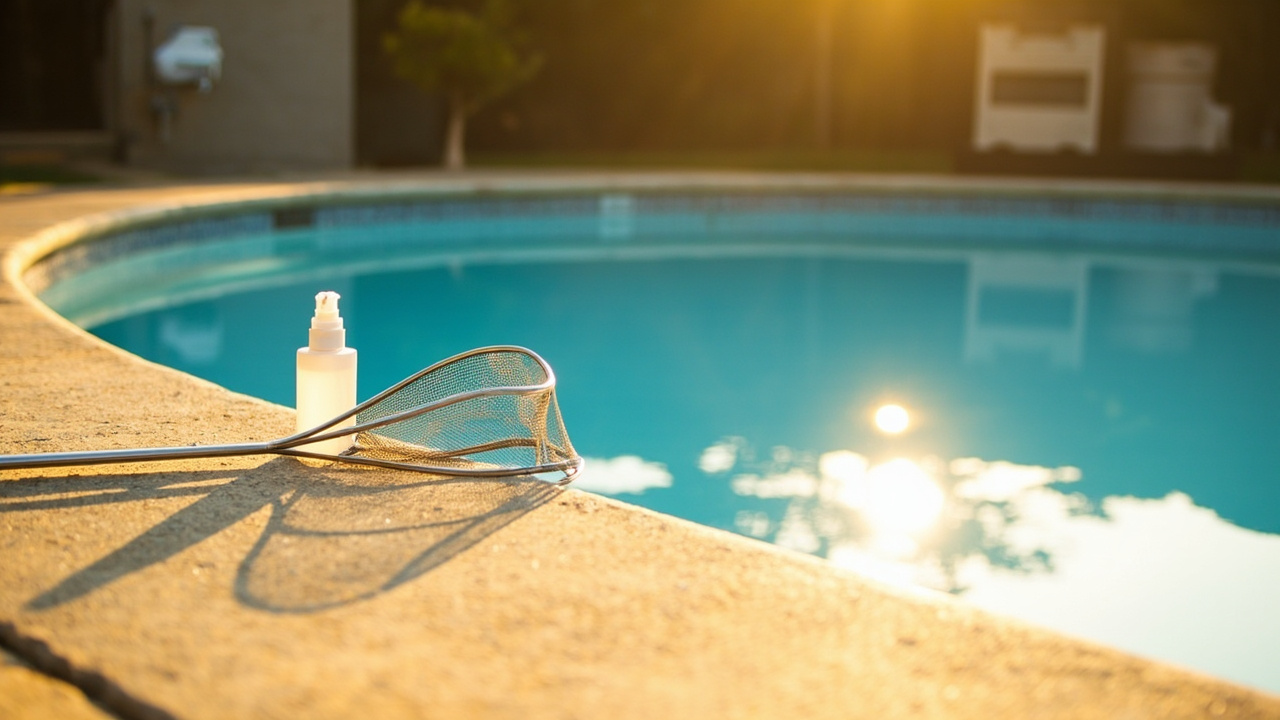


A pool maintenance schedule isn’t a calendar you hang on the wall — it’s a rhythm that flexes with water temperature, bather load, weather, and where you are in the swim season. Skip the daily observation and the weekly test, and a 20-minute routine becomes a 3-hour rescue mission. Get the rhythm right and the pool looks clear every day you open the cover.
This guide covers the full cadence — daily observation, weekly testing, monthly equipment checks, and the four seasonal transitions — so you can stop chasing problems and start running a predictable routine. Use the chemical dose calculator alongside this plan whenever you need exact numbers based on your pool’s gallons.
Quick answer
A practical pool maintenance schedule separates daily observation from weekly testing, monthly equipment checks, and seasonal transitions. Check circulation and debris often, test sanitizer and pH on a repeatable cadence, and let heat, rain, swimmer load, and water temperature change the frequency. New owners should test more often until the pool’s demand becomes predictable; experienced owners can use trend records to avoid unnecessary chemical additions.
What this is not
Not a chemical-addition calendar
Readings and conditions control dosing. A “shock every Sunday” rule ignores CC, FC, and CYA — and burns stabilizer with every dose.
Not the month-by-month calendar
This is the cadence. The fixed month grid lives in the monthly calendar page. Use both: the rhythm tells you how often, the calendar tells you what’s typical for your climate.
Daily, weekly, monthly, and seasonal checklist
Daily observation
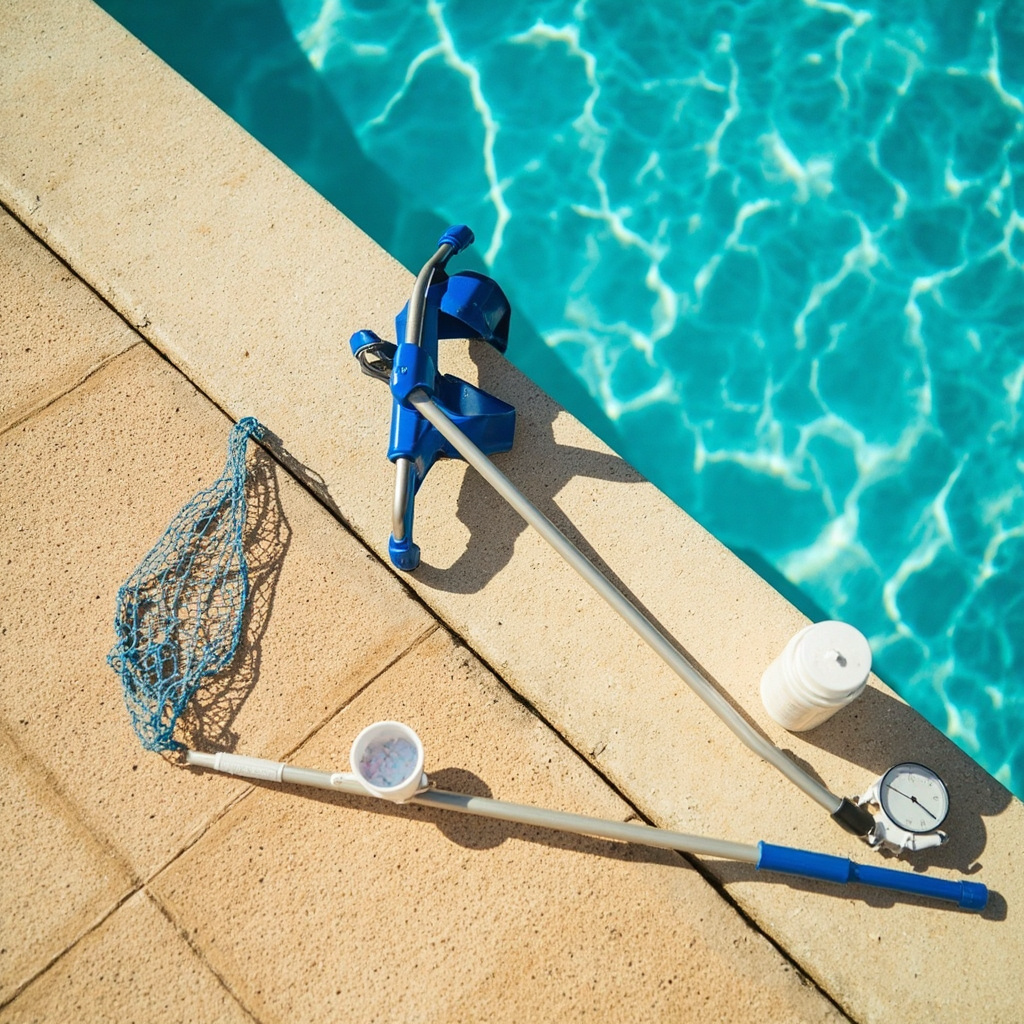
Water level (mid-skimmer), pump running, no obvious debris, no wet spots on the equipment pad. Skim floating leaves before they sink — once they break the surface tension they’re past the point where a skimmer can save you. Look at the filter pressure gauge once and write it in a notebook or phone note. None of this takes more than 5 minutes; none of it can be skipped without consequences.
Weekly rhythm
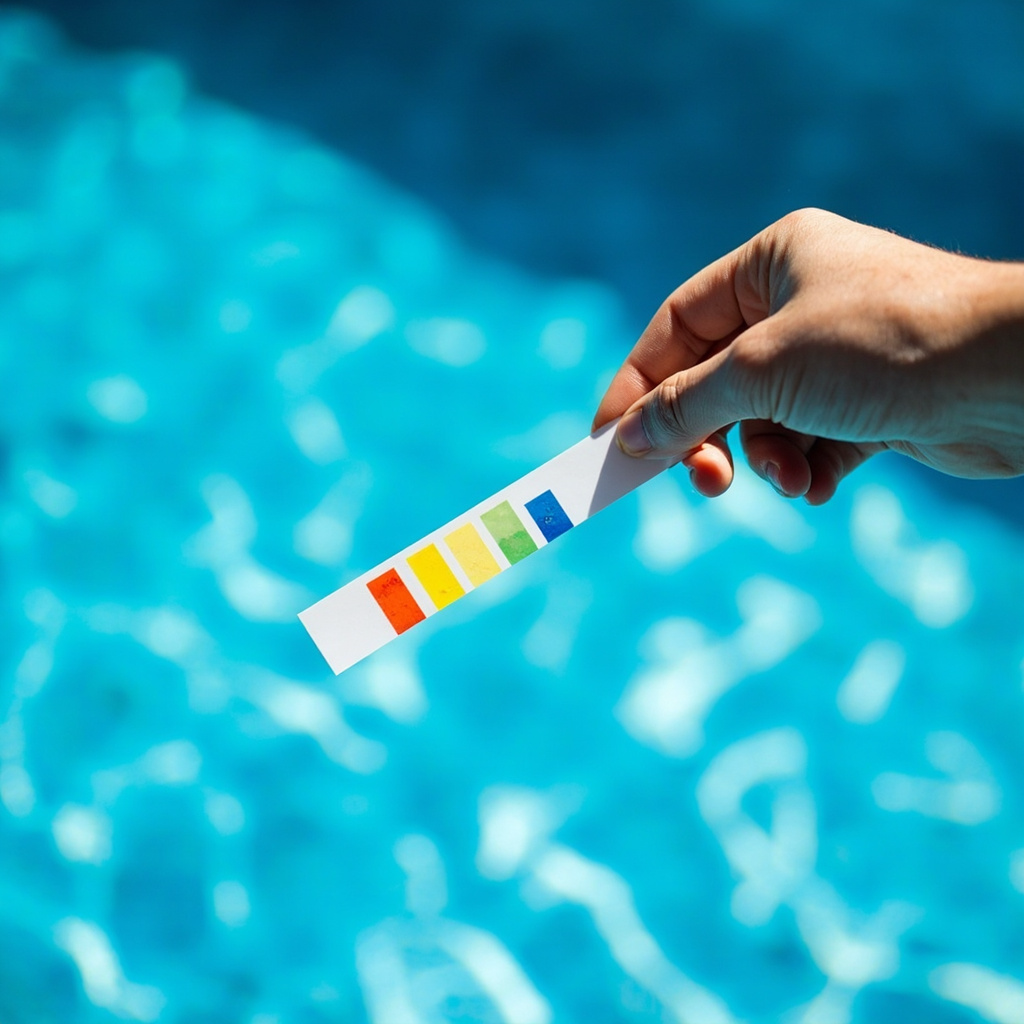
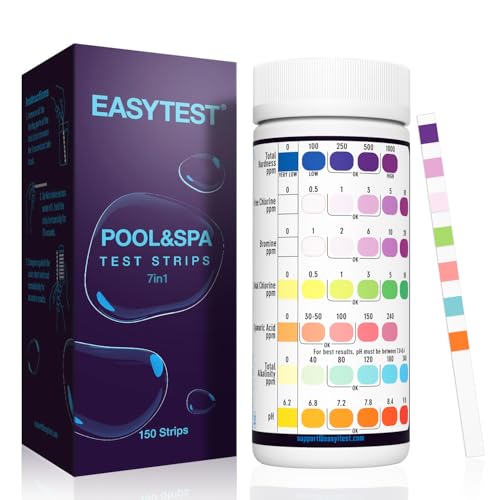
Test FC, pH, and TA every week. Check CYA monthly. Brush walls, vacuum or run the robot, empty skimmer and pump baskets, and look at the filter pressure. Adjust TA first, then pH, then chlorine — that order matters, and it lives in the weekly pool care page with full dosing examples. Salt pool owners should also check salt ppm weekly and inspect the cell for scale.
The weekly test is the cheapest insurance you can buy. A 7-way test strip covers FC, pH, TA, CYA, and CH in one dip — about 60 seconds per reading. Log every result. Trend matters more than any single number. Don’t fall for the trap of testing once a month and “saving time” — by then you’ve usually already paid for it in extra chemicals.
Monthly checks
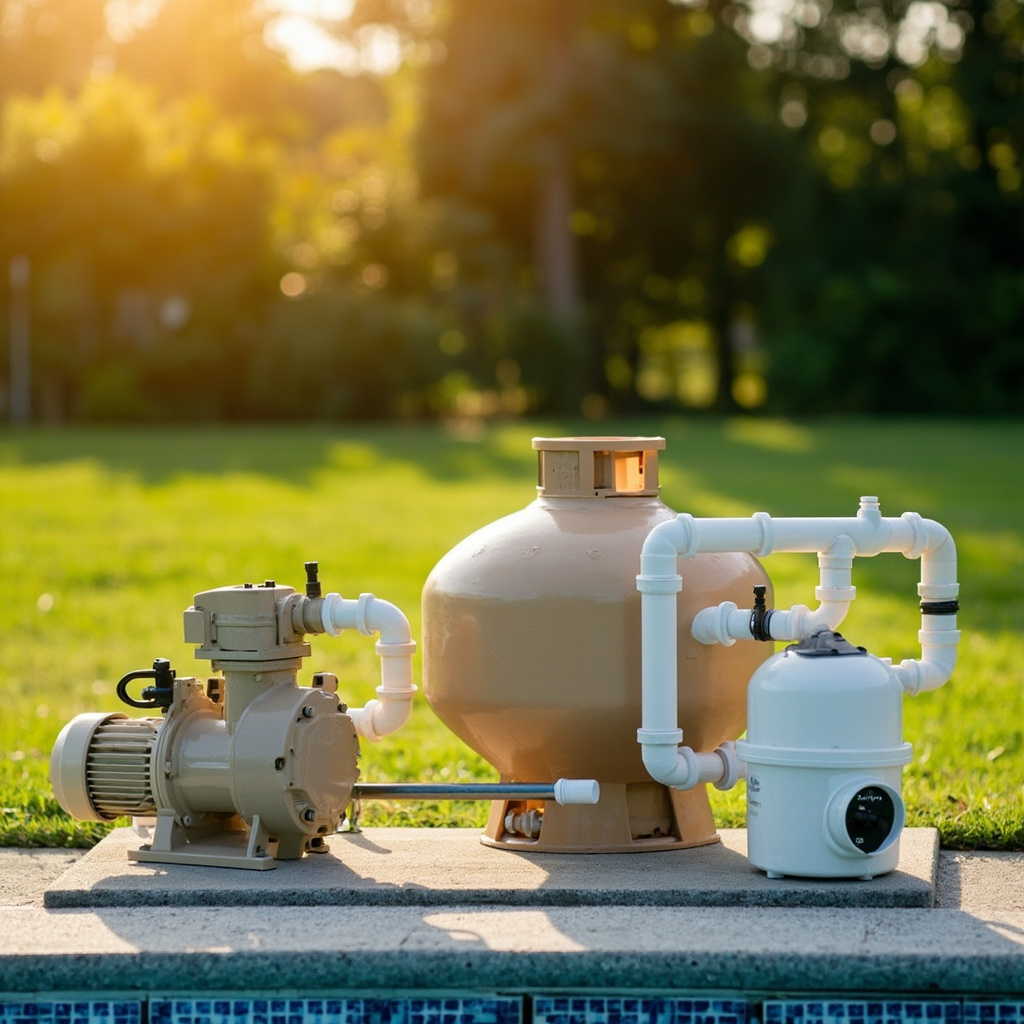
Inspect the filter media, review chemistry trends, and check equipment for leaks or noise. For sand or DE filters, backwash only when pressure rises 8–10 psi above your clean baseline. For cartridges, hose off monthly and deep-clean with a hose and filter cartridge cleaner when pressure climbs. Walk the equipment pad listening for the pump: a whining pump or a salt cell with visible scale are early warnings. Compare this month’s readings against last month’s; drift is easier to fix than a crisis.
Salt pool owners add one more monthly task: pull the salt cell and inspect the plates. White scale buildup means it’s time for an acid wash (mild muriatic acid, not straight-from-the-bottle). Most manufacturers recommend a cell inspection every 3 months, but high-calcium-water pools should check monthly.
Seasonal transitions
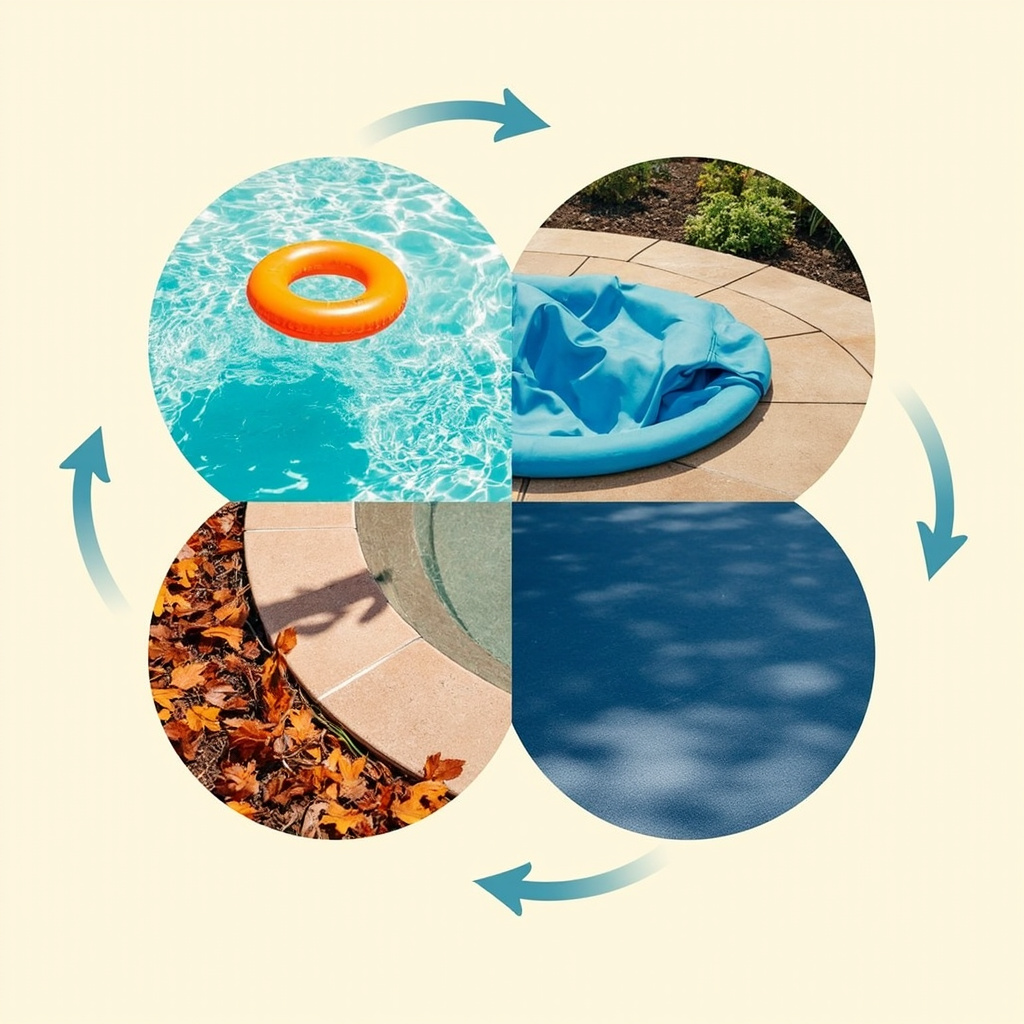
Opening, peak summer, leaf fall, closing — each phase has its own rhythm. Opening runs the open pool sequence (fill, balance, shock, brush, filter). Closing follows the winterize pool sequence (chemically balance, blow out lines, drop water level, cover). Between the two sits a long shoulder season that blends summer-level monitoring with leaf-management tasks. The seasonal handoff is where most pools lose chemistry — the water temp drops but tests continue, debris loads shift, and freeze risk enters the picture. Plan the handoff before the season forces it.
Decision tree: which rhythm fits your pool?
Pick the rhythm that matches your setup
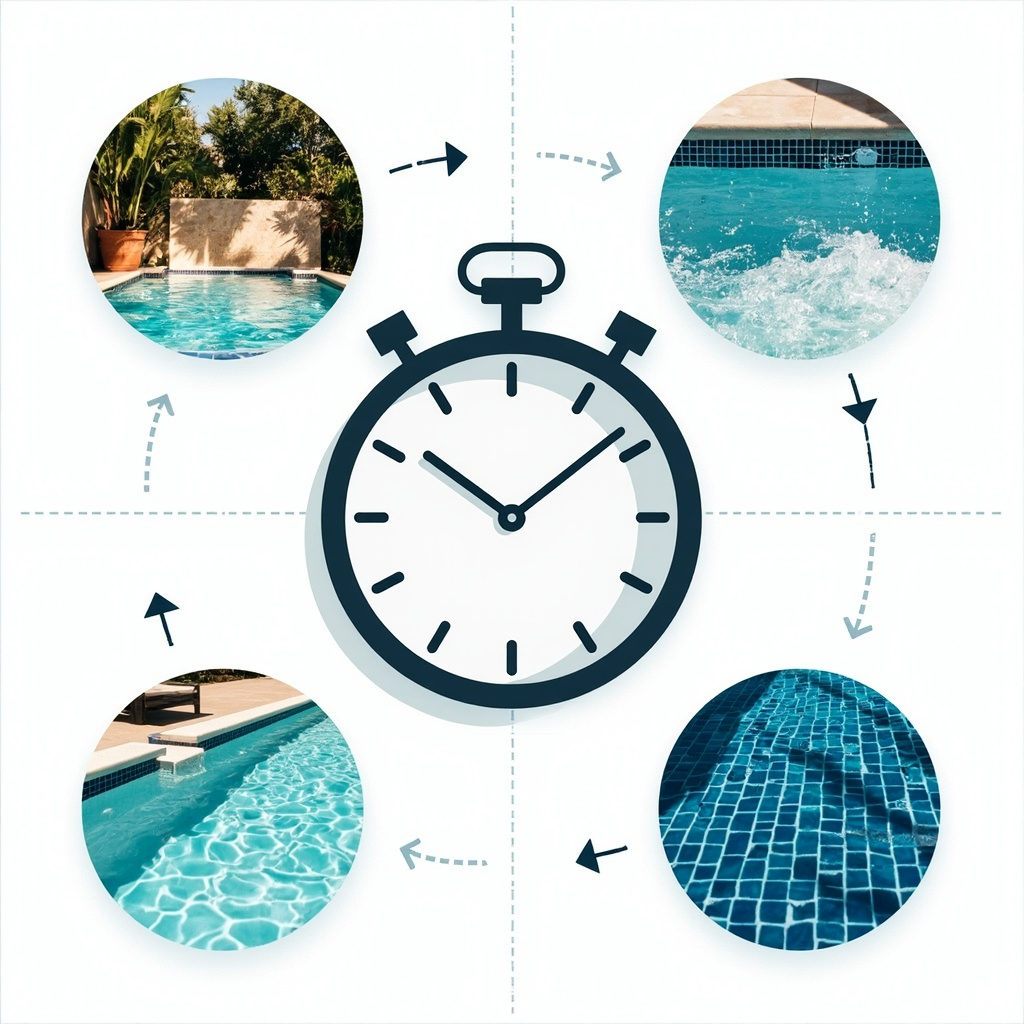
Not every pool runs the same schedule. Pick the branch that matches your setup.
- If you’re a new owner: Test more frequently and log every result. The first month of data teaches you what your pool’s “normal” looks like — without it you’re guessing. Use the first year pool owner plan for the opening month.
- If your pool is a stable veteran pool: Use trends without skipping verification. A pool that ran fine all summer doesn’t mean it needs no attention — it means you have a baseline. Test weekly and trust the log.
- If you’re running heavy use or heat: Increase test and debris-check frequency. Above 85°F water or with daily swimming, FC burns off faster and pH drifts faster. Test twice a week during heat waves.
- If you’ve had rain or contamination: Run the after-event diagnostic sequence. Test FC and CC immediately, shock if CC is above 0.5 ppm or FC has dropped below target. Brush walls before shocking — debris binds chlorine.
- If it’s a cold open pool: Reduce only after temperature and demand fall. Below 60°F the test cadence drops, but freeze-watch starts. The winterize pool page covers the handoff.
- If the pool is closed: Monitor cover, water level, freeze risk, and equipment. A covered pool is not zero-maintenance — it needs cover inspection and water-level checks all winter.
What you’ll need
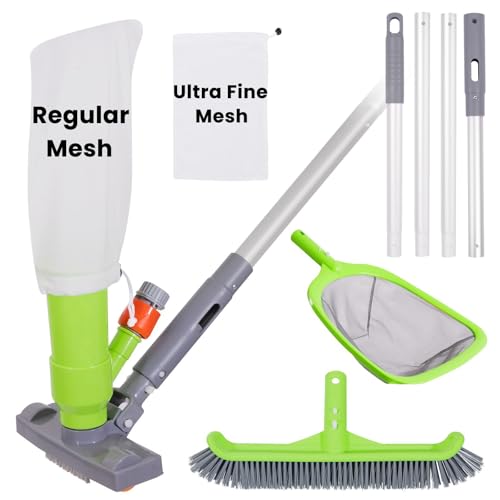
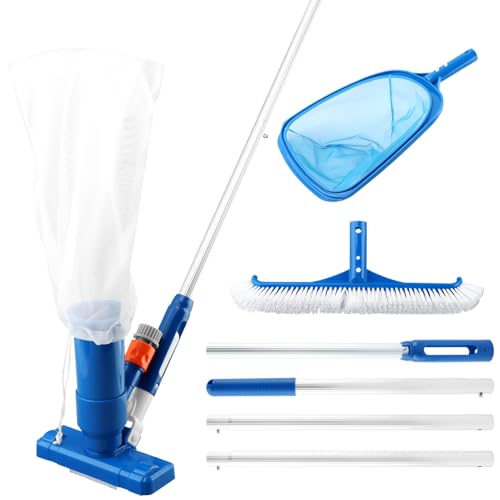
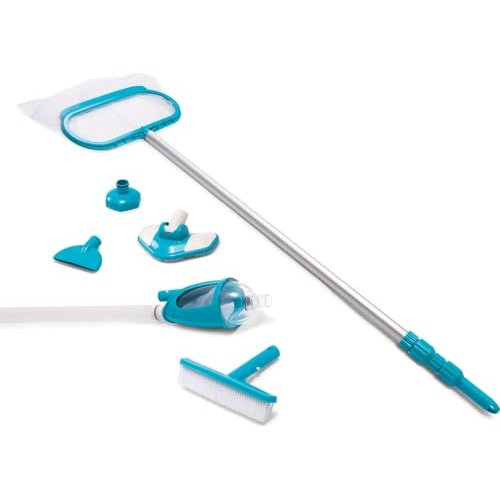
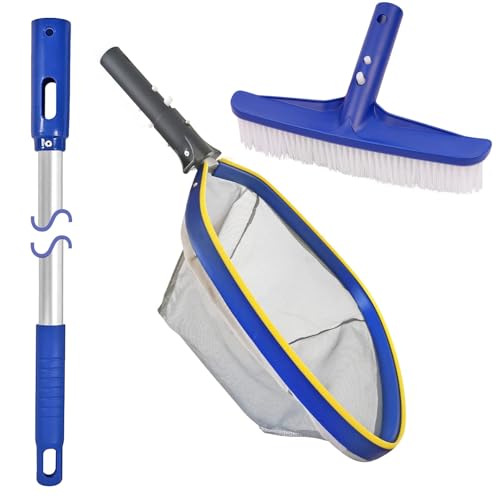
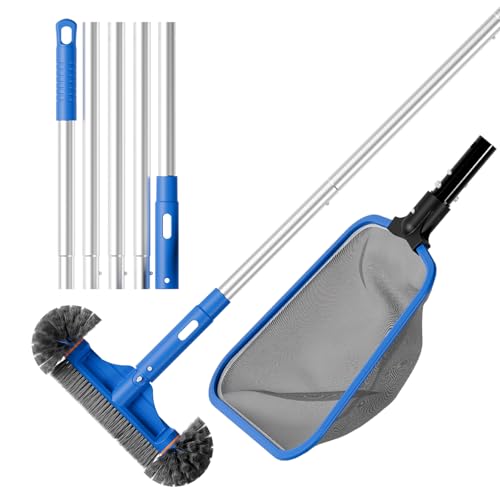
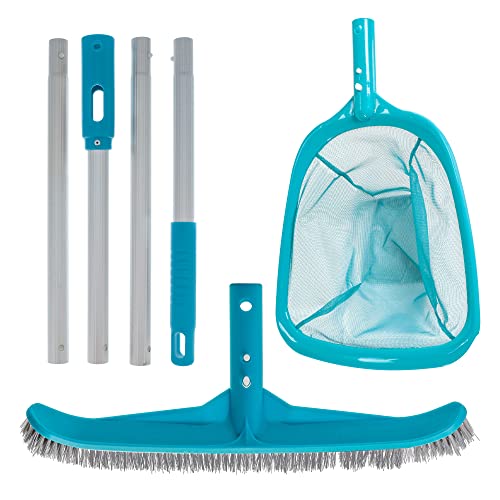
The basics fit in a single tote: a test strip kit, a skimmer net with pole, a wall brush, and a vacuum or robotic cleaner. Most owners start with an all-in-one Sepetrel cleaning kit that includes skimmer, brush, and adjustable pole in one box. Above-ground owners should grab a kit sized for their depth — the Lovarisse above-ground cleaning kit is built for shallower decks and lighter frames.
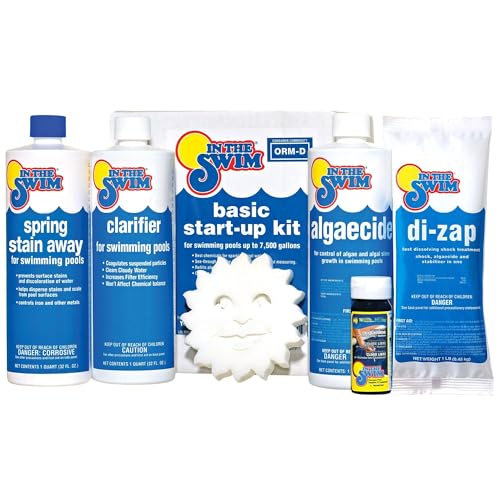
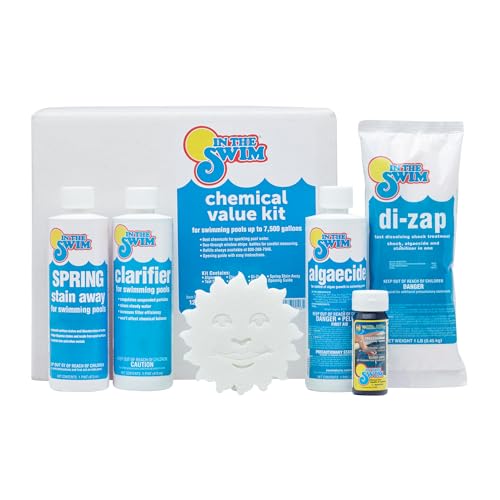
Chemistry starts with a weekly test routine and one oxidizer. A 12-pack cal-hypo shock covers routine oxidation and post-storm boosts. Pool owners with chronic algae should add a preventative algaecide to the weekly routine. First-time owners can start with a complete opening chemical kit and skip buying each product separately.
A wall brush with telescopic pole handles the brushing step that most owners skip — and it’s the one that matters most for prevention. Algae starts as a film you can’t see; by the time it’s visible green, it’s already anchored. A heavier-duty Sepetrel upgrade kit with half-depth vacuum suits plaster and gunite pools that need a deeper vacuum head.
What to buy only if needed
Don’t buy gear you won’t use. Add to your routine only when conditions justify it.
- If leaves are a recurring problem: Get a leaf cover or pool-specific leaf net — those tools save 30 minutes a week during peak drop. Above-ground pools in leaf-heavy yards especially benefit.
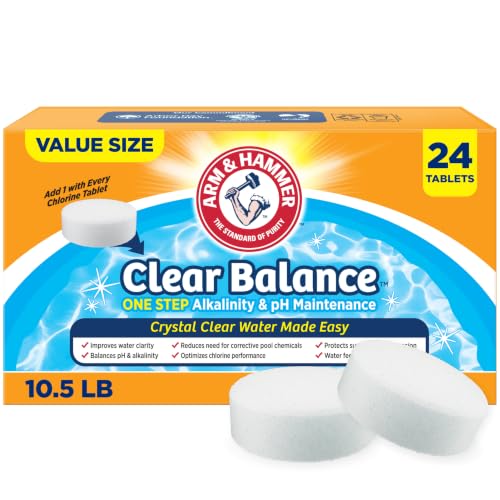
- If TA drifts constantly: A box of pH maintenance tablets helps buffer pH between weekly adjustments — useful for high-evaporation pools but unnecessary for stable systems.
- If you run multiple pools or a pool + hot tub: A full-season value kit covers the bundled chemistry for less than buying individually.
- If you have an INTEX above-ground: Skip generic pool kits and pick the INTEX-specific maintenance kit — it includes a hose-vacuum that works without a separate pump.
Safety notes
Chlorine, shock, and pH adjusters are chemicals that deserve real caution — not paranoia, just consistent handling.
- Never mix different chlorine products dry or in a bucket. Combining trichlor tabs with cal-hypo shock creates a fast chlorine release and dangerous fumes. Add each to the pool separately, fully dissolved.
- Never pour shock through a skimmer that feeds an automatic chlorinator. The chlorinator holds concentrated chlorine; shock added there can trigger a violent reaction in the cell.
- Add chemical to water, not water to chemical, when pre-dissolving. Pouring water onto dry acid or shock splashes concentrated reagent.
- Gloves + eye protection; don’t breathe dust from containers. Granular shock dust irritates lungs; trichlor tabs are corrosive to skin and eyes.
- Store locked away from kids and pets. Even “swim-ready” tabs are dangerous if eaten — and they look like candy to a toddler.
When to call a pro
When a service professional helps
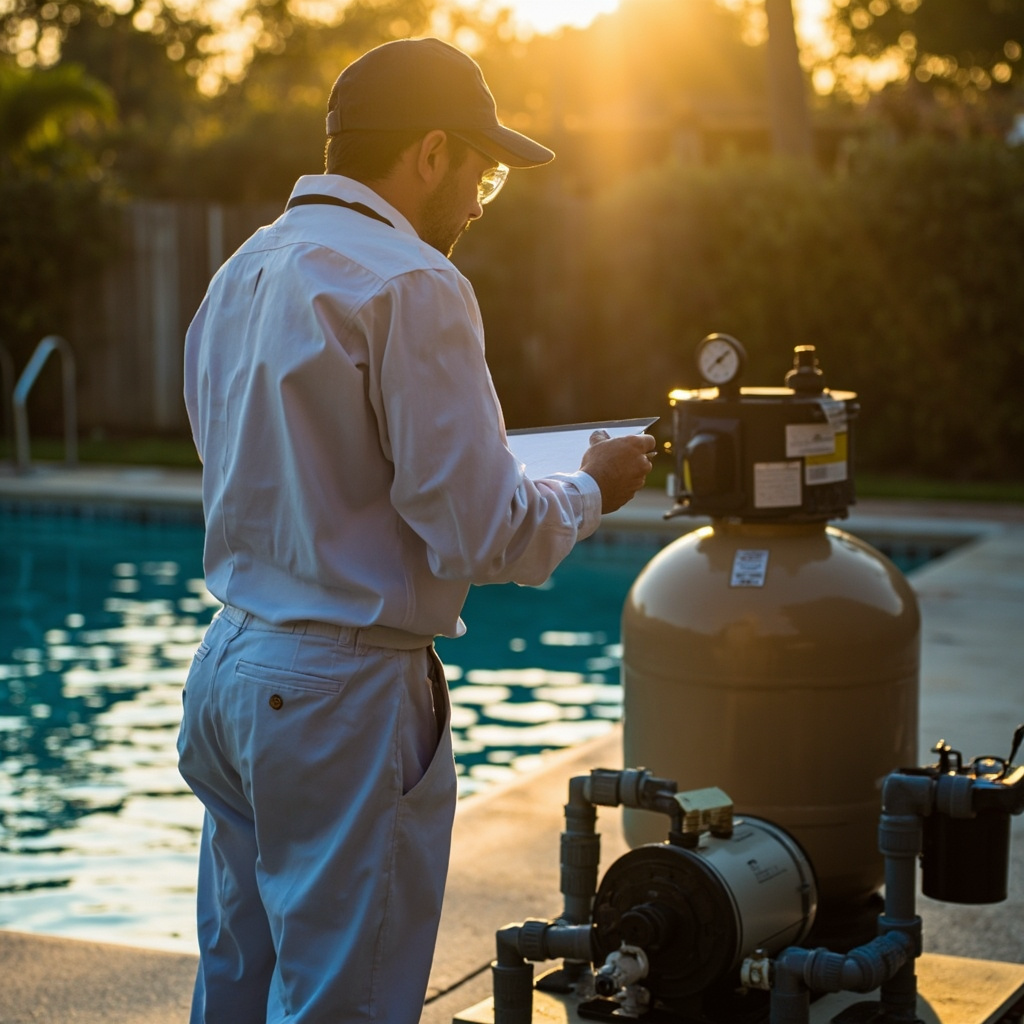
Keep DIY if: you can test water, brush, run the filter 24 hours, and your numbers are moving in the right direction. Most weekly maintenance is owner territory.
Call a pro if:
- Pump or filter won’t prime, or you suspect electrical issues
- Persistent algae after correct chemistry and brushing (3+ days with no improvement)
- Structural leak or large water loss (more than 2 inches per day)
- You’re not comfortable handling muriatic acid or large shock doses
- Heater, salt cell, or automation system shows faults you can’t diagnose
A service call costs $80–$150 in most regions — a structural leak or electrical fault that goes undiagnosed can cost thousands.
Common mistakes
Skip these routine mistakes
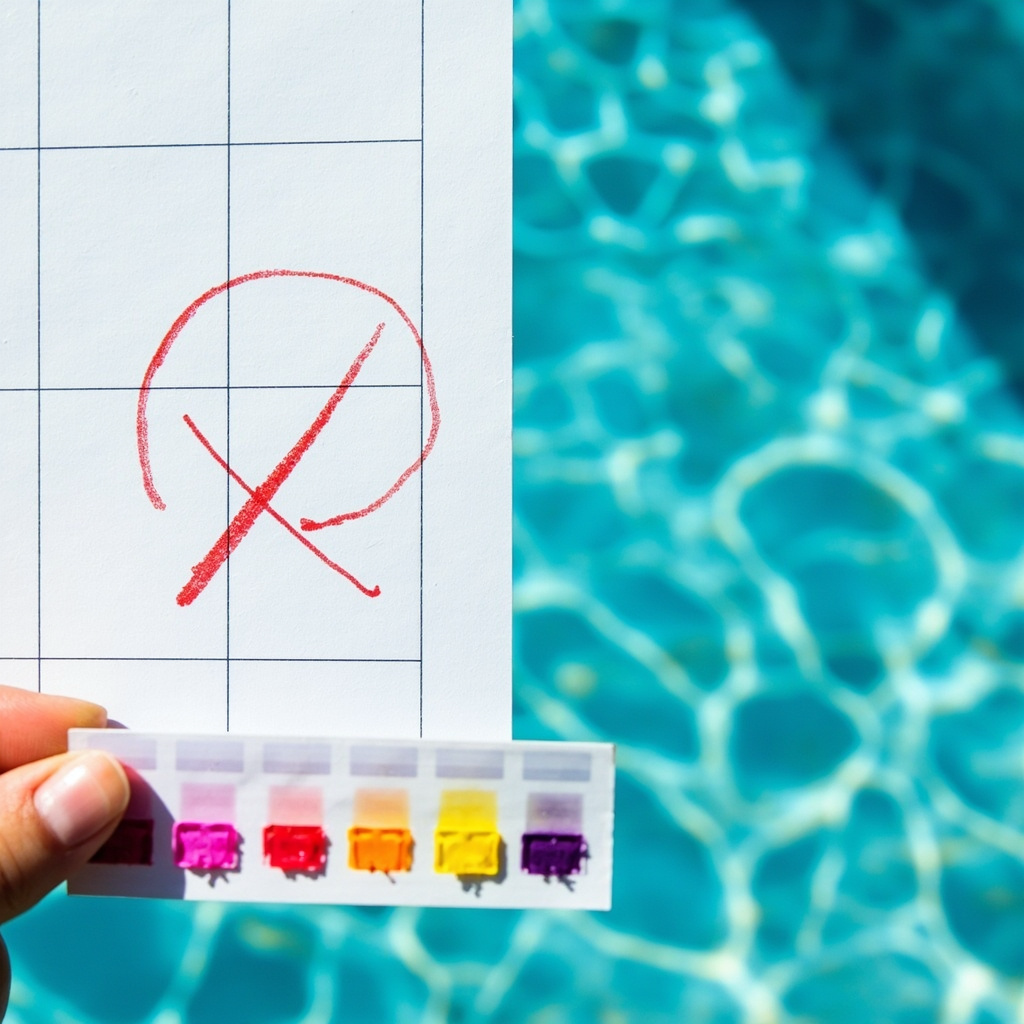
- Adding chemicals or gear by calendar without testing. Buying shock every Sunday regardless of CC reading wastes stabilizer and money. Test first, treat only what the readings justify — your FC target depends on CYA, not the day of the week.
- Skipping pool-volume, fit, or compatibility verification. Dosing for “an average pool” instead of your actual gallons under-doses a 20,000-gallon pool or over-doses a 5,000-gallon one. Use the chemical dose calculator with your real gallons before each addition.
- Treating one protection or treatment step as the whole system. Shocking without brushing lets debris shield algae from chlorine. Brushing without filter flow re-circulates dislodged algae. Each step needs the others — see the green pool page for what a missed step looks like.
- Ignoring label, weather, circulation, or maintenance constraints. Adding shock in full sun wastes chlorine to UV. Skipping the filter cycle for 8 hours leaves the dose unmixed. Read labels, run the pump 24 hours after any chemical addition, and don’t dose in storms.
- Waiting through repeated failure instead of escalating. Three days of cloudy water with rising CC is a service call, not a “wait it out” situation. Persistent algae after correct chemistry is a professional escalation trigger, not a stubborn-pool problem.
Related
Key takeaways
- Daily observation takes 5 minutes — skip it and the weekly routine grows to hours.
- Weekly testing (FC, pH, TA) is the floor; everything else is built on top.
- Monthly equipment checks catch leaks and pump wear before they fail.
- Seasonal transitions (open, peak, fall, close) run their own sequences — see the linked guides for each.
- Trends matter more than single readings — log every test result.
- Adjust cadence for temperature, bather load, and rain — never by calendar alone.
- Call a pro for electrical, structural, or persistent chemistry faults you can’t diagnose.