
Quick answer
Your eyes sting and your skin feels tight after a swim. The usual cost of guessing is wasted chemicals, cloudy water, and another uncomfortable test swim. Test pH, free chlorine, combined chlorine, calcium hardness, and TDS in that order. Keep pH 7.2–7.8, CC below 0.5 ppm, FC about 1–3 ppm, and hardness roughly 150–1000 ppm. Fix the number that is out of range, circulate, then retest. Chemistry first; product choice comes after the reading.
What eye and skin irritation usually means in a pool
Pool water can feel harsh when its chemistry has drifted, even when the water looks clear. pH changes chlorine activity. Nitrogen compounds from swimmers create combined chlorine, often called chloramines. Calcium hardness and total dissolved solids change how water interacts with surfaces and skin. These are water measurements, not labels for a medical condition.
Why chemistry drives most irritation
At pH 7.2–7.8, chlorine works in a predictable range. Above 7.8, the balance shifts toward less active hypochlorite, so sanitation becomes weaker and chloramine buildup can become more noticeable. Below 7.2, the water is more acidic and may sting. Don’t add more chlorine just because your eyes sting; first test pH and CC. Skip a product swap if the reading hasn’t identified the problem.
Separate pool chemistry from personal symptoms
This page covers pH, FC, CC, CYA, calcium hardness, TDS, and metals introduced by pool chemicals. It doesn’t diagnose skin or eye conditions, and it doesn’t give medical advice. A chemistry correction is a measurable water task: record a reading, make one controlled adjustment, circulate, and retest.
Common causes: eye irritation
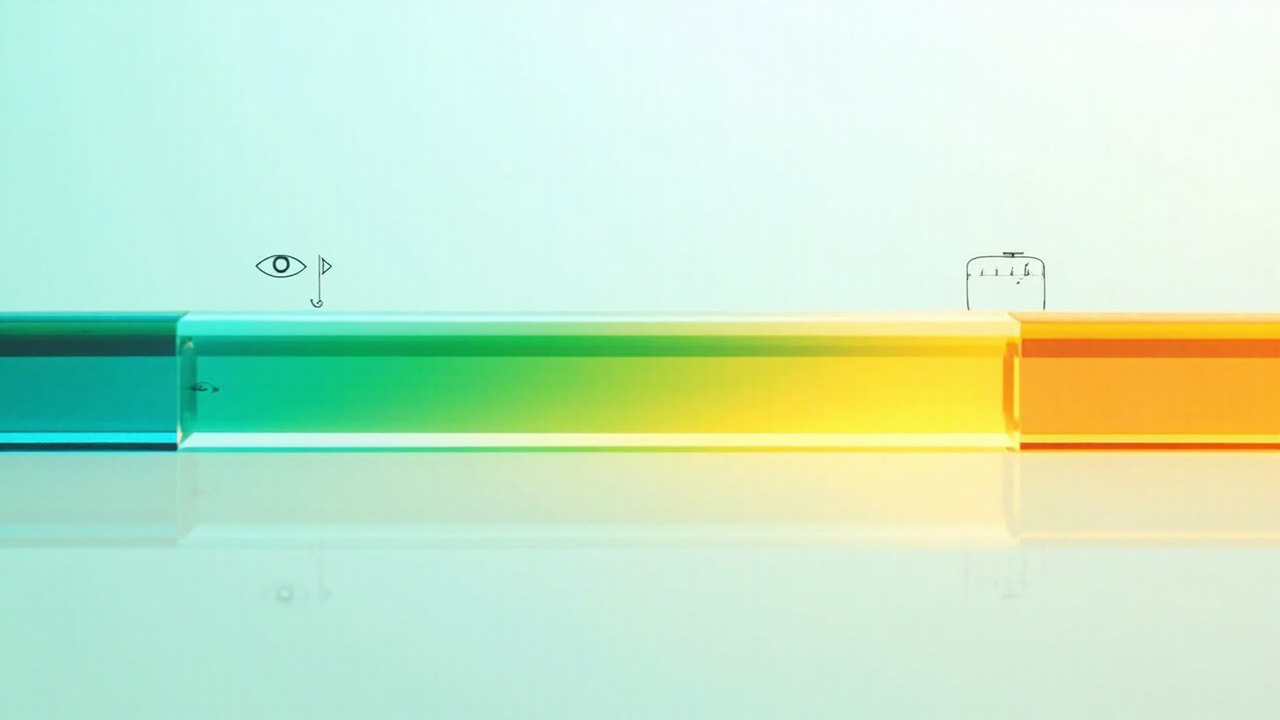
Test pH above 7.8
High pH reduces the proportion of active hypochlorous acid. It also makes a strong chlorine smell more likely to reflect chloramines rather than clean water. Test with the pH balance chemistry hub and Clorox pH Up, adjust in small label-directed amounts, and retest after circulation. Don’t chase a smell with fragrance or extra sanitizer.
Correct pH below 7.2
Low pH can sting eyes and make water aggressive toward equipment. Acid overdose is a common cause. Raise pH gradually, then check total alkalinity with Sunnyside muriatic acid because a weak buffer lets pH swing again. Skip a second dose until the first reading has mixed throughout the pool.
Measure combined chlorine above 0.5 ppm
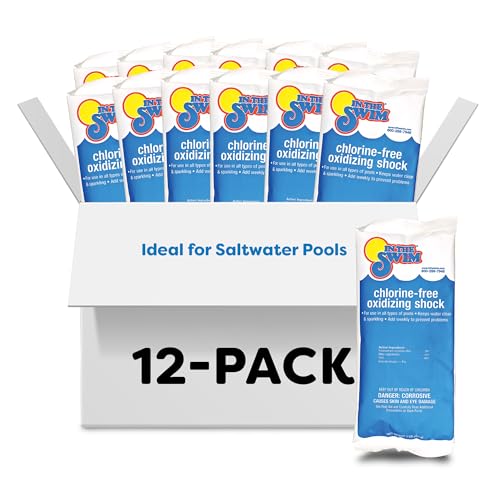
CC is the difference between total chlorine and FC. It represents chlorine already bound to nitrogen compounds. A reading above 0.5 ppm is a useful trigger to pause the symptom guesswork and address oxidation. Read the pool shock and combined chlorine guide and In The Swim MPS for the chemistry sequence. Don’t use a chlorine shock automatically when FC is already high; skip it until both FC and CC are known.
Check free chlorine above 5 ppm
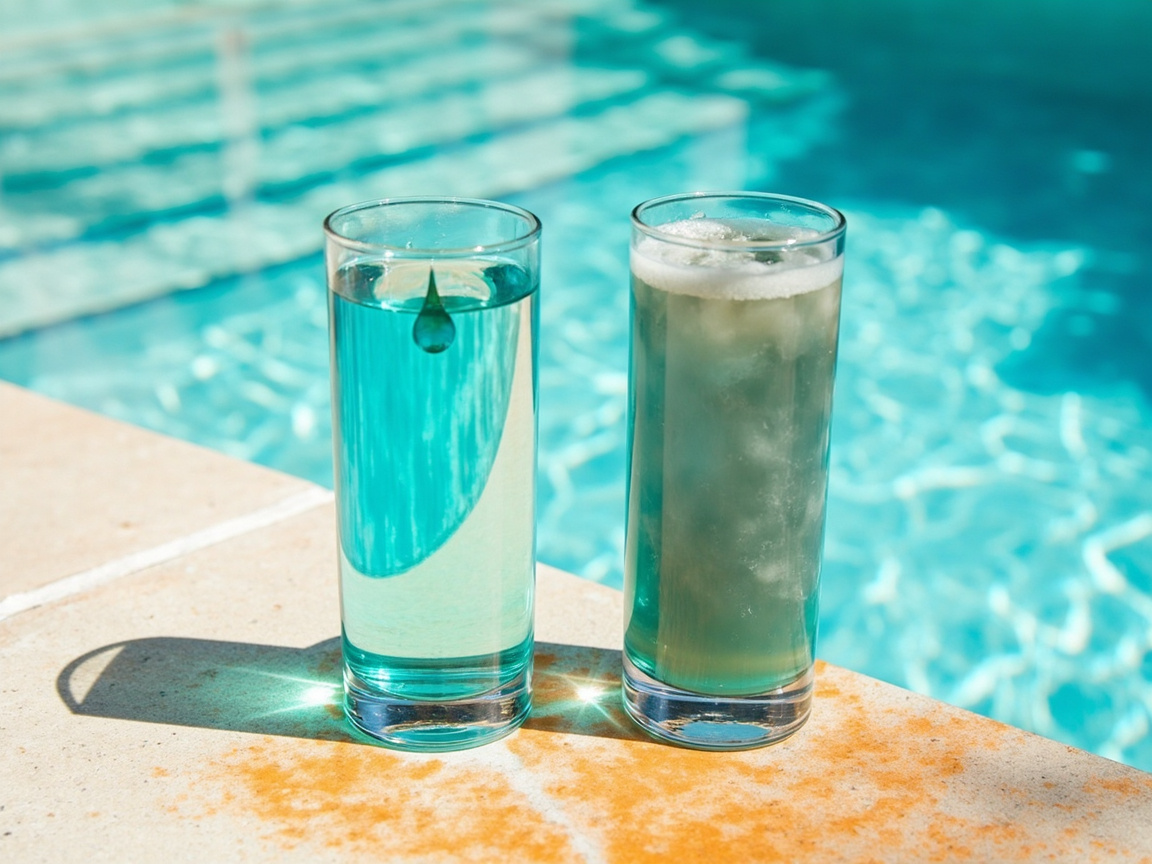
High FC can feel harsh, especially when CYA is absent or low. Test FC with the free chlorine chemistry guide with Taylor K-2006-SALT as your reference, keep swimmers out while readings are outside your operating range, and let circulation and sunlight work only as the label and your test results allow. Don’t dilute or dose blindly; record pool volume first.
Check low cyanuric acid in sun
CYA protects FC from rapid ultraviolet loss. Low CYA doesn’t itself explain every sting, but it can force wider FC swings in an outdoor pool. Compare the reading with the cyanuric acid guide, then change one variable at a time.
Common causes: skin irritation
Balance pH above 8.0 or below 7.0
Both extremes can leave water feeling drying. A pH reading tells you where to start, not which product to buy. Test alkalinity too, follow the dose label, circulate, and retest. Don’t combine pH-up and pH-down in the same adjustment window.
Identify combined chlorine, not a nickname
Pool chloramines are a chemistry issue. The phrase “swimmer’s itch” is often used loosely, but this article does not use a nickname as a diagnosis. Measure CC, review the weekly pool care routine, and correct the water reading. Skip any assumption that a rash label tells you which pool chemical to add.
Check high calcium hardness above 1000 ppm
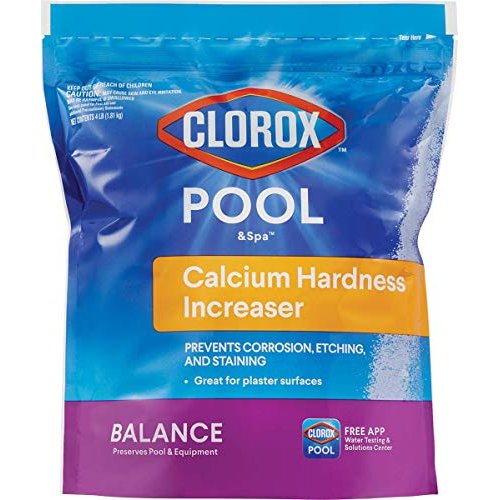
High hardness can contribute to scale and leave water feeling less comfortable. Check the calcium hardness guide and Clorox calcium increaser, inspect for deposits, and avoid adding more calcium when the number is already high. Water replacement or professional balancing may be the practical chemistry route.
Check low calcium hardness below 150 ppm
Low hardness makes water more aggressive toward plaster, grout, and metal. It can also make skin feel dry. Confirm with a liquid test when the strip result is close to a boundary. Add calcium only after the reading supports it.
Measure high TDS
TDS includes dissolved salts and leftover chemical by-products. A high reading can make balancing harder and can signal that dilution is more useful than another additive. Most strips don’t measure TDS, so use a meter or water analysis. Don’t buy a “comfort” chemical to hide a TDS problem.
Rule out copper from algaecides as a water issue
Copper can enter water through some algaecides and source water. Test for metals when staining or green-tinted water appears alongside irritation complaints. Stop adding copper-based products while the cause is unconfirmed, and check pool water testing for a broader panel.

What this is NOT
Not a substitute for a water reading
A clear pool can still have high CC or drifting pH. Test before dosing.
Not a reason to diagnose a condition
This article stays with water chemistry. It doesn’t name, treat, or classify eye or skin conditions.
Not an excuse to mix chemicals
Different products can react violently. One reading, one adjustment, one retest is the safer workflow.
Diagnostic decision tree: five questions
Step 1: Test pH
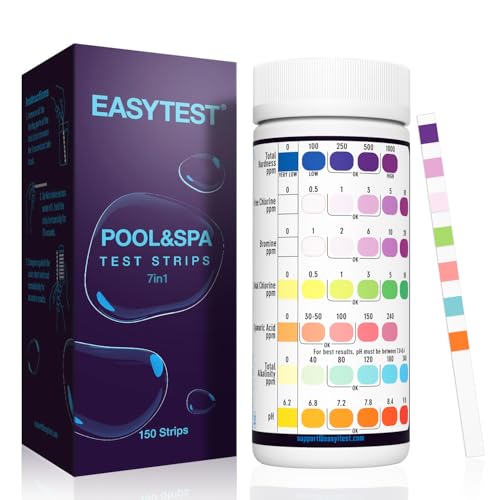
Use EASYTEST strips or a liquid kit. If pH is below 7.2 or above 7.8, correct pH first and circulate. If it is in range, continue.
Step 2: Test combined chlorine
Calculate CC as total chlorine minus FC, or use a kit that reports it. If CC is above 0.5 ppm, focus on oxidation. If not, continue.
Step 3: Test free chlorine
Compare FC with your pool’s CYA and operating target. If FC is above 5 ppm, wait for a safe reading rather than adding more sanitizer. If it is low, follow the free chlorine chemistry sequence.
Step 4: Test calcium hardness
Aim for a balanced range suited to the surface; 150–1000 ppm is the broad screening band used here. Low supports a calcium increase; high supports dilution or professional review.
Step 5: Test TDS
TDS below about 1500 ppm is a useful first-fill reference, not a universal target. If TDS is high and other numbers resist correction, dilution may beat another chemical.
Picks by scenario
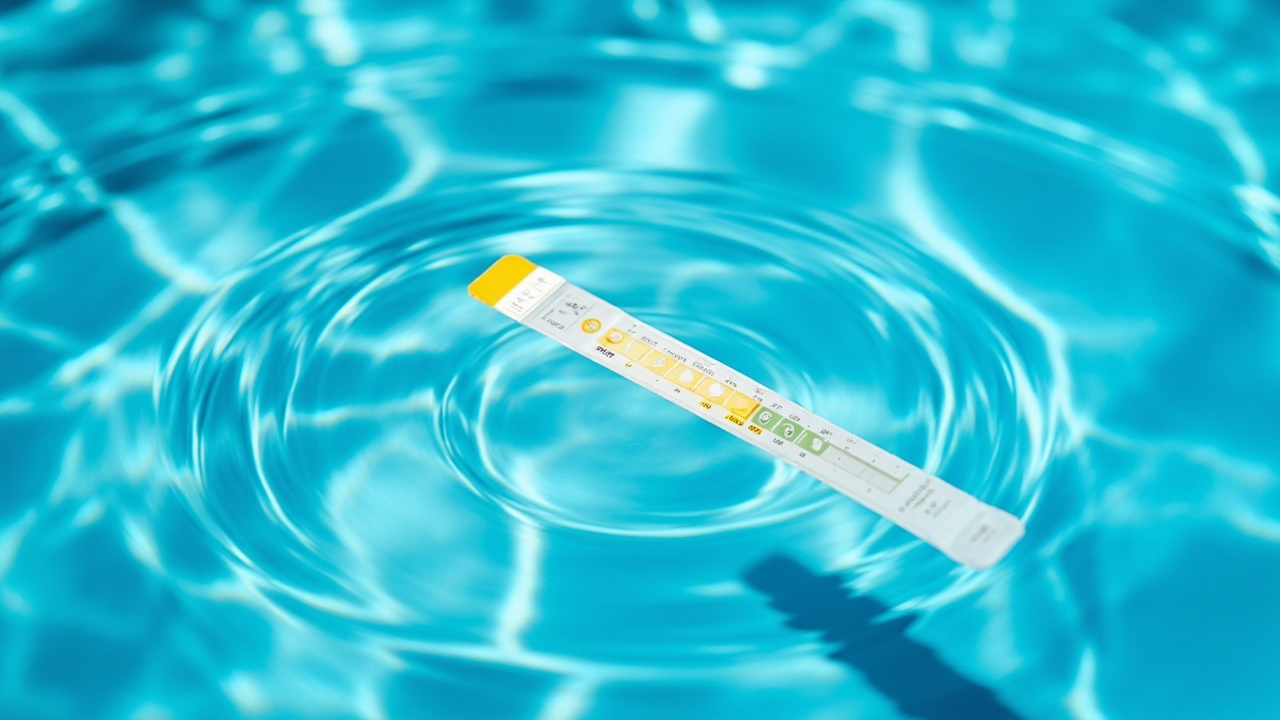
Best for daily diagnosis: EASYTEST 7-Way Pool Test Strips, 150 Strips
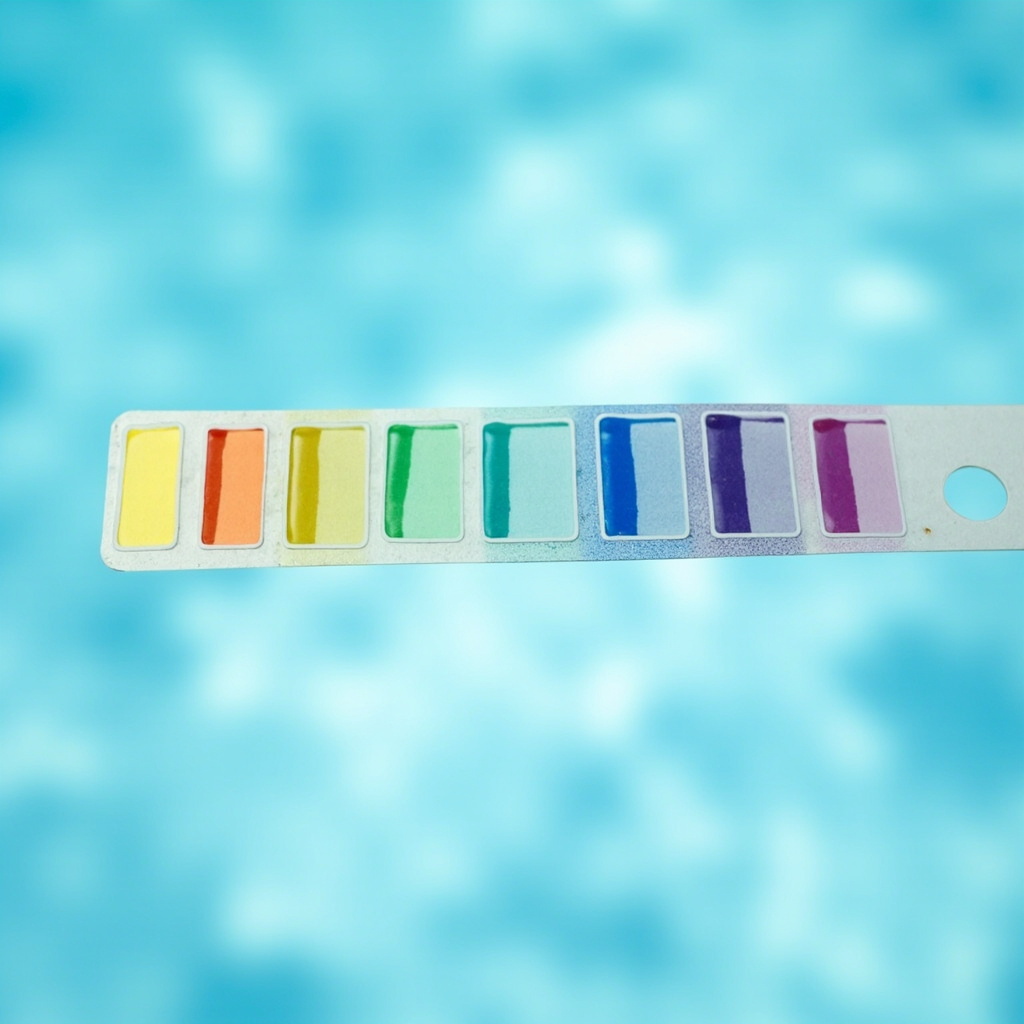
Use these after the decision tree tells you to screen several parameters at once. They cover pH, FC, total chlorine, alkalinity, CYA, and hardness. They don’t measure TDS. Don’t treat a strip color as a lab result; skip a large dose when the color is ambiguous and confirm with liquid testing.
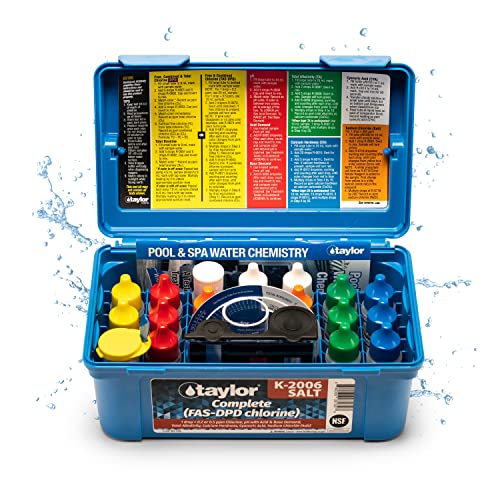
Best for close readings: Taylor K-2006-SALT Test Kit
Choose a Taylor K-2006-SALT liquid kit when CC is near 0.5 ppm or when a strip result conflicts with the water’s behavior. Use fresh reagents and follow the test sequence. Skip it if you won’t store reagents upright and cool.
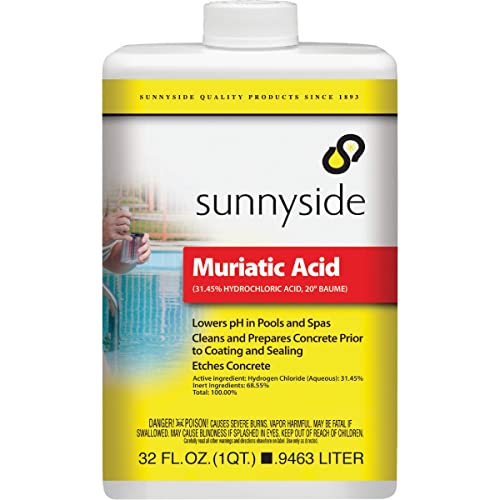
Best when pH is high: Sunnyside Corporation 71032 1-Quart Muriatic Acid
Buy pH-down only after a high pH reading. Dose from pool volume and the label, circulate, and retest. Never use it when pH is already low. Skip acid if you can’t provide ventilation, chemical-resistant gloves, and eye protection.
Best when pH is low: Clorox Pool & Spa Swimming Pool pH Up, 5 lb
Use sodium carbonate after a confirmed low-pH reading. Check alkalinity before repeating a dose. Don’t add pH up and acid together; skip the product when the test result is inside 7.2–7.8.
Best when hardness is low: Clorox Pool & Spa Swimming Pool Calcium Hardness Increaser, 5 lb
Choose calcium chloride only when hardness is below your target. Pre-dissolve it in a bucket and add slowly with circulation. Skip it when hardness is high or the pool is already scaling.
Best when CC is high: In The Swim Chlorine-Free Pool Shock — 12 x 1 Pound Bags
MPS oxidizes combined chlorine without raising FC. Use it after a CC reading above 0.5 ppm and follow the label dose; a common label direction is 1 lb per 10,000 gallons. Don’t use it to correct high pH or TDS. Skip a shock until you know FC, pH, and pool volume.
Common Mistakes
Mistake 1: Blaming chlorine first
Test pH and CC before buying more sanitizer. “Chlorine smell” often points to chloramines.
Mistake 2: Skipping calcium testing
Low and high hardness call for opposite actions. Check the open-pool sequence after a fresh fill.
Mistake 3: Making several adjustments at once
Add one product, run circulation, and retest. Multiple changes erase the clue you needed.
Mistake 4: Testing only free chlorine
FC alone can’t show CC. Use the pool water testing hub with EASYTEST strips to build a repeatable test routine.
Mistake 5: Ignoring volume and CYA
A dose for 10,000 gallons is not a dose for 20,000 gallons. Record volume, CYA, and current readings before dosing.
Safety notes
Handle acids and powders separately
Never add dry acid directly to a skimmer. Pre-dissolve only as the label permits; concentrated pockets can erode heater elements and burn skin on contact. With muriatic acid, add acid to water, never water to acid. Water poured into acid can trigger an exothermic reaction that boils and spits corrosive droplets.
Store chemicals correctly
Keep chlorine, acid, and test reagents in their original containers, upright, cool, dry, and locked away from children and pets. Never mix products dry or in a bucket. Avoid breathing powder. Wear gloves and eye protection. Pre-dissolve calcium chloride because it releases heat. Rinse pool-deck surfaces after shock dosing so residue doesn’t contact skin.
Protect the test result
Store test reagents upright and cool; replace them yearly for reliable readings. Keep swimmers out while a label requires it, and never pour shock through a skimmer connected to an automatic chlorinator.
When to call a pro
Use a water analysis when numbers conflict
Call a pool professional when repeated tests disagree, TDS stays high, equipment won’t circulate, or a fresh-fill pool has no chemistry history. The weekly pool care routine helps organize repeat tests.
Stop the chemistry troubleshooting boundary
If the pool is balanced but the problem persists, stop changing chemicals. Persistent irritation after rebalancing water chemistry = consult a medical professional.
What you’ll need
Start with a clean sample cup, a 7-way strip like EASYTEST 7-Way Pool Test Strips, 150 Strips, and a notebook. For borderline results, use the liquid test kits vs strips comparison and switch to a Taylor K-2006-SALT liquid kit. You may also need a pH-up or pH-down product, calcium increaser, or MPS—but only after the decision tree identifies the parameter.
What to buy only if needed
Buy pH-down only for high pH, pH-up only for low pH, calcium increaser only for low hardness, and MPS only for high CC. For outdoor pools, compare CYA readings with the cyanuric acid guide. If the number is not out of range, don’t add a chemical just because irritation occurred.
How we picked
The six products map to the five diagnostic readings and the most common corrections. The strip is a broad screen; the liquid kit is for close decisions. The balancers and MPS appear only after a reading supports their use. Product data and prices came from the supplied Amazon Creators API research artifact; prices can change, so verify the listing at publication.
Key takeaways
- Test pH, CC, FC, calcium hardness, and TDS before dosing.
- Keep pH 7.2–7.8 and CC below 0.5 ppm.
- Match the chemical to the failed reading.
- Change one variable at a time, circulate, and retest.
- Never mix chlorine, acid, or powders.
- Persistent irritation after balanced chemistry crosses the medical boundary.
Related
- Learn pH balance chemistry and pool shock and combined chlorine.
- Compare the weekly pool care routine with the open-pool sequence.
Read the five numbers together
Compare pH with free chlorine
A pH result without FC is only half a picture. At the same FC number, pH changes the active chlorine balance. Record both values in the same row of your notebook, along with the time and water temperature. If pH is drifting upward every day, check alkalinity before repeatedly adding acid. If FC is dropping quickly, compare CYA and sunlight exposure before increasing the dose. Don’t compare readings taken at different points in the pool.
Compare total chlorine with free chlorine
Total chlorine and FC are not interchangeable. Subtract FC from total chlorine to estimate CC. Run the filter, limit swimmer load while you correct the water, and retest at the same sampling point. Inconsistent samples make trends useless. Don’t call a total chlorine result “fine” until the subtraction shows CC.
Compare hardness with surface and makeup water
Hardness needs context. Plaster and vinyl pools don’t respond to the same balance in the same way, and makeup water can change the number. Test after adding a large volume of water. If hardness is low, add calcium in measured stages. If it is high, stop adding hardness products and check for scale.
Build a repeatable test routine
Sample away from returns
Run circulation long enough to mix a recent chemical addition, then sample away from the return jet and skimmer. Rinse the cup with pool water first. Fill it to the marked line, keep strips dry until use, and read colors within the kit’s stated window. A strip read several minutes late is not a better reading.
Record the adjustment, not just the result
Write down the chemical, amount, pool volume, starting number, circulation time, and retest number. If the same pH correction repeats daily, check alkalinity and aeration. If CC returns after ordinary swimmer loads, inspect filtration and oxidation rather than stacking products.
Recheck before reopening
After any adjustment, circulate and test again. Don’t use swimmer comfort as the test method. Keep the pool closed when a label says to wait or readings are outside your target. If a dose produces an unexpected result, stop dosing and get a second water analysis.
Before-swimming re-entry gate
Reopen the pool only when all three of the following chemical-and-sensory checks pass at the same time. None of them alone is enough.
- Strip test (FC): a 7-way strip reads FC at or below 5 ppm. If the strip reads above 5 ppm, wait and retest after circulation; do not judge by time alone.
- Strip test (pH): the same reading shows pH inside 7.2–7.8. If pH is outside this band, correct and retest before reopening.
- Sensory chlorine-smell gate: at the surface, the water does not carry a strong chemical or “chlorine” smell. A noticeable smell after rebalancing typically reflects combined chlorine (CC), not strength of clean water — recheck CC and confirm it is below 0.5 ppm before swimmers return.
If any one of the three checks fails, keep the pool closed and run another test cycle. Don’t reopen on a calendar clock (for example, “wait 8 hours”) when the readings are still outside the gate.
What changes after rain or a fresh fill
Rain dilutes some parameters and adds debris that consumes chlorine. A fresh fill can have low calcium, unbuffered pH, or source-water metals. Test the complete set rather than assuming fresh water is ready. The open-pool sequence gives a useful order for initial balancing, while the weekly pool care routine helps maintain the same habit.
Use the same order every time
Test pH, CC, FC, calcium hardness, and TDS. Correct the largest chemistry error first. Circulate. Retest. Then move to the next parameter. This order keeps a calcium addition from being made in a scaling pool.
Keep labels and volume visible
Store pool volume, surface type, CYA target, and chemical labels together. Product instructions vary. The chemical dose calculator can help translate a confirmed reading into a volume-based starting point, but the result still needs a retest. Skip calculator math when pool volume is a guess.
A practical closing check
Before buying anything, ask five questions: Is pH inside 7.2–7.8? Is CC below 0.5 ppm? Is FC appropriate for CYA? Is calcium inside the surface-appropriate range? Is TDS reasonable? If one answer is no, buy only the product that addresses it. If all five answers are yes, stop adding chemicals and keep the balanced result as useful information.